Ecologists and climate researchers have sometimes called it “natural geoengineering.” The idea is elegant in its simplicity: A forest can store anywhere from 10 to 1,000 tons of carbon per hectare (i.e., per 0.01 square kilometers). That’s carbon that would otherwise contribute to the ongoing roasting of our planet as excess carbon dioxide (CO2) in Earth’s atmosphere. So, why not just plant more trees? Problem solved, right?
Unfortunately, a new study has discovered some troubling and frustrating hurdles to this otherwise great concept for curbing greenhouse gases via nature’s own long-term carbon capture methods. Researchers in the United States, Europe, and Argentina analyzed minute variations in the growth of oak trees, alongside their treetop CO2 levels, and over 75 years’ worth of tree ring records and temperature data to determine that the mighty oak converts less carbon into wood than previously assumed.
While the oaks continue engaging in photosynthesis late into a given year, according to the new study, the trees’ growth of woody biomass—its twigs, branches, trunk, and roots—typically stops by mid-summer. The finding could compel scientists to revise how they incorporate global forest cover into their climate models, cutting down estimates on how much our CO2-breathing plant friends might actually be able to bail us out of human-made global warming.
“Right now, most models assume that if you have photosynthesis, you have growth,” the study’s lead author Mukund Palat Rao, an ecoclimatologist at Columbia University, said in a statement. “We find that’s not the case.”
“The moment you have dry and hot conditions, growth activity stops pretty instantly while photosynthesis seems to continue at a slightly decreased rate,” Rao explained.
Cruel summer
The carbon that plants repurpose from CO2 goes into a lot more than just their own physical growth as your typical carbon-based life form. Some of that carbon is processed with water via photosynthesis into sugars for energy and other nutrient molecules. Some of it is used to make starchy compounds and only temporarily stored in fruits and foliage, where it much more quickly decomposes back into CO2. And some of it, via a somewhat arcane and miraculous act of symbiosis, is converted into compounds that nourish microbial communities in the soil surrounding the tree’s roots.
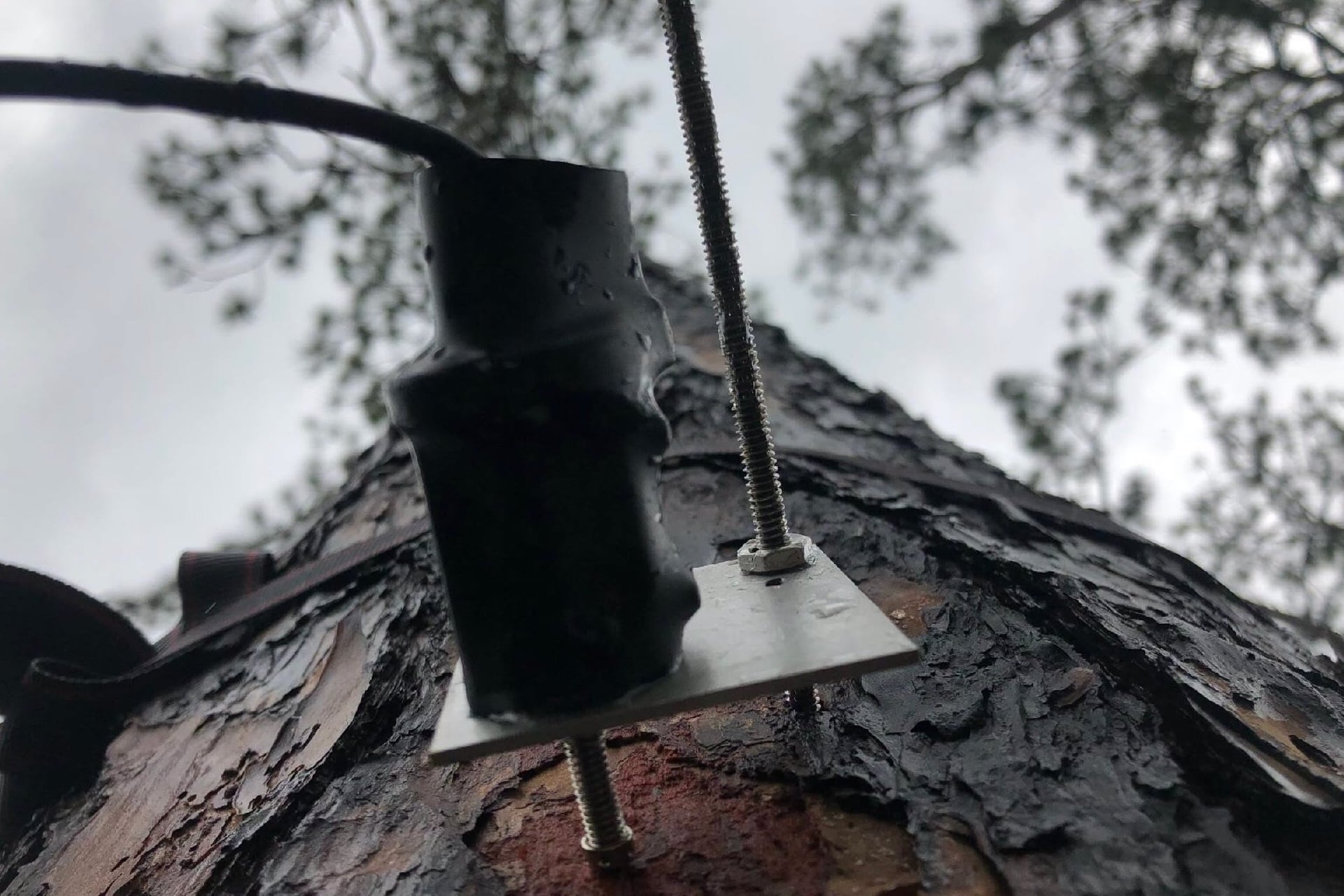
Rao’s team carefully took microcore samples of bark, the actively growing cambium layer, and the fluid-transporting xylem layer of five healthy sample oaks on the east coast every 15 days between March and September 2021, comparing them to nearby atmospheric CO2 and other data. As they published this June in the journal Science Advances, the researchers found that these oaks generally grew from May into July but continued to perform photosynthesis well after growing stopped later in the summer.
All told, the team’s eastern trees absorbed 36% of their carbon without growing. The team also measured trees in California, which absorbed 26% of their carbon without growing during those summer months. Rao and his coauthors suspect that the hot, dry summer weather reduces the internal water pressure inside these trees that are essential to their growth.
“Understanding how photosynthesis and growth are linked is very important from the perspective of understanding how forests will store carbon over long time scales,” Rao said.
Seeing the forest for the trees
This is not, of course, the first major challenge to the notion that simply growing more forest cover could save the planet from climate change. Earlier indications came from a study of North American and European trees in 2022. And, last year, the Colorado State Forest Service put out an alarming report that its own forests were actually contributing more carbon than they were absorbing due to droughts and wildfires.
“We shouldn’t necessarily look to our forests to offset emissions because they’re currently a net carbon source across the state as a whole,” that study’s lead author, Tony Vorster of the Natural Resource Ecology Laboratory, said in 2025.
According to Rao, he and his colleagues’ next steps are figuring out the degree to which this decoupling of photosynthesis and growth occurs in other tree species and ecosystems across the world.
“I don’t really have answers yet,” Rao said. “There are many questions still left to address.”
More From Science | A Monolith Designed to Record Civilization’s Downfall Is Finally Taking Shape