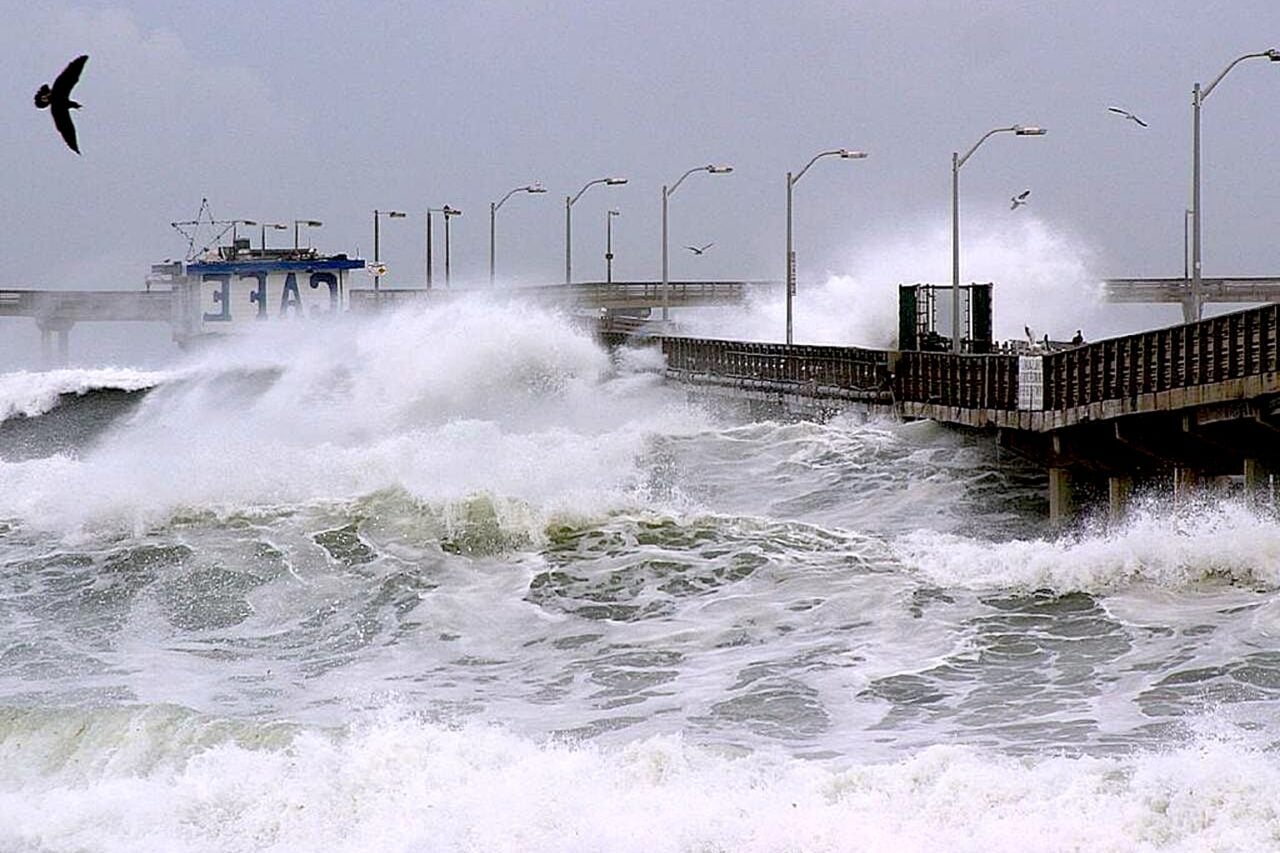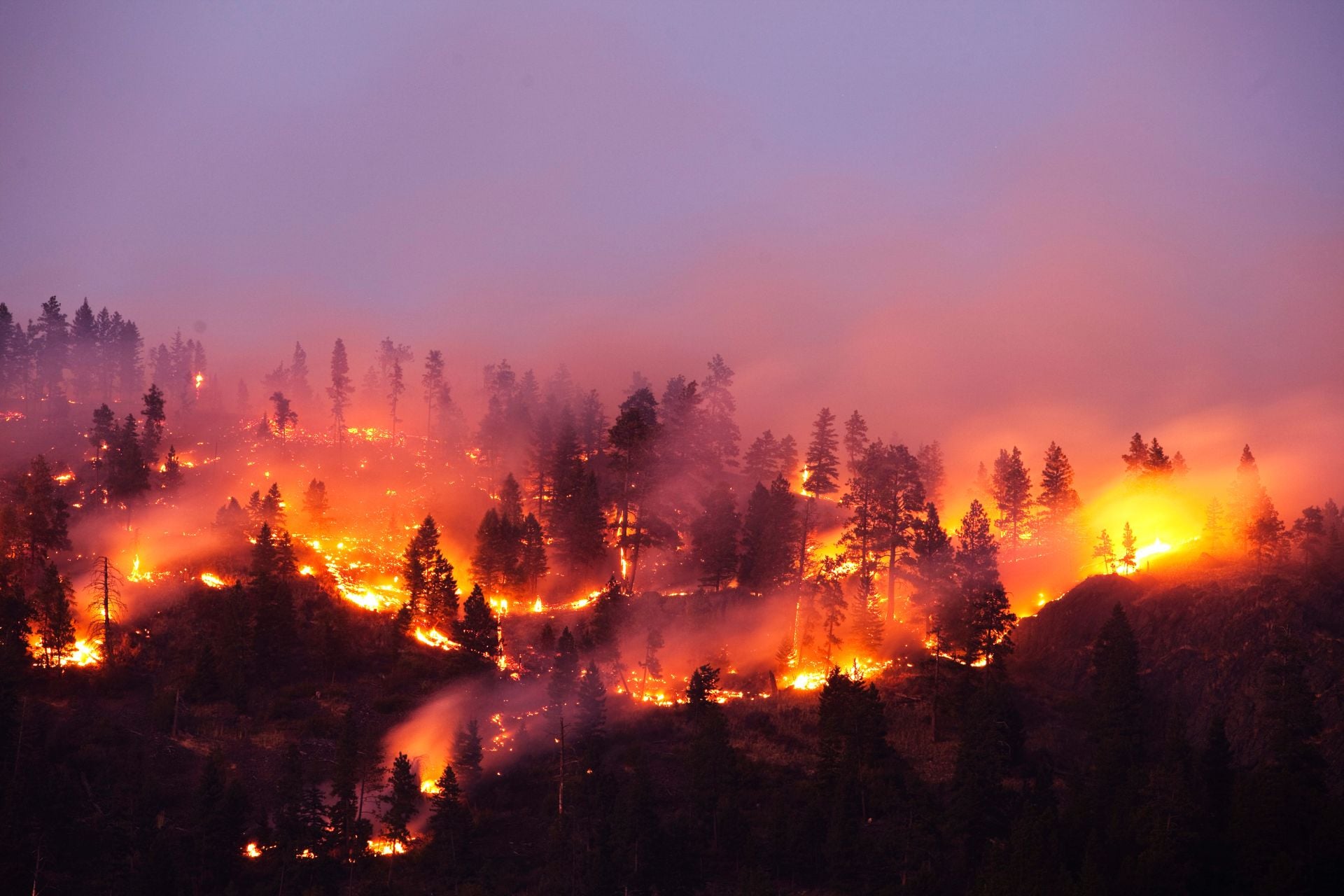
It’s been a particularly apocalyptic summer. Relentless, record-shattering heatwaves, untamable wildfires, and deadly floods are just some of the disasters that have made global headlines in the past few months. In a warming world, these extreme events are beginning to feel commonplace. But according to a staggering analysis, it’s probably going to get much worse very soon.
Research published earlier this year in the journal Geophysical Research Letters shows—with 98% statistical certainty—that global warming has accelerated significantly in the last decade. Since 2015, Earth’s temperature has risen at an estimated pace of 0.63 degrees Fahrenheit (0.35 degrees Celsius) per decade, as opposed to just under 0.36 degrees F (0.2 degrees C) per decade from 1970 to 2015.
This is the first time researchers have stated with statistical confidence that global warming is accelerating. While the study did not investigate the specific causes of the acceleration, climate models show that an increasing rate of warming is possible, according to the authors. The findings speak to how insufficient efforts to slow and eventually stop global warming under the Paris Climate Accord have been.
“If the warming rate of the past 10 years continues, it would lead to a long-term exceedance of the 1.5-degree C limit of the Paris Agreement before 2030,” lead author Stefan Rahmstorf, a researcher at the Potsdam Institute for Climate Impact Research, said in a statement. “How quickly the Earth continues to warm ultimately depends on how rapidly we reduce global CO2 emissions from fossil fuels to zero.”
Finding a trend amid the noise
Due to exceptionally high average global temperatures in recent years, scientists began debating whether the pace of global warming had increased. They couldn’t be certain because telling natural, short-term fluctuations apart from long-term trends driven by human activity is statistically challenging.
Natural variability has led to misleading conclusions before. Following the strong 1998 El Niño, for example, some claimed that global warming had slowed or even stopped. Subsequent research by Rahmstorf and Grant Foster, who is now a retired statistician formerly at Tempo Analytics, showed that the apparent “pause” between 1998 and 2012 reflected temporary natural variability superimposed on the long-term warming trend, not a halt in anthropogenic warming.
Rhamstorf and Foster teamed up again for this new study, and their question was essentially the same: Has the rate of human-caused warming actually changed in recent years, and if so, by how much? To find the answer, they ran a thorough statistical analysis of observational data and filtered out the influence of El Niño, volcanism, and solar variation. This revealed a near doubling in the rate of warming since 2015.
“We filter out known natural influences in the observational data, so that the ‘noise’ is reduced, making the underlying long-term warming signal more clearly visible,” Foster explained in a statement.
Cranking up the heat
Based on the findings, all temperature records are already close to 2.7 degrees F (1.5 degrees C) of warming above pre-industrial levels and are on track to exceed that level before 2030. To be clear, Earth’s global temperature would need to exceed this limit for an average of 20 years to officially breach the Paris Agreement, and that’s where we’re currently heading, according to the researchers.
Long-term exceedance could trigger multiple climate tipping points, including breakdowns of major ocean circulation systems, abrupt thawing of boreal permafrost, and collapse of tropical coral reef systems. These changes could have irreversible and dangerous consequences for humanity. Sustained overshoot will also significantly increase the frequency and intensity of extreme weather events such as heatwaves, droughts, wildfires, heavy precipitation, and flooding.
“Stopping this trend is in our hands,” Foster and Rahmstorf write in their report. “Studies show that global warming will stop around the time humanity reaches zero CO2 emissions, but it can hardly be reversed.” However, they recognize that in the current political climate, it is quite possible that the current pace of warming will continue or even accelerate further. Without decisive action from the world’s biggest polluters—including the U.S.—we could be living in an altogether different climate in just a few years.