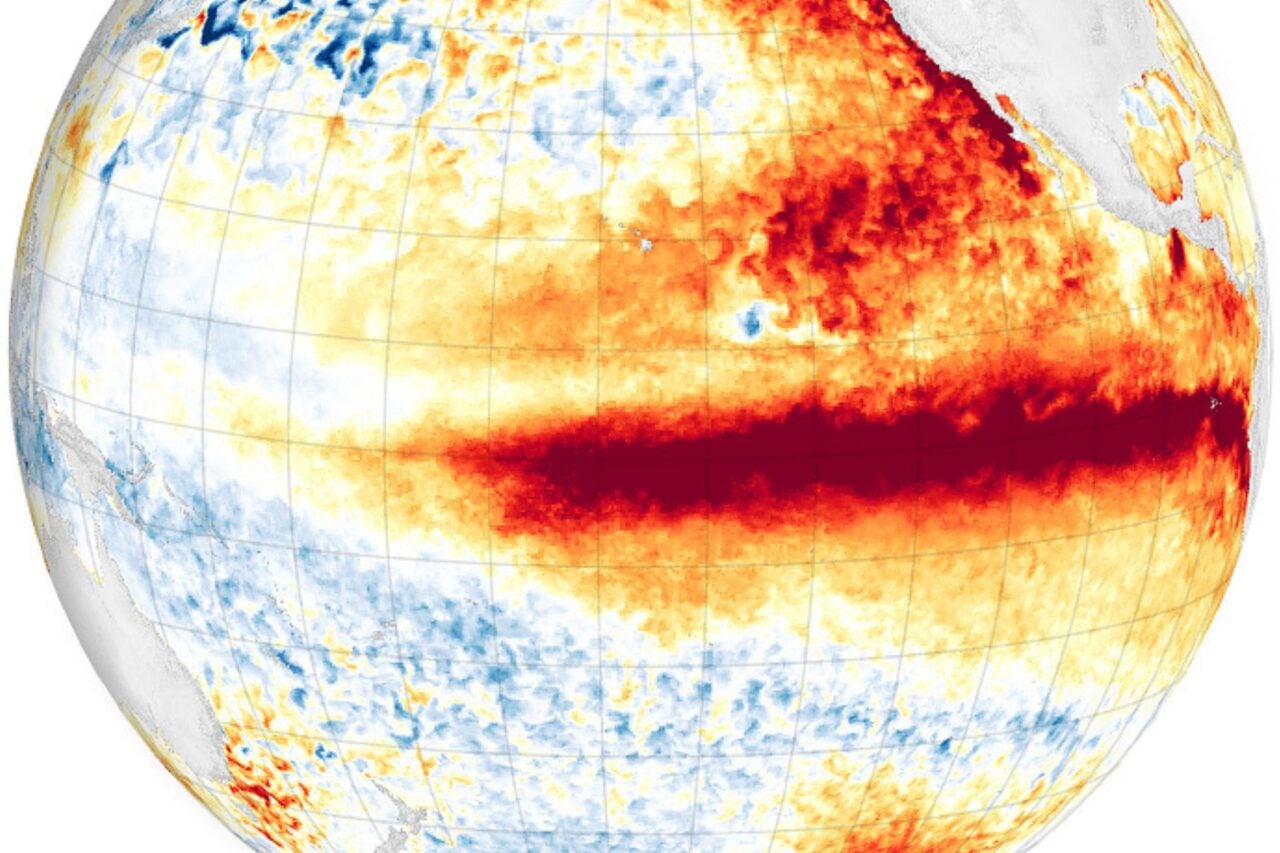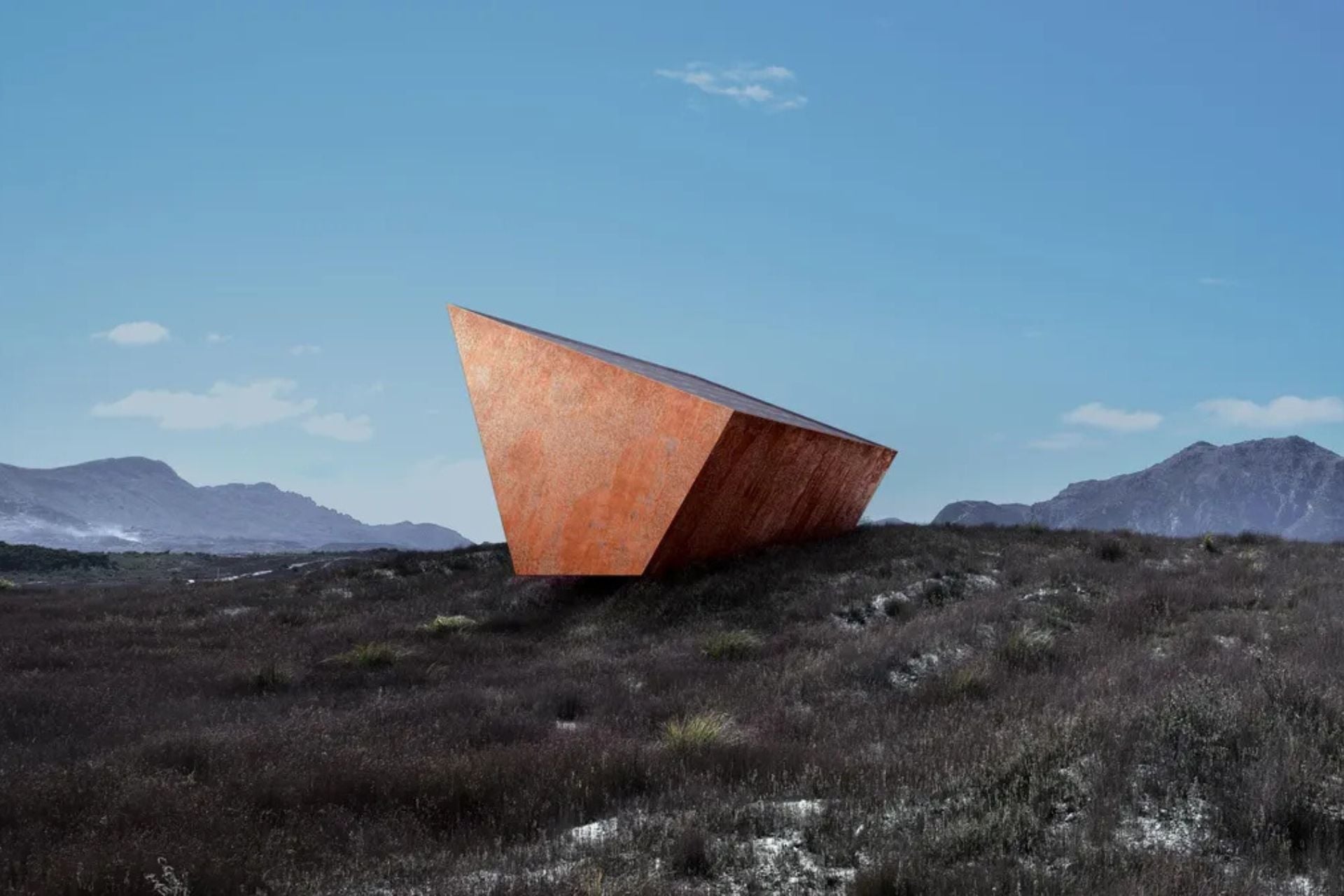
It’s been nearly five years since the Australian non-profit Rouser Lab unveiled its plan to build Earth’s Black Box, a flight recorder-like device designed to document humanity’s spiral into environmental destruction. Now, its creators say they will install their doomsday tracker in Tasmania before the year is out.
Parts assembly is underway, and Rouser Lab plans to install the device on the edge of a remote Tasmanian airfield in December, The Guardian reports. The 52-foot-long (16-meter-long), 13-foot-high (4-meter-high) monolith will be made of reinforced steel and concrete, “designed to withstand every possible threat including cyclone, earthquake, fire, flood or attack,” Rouser Lab’s website states.
The roof will be outfitted with 36 solar panels protected by layers of toughened glass. These will supply power to internal drives storing hoards of “data sets, measurements, and interactions relating to the health of our planet,” according to a separate site dedicated to the project. That data will come from space agencies, weather agencies, and universities, funneling continuously into the box via the internet to form “Earth’s Vital Index.”
“The purpose of the device is to provide an unbiased account of the events that lead to the demise of the planet, hold accountability for future generations, and inspire urgent action,” the Earth’s Black Box website states. “How the story ends is completely up to us.”
Preserving the apocalypse
Over the past five years, Rouser Lab has remained tight-lipped about the project’s progress, but artistic director Jonathan Kneebone told The Guardian that he and his colleagues have been “evolving the design, data storage systems, source materials, web platform—as well as developing funding models to sustain the project into the future.”
It’s important to note that Rouser Lab is not a science or technology organization. Rather, it bills itself as an “experimental environmental communications agency.” As years passed with no update on Earth’s Black Box, some speculated that it was an advocacy stunt meant to call attention to the climate crisis. While that is part of its purpose, it’s now clear that Rouser Lab was, and is, entirely serious about building and installing the device.
The organization imagines a scenario in which future civilizations could learn from the data stored inside Earth’s Black Box to avoid repeating the mistakes of their predecessors (us). Rouser Lab is also working on a project called Climate S.O.S., which aims to build a 164-foot-tall (50-meter-tall) “techno-obelisk” topped with a radio telescope that will transmit a distress call out into space in the hope that an alien civilization might save us from climate collapse.
That’s still a long time coming. In the here and now, Rouser Lab hopes Earth’s Black Box will serve as an “objective real-time archive for scientists, students, journalists and the public.”
Whether the device will actually prove useful remains an open question. There is already an immense wealth of free, open-source data on climate breakdown available to anyone who wants to access it, and there’s really no reason to assume it won’t be accessible to future generations. From an advocacy standpoint, it’s possible that the box’s installation could reinvigorate some interest in the climate crisis. That is, until the news cycle turns over again.