Spider silk is reportedly five times stronger than steel. With some genetic adjustments, silkworm silk can get even tougher. And now, one team says it’s found a way to spin near-Kevlar-level silk fibers—no synthetic strings attached, literally.
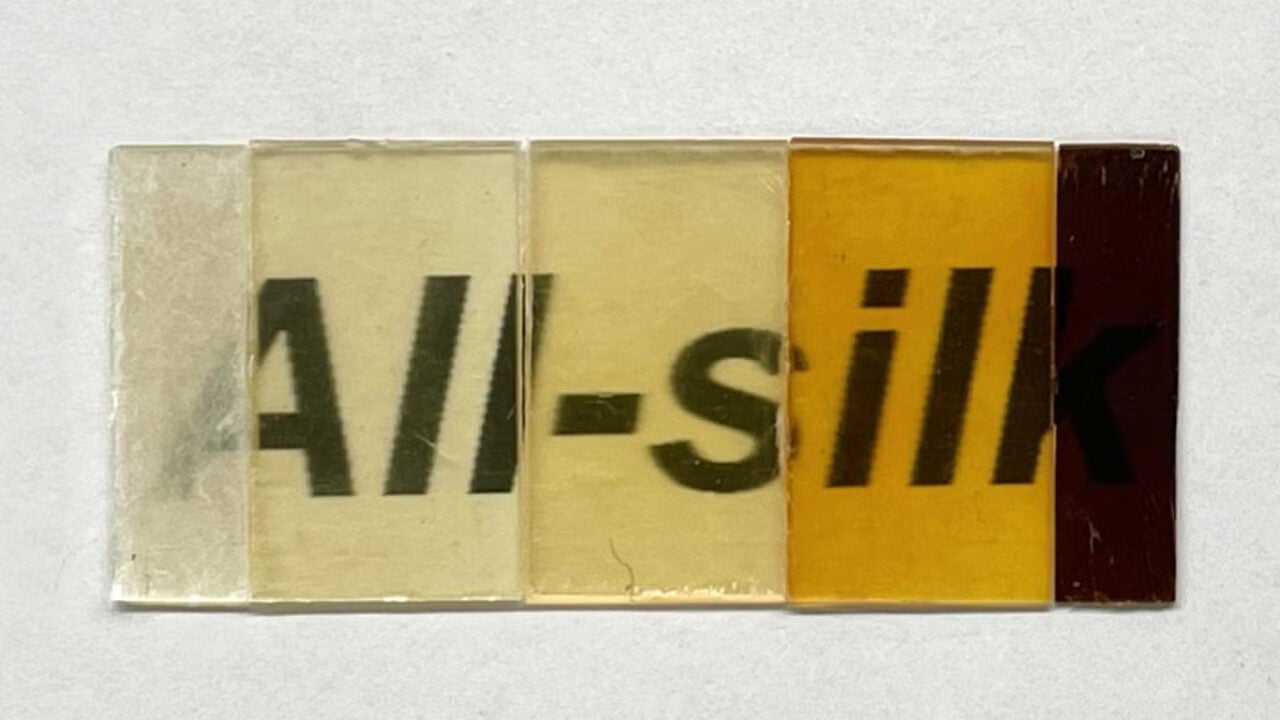
Remarkably, the new approach preserves the natural structure of the silk fibers and mostly depends on carefully controlled temperatures and pressures to toughen up the silk. According to a recent Nature Sustainability study on the findings, heat and pressure fused silk fibers into a dense, transparent material with tensile toughness greater than bone and nearly as high as Kevlar fibers. Compared to artificial materials, the fiber degrades more easily, making it a viable component of sustainable technologies, the paper noted.
What’s more, this “fused silk” is also transparent in the visible range and has optical properties relevant for next-generation wireless and imaging technologies, Chunmei Li, study co-author and a biomedical engineer at Tufts University, told Gizmodo.
Following the silk lore
Historically, humans began extracting silk from silkworms as early as 8,500 years ago. But in recent years, the unique chemical organization of silk fibers has attracted a “resurgence of interest” in silk for developing high-tech materials in biomedical engineering, energy generation, food preservation, sensors, and more, according to the paper.
“The initial question stemmed from a long-standing problem in processing natural biopolymers,” Li said. Natural silk has “impressive mechanical and functional properties,” he added, but processing silk has required a “slow, chemically intensive” process that “can destroy the hierarchical structure that gives silk many of its useful properties.”
Finding the silk zone
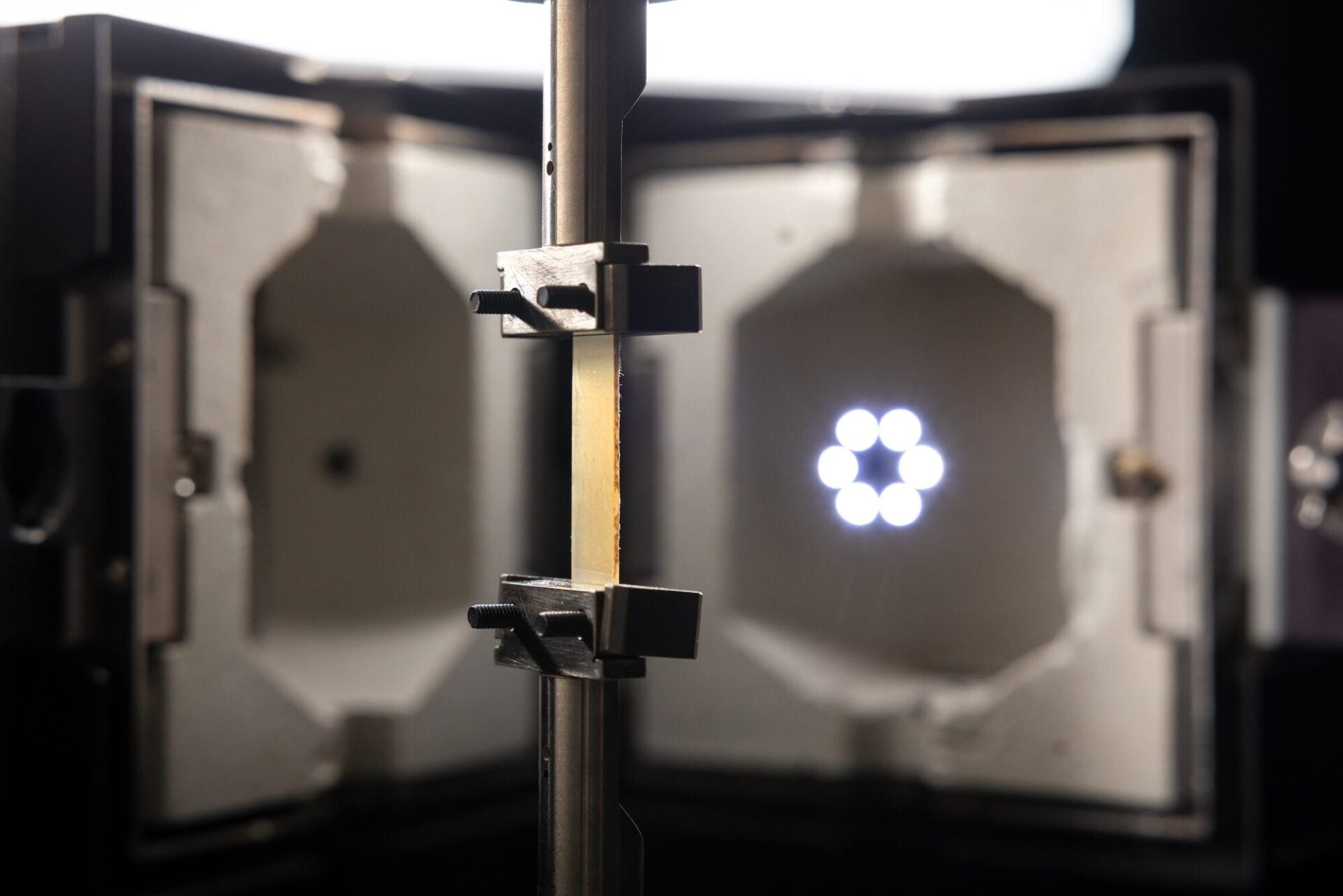
A key improvement brought about by the new approach is that it doesn’t require excessive chemical-heavy processing; researchers “simply align the fibers and apply heat and pressure, and they fuse together in one step,” Li explained in a Tufts statement. For the study, Li and colleagues first treated commercially available silk fibers with sodium carbonate to remove the sticky covering produced by silk moths.
“The goal was not only to see whether the fibers could be fused directly, but also to understand what was happening during the process—how the fibers came together, how the structure changed, and why the final material performed well,” Li told Gizmodo.
The trick was finding an optimal zone for hot-pressing the silk. If temperatures and pressures were too low, the silk became too limp. If temperatures and pressures were too high, the silk would be too brittle or break down altogether. The team landed on a window between 257 and 419 degrees Fahrenheit (125 and 215 degrees Celsius) and between 1900 and 9800 atmospheres of pressure.
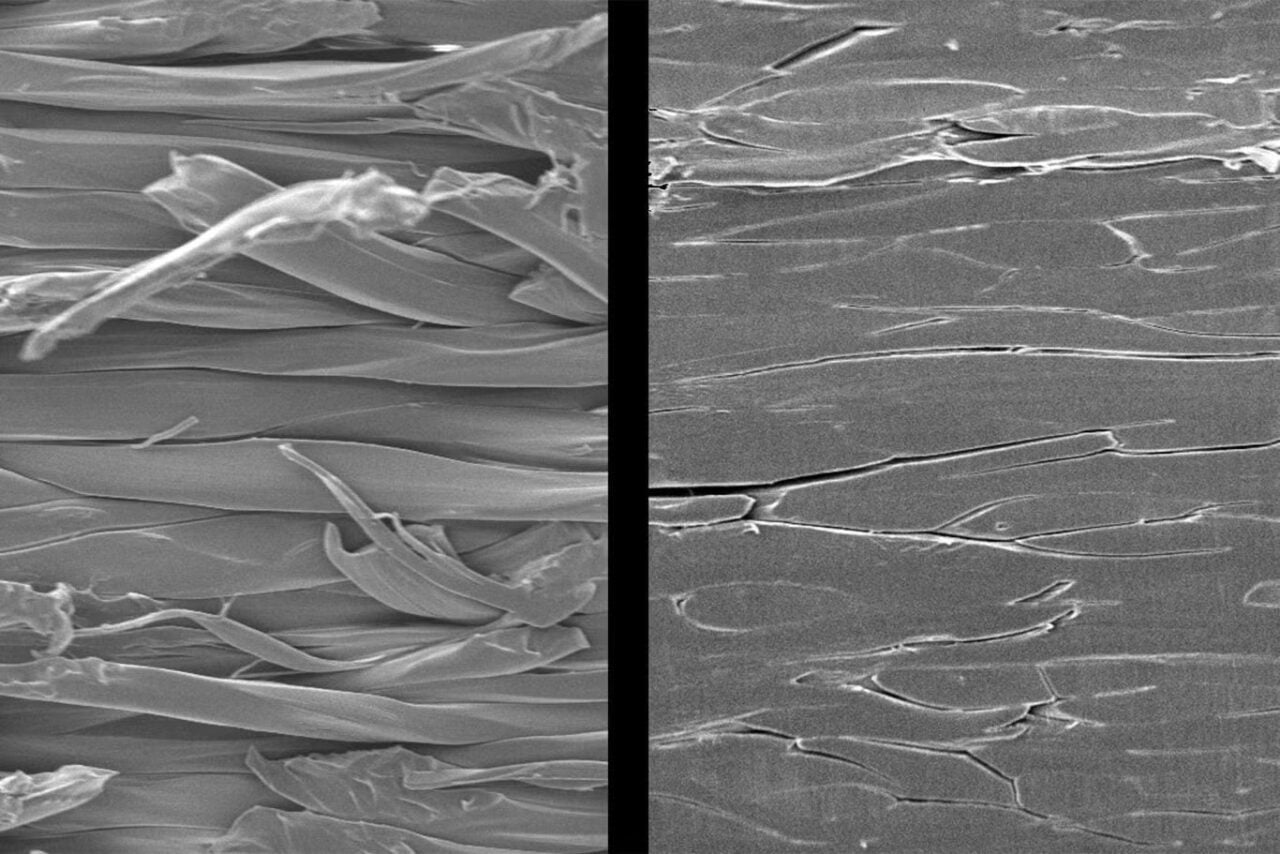
Under these conditions, remarkably, the silk fibers bundled up and fused together, taking a new form that somehow resembled wood in structure. The powerful inter-fiber bonds distribute any stress placed on the material, resulting in a sturdy, solid material that preserves the best properties of natural silk, according to the statement.
The next big thing?
The team anticipates that the new material will make itself useful across a vast range of applications. The researchers also conducted ballistics tests and confirmed that the material was “as puncture-resistant as carbon-fiber-reinforced polymers” used in airplanes and cars, reported a University of Michigan statement on the findings. They even implanted some in mice and saw that the materials slowly degraded, meaning they could be useful for temporary medical implants.
Looking forward, the team wants its magic silk to be more scalable and support complex shapes and is currently working on follow-up investigations toward this goal. The idea is to bring in industrial and commercial partners willing to try incorporating the fused silk into sensors and other tech, the researchers added.
“Sustainable materials do not have to be weak or only symbolic replacements for plastics,” Li told Gizmodo. “Some natural materials are highly engineered by nature, and silk is one of them. Sustainability can come from better design, better processing, and a deeper understanding of materials that already exist in nature.”