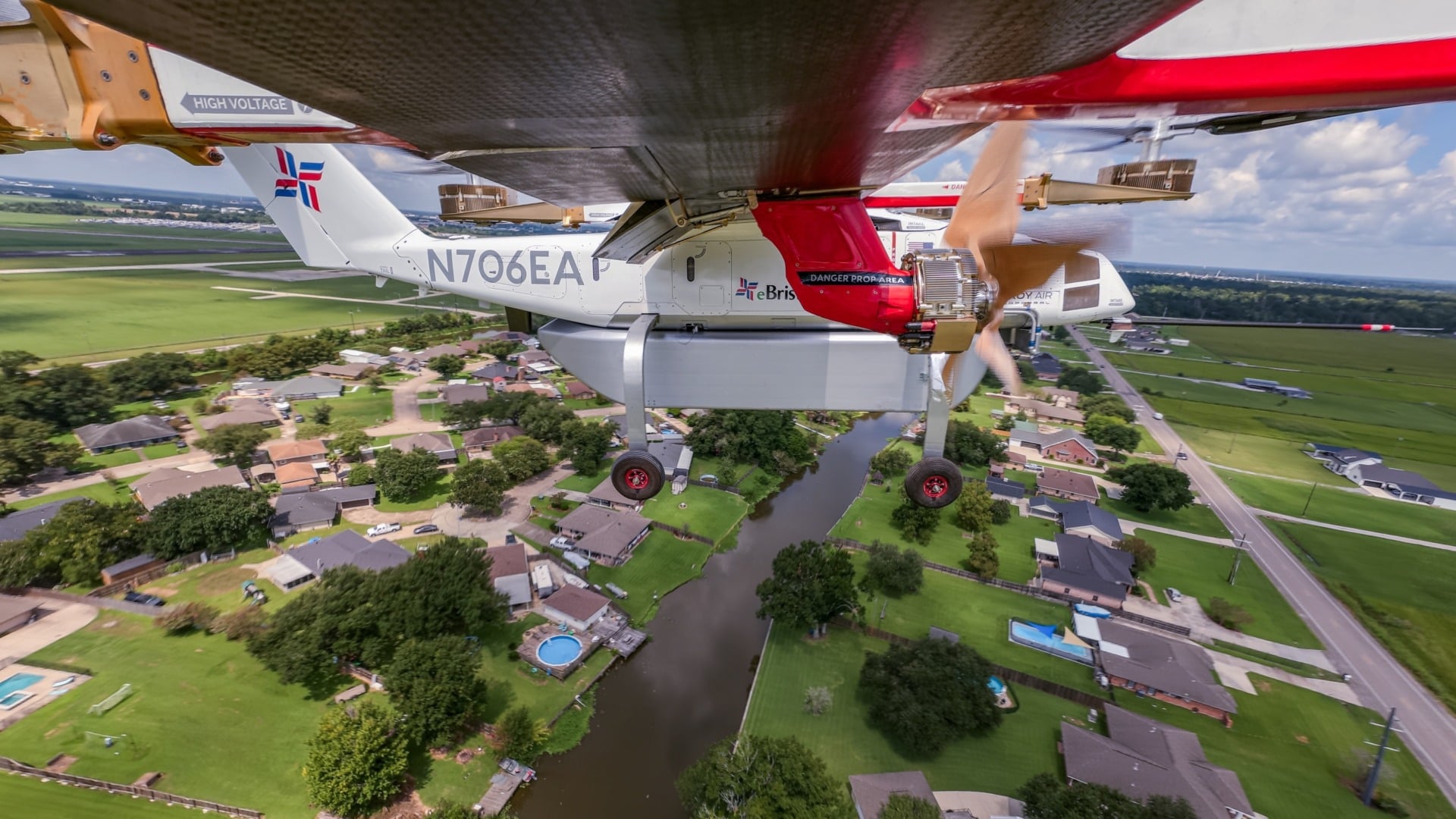
An autonomous hybrid-electric aircraft flew all on its own last month in a series of flights transporting cargo over the small Louisiana town of Houma.
Elroy Air, the company behind the aircraft known as the Chaparral, announced Wednesday that it completed the first autonomous and uncrewed flights under the U.S. Department of Transportation (DOT) and Federal Aviation Administration’s (FAA) eVTOL Integration Pilot Program (eIPP).
The program was established under President Donald Trump’s Unleashing American Drone Dominance executive order, which aims to accelerate the integration of drones and other advanced aircraft into the National Airspace System.
Under the eIPP, state and local governments partner with private companies to test electric vertical takeoff and landing aircraft and collect data that could eventually help shape regulations for their use.
As part of the program, Elroy Air’s Chaparral aircraft conducted a weeklong series of flights in late August, transporting cargo like packages, medical supplies, toolboxes with spare parts, food, and water.
The Chaparral looks like a large drone with airplane wings and is capable of carrying more than 500 pounds with a range of up to 450 miles.
“Over the course of the week, Chaparral flew autonomously and with no pilot on board from one of the nation’s busiest airports for rotorcraft under Air Traffic Control oversight,” said Elroy Air CEO Dr. Andrew Clare in a press release. “These flights bring Chaparral closer to fulfilling our mission: moving heavy cargo autonomously, safely, and at scale for commercial operations.”
For the FAA, the flights are also about figuring out how aircraft like these could eventually be used more widely.
“This demonstration with the Louisiana Department of Transportation and Development and Elroy Air provides data to help turn these concepts from trial to deployment,” said FAA Administrator Bryan Bedford. “These test flights demonstrate how these new aircraft can expand cargo delivery options to communities nationwide and improve our logistics infrastructure.”
The FAA also told Gizmodo that it will use what it learns from the demonstrations to identify gaps, improve procedures, and help integrate these aircraft into the nation’s airspace.
Elroy Air’s tests focused on whether aircraft like the Chaparral could eventually be used to move cargo to hard-to-reach energy sites across the Gulf Coast.
While these flights were focused on commercial operations, Elroy Air is also developing the Chaparral for defense logistics, tactical resupply, and humanitarian aid purposes.
In August, the U.S. Army awarded Elroy Air a $46 million multi-year contract.
The company claims its commercial pipeline includes more than 1,400 aircraft, roughly $5 billion in potential sales from logistics and aviation companies. But as The Next Web notes, that figure is based on non-binding letters of intent and memorandums of understanding, meaning none of those potential orders are guaranteed to turn into actual sales.
Elroy Air is also in the process of going public through a merger with a special purpose acquisition company. The company announced the deal in June and expects to complete its first production aircraft later this year.
Elroy Air did not immediately respond to a request for comment.