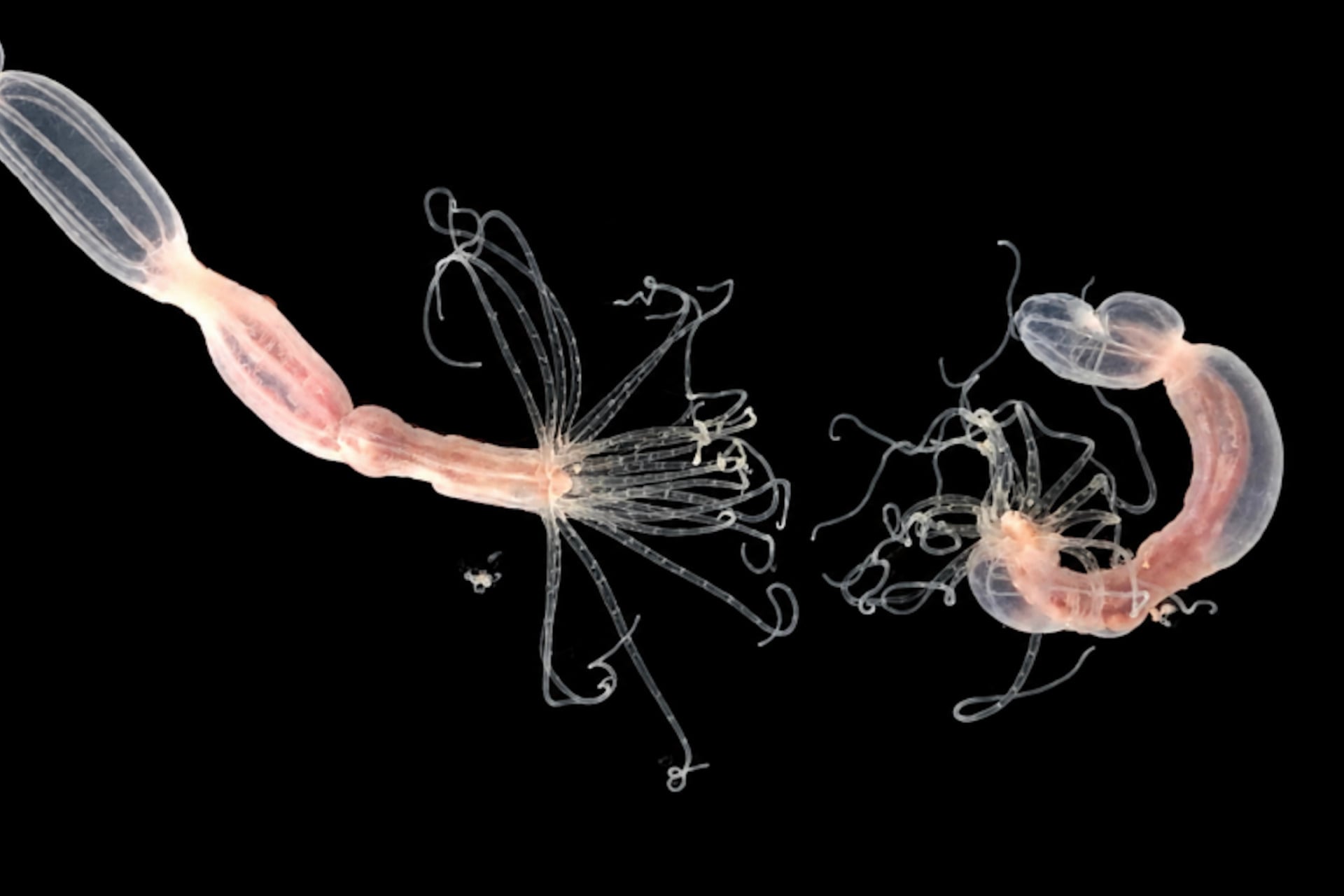
Floating outside the salt marsh silt it usually nestles in, the starlet sea anemone (Nematostella vectensis) looks a little bit like a miniature squid or those alien heptapods from Arrival (2016). This tiny, translucent, tentacle monster has teetered on the verge of endangered status for decades—despite a healthy population now grown as a “model organism” for lab experiments.
But researchers at the Hebrew University of Jerusalem and the University of North Carolina at Charlotte have discovered something incredible within this sea anemone’s immune system, which might change both how humanity protects these creatures and modern medicine: N. vectensis produces a previously unknown protein, called the “CARD Inhibitor Binding protein,” which boosts its protection against viral infections. The protein constitutes “an ancient mechanism,” as the study’s lead author Ton Sharoni and his colleagues put it in their new paper, a long hidden parallel track in immune system evolution that could revolutionize treatments against viruses.
“Humans and sea anemones both need protection from viruses, but this work shows that evolution can organize those defenses in fundamentally different ways,” experimental biologist Yehu Moran, Sharoni’s co-lead author, explained in a statement.
The protein, which the researchers have named CARDIB, superficially resembled a well-known antiviral protein found in humans and other species known as MAVS, mitochondrial antiviral-signaling protein. But the similarities stopped there.
“Everything about CARDIB suggested it should function like MAVS,” Moran said “Instead, we discovered that it does the exact opposite.”
Pumping the brakes
When a viral infection appears in humans and other vertebrate species, MAVS proteins kick the immune system into action. These signalling molecules serve a variety of defensive purposes, including spurring the production of cytokines and inducing apoptosis, a form of programmed cell death that prevents pathogens from replicating by killing off infected cell hosts. CARDIB does none of this.
“Rather than activating antiviral defenses,” Moran noted, “CARDIB normally suppresses them.”
The researchers determined this by creating tailored mutant versions of N. vectensis in the lab via CRISPR gene-editing tools. They then tested these experimental sea anemones, which no longer had the gene needed to produce CARDIB proteins, against the version of N. vectensis found in nature.
“The results were completely counterintuitive,” Sharoni said. “Although CARDIB acts as a brake on the immune system under normal conditions, that brake turns out to be essential for mounting an effective antiviral response.”
Sea anemones that could not produce CARDIB proved to be much more vulnerable to infections, the researchers reported in their new study, published this June in the journal Nature Ecology & Evolution. By contrast, they noted, those producing CARDIB killed off less of its infected cells via apoptosis, arguably more judiciously, showing “a slower but sustained antiviral response.”
In the immortal words of the other, no less powerful Cardi B: “You gotta switch it up sometimes.”
648 million years in the making
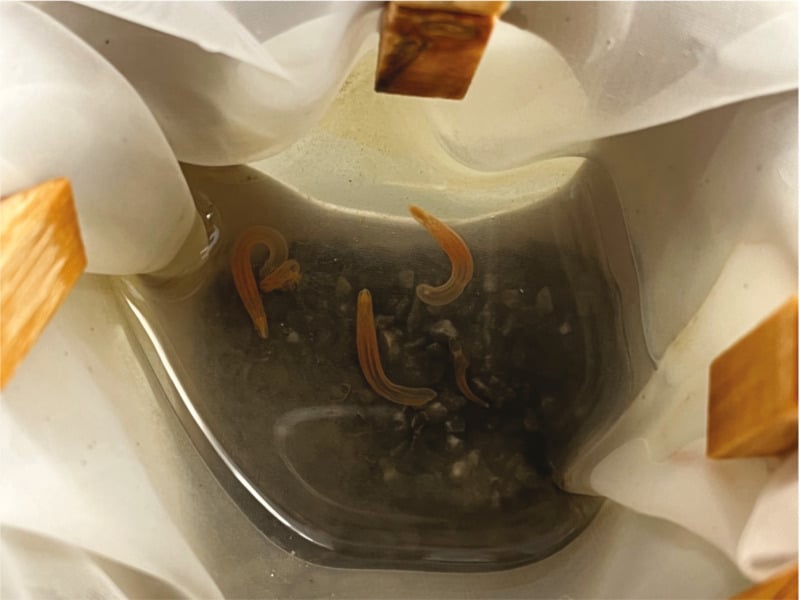
A field setup of estuary water for testing the CARDIB in sea anemones. Credit: Sydney Birch / University of North Carolina at CharlotteThe starlet sea anemone’s immune system dates back at least 648 million years ago to the primordial “snowball Earth” period known as the Cryogenian. According to Moran, Sharoni, and their coauthors, their findings challenge the notion that more-or-less all animals on Earth inherited the same shared antiviral defenses from a common ancestor.
To further test CARDIB’s antiviral utility, Hebrew University’s researchers partnered with biologists at the University of North Carolina at Charlotte to test how N. vectensis fared against its CRISPR-edited sea anemone control group in real-life ecosystem conditions.
UNC Charlotte’s scientists placed the creatures in samples of native estuary water typically inhabited by this sea anemone in nearby Georgetown, South Carolina. It only took a few days (96 hours) to notice how much better the CARDIB-making sea anemones survived and thrived.
“This demonstrated that the pathway we discovered is not simply a laboratory phenomenon,” said Moran. “It plays a crucial role in helping these animals cope with the viral challenges they face in nature.”
The find opens up the possibility that other undiscovered species might have also independently evolved distinct immune system molecules—future work that might one day help medical researchers prevent certain viruses from blowing up into deadly pandemics.