The Vesuvius Challenge is a winner of the 2026 Gizmodo Science Fair for virtually deciphering an entire papyrus recovered from the charred library of Herculaneum and for creating an open forum for scientific discourse and experimentation.
The question
Can we salvage any valuable information from the “lost” library of Herculaneum?
The result
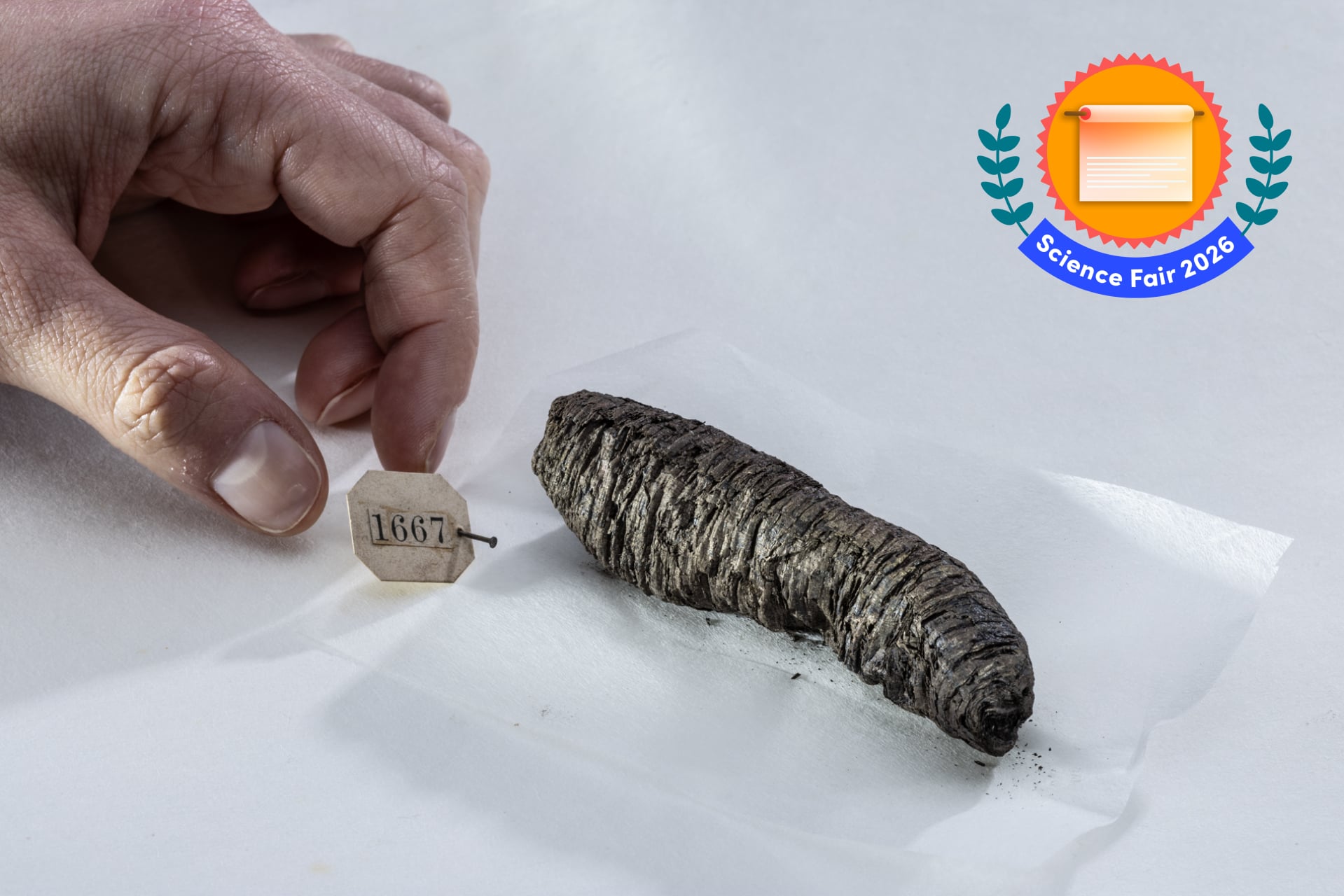
Yes, we totally can! In June 2026, scientists with the Vesuvius Challenge succeeded in virtually unwrapping and deciphering PHerc. 1667—one of the many papyri charred and carbonized in the eruption of Mount Vesuvius 2,000 years ago. A team of papyrologists then worked out 22 columns of Greek written on roughly 4.6 feet (1.4 meters) of papyrus. The text appears to be a philosophical treatise on ethics, specifically a Stoic work on human nature, impulse, and the moral progress of human beings.
This isn’t a one-time miracle but a long, steady flow of innovation that began with Brent Seales, principal investigator of EduceLab‘s Digital Restoration Initiative at the University of Kentucky. The achievement is the latest from a full-blown public competition: the Vesuvius Challenge, which invites anyone to decipher the lost texts of Herculaneum. Since launching in 2023, the competition has blazed through key milestones—restoring the first word, the first paragraphs, and so on—and now the first full scroll.
Why they did it
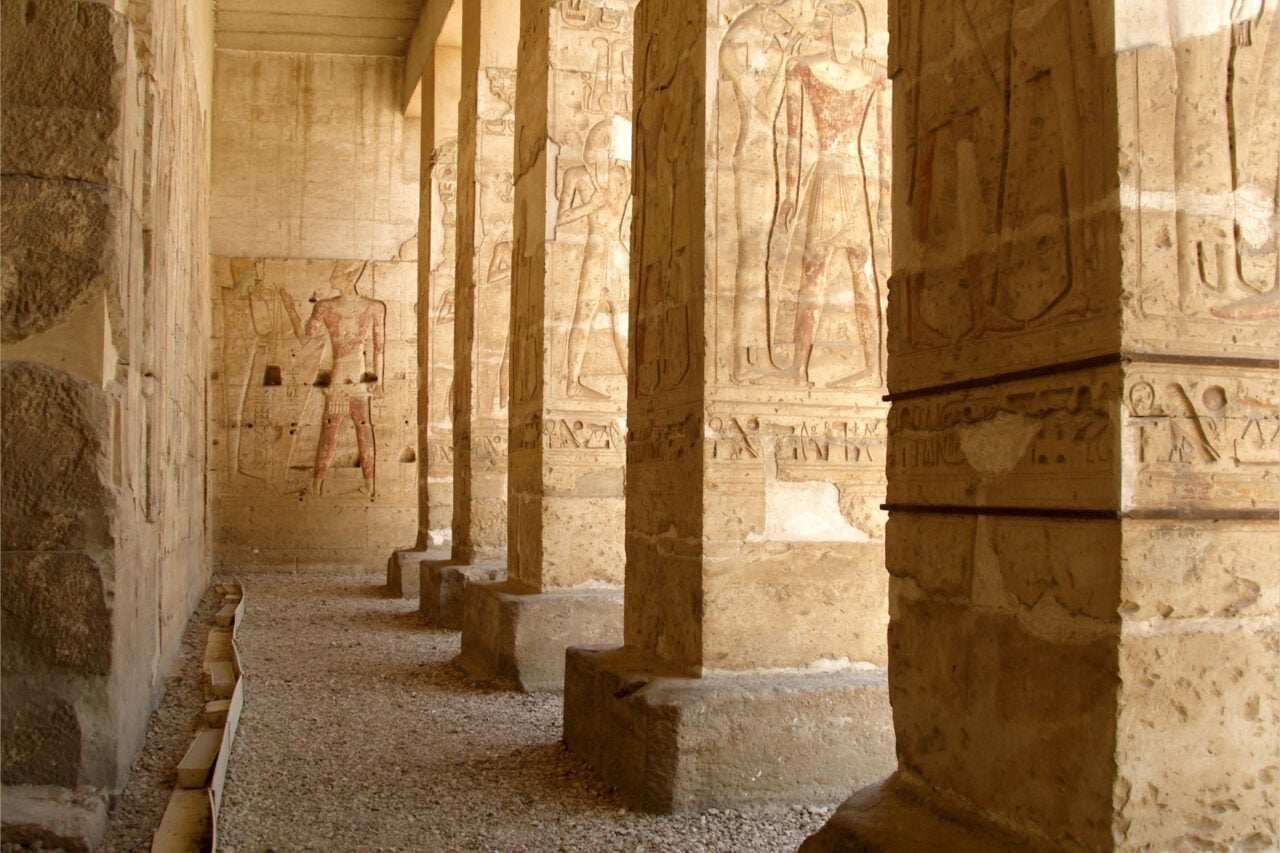
The Villa of the Papyri in Herculaneum was first discovered in the 18th century. To this day, it remains the only surviving library from the Roman and Greek eras with a preserved collection, according to Federica Nicolardi, a papyrologist at the University of Naples Federico II. Libraries from antiquity are extremely rare, despite extensive records of their existence, added Nicolardi, who leads the Vesuvius Challenge’s papyrology team.
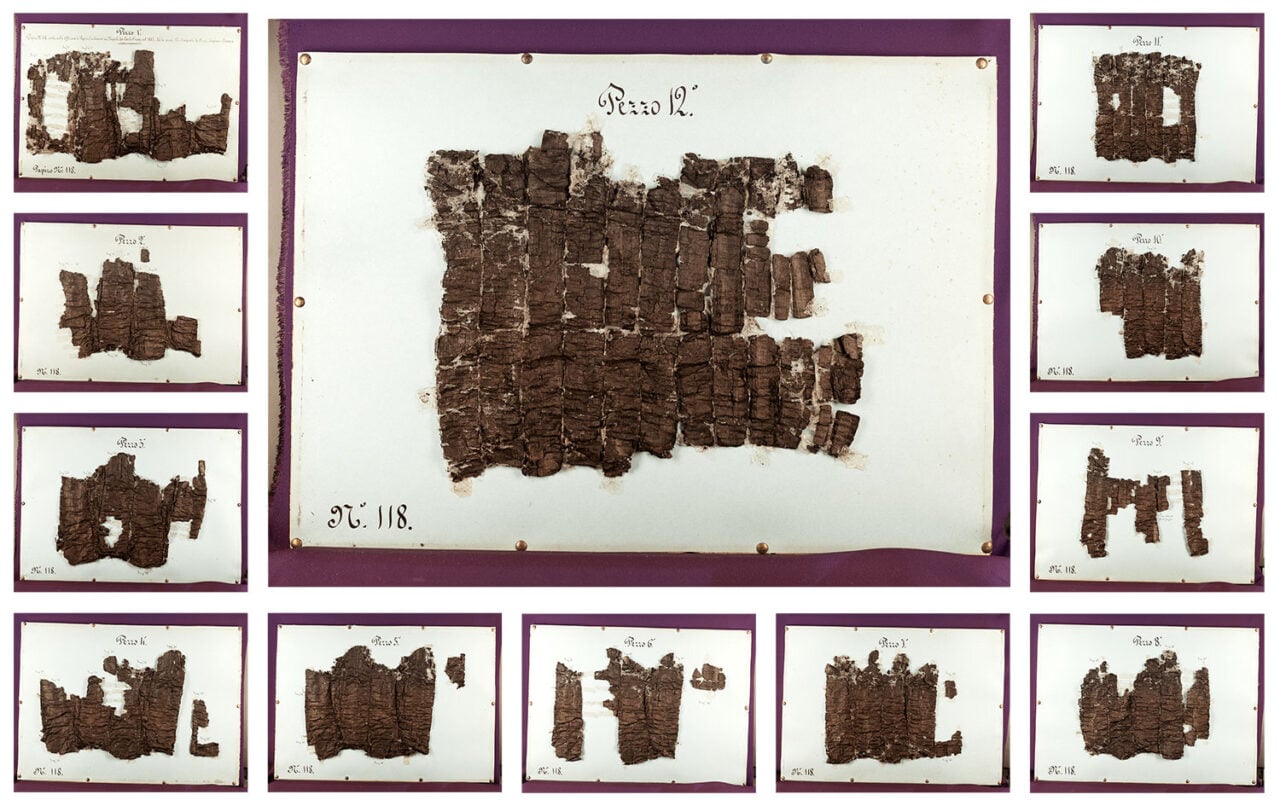
Naturally, there was much interest in accessing their contents, but the fragile scrolls would literally crumble to bits when researchers tried to pry them open. This would change with Seales, who was tasked with the digitization of manuscripts from antiquity in the 1990s. It was in 2004 that Herculaneum scrolls became a part of his work.
“The internet very quickly became the largest digital library in human history,” he recalled. “I realized that damaged materials in libraries were going to get left behind. What quickly came onto my radar was Herculaneum—the pinnacle of damage.”
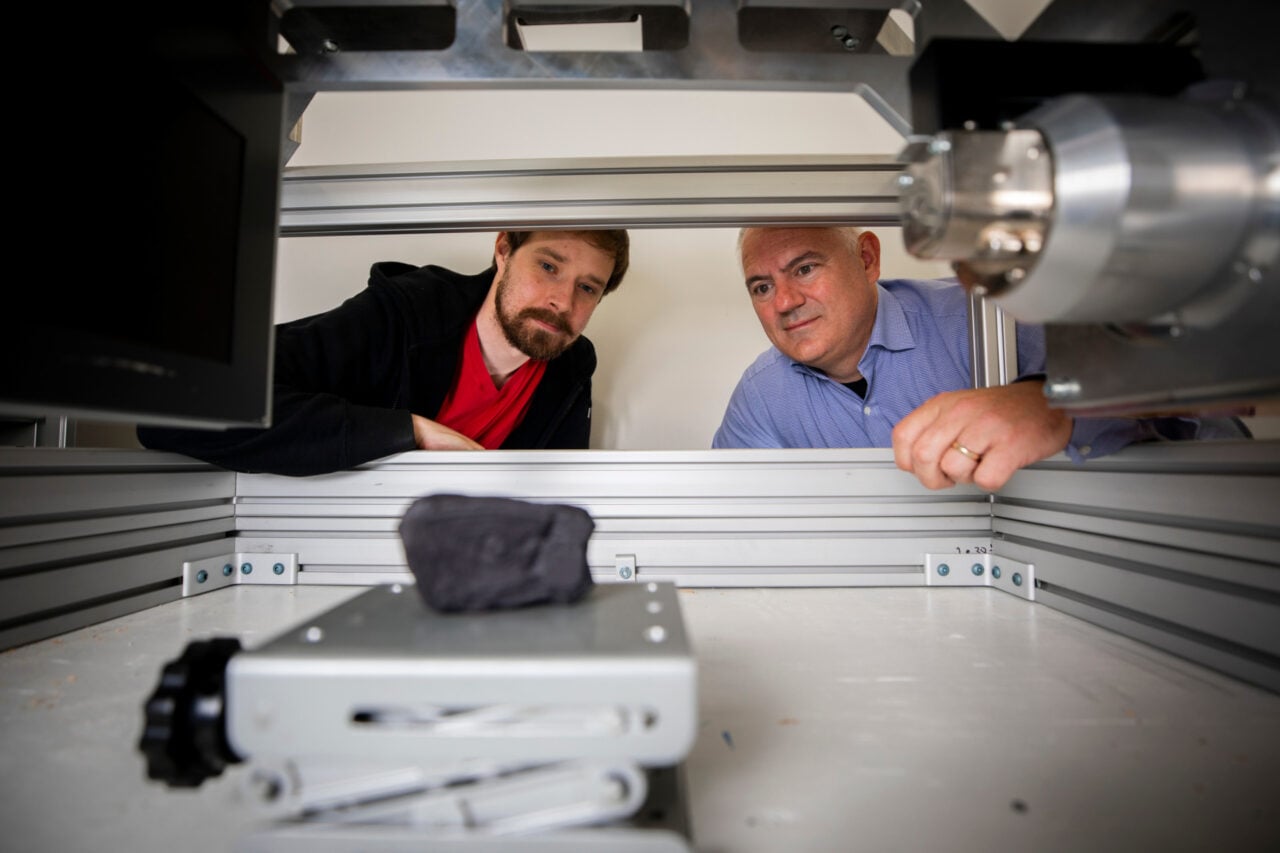
Around this time, Seales crossed paths with a surgeon using X-ray computed tomography (CT), which got him seriously thinking about sticking a scroll in a CT scanner (the first mummy CT scan was in the 1970s). After 15 years of development, Seales and colleagues pioneered a technique to virtually unwrap a charred scroll from En-Gedi in 2015, using X-ray tomography and computer vision.
Things took an unexpected turn during the pandemic when Seales was contacted by Silicon Valley investor Nat Friedman. After a few meetings, Friedman pitched an idea: What if we made this a competition?
Why they’re a winner
Seales’s decision wasn’t actually a no-brainer. Getting an extra hand or two (or many) would certainly help speed up progress. But it also meant that Seales and his team had to fully disclose all their work, know-how, and datasets to the entire world.
“We had to become comfortable with accepting that that was going to be the new reality,” Seales admitted. It took a couple of months to discuss that reality. “Part of the history was that we’d spent great effort and time scanning the scrolls—nothing could happen without that—and that had nothing to do with Nat, or with the contest, or with anything,” he added.
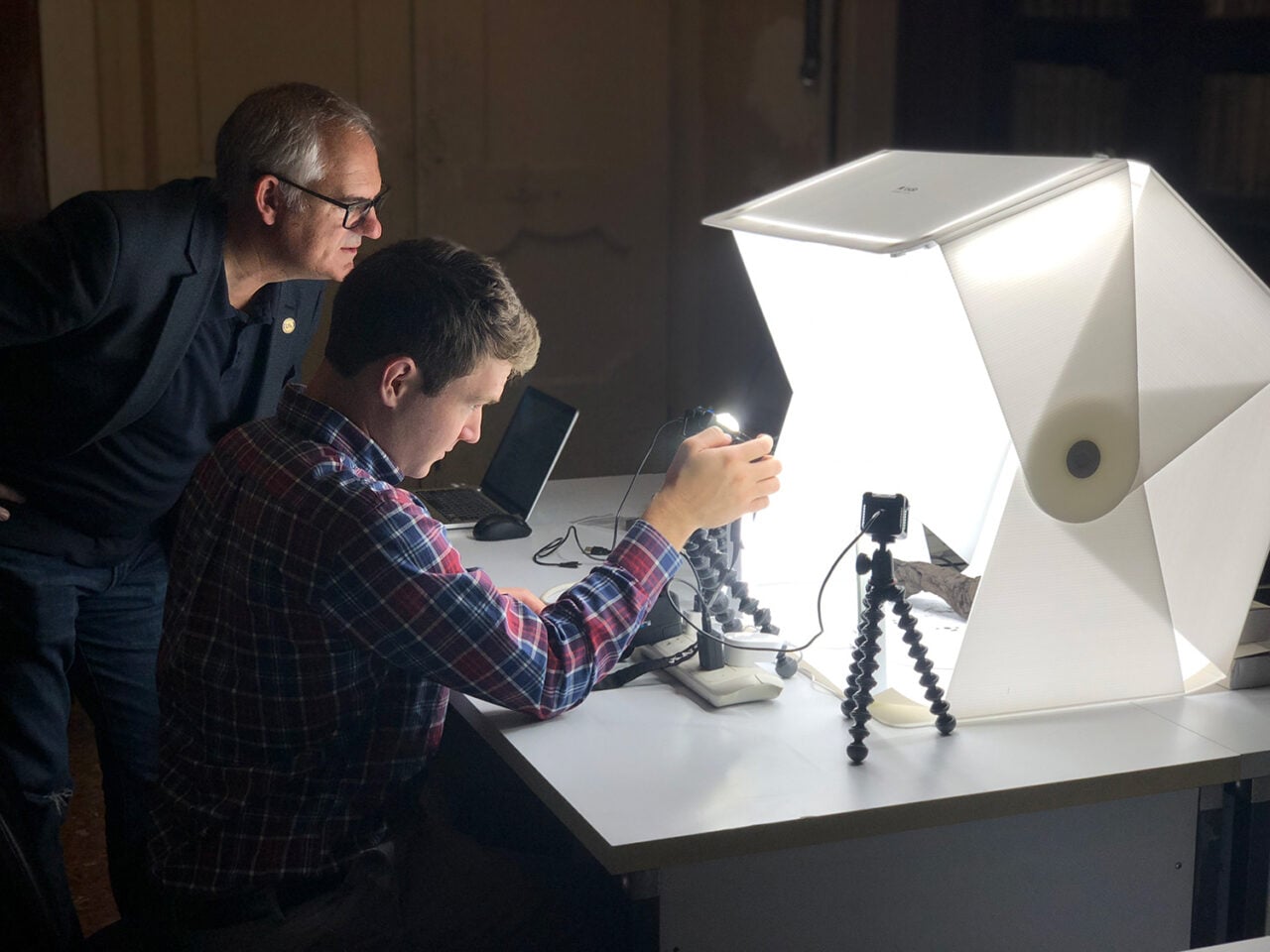
“At the end, when we made the decision, we know it was right, and everyone agreed,” he said. “And then we just ran with it.”
And so did the hundreds of people that participated in the contest—and, of those, a small cohort that ended up joining the internal research team. This was how Giorgio Angelotti and Sean Johnson, the tech team lead and a research scientist at Vesuvius Challenge, respectively, ended up as key contributors to the first reading of a full scroll. In fact, according to Angelotti, the entire technical team began as members of the community.
The team adjudicates and verifies contestant submissions but is usually developing and refining tools to test them on scroll slices, according to Johnson. Intermittently, the team works toward a more solid deadline for a conference or presentation, which ushers the researchers “out of ‘research land’” and into “production land” for benchmarking, Johnson explained. The first scroll was one such milestone, he said.
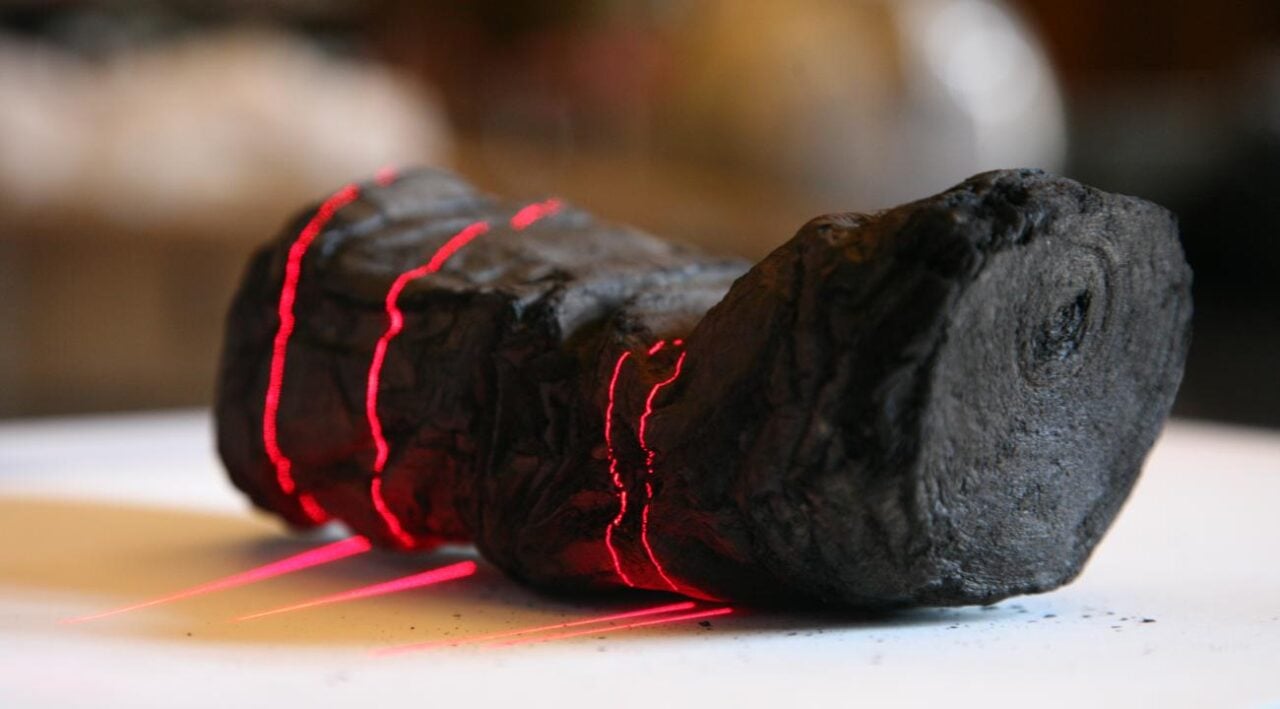
The first fully unwrapped scroll truly represents a labor of love and ingenuity. First, the team takes some external photos of the scroll to 3D print a nylon mesh to transport the scroll to the synchrotron for X-ray microtomography. Because the papyri are made from plant fiber, the overall shape creates a “periodic tubular pattern” with some identifiable cavities, Angelotti said.
There is also a team of annotators who semi-automatically trace the fibers. This gives the team an idea of how to “deform” a perfect reference scroll into the shape of the scan. As for detecting the ink, the models can partly reveal ink traces, but they lack the context to see a full letter to exclude full letter memorization, Angelotti explained. That’s where the papyrologists come in, to give feedback on reading the ink, as well as annotating the images and creating labels for detection training, Nicolardi added.
“It was during the holidays that I first received the data [for a portion of PHerc. 1667],” she recalled. “I thought, ‘Okay, this is my Christmas present,’ because I could see 10 columns from this papyrus—and they were extremely well readable. Then [later] I received the image with the full length of the scroll, and Giorgio told me, ‘You know, this is it. There’s nothing else.’”
What’s next
As Johnson puts it, the project is a cycle between “research land” and “production land.” While a huge achievement, the reading of PHerc. 1667 represents just one of hundreds of scrolls from the Villa of the Papyri. And maybe even more, since it technically hasn’t been fully excavated yet.
“Most scholars believe we’ve only scratched the surface on the [number] of scrolls that were actually there at the moment of the eruption,” Seales said. “And if we found more scrolls, it would probably be the largest discovery of classical material in human history.”
There’s still a lot more work to do with the currently available scrolls, Angelotti noted. Scrolls like PHerc. 1667 are what he calls the “nice” scrolls, which are complicated (as they all are) but still have some fissures that the team can latch onto. Then there are some scrolls with tightly compressed regions, detached sections, and sometimes even signs of mud and other contaminants that leave them heavily deformed.
Some of these scrolls we may never read, he said. But we can try—even if it’s just a tiny section. That will depend on improved automation and high-res scans of remaining scrolls, as well as enhancing the legibility and detectability of ink, Angelotti explained.
“I think all the information is still inside,” Seales said. “Of all the ones that have been opened and unwrapped, there’s always visible ink whenever they crack them open. It’s just a matter of the right way to scan it, the right resolution, and the right software to see the evidence that’s not going to be visible always to the naked eye.”
“I am not going to count out anybody else’s innovation to be able to come at even the most badly damaged stuff and figure it out,” he said. “Because we already have evidence that, you know—we did that the first time, right?”
The team
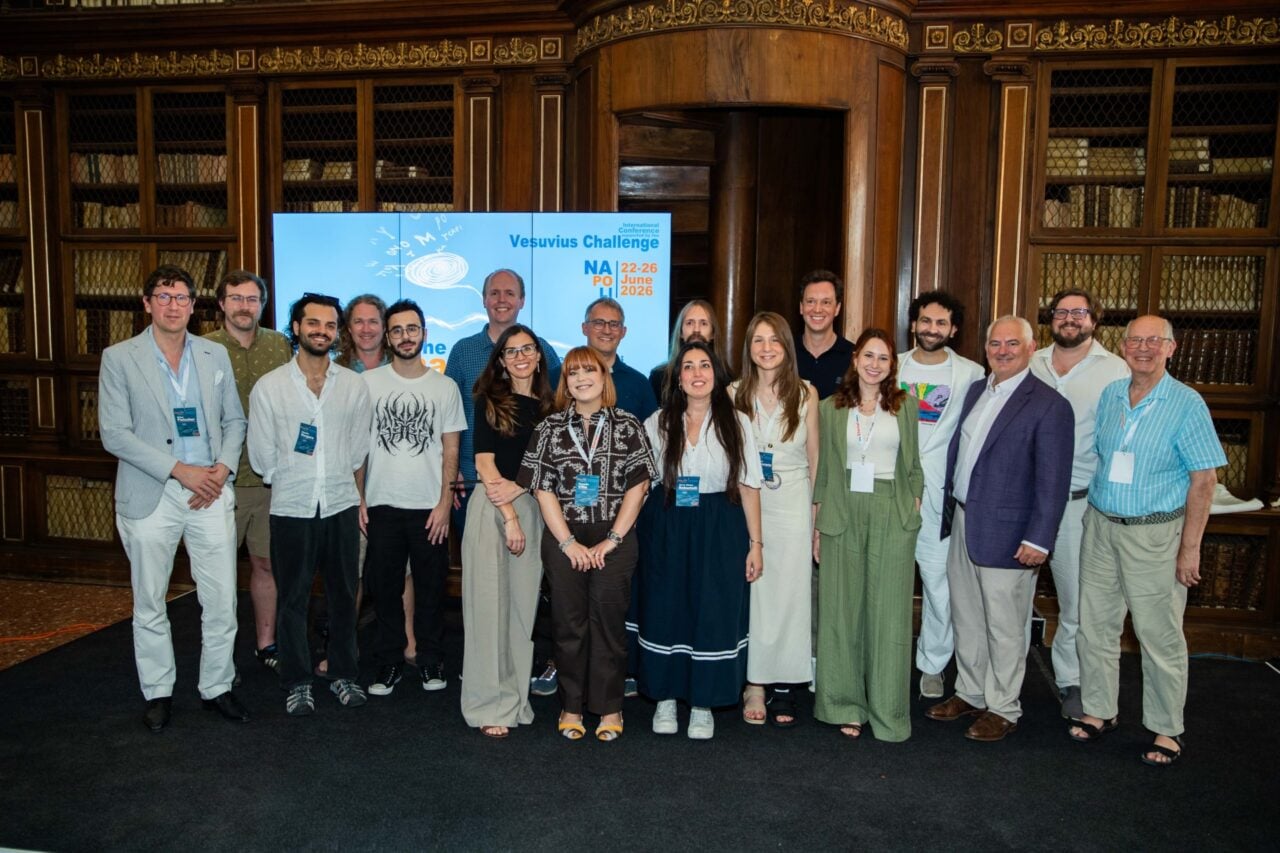
Among the key contributors are Brent Seales, principal advisor; Giorgio Angelotti, project and technical lead; Federica Nicolardi, papyrology team lead; and Sean Johnson, research scientist. A full list of the team behind the Vesuvius Challenge, including research partners and sponsors, can be found here.
Click here to see all of the winners of the 2026 Gizmodo Science Fair.