It’s one of the biggest and most urgent questions in the international AI race: Will countries around the world ever reach a consensus on how to regulate the technology cooperatively?
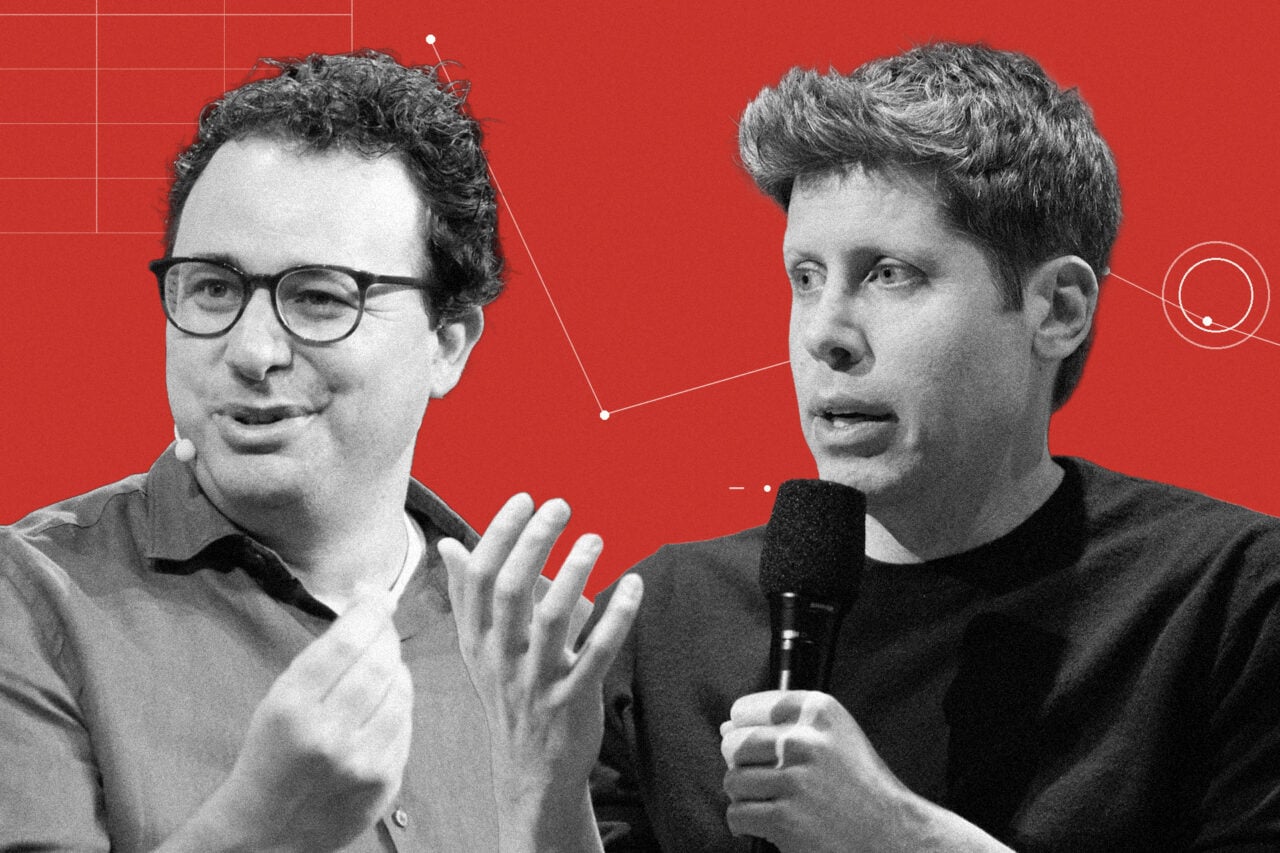
Sam Altman believes he’s found the answer, one that would theoretically create a shared set of safety standards while simultaneously keeping the U.S. at the vanguard of the AI boom. In an op-ed published Wednesday in the Financial Times, the OpenAI chief executive called for “a US-led international forum that establishes accepted standards, provides expert and impartial analysis of capabilities and risks, and makes the technology available to nations and companies that participate and follow the rules.”
Such a forum, he continued, “could also serve as a governance mechanism over the [AI] labs, and guard against the commercial pressures that can lead to unsafe racing.” He cited global aviation safety standards and the International Atomic Energy Agency—established in 1957, at the height of the Cold War, to oversee the use of nuclear energy around the world—as historic examples upon which a new global, US-led AI oversight forum might be modeled.
The development of shared safety standards around AI poses some new challenges, however. AI development takes place in cyberspace, whereas new airplanes and nuclear enrichment facilities are built out in the open, where regulators, journalists, and others can at least hypothetically see and inspect them. The opaque conditions in which AI model training takes place make it much more difficult to know if other labs are adhering to a common set of rules.
Both OpenAI and its biggest competitor, Anthropic, have previously voiced their support for the formation of an international committee that could implement a unilateral slowdown on new AI developments to prevent humans from losing control.
A public appeal
Altman’s new op-ed was also aimed at an American public that’s grown increasingly wary of the AI boom, a technological gold rush that promises to vastly expand the wealth of a handful of Silicon Valley fat cats while ramping up energy costs for the rest of us, among many other concerns. The formation of a U.S.-led international forum, he claims, would make it possible to widely distribute the supposed future blessings of AI. “Everyone on Earth should benefit from this technology and determine for themselves how best to use it,” he wrote.
How might such broad-scale public distribution be achieved? According to a report from the Financial Times, also published Thursday, Altman has been in early talks with the Trump administration about giving the latter a 5% stake in OpenAI. The company was valued at $852 billion following its latest funding round in March, which means a 5% stake would be worth about $42.6 billion. Altman’s proposal would be contingent upon similar wealth-sharing agreements from OpenAI’s competitors, like Anthropic, Meta, and Google, according to the FT report, though it’s not yet clear if those companies would support the plan.
Altman has reportedly been in talks with Trump himself, Commerce Secretary Howard Lutnick, and Treasury Secretary Scott Bessent. He’s also met with Senator Bernie Sanders, who introduced a bill last month calling for the formation of a sovereign wealth fund through which U.S. taxpayers would receive an annual check of $1,000 drawn from the coffers of the biggest American AI companies. Likewise, Altman’s new proposal suggests that OpenAI and its competitors would hand over a 5% equity stake to public investment vehicles such as the Alaska Permanent Fund, a sovereign wealth fund that transfers a portion of revenue from the state’s natural resource extraction industries to the state government, according to the FT report.
Extending a hand to Trump
While trying to bridge the trust gap with a disenchanted public, Altman’s efforts are also aimed at shoring up the fractured relationship between the American AI industry and the federal government.
Frontier AI labs like OpenAI have been walking on tiptoe for weeks, since a letter from Lutnick to Anthropic CEO Dario Amodei ordered that company to block access to its new Fable 5 model for all “foreign persons.” Given a very short time window, Anthropic was forced to remove the model from the market entirely, along with another one called Mythos 5. Fable 5 was redeployed earlier this week after deliberations between Anthropic and the federal government. In its announcement of the rerelease, Anthropic called for greater collaboration between AI companies and federal regulators to prevent similar shutdowns from happening in the future.
OpenAI has agreed to gradually roll out its family of new GPT-5.6 models, starting with a cohort of government-approved partners. “We don’t believe this kind of government access process should become the long-term default,” OpenAI said in its Friday announcement.
Altman’s notion of a U.S.-led international coalition to oversee global AI developments could also be a spoonful of honey to entice a president who campaigned on the slogan “America First” to accept the medicine of global cooperation to regulate the technology. An agreement with Silicon Valley’s wealthiest companies could also serve as a political sweetener as Republicans brace for what they expect to be a rocky midterm season.