OpenAI is postponing the general release of its latest AI system, GPT-5.6, to comply with a government “request.”
The company will instead gradually roll out access to GPT-5.6, which made its public debut on Friday in the form of three separate models: Sol, the most powerful of the three, which OpenAI calls its “strongest model yet”; Terra, a smaller model specializing in “everyday work”; and Luna, the quickest and most affordable of the trio.
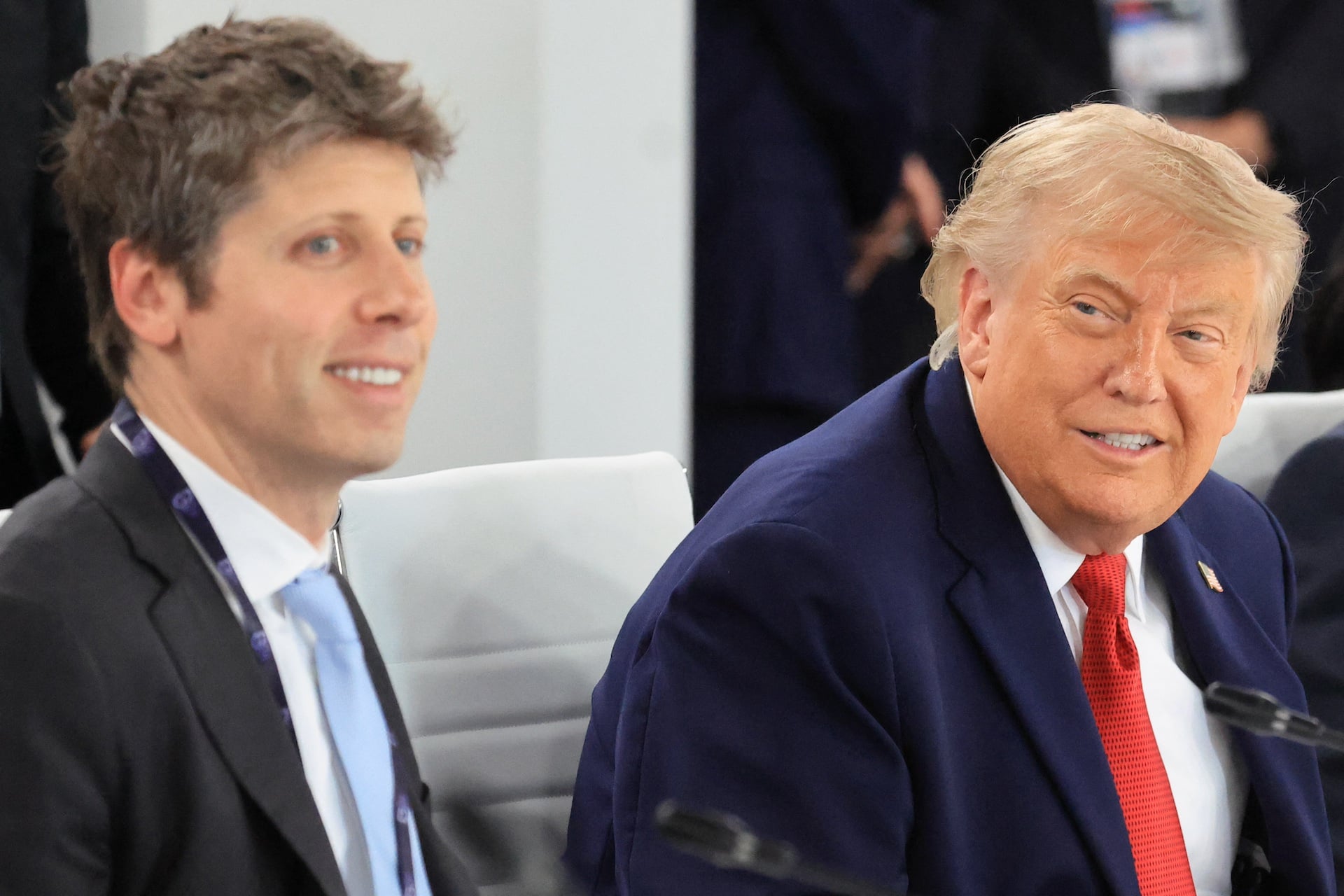
The deployment of the new models will begin with a limited preview for a small group of early testers. The federal request—first reported by The Information—came from the Office of National Cyber Director Sean Cairncross and the Office of Science and Technology Policy, headed by Michael Kratsios. It followed weeks-long deliberations between OpenAI and federal officials over how GPT-5.6 would be released, according to The Information. The company reportedly shared its plan for a staggered release earlier this week. Then, CEO Sam Altman received a call from Commerce Secretary Howard Lutnick advising against even that tentative launch before other government agencies were able to sign off on it.
To comply with the federal government’s request for a gradual release, OpenAI has opted to essentially give the Trump administration control over who can use the new model and when they’ll be able to use it. Altman reportedly told staff in a memo on Thursday that the government would be approving access to GPT-5.6 “customer by customer” during the staggered rollout for GPT-5.6.
“We don’t believe this kind of government access process should become the long-term default,” OpenAI said in its Friday announcement. “It keeps the best tools from users, developers, enterprises, cyber defenders, and global partners who need them.” The company said it’s currently complying with the government’s request as a “short-term step because we believe it is the strongest path to broader availability in the coming weeks,” and that it was continuing to work with the Trump administration to work out “a repeatable process for future model releases.”
The New York Times also reported on Thursday that OpenAI is considering holding off on its highly anticipated IPO until next year. That’s ostensibly due mainly to market volatility and the shakiness of rival SpaceX’s own stock market debut, but one has to suspect that the industry’s relationship with an unpredictable and often vindictive government is also contributing to the cold feet. OpenAI did not immediately respond to a request for comment.
A new normal?
As far as new product releases go, the staggered and federally monitored rollout for GPT-5.6 is a highly unusual, bureaucratically labyrinthine process. But it could become business as usual for the American AI industry under Trump.
As of Friday morning, Anthropic—OpenAI’s biggest competitor and the most valuable startup in the world—is still in talks with federal officials to lift the ban on its newest and most powerful models, Fable 5 and Mythos 5. The company took those models offline after receiving a letter from Lutnick earlier this month, which said it needed a federal license before “foreign persons” inside and outside the U.S., including Anthropic’s own employees, could use the AI systems. Lutnick cited national security concerns and invoked U.S. export law to enforce an immediate shutdown—a legally dubious move, according to some experts.
Federal officials had previously learned from Amazon CEO Andy Jassy that the almost comically strong security guardrails around Fable (which, unlike Mythos 5, had been released to the public ) could allegedly be bypassed. Cybersecurity experts, however, have said the concerns were overblown and that the model had simply been identifying security vulnerabilities in a controlled environment, a vital use case for AI in cybersecurity.
But there are plenty of reasons to suspect that the federal action against Anthropic has nothing (or at least very little) to do with safety. The company was already in the government’s bad graces after it refused to cooperate with the Pentagon earlier this year to use its AI systems in surveillance of U.S. citizens or autonomous weapons systems. Secretary of War Pete Hegseth later designated Anthropic a national supply chain risk, the first time that label has ever been applied to an American company. Anthropic has sued the Pentagon to get the label removed.
Mixed messages
Whatever the government’s motivations for forcing Anthropic to take its most powerful models offline, it’s a remarkably hands-on approach for a president who not so long ago seemed firmly committed to a hands-off, laissez-faire stance towards AI.
Trump began his second term intent on dismantling the burgeoning regulatory framework being built during the Biden administration, which included a requirement that AI companies building advanced models provide reports to the government outlining the results of their safety tests. Such bureaucratic red tape, Trump argued, would slow the American AI industry down at a time when it needed to sprint forward to maintain its lead over China’s own AI efforts.
Trump appeared to reverse course earlier this month when he signed an executive order asking AI companies to voluntarily give the federal government access to new models for a 30-day prerelease review period. The move was likely driven in part by concerns surrounding Anthropic’s Mythos, which the company unveiled in April but declined to release publicly due to cybersecurity concerns.

Throughout the entire boondoggle, first with Anthropic and now with OpenAI, the Trump administration has maintained that its interventions in the actions of privately held companies are purely in the interests of national security. Citing an anonymous source close to deliberations between the White House and OpenAI, Axios reported on Thursday that the request to stagger the release of GPT-5.6 was made because the model was found to have “Mythos-like” abilities, not because the government was trying to put the AI industry under its thumb.
Capricious government intervention, however, will almost certainly cause confusion and hesitancy among AI developers who fear that by releasing a new model, they may cross an ill-defined red line and thereby invoke the Trumpian wrath. Meanwhile, as cybersecurity experts were quick to point out following the Fable/Mythos ban, rival labs in China will be able to seize upon the disorder by pushing ahead with their own AI development, while labs in the U.S. get bogged down trying to figure out what is, and what isn’t, allowed from them.