Julius Caesar’s account of the Gallic Wars recounts how the Parisii—a Gallic tribe who lived on the Seine—burnt down their own capital, Lutetia, to prevent Roman invasion. The bold yet risky decision unfortunately didn’t stop the Romans, and it also meant the ancient settlement would stay lost for over two thousand years.
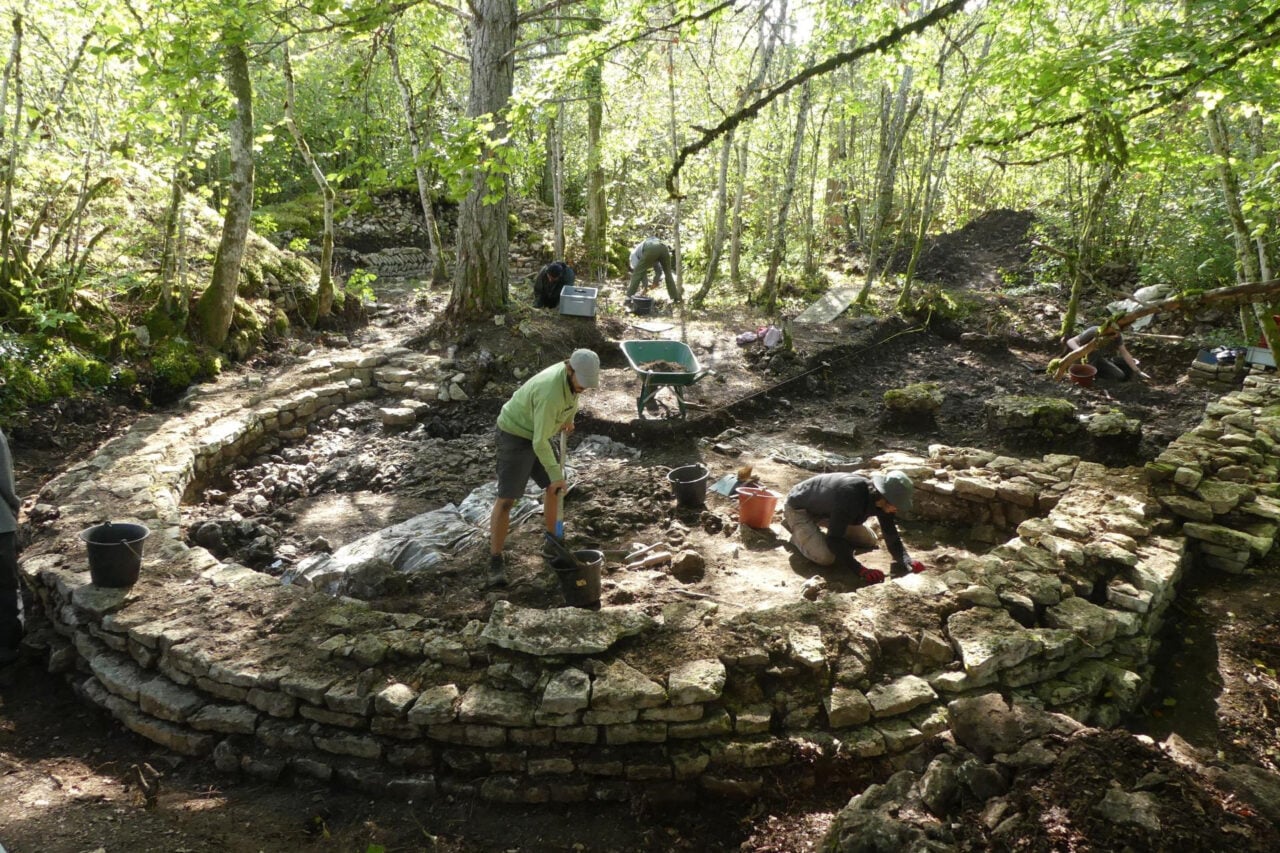
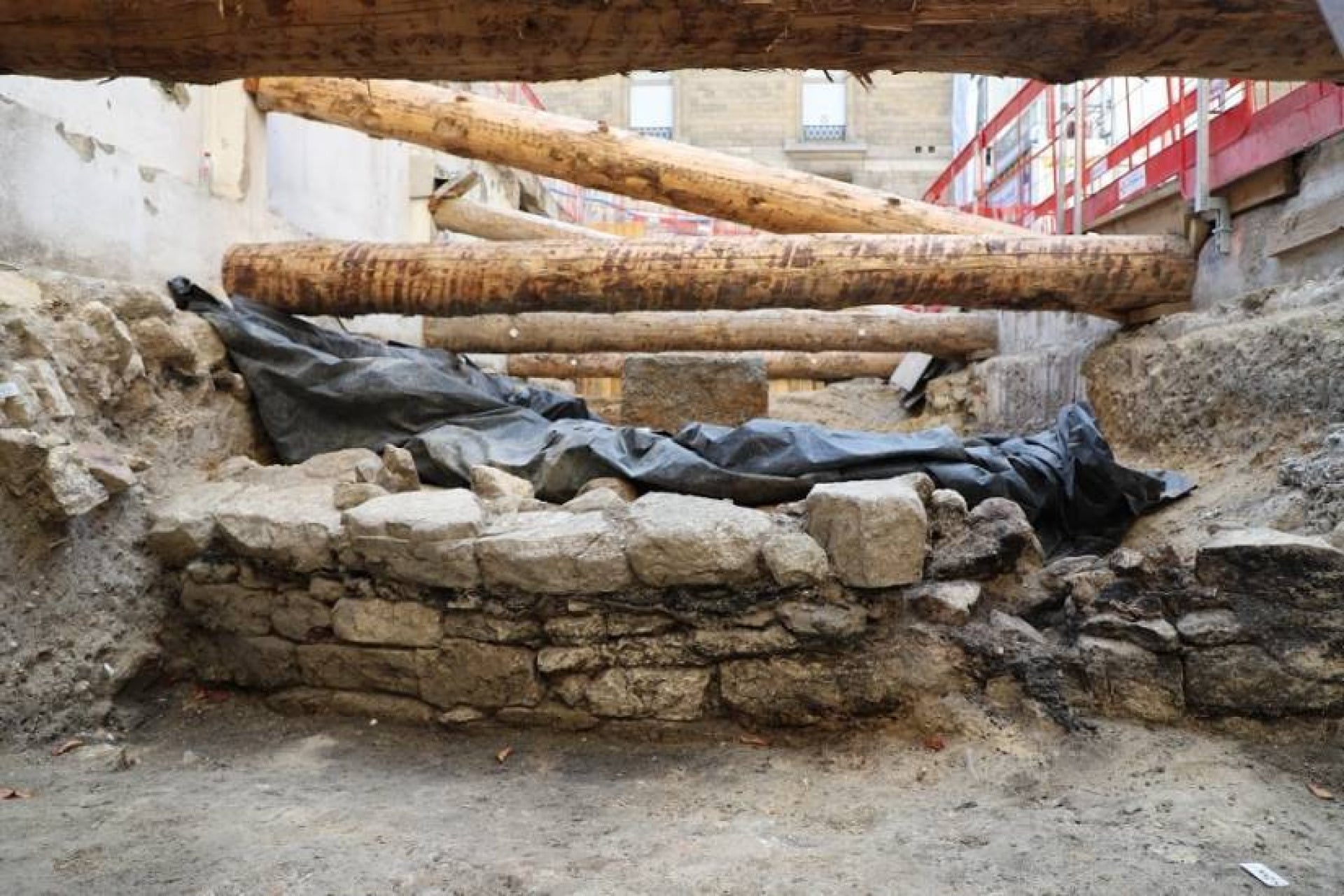
Until now, that is. In a statement, France’s ministry of culture announced the discovery of ancient Gallic stone and wood walls, as well as other Gallic artifacts. The archaeological site is located in the courtyard of the Hôtel-Dieu, a public hospital that reportedly opened in 829. The hospital itself is on the Île de la Cité, an island in the middle of the Seine that was long believed to be the original location of Lutetia. Importantly, the wall shows traces of fire, and a thick platform behind it, made from sand and gravel, suggests it was built for defensive purposes.
The discovery supports the hypothesis that Paris was built from the oppidum of Lutetia, according to the statement. The project was conducted by the Department of History of Architecture and Archaeology of Paris and the National Institute for Preventive Archaeological Research.
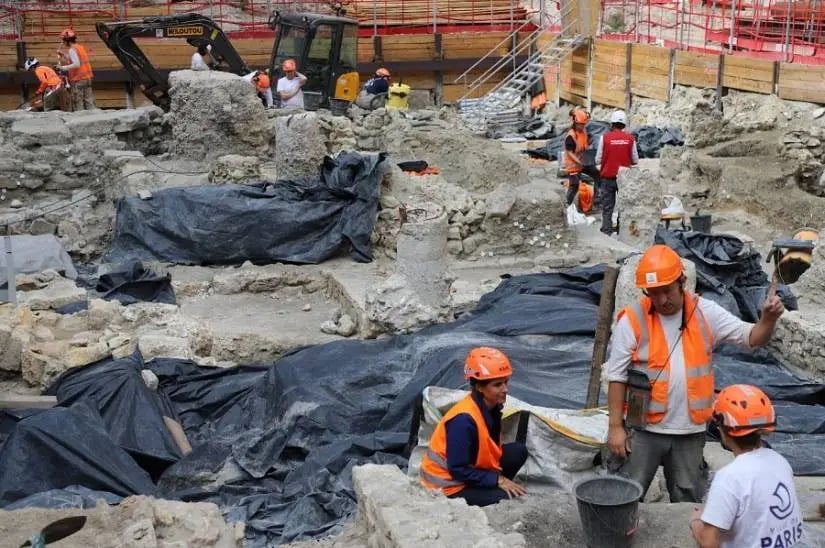
“This discovery fills an archaeological gap,” Stéphane Deschamps, an archaeologist at DRAC Île-de-France, said in the statement (translated via Google). “For centuries, the location of Lutetia has been debated. Today, with this wall and its context, we may hold the key to the mystery.”
Recorded, but gone
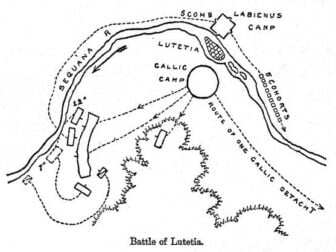
To the chagrin of experts, Julius Caesar’s account of the Battle of Lutetia leaves a lot of room for dispute as to the exact location of the settlement. (To be fair, Caesar wasn’t even there in person; he based his account on the report he got from his lieutenant, Labienus.)
After Roman conquest, Lutetia underwent multiple renovations and invasions. Following the fall of the Romans, Lutetia was renamed “Paris” by the 5th century CE and hosted the palace of Clovis I, the first Frankish king.
In other words, Lutetia bore witness to the evolution of modern-day Paris over several millennia. As a result, archaeologists and historians had long debated where it was but struggled to find direct archaeological evidence. So, to say the latest discovery is a big deal for experts is somewhat of an understatement. In the statement, Catherine Pégard, France’s minister of culture, called the discovery among the most important for understanding Gallic Lutetia.
Burnt into history
As with most things in archaeology, the team stressed that continued excavations and analysis will help provide stronger support for the site being Lutetia. That said, the signs thus far are fairly clear. Carbon dating of wooden elements indicated the fort was built sometime between 200 BCE and 10 BCE. The team found a Gallic spearhead at the foot of the wall. The overall structure of the wall also appears to be a Gallic design, with large blocks and an interlocking beam system.
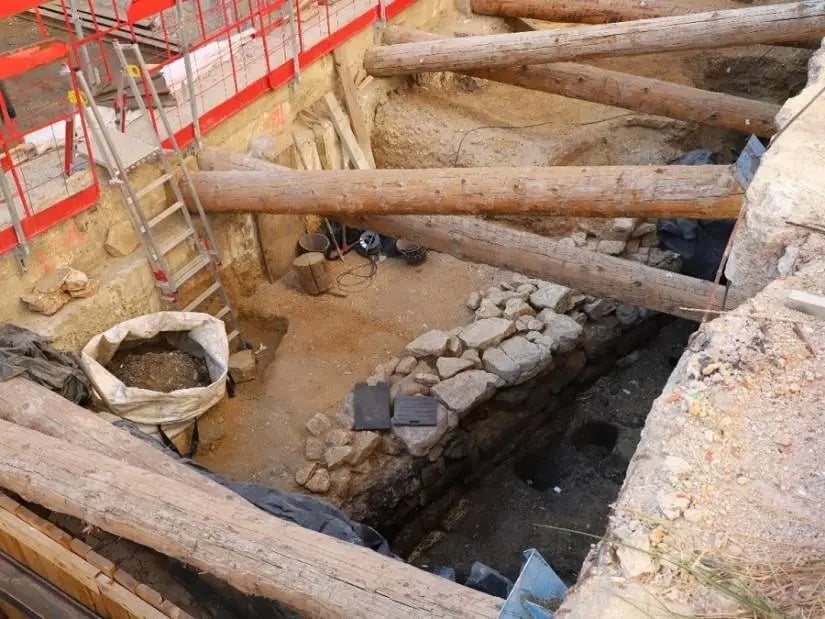
And of course, there are the traces of fire consistent with Caesar’s account of the Battle of Lutetia. At the same time, however, that exposure to fire has left the remains extremely fragile, the team explained in the statement. The site itself is also due for restructuring as part of a project to renovate the premises of the (also historically significant) Hôtel-Dieu hospital.
As a result, the team explained it plans to eventually remove sections of the wall and reconstruct it elsewhere, using the original elements retrieved from the site. This way, at the very least, we won’t have to worry about losing the fort again.