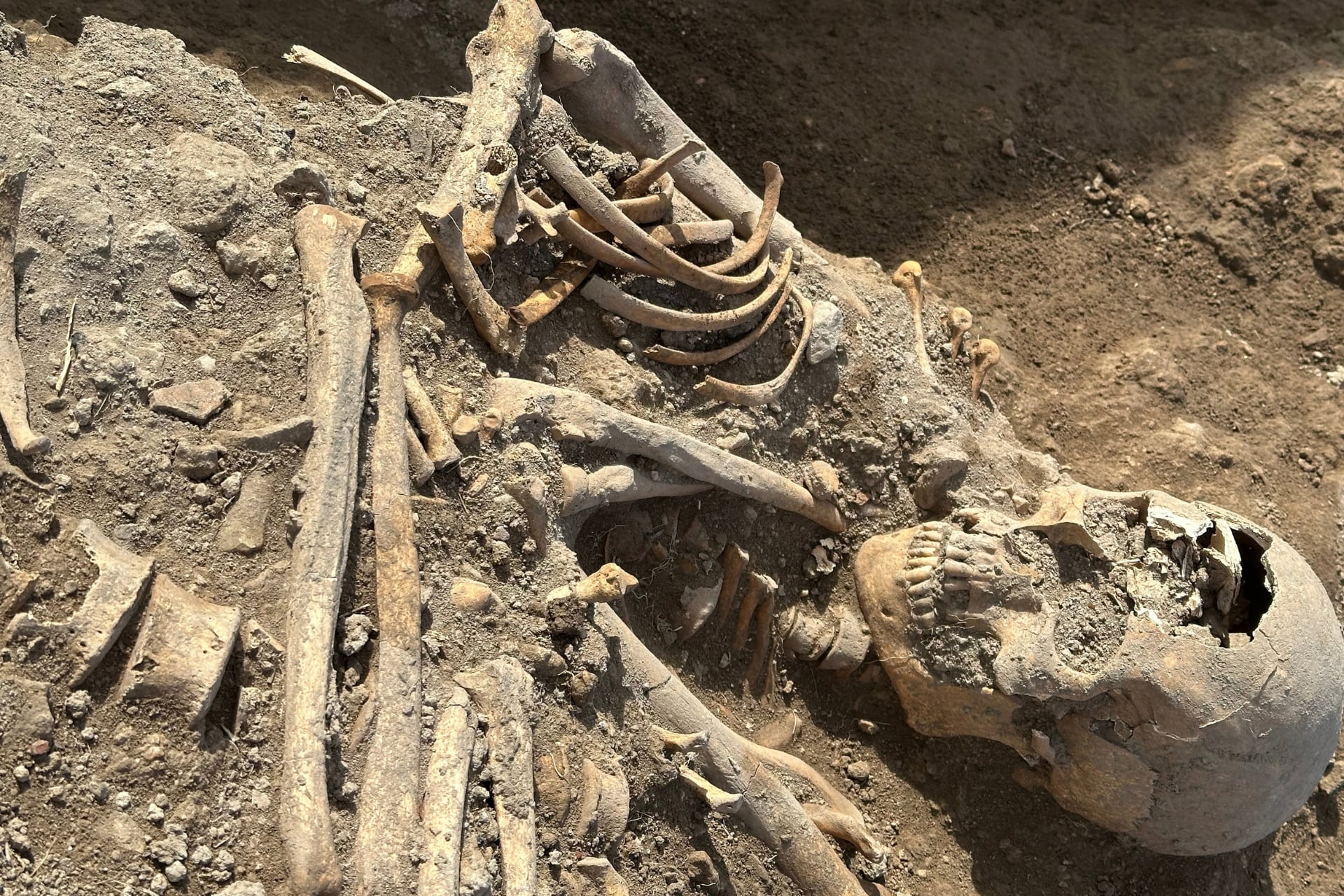
Archaeologists in southern Italy have discovered the remains of a woman holding a child.
The striking finds came to light a few days ago in Sipontum, an ancient coastal city on the Adriatic Sea invaded by Romans in 194 BCE and eventually abandoned in the 13th century. There are still many questions awaiting answers—the most obvious regarding the relation between the woman and child—and further investigation of the remains could shed light on the ancient settlement’s last period of inhabitation.
“There must have been a close relationship if the girl or boy was in her arms,” Giuliano Volpe an archaeologist at the University of Bari ‘Aldo Moro’ who took part in the excavation, told Gizmodo. This is the first discovery of its kind at Sipontum. “DNA analysis will clarify the kinship relationship more precisely.”
One of tens of graves
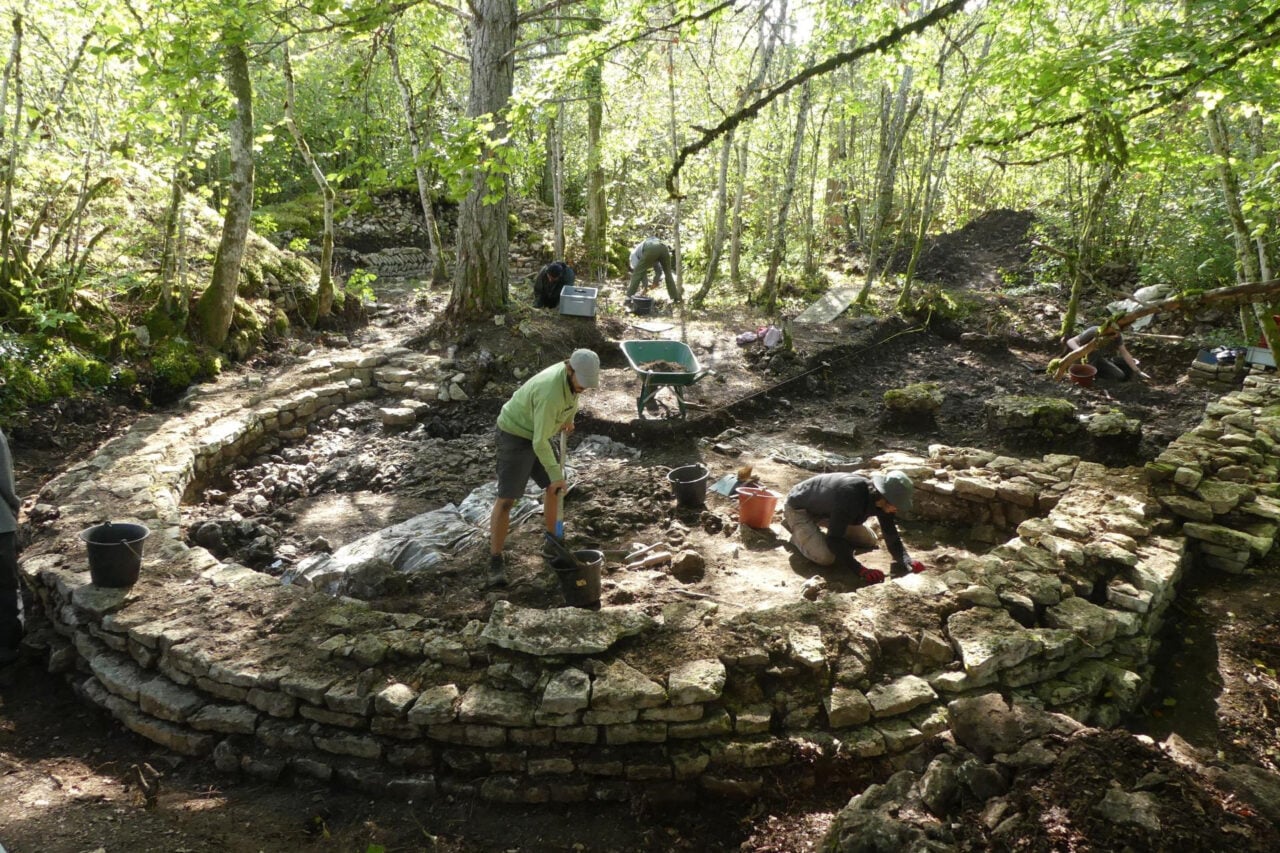
The team was working near Sipontum’s port neighborhood, where they were continuing previous excavations. In previous years, the area had yielded the remains of medieval buildings on top of ancient Roman ruins. This time they found the remains of an over 98-foot-long (over 30 meters) wall with an entrance and a threshold—the wall of a cemetery.
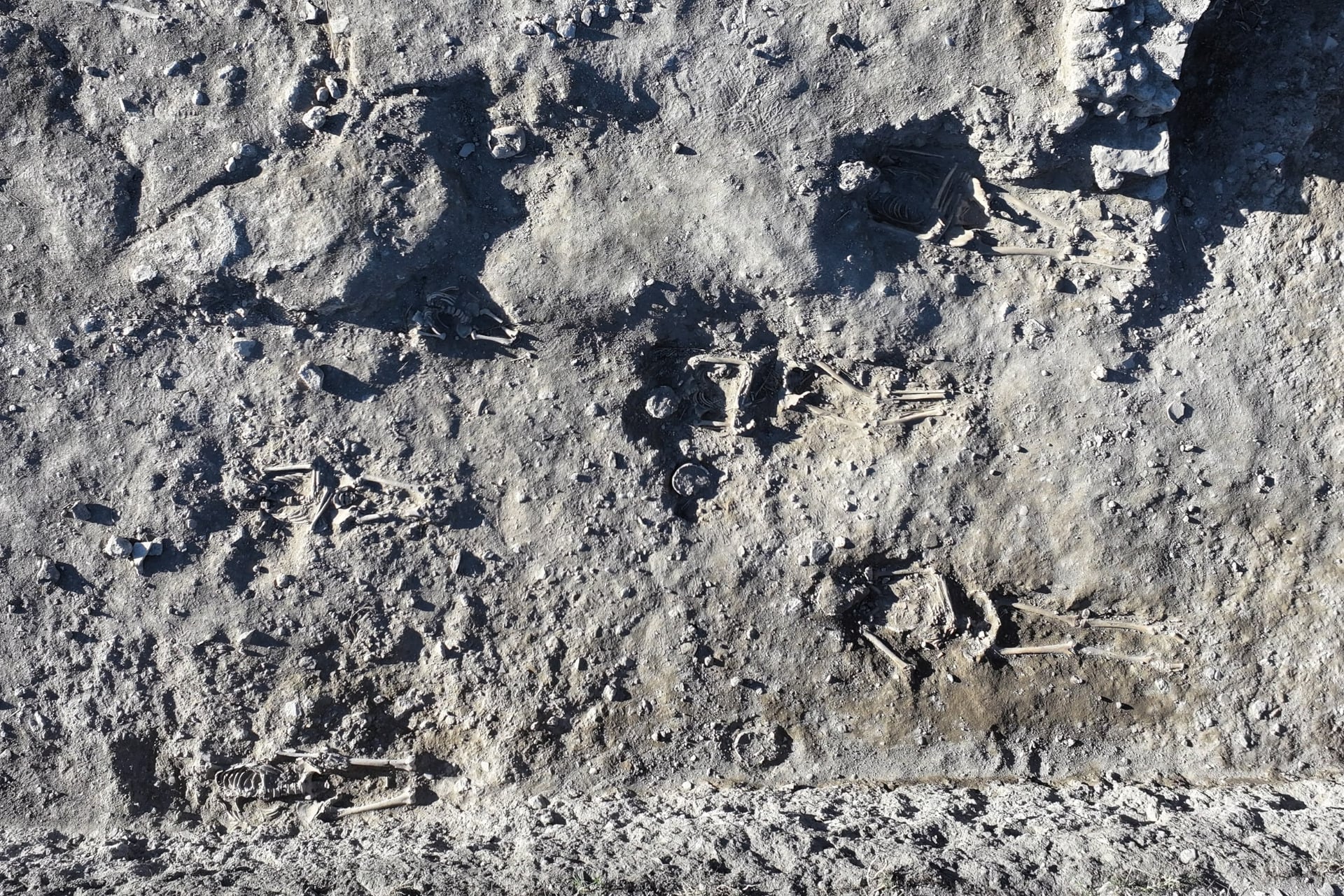
Within the cemetery, Volpe and his colleagues found tens of aligned graves, including the one with the woman holding a child. The woman was between 30 and 40 years old, and the child may have been five to seven years of age. Anthropological investigations will provide clearer results, and shed light on their diet, health, activities, and potential cause of death. Carbon-14 dating (a technique to date organic material) will help date their remains more precisely, as well as the cemetery itself.
A poor medieval cemetery
The cemetery is certainly medieval, according to Volpe. Judging from the ceramics and fragments of painted plaster found in layers above the cemetery, the burial ground is from the 12th to 13th century. It was likely situated close to a sacred building, such as a church, monastery, or hospital. “They were simple burials, without grave goods or elements of clothing or ornamentation (with the exception of a fibula and traces of a bracelet), possibly wrapped in shrouds,” Volpe explained. They didn’t have coffins or well-constructed graves. “All in all, it seems like a rather poor cemetery.”
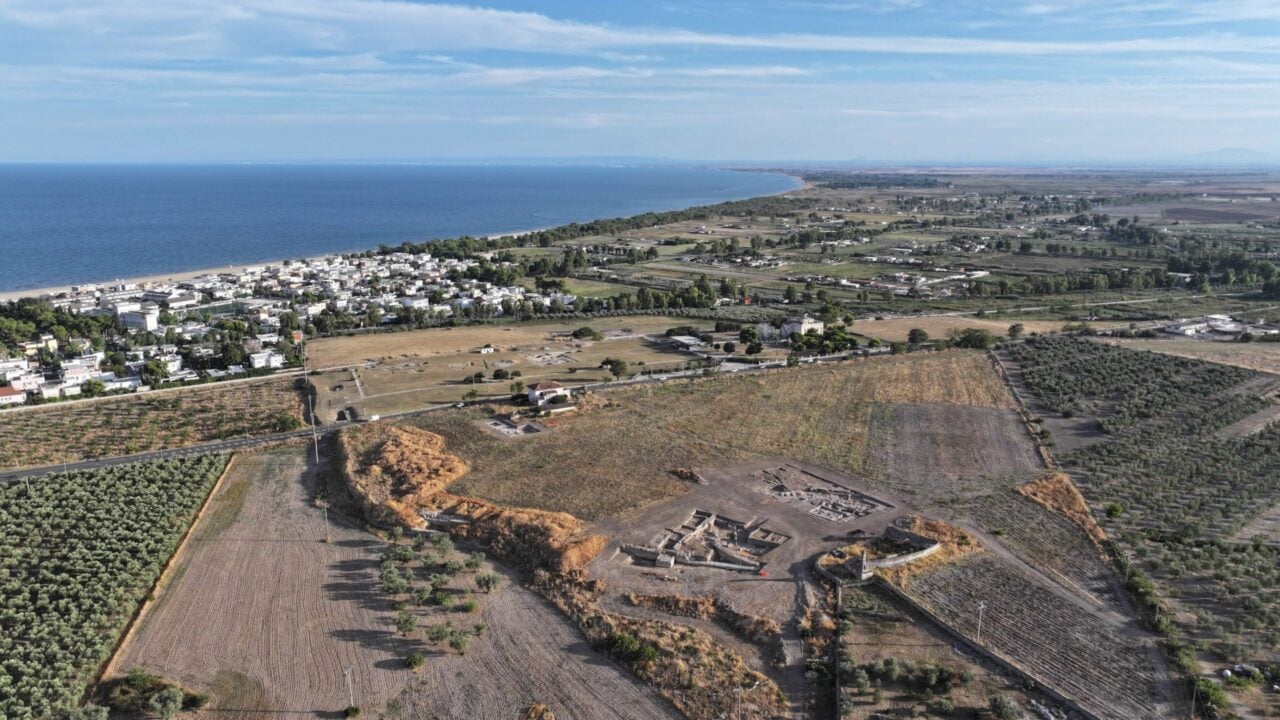
Moving forward, the team will be investigating whether the cemetery was used for an extended period of time or for a single mortality event. King of Sicily William I (appropriately also known as William the Bad) destroyed Sipontum in 1155, for example, and may have caused such an event. That destruction wasn’t the end of this long-lived settlement, however. It was over a century later that Manfred, another Sicilian king, moved the population from the reconstructed Sipontum to a different location that was eventually (and humbly) named Manfredonia.
Nevertheless, the remains of the woman and child contribute to “the records of Sipontum’s last phase of life.”