I’m a history nerd who also happens to be Korean. And if you know anything about Korean history, you know they loved to write everything down. Just so you get an idea, Korean archaeologists recently identified a medieval firearm with 28 letters denoting the weapon’s name, weight, serial number, who manufactured it and when, and the name and status of the official overseeing the initiative. Too much? Maybe. Useful? Absolutely.
Archaeologists actually suspected that a weapon like this exists, thanks to numerous manuscripts from the era alluding to the firearm. But they weren’t able to find one in the flesh, which was why the discovery was a big deal—and that brings us to this week’s Giz Asks.
Scholars of the prehistoric and ancient worlds must grapple with the fact that they’re dealing with imperfect evidence: damaged buildings, surviving objects, incomplete records, and scattered human remains. But even if the physical evidence is scarce, the “traces” of human history are still out there—there are patterns to be drawn from different sources. And, thanks to record-loving people like the Koreans, historical manuscripts can tell us how things were back then.
So, like most things in science, it’s complicated—and that’s why we asked the experts. What are some seemingly “obvious” ideas about the prehistoric and ancient world that we assume are true, even though the evidence either doesn’t exist or could be stronger? Are these assumptions a reasonable benchmark or a serious flaw? What would it take for these ideas to find firmer scientific footing? Most importantly, what’s a good rule of thumb to remember when engaging with research and stories about the distant past?
The following responses may have been edited for length and clarity.
Sahar Saleem
A paleoradiologist at Cairo University in Egypt.
Theories and myths surrounding ancient Egypt frequently surface in the public eye, often gaining a false level of public confidence over time despite a complete lack of empirical proof. As a scientist, my responsibility is to approach these speculative narratives with an open mind, evaluating them strictly through objective scientific inquiry rather than circumstantial guesswork. The ideal way to refute these unverified claims is to shift the discourse from subjective interpretation to hard, verifiable data by utilizing advanced, non-destructive methodologies like paleoradiology and archaeometry. By analyzing structural and biological remains with modern medical imaging and precise testing, we can impartially evaluate historical hypotheses and ensure Egypt’s history is anchored in factual truth.
A primary example of this is the assumption of mass human sacrifice during the First Dynasty (around 3000 BCE), which relies entirely on a century-old misinterpretation of subsidiary tombs at Abydos to claim that servants were killed and buried simultaneously with their ruler. Modern science flatly contradicts this theory; the visual claims of “trauma” are based on an unrepresentative sample of skulls and were made entirely through basic visual inspection. No rigorous scientific testing—such as paleoradiology, CT scanning, or microscopic analysis—was conducted to verify these injuries or to distinguish ancient perimortem trauma from modern excavation wear and structural soil pressure. Furthermore, recent excavations by the German Archaeological Institute reveal clear join lines in the mudbrick walls of these tombs, proving they were constructed in distinct phases over decades. Courtiers died of natural causes over time and were buried sequentially—not slaughtered en masse—as executing loyal subjects would fundamentally violate Ma’at, the supreme pharaonic ideal of cosmic justice and peace.
Terry Hunt
The giant statues or moai of Rapa Nui, commonly called Easter Island, illustrate why archaeology must distinguish plausible stories from explanations supported by physical evidence. Some reconstructions show moai lying horizontally on wooden sledges, pulled across logs placed beneath them as rollers. Yet no securely identified archaeological transport apparatus establishes that this was how the statues traveled. Experiments by me and my colleagues involved moving an accurate replica of a statue, situated upright, using ropes and coordinated rocking. Such a demonstration does not independently prove what happened centuries ago. But it does account for the road statues’ forms, their fallen positions, and the transport corridors account for the physical evidence, while horizontal movement on rollers does not.
Rapa Nui oral traditions provide a separate line of evidence: They recall that the moai walked to their destinations. These accounts preserve an Indigenous understanding of statue movement that deserves serious consideration alongside the physical remains. The agreement between this independently preserved knowledge and the archaeological evidence reinforces the walking explanation. The broader lesson concerns how we come to know the ancient world. A compelling illustration can conceal unsupported assumptions, particularly when it depicts familiar technology. Archaeology asks us to reverse that process: Begin with the physical traces, identify what different methods would predict, and evaluate which explanation best accounts for what people actually left behind.
Metin I. Eren
Archaeologist at Kent State University; a research associate at the Cleveland Museum of Natural History and the University of Cambridge, U.K.
We often assume that once archaeologists document an innovation in the Stone Age archaeological record—say, a type of weapon; a technology like fire, poison, or adhesion; or a particular kind of tool—that innovation becomes a fixed part of the human repertoire ever after. But this assumption is entirely without merit. Consider, for example, the spear thrower. This handheld, rod-shaped device employs leverage to launch a long, flexible dart and was likely used to hunt big game by Paleolithic hunters. The earliest preserved spear-throwers have been documented in Europe around 20,000 years ago. And many archaeologists assume that once invented, the spear-thrower became a Stone Age staple, ultimately carried into the Western Hemisphere during the Pleistocene Peopling of the Americas.
However, my colleagues and I recently pointed out that there are no preserved spear-throwers in Paleolithic Africa, Asia, or Australia. Our work also showed that there is no hard evidence for spear-thrower use by the First Americas, while our chronological modeling suggests that spear-thrower technology was not present in the Americas until the Early Holocene. So, what the heck is going on? Well, we cannot say for sure. But what we can say is that technologies are like species in a lot of ways. They emerge and they evolve. They sometimes disperse over large areas and into new regions (think rats). But other times they are limited to small, localized territories (think pygmy three-toed sloth). And technologies go extinct, only for similar, analogous technologies to emerge again later (think pterosaurs versus bats). As such, while the standard narrative—that is, Paleolithic people widely used, shared, and carried the spear-thrower around the world—is certainly possible, there is another possibility given current evidence. Perhaps the spear-thrower was instead invented, lost, and reinvented several times in different, smaller regions during the vast, deep time of prehistory.
So the next time you hear that an archaeologist documented a particular technology at some early period in the archaeological record, don’t automatically assume that all subsequent humans had access to that innovation. They likely didn’t. But what Stone Age humans did have access to is a remarkable ingenuity to re-invent and ditch technologies time and again, when needed, to survive.
Lawrence Todd
Archaeologist and professor emeritus in anthropology, Colorado State University.
Sometimes, unfounded assumptions about the ancient world may arise even before archaeological research begins. In 2002, when I first discussed doing archaeological research in Wyoming’s Washakie Wilderness with a local archaeologist, he showed me a map with no recorded archaeological evidence and said we’d be wasting our time because there was “nothing there.” Many people assumed that remote, high-elevation landscapes contained little evidence of prehistoric human activity.
Twenty-four years later, our Greater Yellowstone Ecosystem archaeological research has documented more than 200,000 individually recorded artifacts and other evidence of past human activity. Remarkably, we have systematically surveyed less than 2% of the Wilderness. A rich and complex archaeological record was there all along. What was missing were efforts to look where we didn’t expect to find anything.
But this isn’t simply a problem of overlooking remote wilderness landscapes. In the nearby Bighorn Basin, our recent research has shown that even areas previously subjected to professional archaeological surveys can contain far more evidence than was originally documented. In one area surveyed in 2008, researchers reported only two isolated stone artifacts within a survey block. When we systematically examined that same 37-hectare area in 2026, we recorded 1,068 artifacts. The landscape hadn’t changed, but our methods and expectations had.
Perhaps the most important lesson is that much of what we assume about the ancient world reflects where other archaeologists have looked, what they have chosen to record, and how they interpret their observations. An empty archaeological map does not necessarily represent an empty archaeological landscape.
Izzy Wisher
Archaeologist at the University of Cambridge in the U.K.
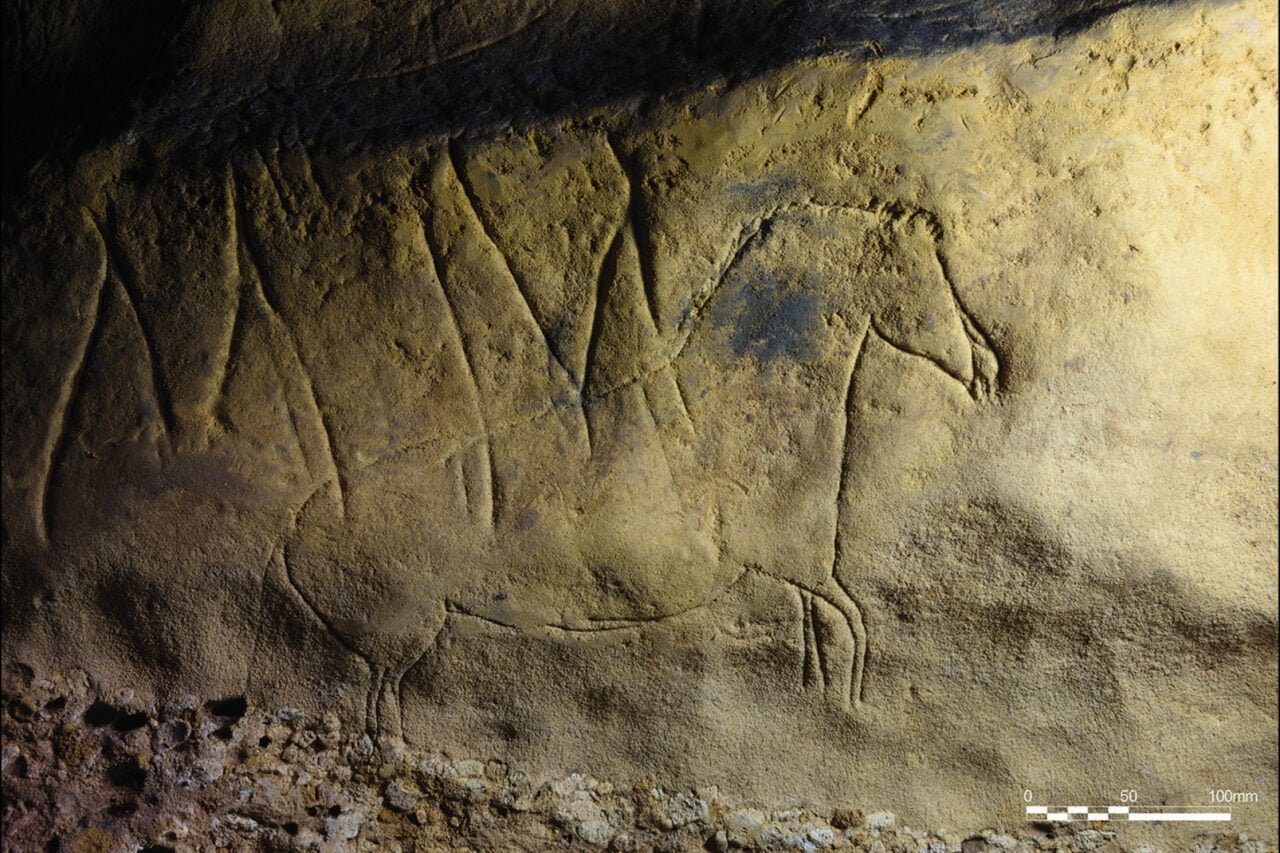
As an archaeologist who works on early prehistoric art that dates to tens of thousands of years ago, I deal with very fragmentary evidence. The archaeological record mostly only preserves art made deep in caves or carved and painted on stone or bone; we have to assume that there was a huge breadth of visual culture that was made using organic materials like wood, textiles, and plants that we have no record of. Despite this, we do our best to use many strands of evidence to reconstruct why and how people made art, and what it might have meant to them. In my own work, I have collaborated with cognitive scientists to try and understand what might have been happening in the minds of our prehistoric artists—what were their visual experiences deep underground, viewing undulating cave walls under flickering firelight? And how did this shape the making of their art or the meaning they imbued it with?
There are many “smoking guns” we might hope to find one day to answer the really big questions in our discipline: When and where did art originate? What did it mean to the earliest human societies? What other intangible art forms, like music or dance, did they have? New methods are helping us get closer. The most remarkable recent example is the application of new dating techniques to rock art in Indonesia, which has shown that detailed figurative paintings of animals, and even narrative scenes, are far older than we once thought. Yet even this kind of breakthrough comes with a caveat: the earliest art we can date is almost certainly not the earliest art that was made. Each discovery pushes the horizon back while reminding us how much evidence remains invisible.
Federica Nicolardi
A papyrologist at the University of Naples Federico II in Italy, and the papyrology team lead for the Vesuvius Challenge.
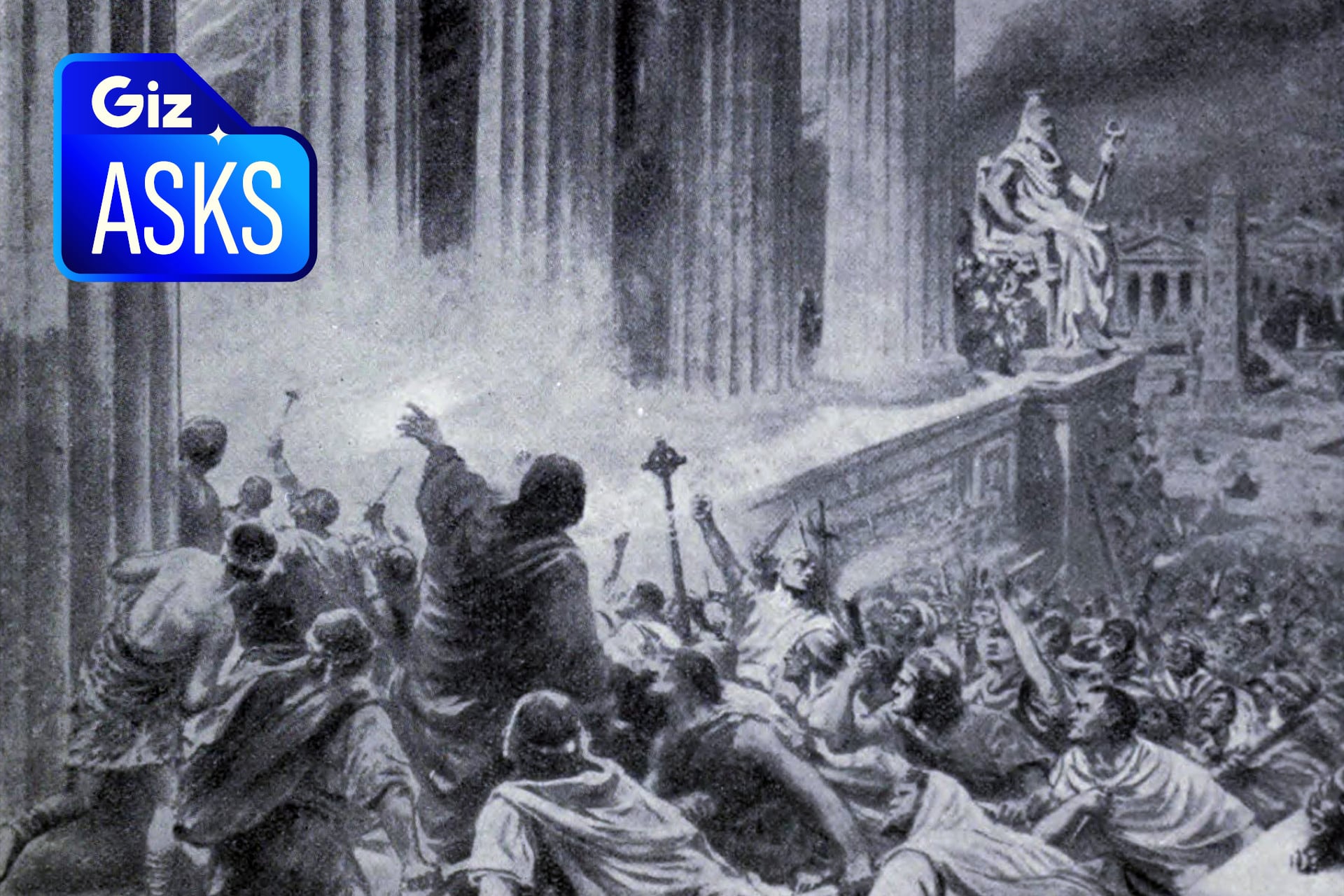
One of the biggest challenges in studying the ancient world lies in the need—and the associated risks—to reconstruct a reality whose physical evidence has often disappeared. Literary sources provide an invaluable basis for this work, but they can be partial, selective, fragmentary, or ambiguous. One of the most striking examples is the now-lost Library of Alexandria, which occupies such a prominent place in our cultural imagination, although many other public and private libraries could be considered.
These examples illustrate a fundamental problem in archaeology: the materials we most want to find are not necessarily those most likely to survive. Papyrus, wood, and other organic materials decay under most environmental conditions, leaving us with only an incomplete picture of ancient book culture. The carbonized papyrus scrolls recovered from the Villa dei Papiri in Herculaneum offer a fascinating counterpoint. They provide a new perspective on the relationship between loss and preservation: although the scrolls have survived as physical archaeological objects, many remain unread, their textual contents concealed within fragile, carbonized papyrus layers. In this case, the physical evidence is not absent, but it remains difficult to access.
Virtual unwrapping offers the possibility of recovering some of this lost knowledge without physically opening the scrolls, revealing texts that have remained inaccessible for nearly two millennia. This example highlights how digital evidence can complement physical evidence, revealing information that would otherwise remain inaccessible and opening new possibilities for our understanding of the ancient world.
Giz Asks is a recurring Gizmodo series in which experts answer big questions in their own words, offering a range of perspectives on the ideas, discoveries, and debates that affect our lives and shape our understanding of the world.