Astronomers have long suspected that sugar exists in deep space—frontiers beyond our solar system. That hypothesis was proven correct via samples from the asteroid Bennu, but scientists wanted to take things a step further: Was there a way to directly detect sugar in interstellar space?
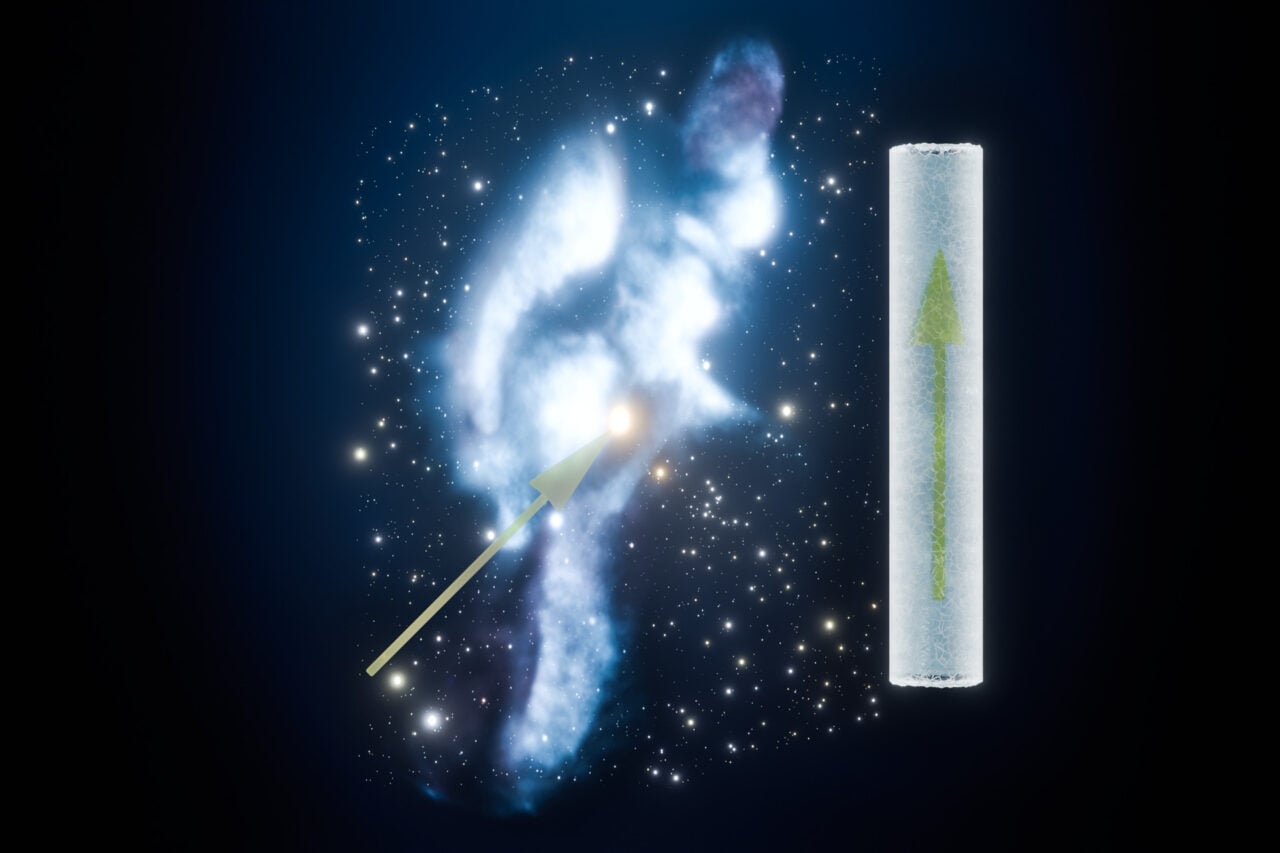
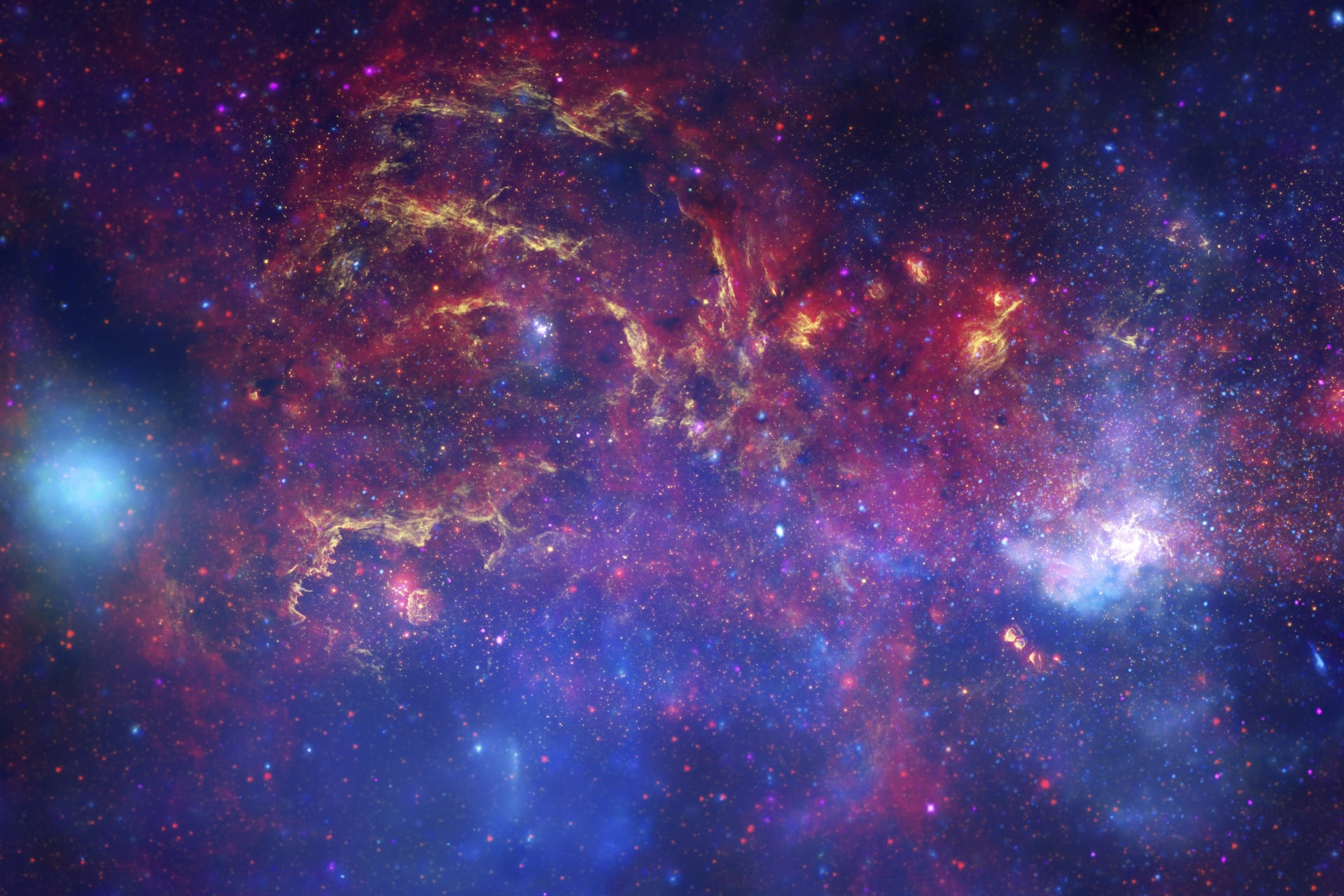
The answer to that question is a resounding yes, according to a paper published today in Nature Astronomy. Using the Yebes 40-meter and IRAM 30-meter radio telescopes in Spain, researchers report the first direct detection of erythrulose, a four-carbon sugar, in the molecular cloud G+0.693−0.027. For the discovery, the team analyzed spectral data collected from the cloud, located near the center of the Milky Way. The findings demonstrate that chemical complexity can emerge in space, even before stars or planets enter the picture.
“Sugars are essential organic compounds because they represent the backbone of RNA and DNA,” Izaskun Jiménez-Serra, the study’s first author and an astronomer at the Center for Astrobiology in Spain, told Gizmodo. “Our goal was to determine whether sugars could already be synthesized in the molecular clouds where stars and planets are born.”
From raspberries to the stars
On Earth, erythrulose is a sugar molecule that occurs naturally in red raspberries. According to Jiménez-Serra, in aqueous environments erythrulose changes into threose, which belongs to a family of simple nucleic acids and is a “possible evolutionary predecessor of RNA.” Erythrulose is an “especially relevant” compound for understanding the chemical history of life, she added.
Broadly speaking, astronomers have detected traces of sugars in meteorites and asteroids. For example, in addition to Bennu, the meteorite Orgueil was more recently found to contain sugar. Then in 2018, NASA researchers succeeded in synthesizing sugar molecules under conditions closely resembling interstellar space. In the paper, the researchers added that erythrulose in particular has been speculated to exist on bodies in the outer solar system.
Striking the sugar
So the hints were there, but scientists hadn’t actually found traces of erythrulose—or any sugar, in fact—directly within the interstellar medium, Jiménez-Serra explained. The latest study sought to address this knowledge gap. Jiménez-Serra and colleagues searched for the “characteristic rotational fingerprint” of erythrulose in G+0.693−0.027, she explained.
From spectroscopic analysis in the lab, the team identified 12 independent spectral lines that matched erythrulose’s predicted emission. (For context, every element has a unique spectral signature, which astronomers check and compare to categorize emission data.) Fascinatingly, the team also found that the molecular cloud had eight times more erythrulose than similar three-carbon, or simpler, sugar compounds.
Cosmic chemical chronicles
Molecular clouds, as their name suggests, are irregular “clumps” of dust and gas in interstellar space. Although they frequently witness the birth of stars—hence the nickname “stellar nurseries”—stars and planets aren’t quite there yet. Therefore, the discovery of erythrulose in molecular clouds strongly suggests that “some of the chemical ingredients needed for the emergence of life may already be present in the material from which planetary systems are built,” Jiménez-Serra said.
Importantly, this opens the possibility to study a new family of organic compounds (sugars and their derivatives) across the galaxy,” she added. Next, Jiménez-Serra plans to search for larger sugars, such as ribose, a key component of RNA. The hope is that the right combination of astronomical observations, lab experiments, and theoretical calculations will shed light on how life’s building blocks operate under the cold vacuum of interstellar space, she said.
Related article: Both Pluto and Titan Share a Mystery Molecule That’s Never Been Seen Before