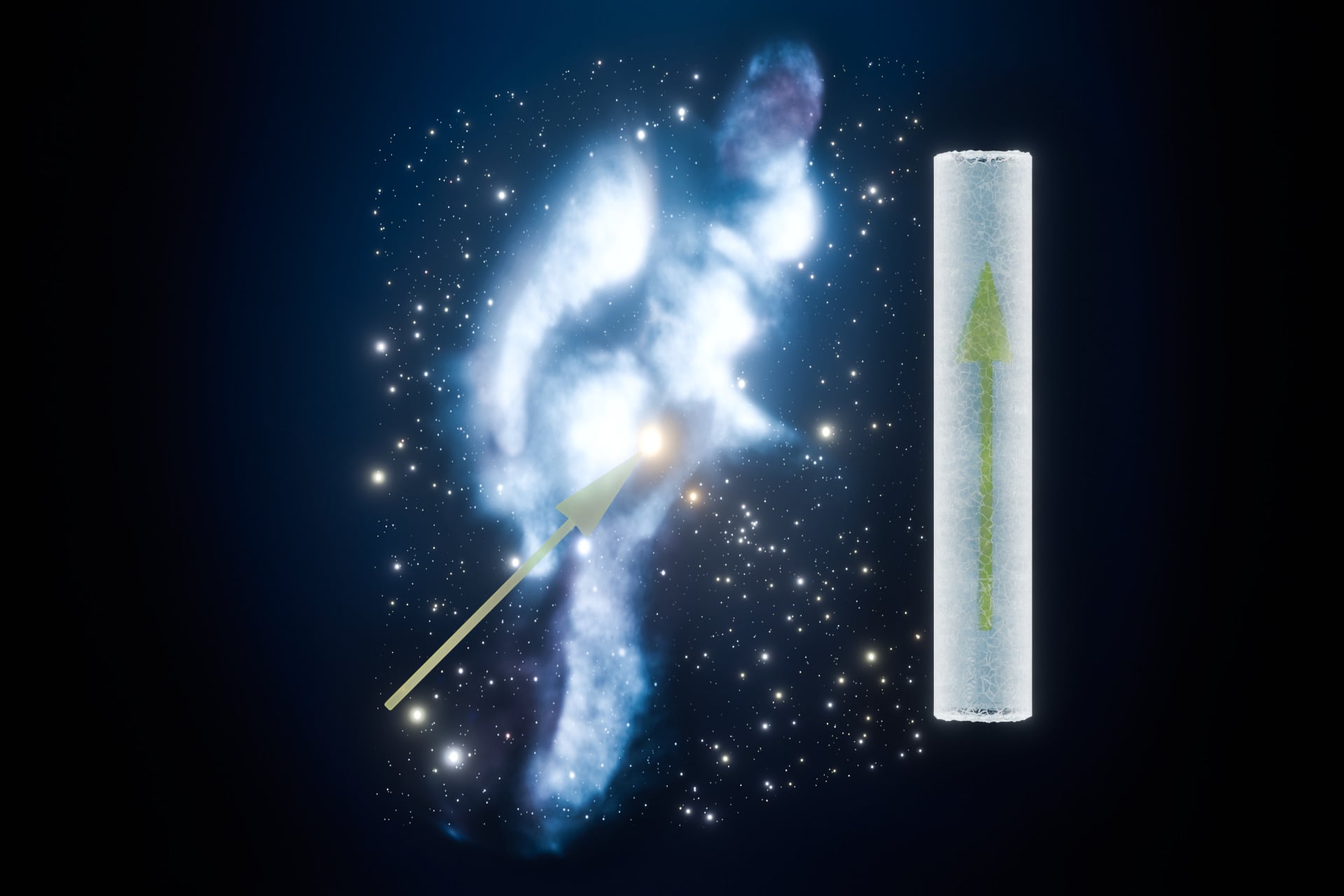
Roughly within the last 20 million years, some stars in our neighborhood exploded in fiery supernovas, ejecting massive clouds of gas and dust into the cosmos. Even now, our solar system—Earth included—is traversing the Local Interstellar Cloud. New evidence from Antarctica suggests the cloud is leaving traces of stardust on Earth.
In 2019, researchers led by Australian National University’s Dominik Koll collected about 1,100 pounds (500 kilograms) of recent Antarctic snow. Upon closer inspection, they found the snow contained iron-60, a rare radioactive isotope associated with stellar explosions. After years of follow-up investigations, the team concluded that the most likely explanation was that the Local Interstellar Cloud left behind iron-60, which Antarctic snow recorded over the past 80,000 years. The findings were published yesterday in Physical Review Letters.
“The story doesn’t fit perfectly, though,” Koll wrote in a column for The Conversation. The ice samples studied had less iron-60 than anticipated, but they’re nevertheless imprints of the cosmic cloud in Earth’s geological record, he added.
Static, but vibrant
According to Koll, it’s not incredibly uncommon for tiny grains of supernova dust to trickle down to Earth’s surface. But that surface teems with activity and drastic changes, which is why Antarctica serves as a valuable location for studying geological records. The snow and ice in Antarctica form a “largely undisturbed” and layered record spanning tens of thousands of years, he added.
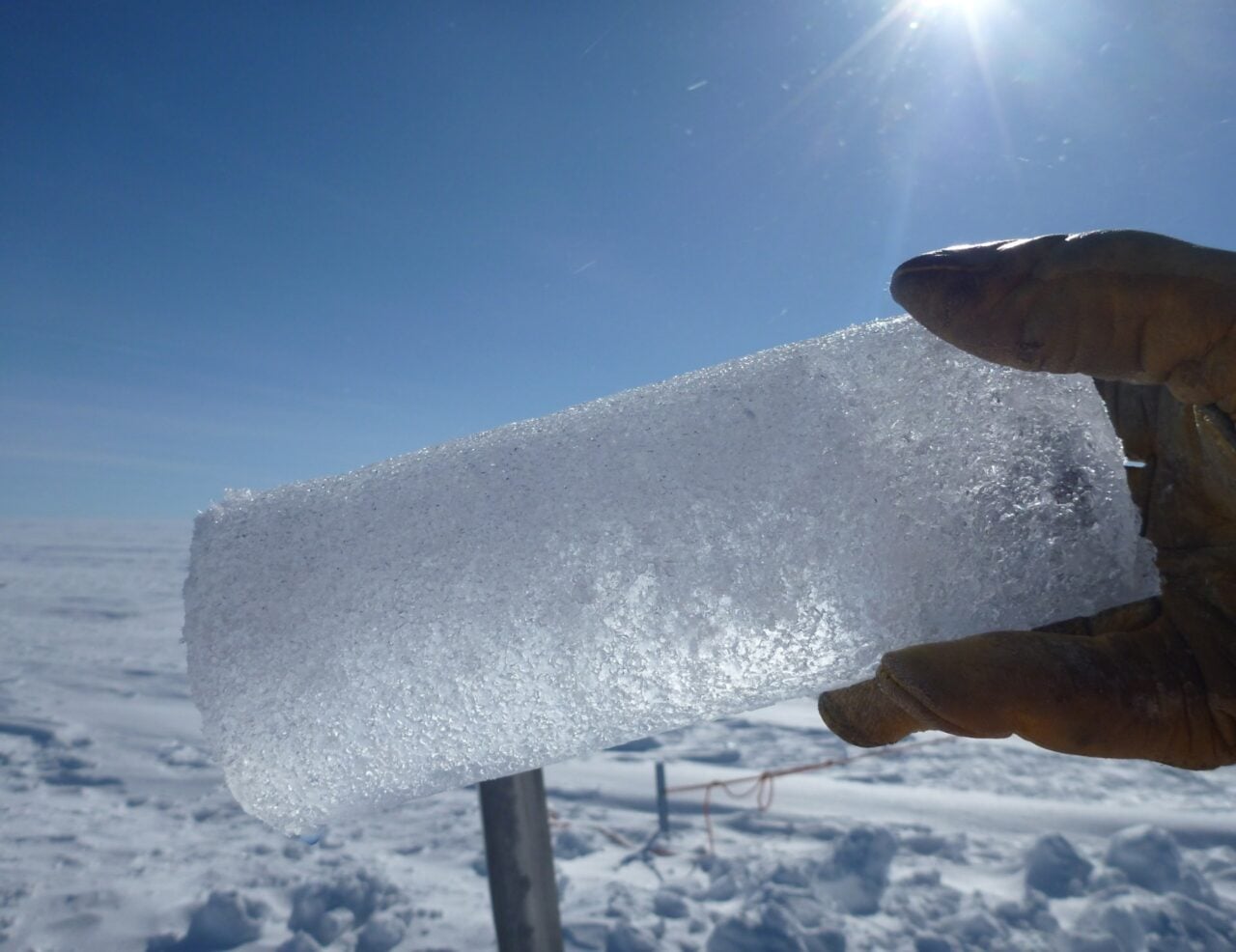
When researchers first discovered iron-60 in Antarctic surface snow that was less than 20 years old, they were actually divided as to how this isotope ended up there. Koll’s team suspected that the Local Interstellar Cloud could store iron-60 for a long time and gradually deposit the isotope on Earth. But they didn’t have enough proof at the time, Koll explained in a statement.
Well worth the pain
The latest findings describe how the team gathered enough evidence for their “educated guess,” as Koll described it in his column. The “painstaking” process involved melting and chemically treating the ice to isolate tiny amounts of iron, then using a particle accelerator to count a handful of iron-60 atoms out of 10 trillion particles.
Surprisingly, this analysis found significantly lower levels of iron-60 than expected, compared to more recent Antarctic samples. That indicated that less iron-60 reached Earth between 40,000 and 80,000 years ago, which was the age of the ice samples in the study. The results were also somewhat inconsistent with the idea that these iron-60 deposits were fading traces of ancient supernovas from millions of years ago.
Closer to home
So it seemed that the iron-60 in Antarctic ice came from a “smaller, more local source,” Koll wrote in the column. And, as it turns out, a recent study suggested that the solar system has been passing through the Local Interstellar Cloud from sometime between 40,000 and 124,000 years ago—an uncanny match with the new results. As of now, it appears that Antarctica collected traces of interstellar stardust as our solar system passed through the cloud.
That said, as Koll noted, iron-60 levels were still quite low. In the paper, the authors also noted that astronomers have yet to settle the origin story for the Local Interstellar Cloud itself. But the latest findings can help both ways, the paper added, in that Antarctic ice can illuminate hidden mysteries about the stellar cloud and also what that means for our solar system passing through this cloud.
“If we look deeper and analyze even older ice,” Koll said, “we might soon unravel the mystery of these local interstellar clouds, revealing their full history and uncertain origins.”