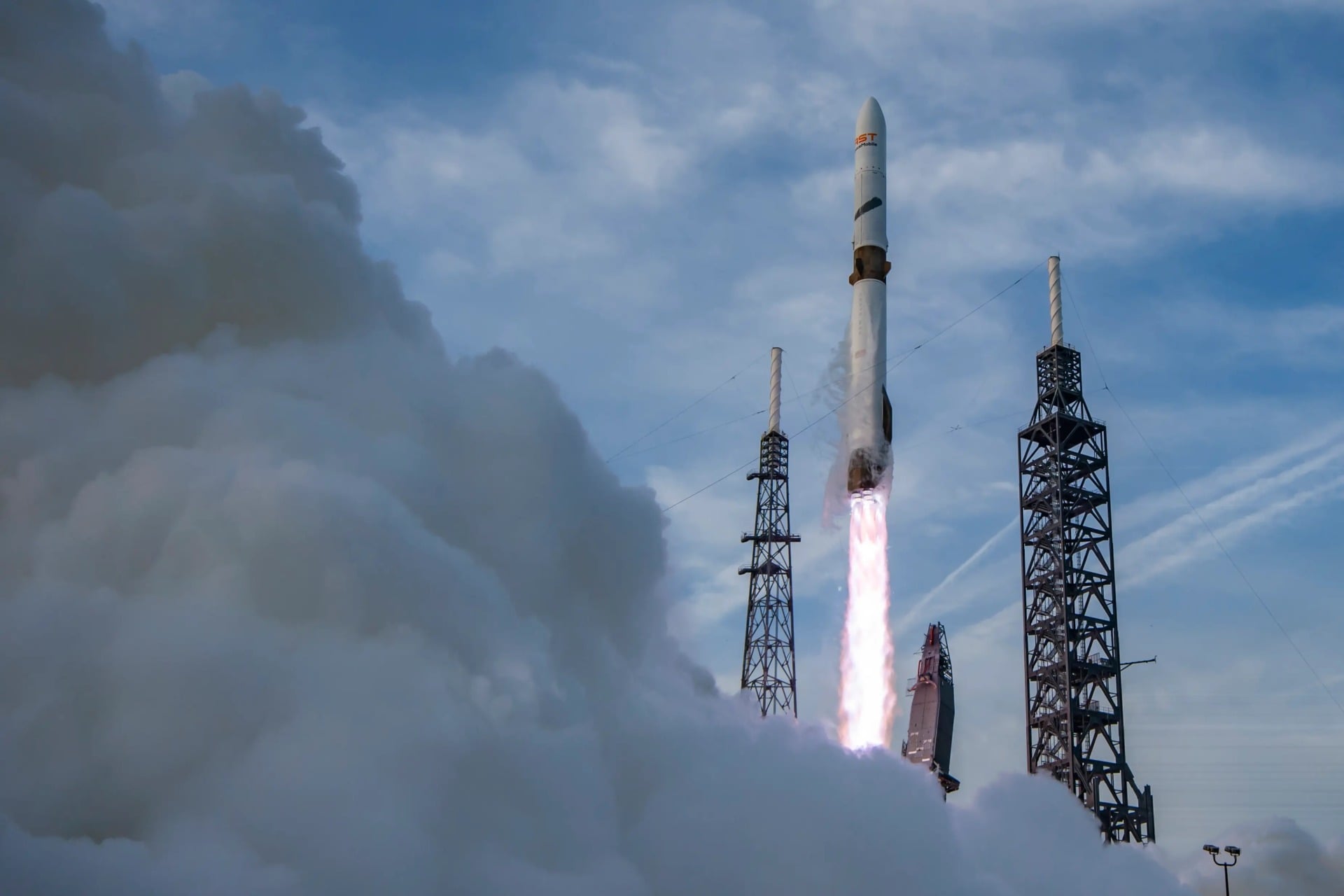
After a massive explosion rocked the launchpad in Florida, Blue Origin is aiming to have another New Glenn rocket ready for liftoff by the end of the year to resume its busy schedule.
During a static fire test on May 28, New Glenn erupted in a massive fireball that wrecked the launchpad at Cape Canaveral Space Force Station. Satellite images captured the full extent of the damage to the launchpad, revealing the scorched facility in ruins.
These 2 images taken by SkySat satellites from Planet just days apart make for a nice before and after of LC-36. It also shows how part of the pad has collapsed into the flame bucket.
📸 Planet via https://t.co/fdjaiUrn9R https://t.co/DimASdZnls pic.twitter.com/1EPm66Vjhd
— Lukas C. H. (@GewoonLukas_) June 1, 2026
Despite the visible damage, Blue Origin’s chief executive David Limp shared on X that the company will fly New Glenn again before the end of 2026. After assessing the launchpad, Limp downplayed the amount of time it would take to repair the facility, adding that the New Glenn booster and the three upper stages that were on site “also look good.”
Talk about a fixer-upper
At the time of the fiery mishap, Blue Origin was prepping New Glenn to launch a batch of Amazon’s Leo satellites for its fourth mission, NG-4. The explosion took place during ground tests of the propulsion system ahead of the upcoming launch.
Blue Origin later confirmed that the rocket experienced an anomaly during a hot fire test of New Glenn’s booster called “No, It’s Necessary.” Since then, the company hasn’t shared additional information on what may have caused the rocket to go up in flames.
The recent update from Limp, however, detailed some of the damage done to the launchpad. The propellant farm, oxygen, liquid hydrogen, and liquid nitrogen tanks, as well as the water tower, are “all in good shape,” according to Limp. “The big support tower is damaged, but it can be repaired in place rather than torn down and replaced,” he added on X.
“We will fly again before the end of this year,” Limp wrote. That gives the company less than seven months to repair the damage from the explosion and get its rocket up and running again.
By comparison, SpaceX spent over a year repairing the launchpad at its Space Launch Complex 40 following a Falcon 9 explosion in 2016. SpaceX’s Falcon 9 rocket was also undergoing a static fire test when it experienced an anomaly that resulted in an explosion.
An overly ambitious timeline
Blue Origin is under a lot of pressure to resume operations of its New Glenn rocket. The rocket has suffered multiple setbacks that have repeatedly delayed its inaugural launch. New Glenn made its debut in January 2025, and Blue Origin was finally on its way to establish itself as a competitor in the heavy-lift vehicle industry.
There’s a lot riding on the rocket. NASA is heavily relying on Blue Origin as part of the agency’s Artemis program. The company is slated to deliver a suite of instruments and lunar terrain vehicles to the Moon and provide a human landing system for NASA astronauts to reach the lunar surface.
“NASA is committed to helping the Blue [Origin] team recover, continue to advance their lunar lander, and get New Glenn back to launching as soon as safely possible,” NASA Administrator Jared Isaacman wrote on X.
The U.S. Space Force also awarded Blue Origin a national security mission for the National Reconnaissance Office. The new task order was issued the day before the New Glenn rocket exploded on the pad, but the Space Force reaffirmed its commitment to its commercial partner. “The National Security Space Launch program will continue working closely with our Blue Origin partners to help identify the root cause and implement corrective actions,” Eric Zarybnisky, acting Space Force Portfolio Acquisition Executive for Space Access, said in a statement.
Prior to its launchpad explosion, Blue Origin had just received clearance from the Federal Aviation Administration (FAA) to resume flights of New Glenn following a previous mishap. During its third mission on April 19, the rocket’s second stage suffered a malfunction, causing New Glenn to place its payload in a lower orbit than planned. The anomaly led to the loss of AST SpaceMobile’s BlueBird 7 satellite, part of a constellation designed to provide direct connectivity to smartphones.
Since its early development phase, the rocket has suffered its fair share of missteps, and the recent anomaly is yet another major setback for Blue Origin.