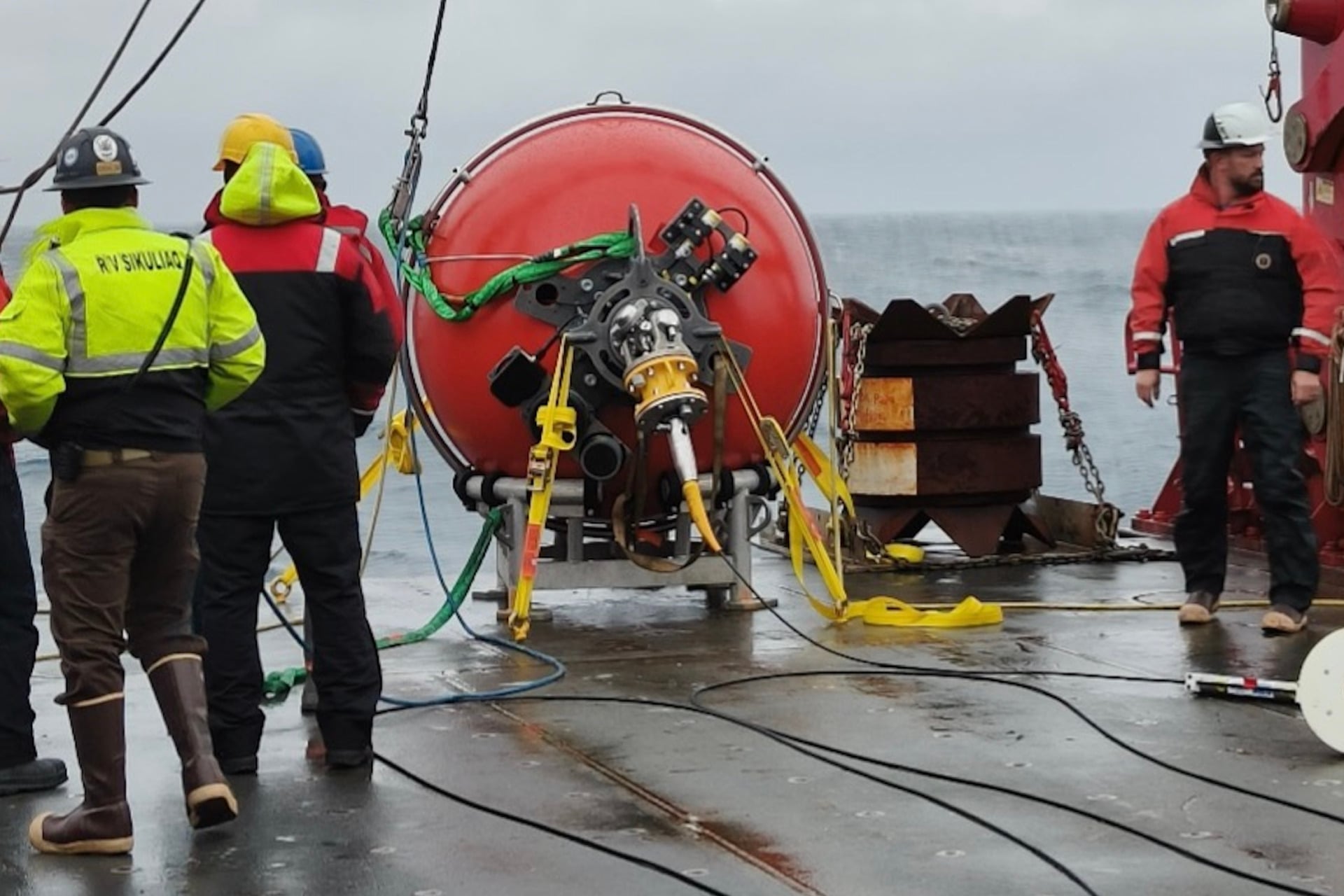
The National Science Foundation will begin dismantling a sprawling network of over 900 deep-sea sensors stationed in Pacific waters off the coasts of Oregon, Washington state, and Alaska, as well as Atlantic sites off North Carolina and the Irminger Sea near Iceland.
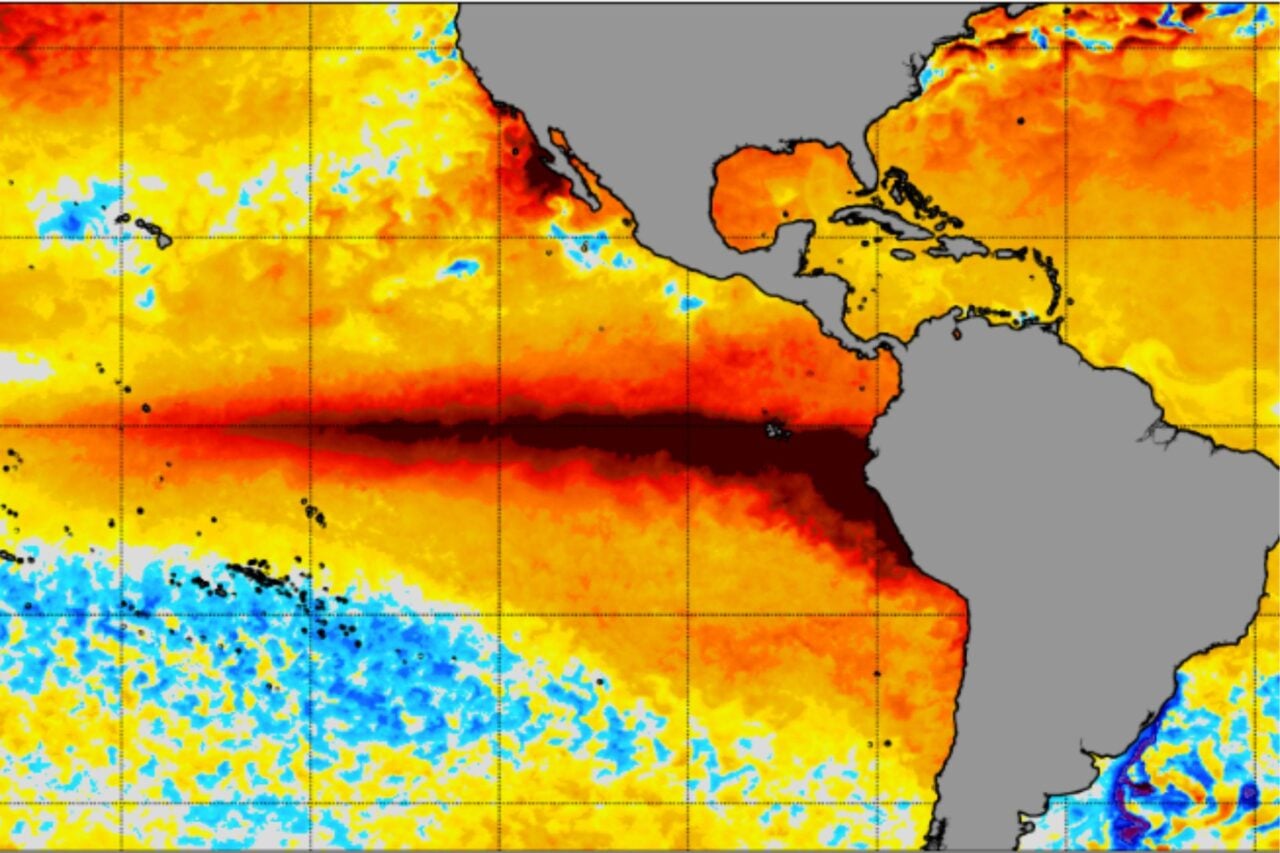
Arguably, the worst part: Subsurface temperature readings from this network’s sensors in the Pacific would have likely been critical to providing more accurate modeling and forecasts to protect against deadly El Niño events in the future.
“It’s a crippling loss of information,” as oceanographer Ed Dever at Oregon State University, who helped direct these sensors’ operations in the northern Pacific, told the Associated Press.
The scuttled instrument network comprises the core of the NSF’s Ocean Observatories Initiative (OOI), a program that the second Trump administration has repeatedly tried and failed to kill since 2025. The NSF said that it plans to remove one of these sensors, anchored by a research buoy 260 feet (80 meters) under the ocean’s surface near Oregon, on June 16. But the total OOI network—a sunk cost that taxpayers have already paid $386 million to construct—would take until 2027 to completely dismantle.
More than El Niño
The initiative has continuously collected real-time data deep in the world’s oceans since it launched in 2015. Beyond El Niño, OOI has helped California monitor for tsunamis and earthquakes, track low oxygen undersea “dead zones,” and generally gather ocean data unavailable via either satellites or surface collection tools. The researchers who had spent more than a decade planning and building this network had originally envisioned the initiative lasting for at least 25 to 30 years. That continuous stream of data, they determined, was what would be needed to more accurately detect the oceans’ role in Earth’s climate.
“We’ve just got to the 10 year record,” Dever lamented, “which will give you some hints, but it won’t continue on.”
The project’s data has also been publicly accessible, a centerpiece of independent scientific research and collaborative projects studying these oceans worldwide. The OOI station in the Irminger Sea, for example, anchored down 9,200 feet (2,804 meters) below the surface, has been integral to international efforts to understand how climate change is slowing what’s known as the Atlantic Meridional Overturning Circulation. The possible loss of this long stable current, which circulates water north and south through the Atlantic and back again, has become an increasing worry for climate scientists, who fear its demise could accelerate extreme weather, creating cataclysmic natural disasters across the planet.
A literal sunk cost
Scientists and politicians have been quick to point out that the annual operating costs for OOI are comparatively quite modest. This sensor network takes roughly $48 million to operate per year or only about 0.003% of the federal government’s $1.6 trillion in annual discretionary spending. (Department of War Secretary Pete Hegseth appears to have spent orders of magnitude more taxpayer dollars on luxury goods, fancy food items like lobster tail, and new furniture since assuming his post.)
Nevertheless, the Trump White House has pushed Congress to cut OOI’s budget by 80%, once in 2025 and again earlier this year, before finally succeeding this spring.
“Walking away from a $368-million investment in a state-of-the-art system, a feat of engineering already paid for by the American people, is absolutely myopic,” Chris Robbins, associate director of scientific initiatives for the nonprofit Ocean Conservancy, told The New York Times.
A spokesperson for the Trump administration’s version of the NSF explained the end of OOI to Newsweek as part of the agency’s “ongoing stewardship of its research infrastructure portfolio.”
“The decision to descope aligns with NSF’s wider strategy of a nimbler approach to prioritize support for evolving scientific priorities and emerging technologies, as well as smart lifecycle management within its research infrastructure portfolio,” the spokesperson continued.
The science agency took pains to emphasize that the NSF is not technically cancelling the Ocean Observatories Initiative. NSF noted that it would continue to make all previously collected data accessible via the initiative’s OOI Data Center.