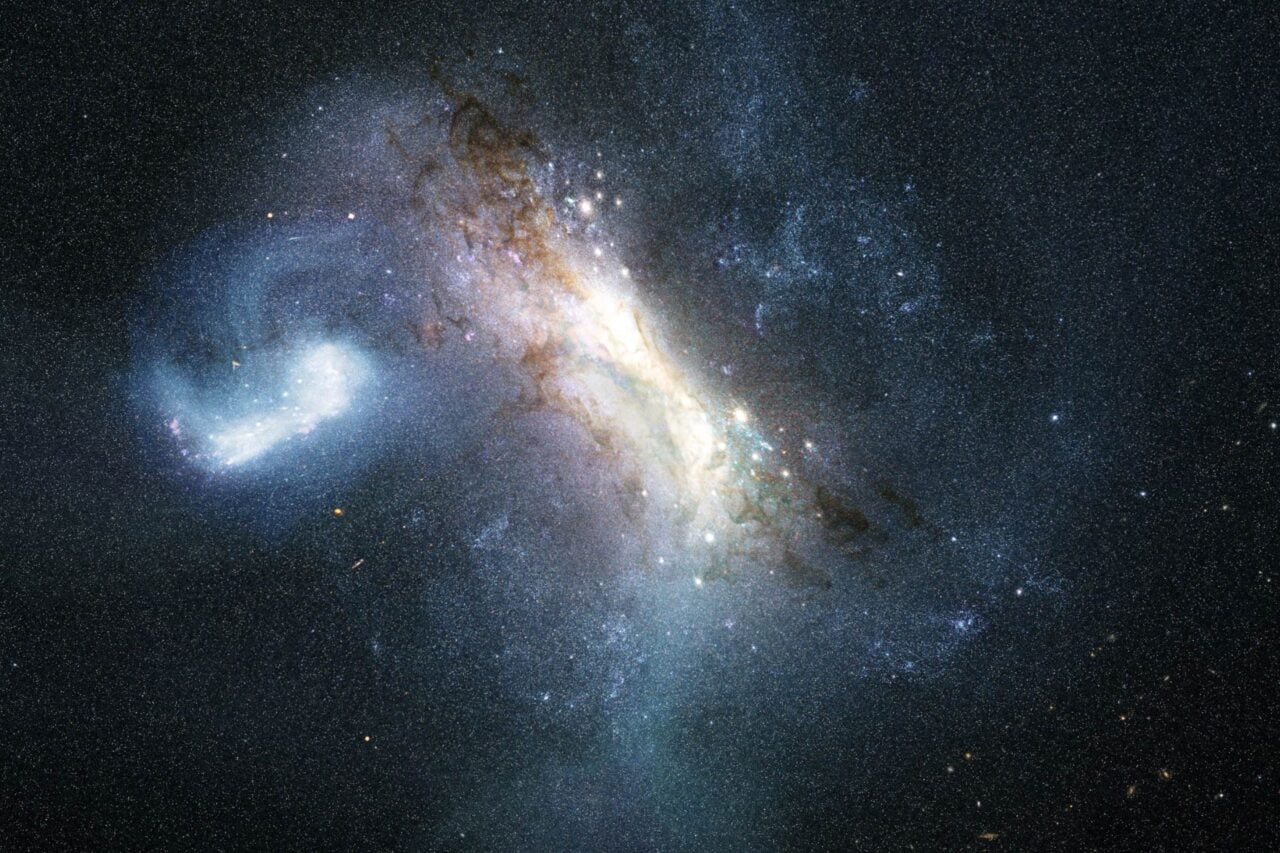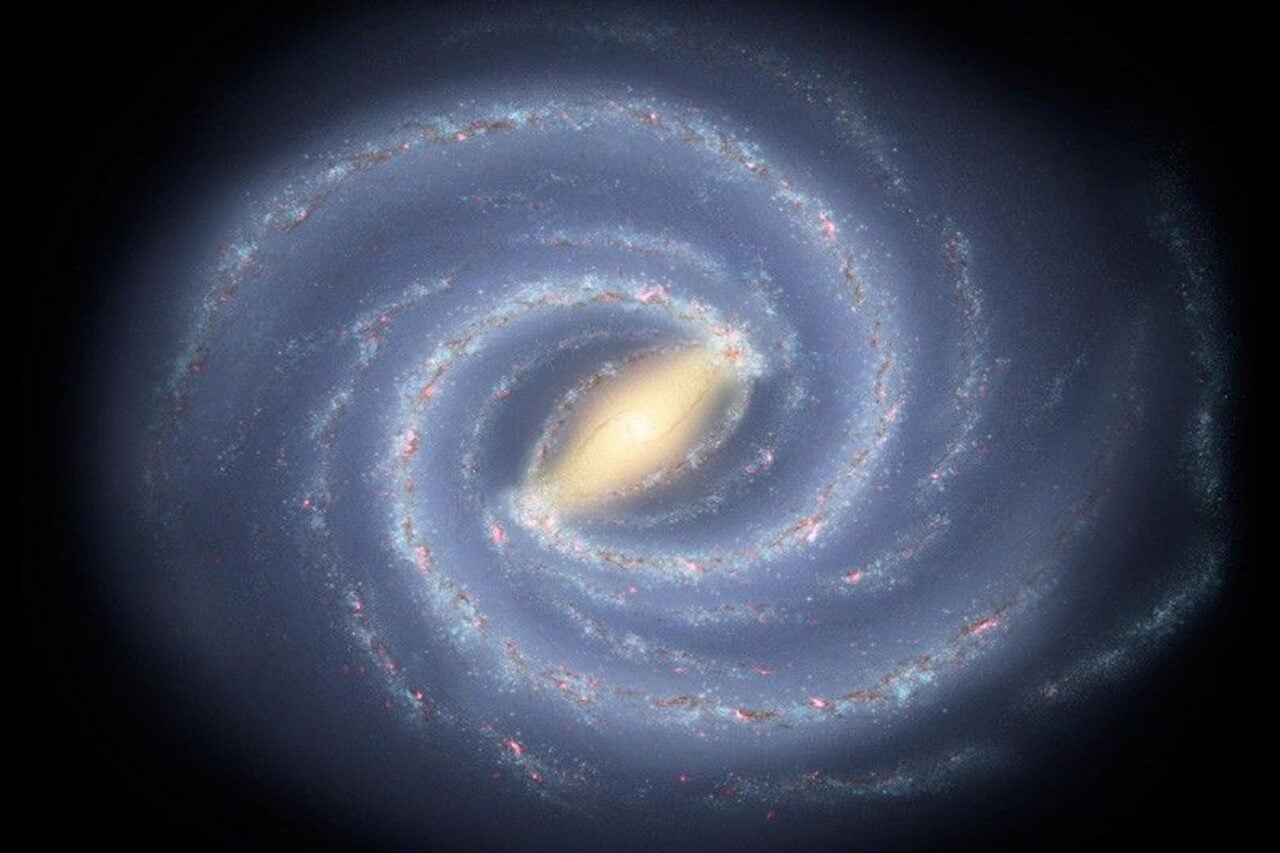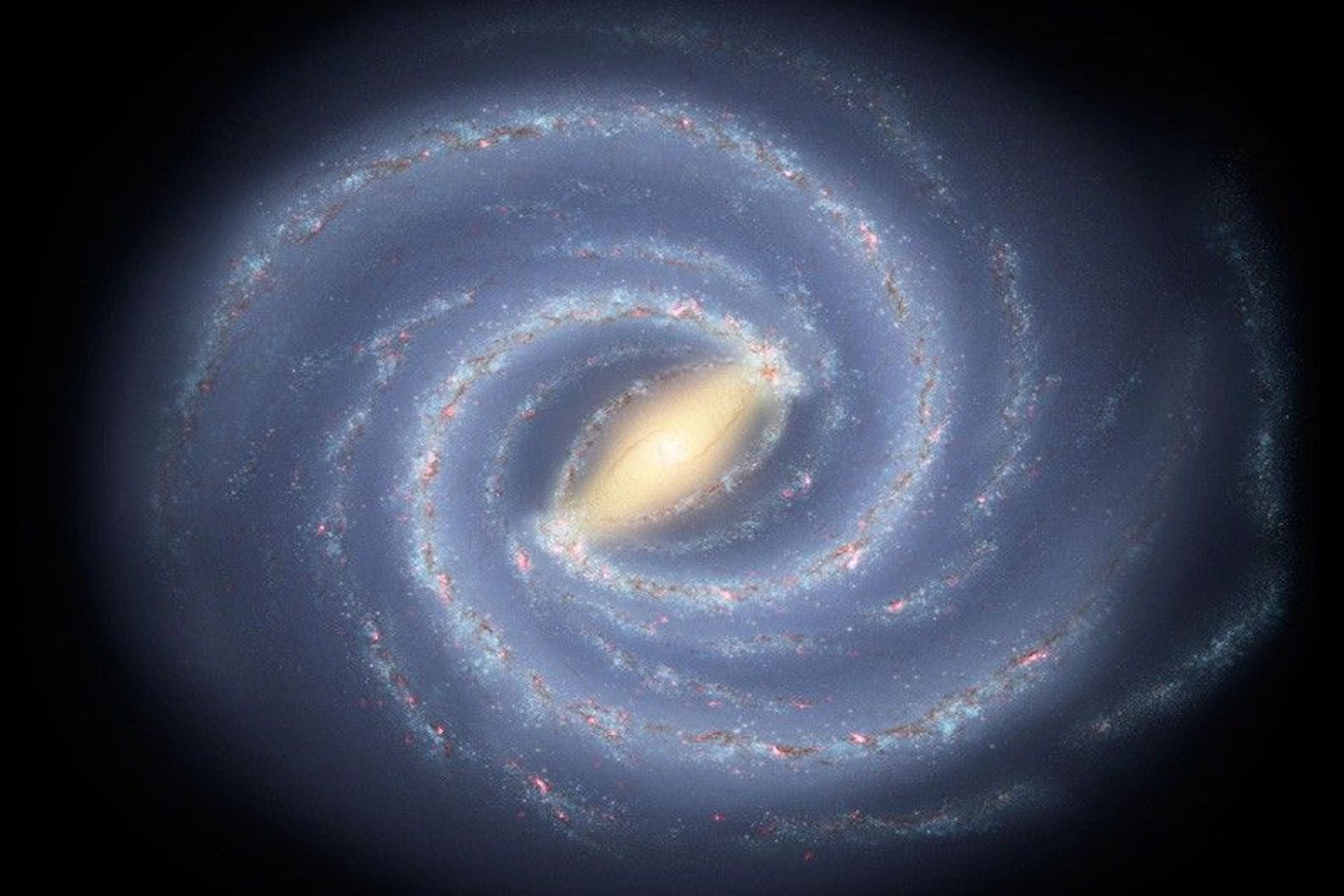
Somewhere beyond the familiar glow of the Milky Way, matter may be meeting its mirror image in a spectacular act of cosmic annihilation. A recent study suggests that our galaxy could be leaking antimatter into the vast darkness of intergalactic space, where these elusive particles collide with ordinary matter and disappear in flashes of energy.
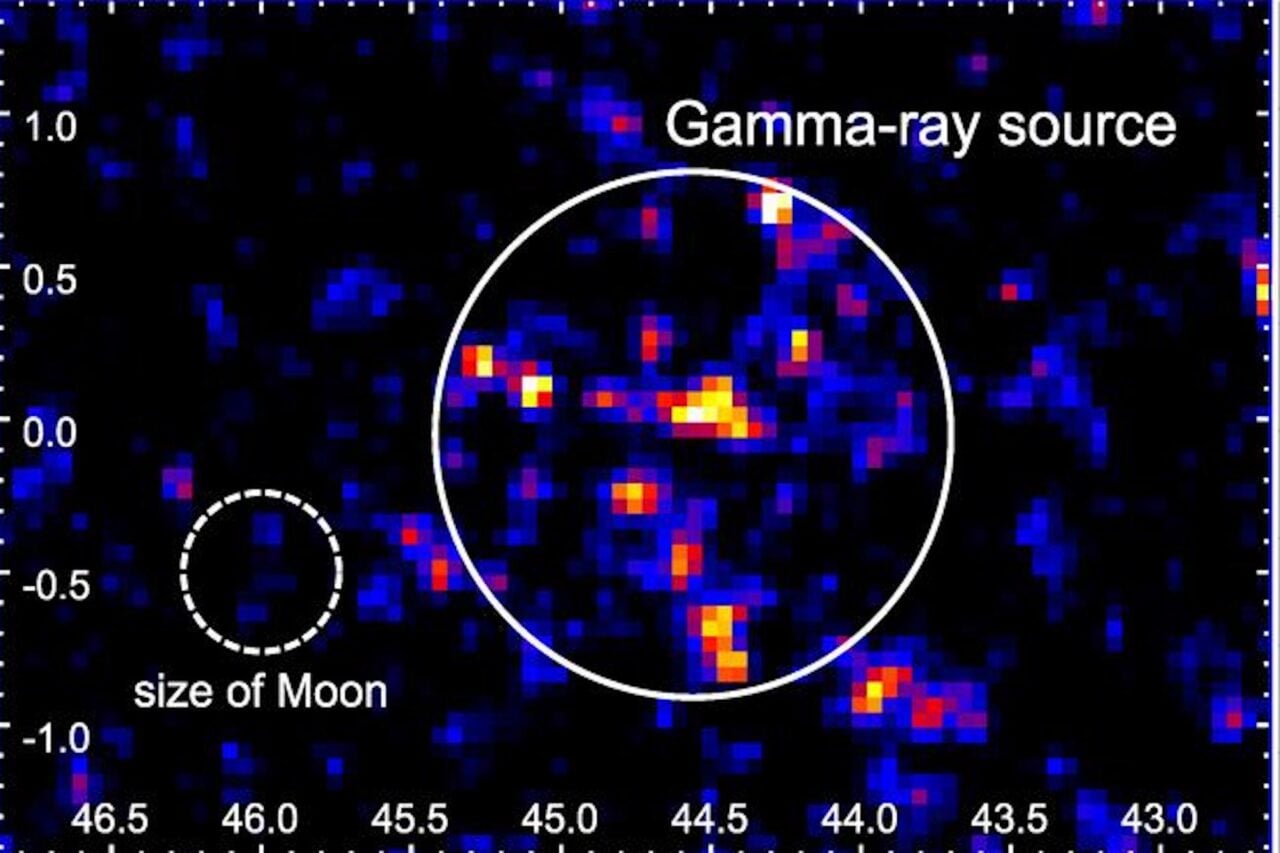
A team of astronomers may have detected the gamma-ray signature produced when antimatter particles, or positrons, collide with electrons outside of the Milky Way for the first time. The findings, published in Astronomy & Astrophysics, could offer a rare glimpse of a hidden process unfolding at the edges of our galactic home.
Total annihilation
Antimatter is, in a sense, the mirror image of ordinary matter. Every fundamental particle has an antimatter counterpart with the same mass but opposite electric charge or other reversed properties.
When antimatter encounters its matter counterpart, the two particles can annihilate, converting their mass into energy, typically in the form of gamma-ray photons—highly energetic light with a characteristic energy of 511 kiloelectronvolts (keV). Scientists can use these gamma rays as clues to antimatter’s whereabouts.
Using data from the European Space Agency’s (ESA) INTEGRAL telescope, the researchers behind the new study put together a detailed map of the Milky Way’s 511 keV emission.
The majority of the signals came from the central regions of the galaxy. This presented a problem: there appears to be far more positrons annihilating than expected. The known sources behind these signals, including black holes, neutron stars, and other highly energetic objects, could not account for how many positrons the Milky Way appears to produce.
The great escape
The vast population of antimatter particles in the Milky Way has long puzzled astronomers. The new study, however, offers an explanation.
The researchers suggest that the positrons are being produced inside the Milky Way and then escape into intergalactic space. There, they meet their matter counterpart and annihilate. This would explain why astronomers have been underestimating the amount of antimatter in the galaxy.
Astronomers estimate the number of positrons being produced in the Milky Way by observing where they annihilate. If some positrons manage to escape from the Milky Way and meet their fate outside the galaxy, then they are not accounted for.
The study suggests that the Milky Way is producing a lot more antimatter than previously estimated. Future observations using NASA’s Compton Spectrometer and Imager, a new gamma-ray telescope scheduled for launch in 2027, could help confirm the faint signals and better determine the galaxy’s antimatter count.