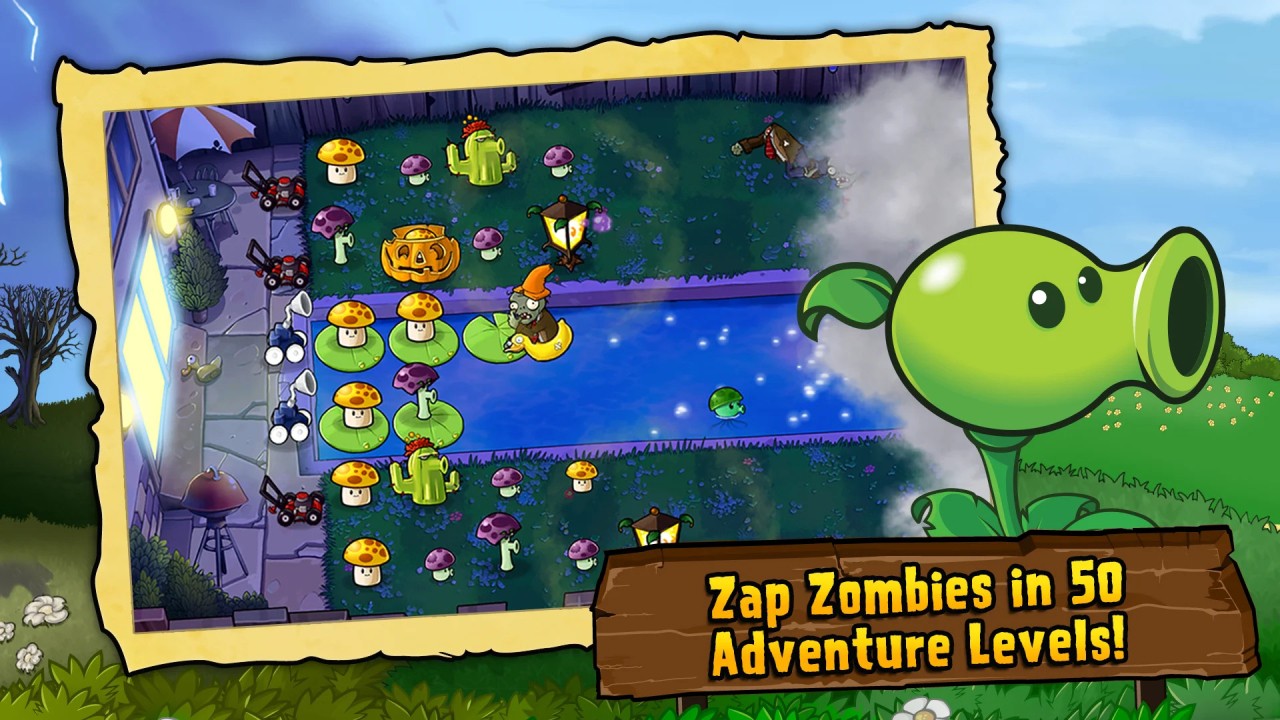
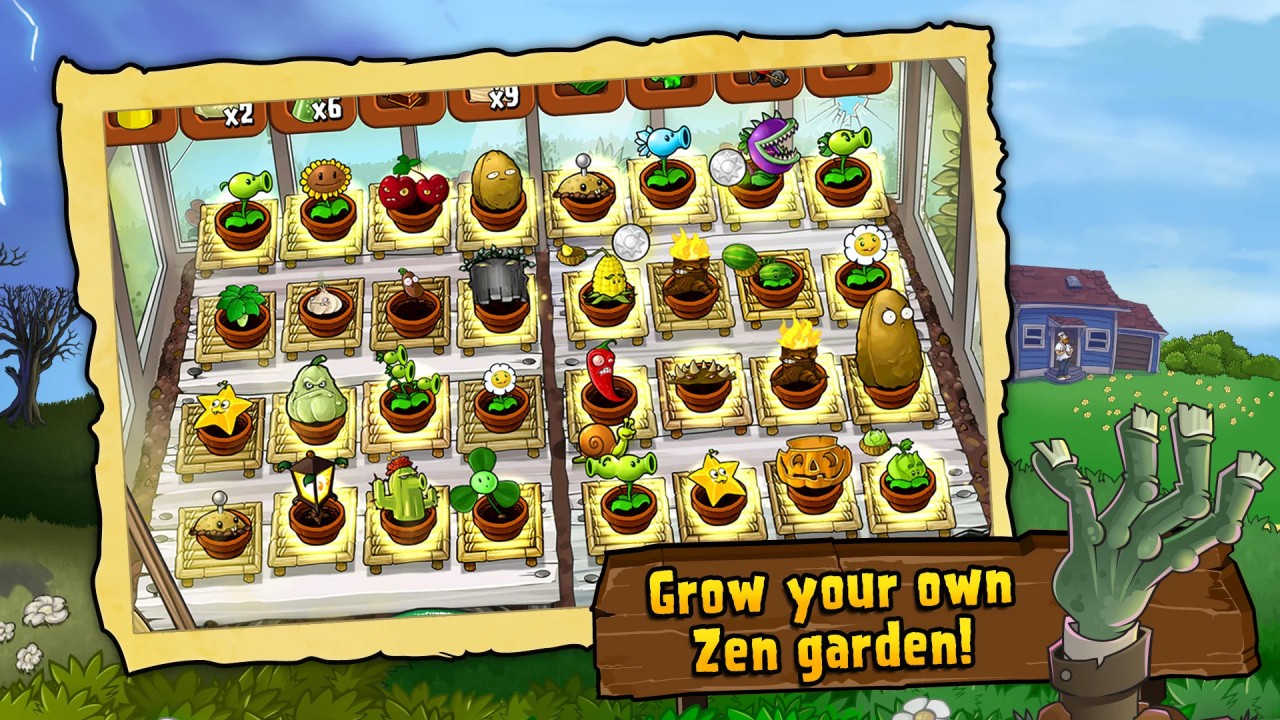
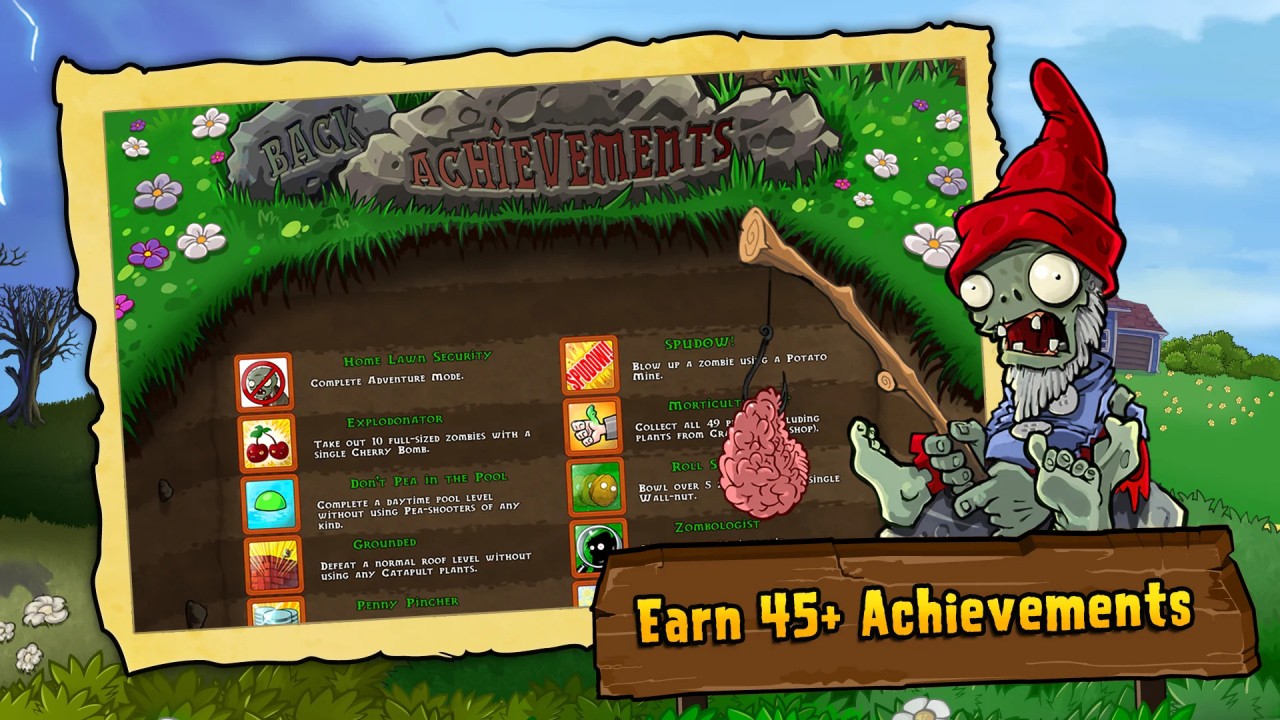
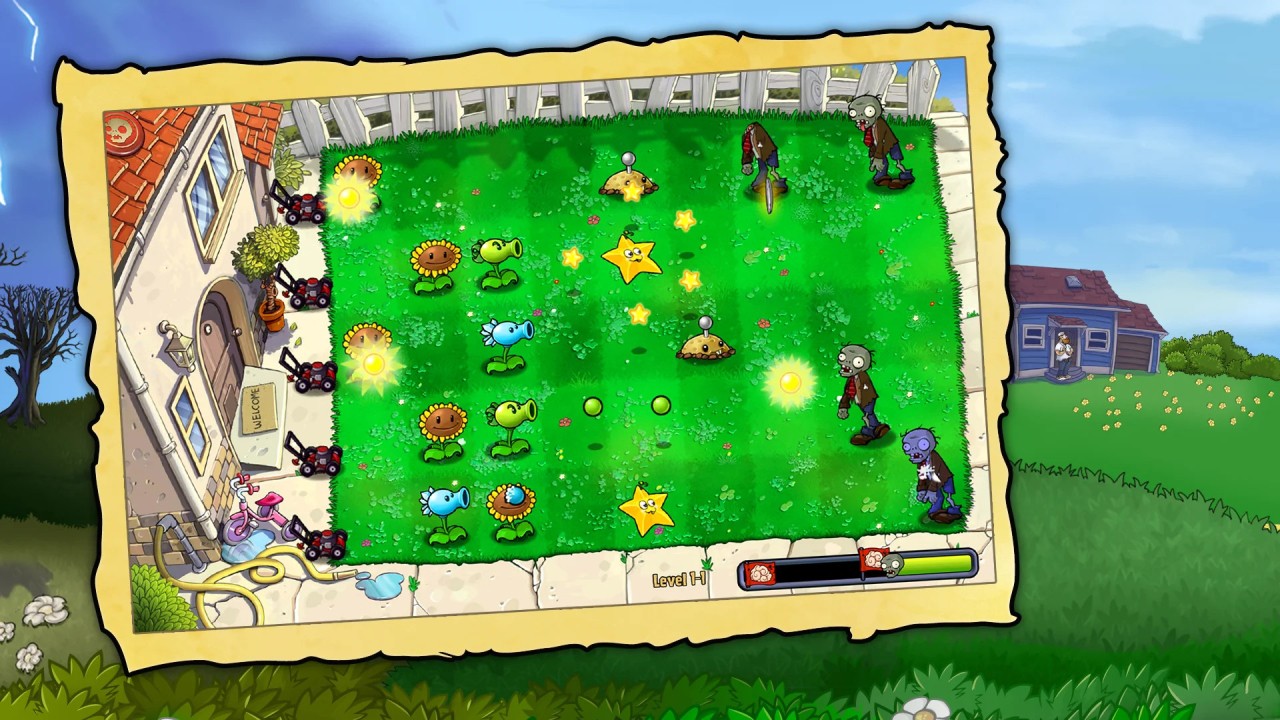
Plants vs. Zombies is an odd but addictive game where you protect your garden against zombies. To the core, it’s a tower defense game, but a fun one. You are not using tanks or soldiers, you are using sunflowers, pea shooters, and wall-nuts to defend your yard from waves of goofy but persistent zombies.
And somehow, it just works. The game is set in a backyard. It presents you with plants, and then, throws zombies of various kinds at your face with more and more unpredictable herd compositions.
There is something about the planting, the cultivating, the peace that descends into pandemonium, and the gratifying slap of smashing zombie skulls with cabbage-pults that grips you into coming back to play again and again until the inevitable happens, and you are dead.
What seems like a cute little idea ends up as a strategic issue, and before you realize it, you are neck-deep in a game where the time and resources are more important than you would ever believe it to be. It is funny, weird, and quite smart. You have to develop the garden in order to survive. That’s the whole thing… and for some reason, it is never tiring.
Why Should I Download Plants vs. Zombies?
Plants vs Zombies does not have the appearance of a game that will require your attention. It feels light. It looks silly. Then you complete a level, then another, and the next thing you know, it’s past midnight, and you’re arguing with yourself whether to go for the cherry bomb or the spikeweed.
That is one of the reasons why it is fun to play. It hooks you gently. You begin in a very modest manner – only with a sunflower and a pea shooter – and as the waves become tougher, you learn how to build your defense line.
The zombies as well begin to move. They wear traffic cones. They come in groups. They pole vault. That is when the strategy becomes important. You are not just tapping and responding, you’re scheming. You’re predicting. You’re hoping that your sun count will play catch-up before the football zombie busts through.
However, it is the atmosphere that makes it really fun. It doesn’t narrate in a scary manner. It uses humor in an attempt to make you laugh. The plants have expressions. The zombies make ridiculous faces. The music is relaxing throughout the rest of the waves and, towards the end, is more of a playful affair than an intense action.
The game offers a challenge, but without pressure. It is the sort of game in which you play to relax and then start competing with yourself in a weird way. Have you ever thought whether it would be possible to pass the level using only mushrooms? Would you give a try at a setup that does not use wall-nuts? It always provides small means to play in a different manner.
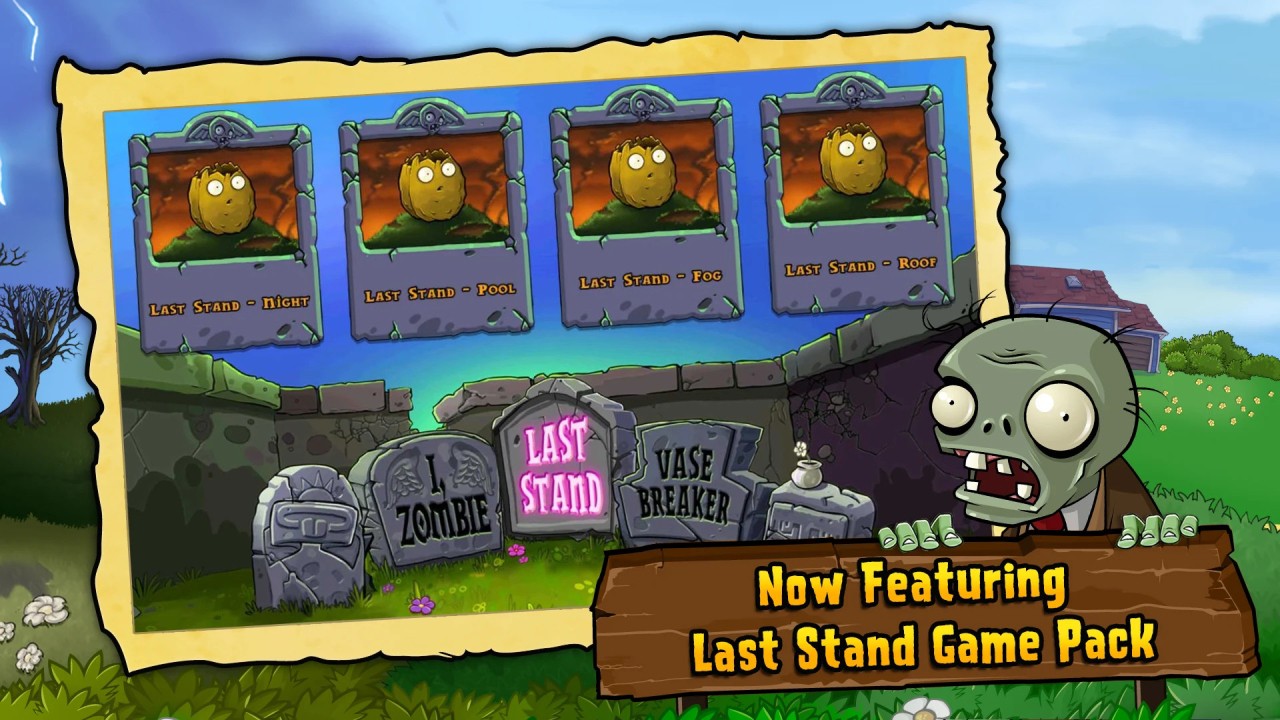
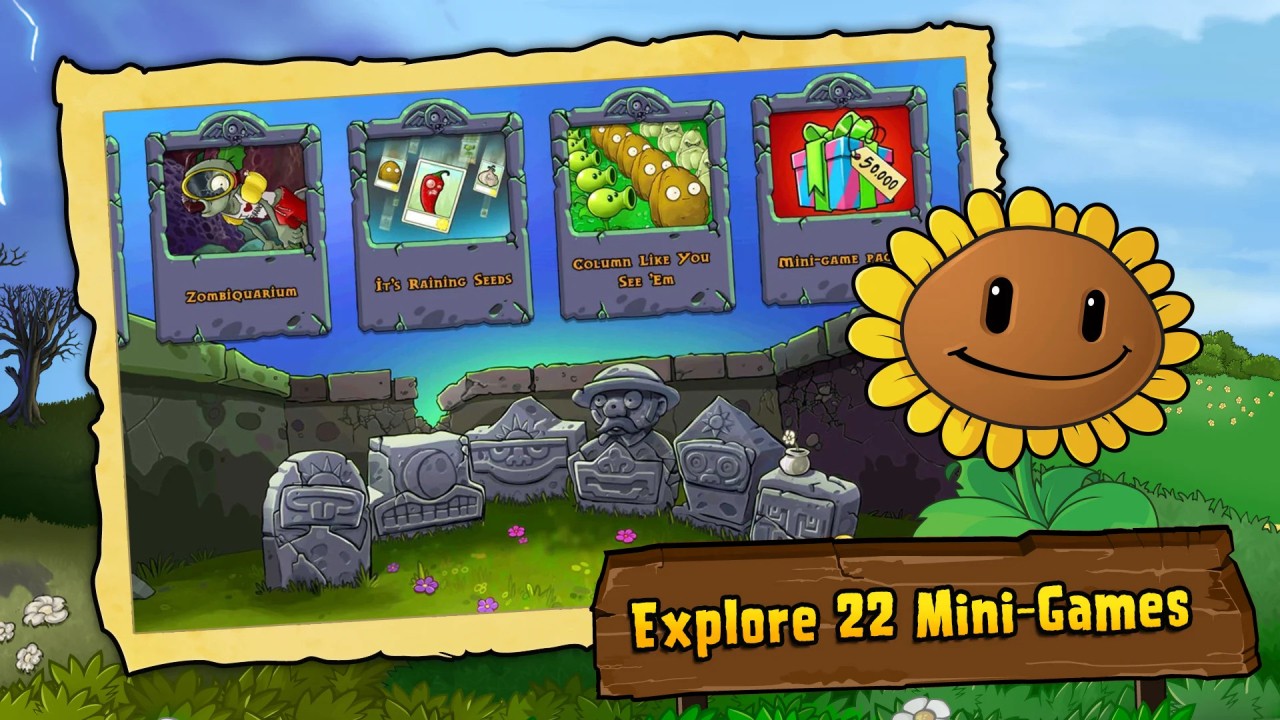
Have you never played any tower defense game? No problem, Plants vs. Zombies is really user-friendly. It teaches without tutorials. It does not oversaturate with new elements. It has mini-games, puzzle modes, and survival mode. And for a game that doesn’t have such a complicated design, it has staying power. It is not made with the purpose of being flashy. It’s built to be fun. And that is why it is still worth downloading even after several years of its release.
Is Plants vs. Zombies Free?
The original Plants vs. Zombies game is still around, and the team still updates it. It is free to play. Electronic Arts also developed a GOTY edition, which is available on Steam, and you can download a demo for Windows and macOS, but the complete game requires payment.
What Operating Systems Are Compatible with Plants vs. Zombies?
Plants vs. Zombies is available for Android and iOS devices as a free-to-play game with in-app purchases. For Windows and macOS users, you can download the Plants vs. Zombies GOTY edition on Steam, and the demo version is free.
What are the alternatives to Plants vs. Zombies?
If you are attracted to the unusual, though tactical feel of Plants vs. Zombies, a couple of other games end up playing on a similar beat.
Among the most popular alternative tower defense titles is Kingdom Rush. It is taking the form of a classic medieval tower defense style, but has that same balance of humor, variety, and intensity. Instead of plants, you create armies of archers, mages, and barracks to fight those waves composed of orcs and goblins. It is a little more combat-oriented, but there is still base protection where you’re upgrading your units and changing your tactics as enemies change over time.
Slime Legion is another of the oddball choices. It is newer and somewhat messier, but it has to deal with pattern-based defense and unpredictable configurations. Instead of rows, it works in grids; it is not plants that you merge anymore, but different kinds of slimes with different powers. It is more experimental, and it has replay value due to the randomness. Just like Plants vs. Zombies, it’s a bit foolish at the beginning, but you will need to work harder as you go deeper. You start seeing the strategies, where before you just used to see funny blobs.
There is also Combasters, which is a more modern and techy game. It is more speedy, a bit shinier, and brings in some elements of multiplayer. You still defend. You still strategize. However, this one has real-time options and an increased vigor. It lacks the same lazy appeal, but if you’re after something that mucks about with the ideas of PvZ in a more cutthroat or high-octane environment, it is a good choice. It’s far less like a garden and more like a digital battlefield, but it maintains the flavour of tactical placement and reactive play.