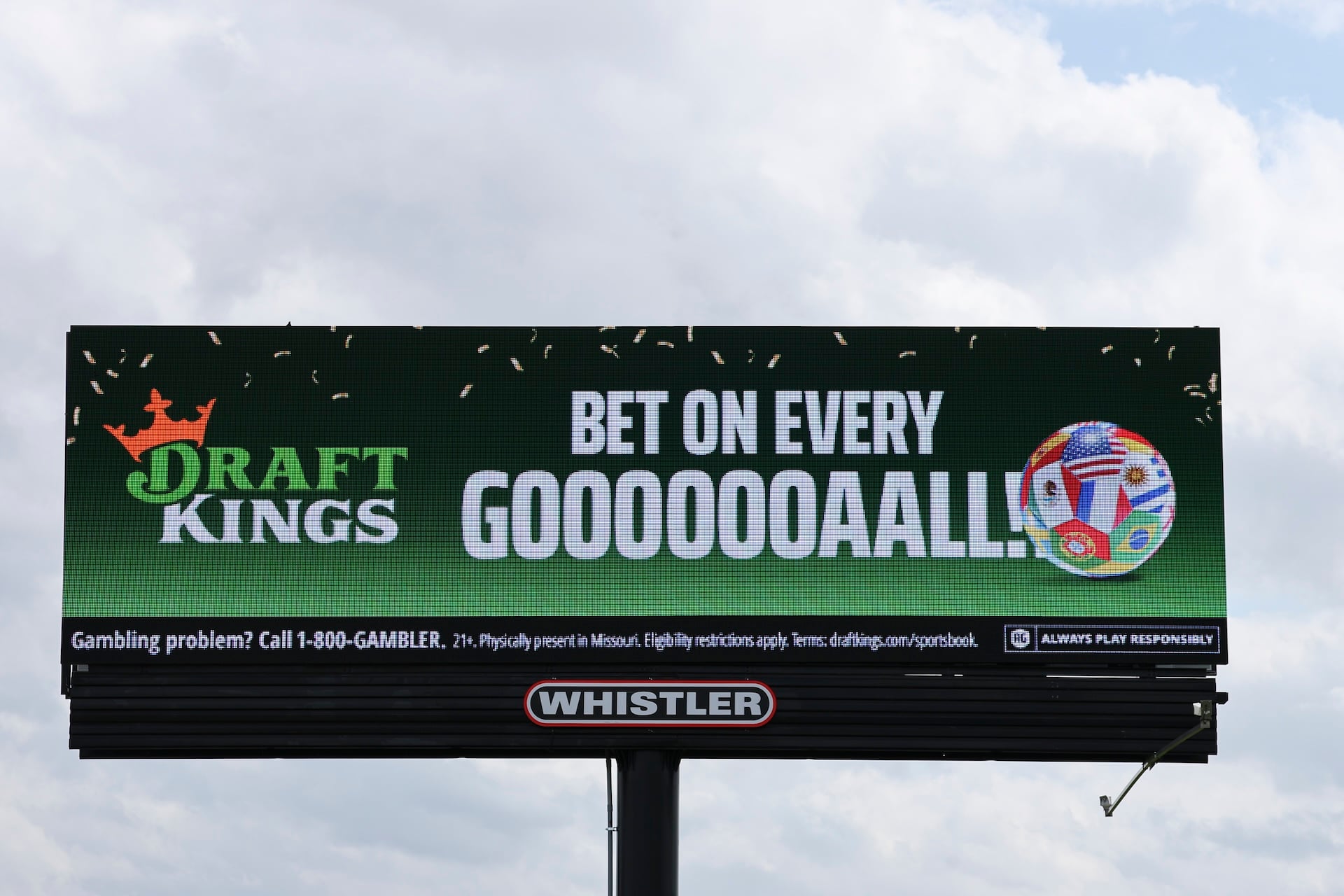
If you’ve ever used DraftKings, you’ve probably noticed that the company is prone to emailing users, and—if they have the mobile app—sending push notifications. Redditors have described these as difficult to turn off.
A report from the New York Times, based on interviews with over 40 former DraftKings employees, and apparently a look at some of the company’s internal documents, has some possible insight about what DraftKings is supposedly up to: using machine learning to target the valuable resource commonly known as “losers.”
One ex-DraftKings employee who went on the record to the Times, Jayden Butts, said his basic task was to apply an AI model that evaluated the worth of users based on the following question: “Is this person going to give us more than we’re giving them?” If the answer was yes, that person was a ripe target for promotions, and the company would “open the floodgates,” according to Butts.
According to the Times’ investigation, in 2023, DraftKings built a model designed to score users on “elasticity.” On its face, this is an economic concept that doesn’t relate directly to traits like problem gambling. It’s more like a measure of responsiveness to incentives. Different consumer goods have different price elasticity of demand, meaning consumers respond to certain price changes more eagerly than others.
Different DraftKings users, then, have different elasticity according to this model, meaning they respond differently to free bets and promotions, with more elastic users generating more revenue for DraftKings. The Times notes that according to a 2023 memo it says it reviewed, players of slots games were more elastic. Early 2024 data, according to the Times, showed that highly elastic slots players blew more money than less elastic players.
One U.K. study of gamblers from 2016 found that problem gambling in online slots players was the second most prevalent of the types of game player it studied, after in-person poker players.
The Times also spoke to former DraftKings employees who tried to build a different model: one designed to predict when users were headed toward a crisis and would need an intervention. One of these ex-employees, named Jake Shanin, told the Times that an internal crisis prediction model was showing promise. Here’s what the Times says happened:
“In early 2025, Mr. Shannin said, the team prepared to share the new model with company officials, including [DraftKings’s chief responsible gaming officer, Lori Kalani]. But the day of the presentation, the meeting was canceled. Two other attempts by DraftKings employees to build similar algorithms have also been shelved, according to two former employees.”
DraftKings provided a statement to the Times saying the company “rejects any implication that its marketing practices are unfair or improperly targets customers.” Promotions, DraftKings says, are “directed toward customers who demonstrate sustained, engaged use of our platform, not toward customers based on their losses.”
In an interview, Kalani told the Times DraftKings needs “customers who are betting within their means, are betting for entertainment and betting for fun” in order to stay in business, and that it monitors for “potentially risky behaviors.” She said, however, that evidence had shown that risk modeling technology wasn’t helpful.