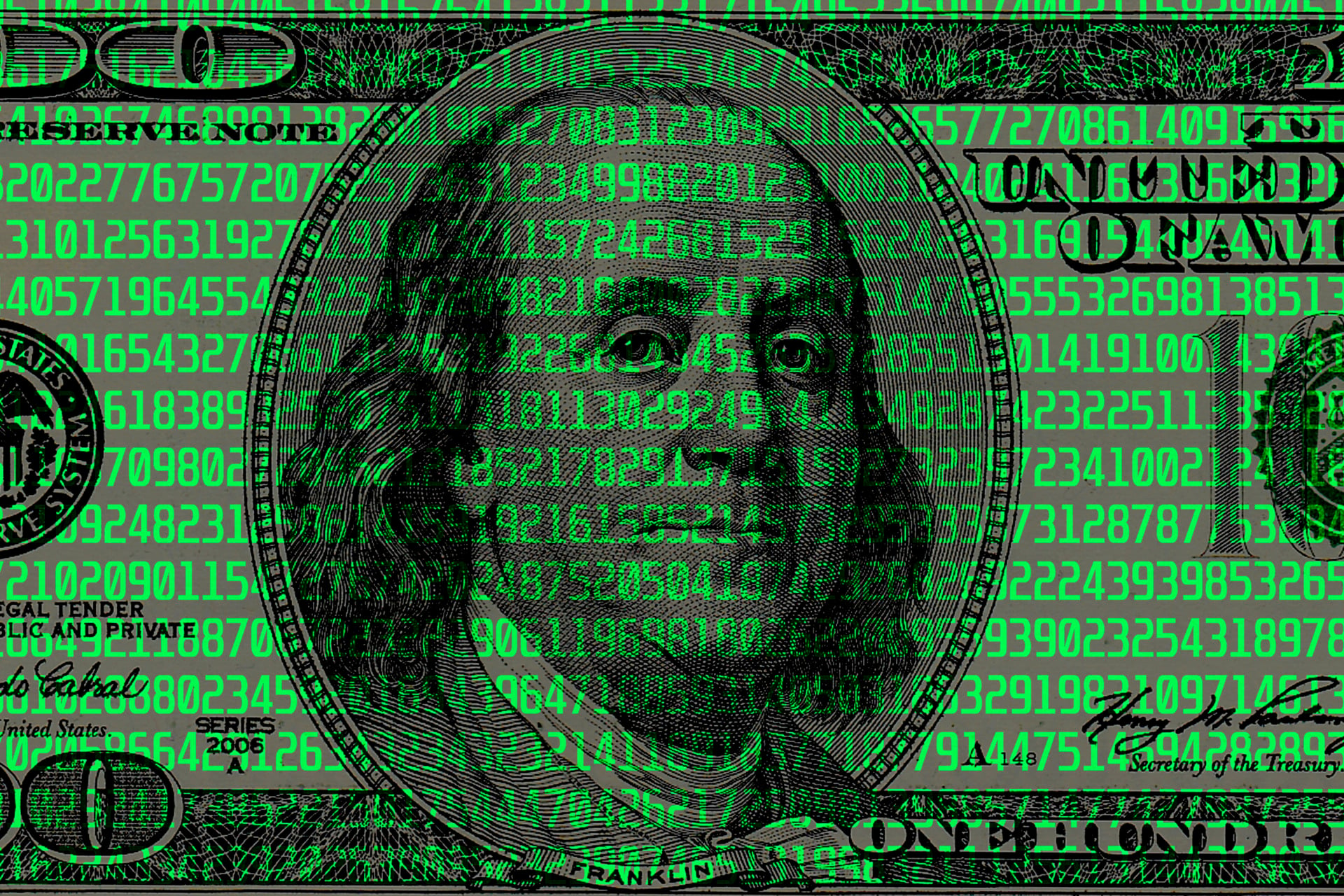
Blockchain analysis firm Chainalysis launched Chain in limited preview on Thursday, giving AI agents the ability to go through all of the company’s blockchain analysis data in a single, unified workspace. The move is yet another step forward for an industry that started out as an attempt to remove many of the points of centralization from online finance and has now turned into what can only be described as a complete financial panopticon mostly built around the centrally issued and controlled U.S. dollar as its currency of choice.
Chainalysis used last month’s $6.3 billion hack of crypto exchange Binance as the backdrop for the launch. In its announcement, the company said its investigators had been using Chain to follow the stolen funds as they spread across tens of thousands of addresses. The attackers initially held the crypto on nearly a dozen different blockchains and kept moving it over bridges, so rather than manually search through each chain, the investigators simply asked Chain to find the corresponding bridge transactions.
“We didn’t need external APIs, we didn’t need explorers, we didn’t need custom scripts. We could just say, ‘Hey Chain, go find the corresponding bridge transactions,’ and it would go and do it,” one unnamed Chainalysis investigator said in the post.
Introducing Chain, Chainalysis’ AI-native workspace for exploring intelligence, conducting analysis, creating outputs and building repeatable automations.
What used to take days, now takes minutes.
Everything we know about how money moves. Ask Chain. pic.twitter.com/b7FsQwblGQ
— Chainalysis (@chainalysis) November 19, 2026
Beyond simply answering questions, Chain can also produce investigation graphs, reports, and briefs from a prompt, and investigators can turn their own tracing methods into repeatable automated workflows. According to Chainalysis, Chain helps its customers, “among them exchanges and law enforcement,” disrupt threat actors, with police able to “develop intelligence, secure evidence and know where to seize assets.”
The product page for Chain claims Chainalysis has mapped more than 450 billion transactions, run more than 10 million investigations across its ecosystem, and identified more than 180,000 unique entities. Customers can also connect their own AI tools, such as Claude, ChatGPT, and Google Gemini, to Chain. “Chain turned a 45-minute manual investigation into a 5-minute automated task,” MoonPay’s Brian Higdon said in a testimonial on the page.
Chainalysis has been the biggest name in blockchain surveillance for most of crypto’s history. The company was founded in 2014 and now sells data, software, and research to government agencies, exchanges, financial institutions, and cybersecurity companies in more than 70 countries. Additionally, its annual crypto crime report, which put illicit crypto flows at $154 billion last year, is one of the most widely cited sources on crypto crime.
Chainalysis is also far from the only firm handing blockchain surveillance work over to AI. TRM Labs launched Co-Case Agent in March, saying the assistant “translates natural language prompts into complex investigative actions.” Elliptic rolled out its Decode agent in September, and Crystal Intelligence previewed its own AI investigator on Wednesday, one day before Chain arrived. The AI cops tracking and analyzing all of your crypto transactions are here.
Regulators and Cops Love Crypto
With all of this in mind, it seems clear that traditional banks are more private than crypto. A bank’s records at least stay with the bank and whoever can compel it to hand them over, while a public blockchain broadcasts every transaction to the world permanently and leaves companies like Chainalysis to connect the dots. It’s almost as if public blockchains were purpose-built for the end of financial privacy.
And government officials around the world are happy with this development. For example, in a speech on Tuesday, Raymond Chan, the Hong Kong Monetary Authority’s (HKMA) executive director for enforcement and anti-money laundering (AML), described what crypto enables from a regulatory perspective:
“Unlike cash, digital-asset transactions leave a permanent public trail on the blockchain, providing valuable evidence. Imagine how effective AML controls would become if we could integrate blockchain analytics, customer due diligence information, scam intelligence, monitoring of suspicious wallets and rapid freezing into an on-chain A.I. agent.”
In July, U.S. Immigration and Customs Enforcement (ICE) awarded TRM Labs a $94.7 million contract for crypto forensic software and support, which Chainalysis described as the largest blockchain analytics contract ever awarded by the federal government in a legal challenge over the sole-source award. ICE’s request for information ahead of the award asked vendors about using AI for “agentic data retrieval and entity resolution” and whether investigators could flag wallets so that exchanges would be automatically notified in real time when the funds moved, allowing them to place holds. ICE also asked about vendors’ relationships with stablecoin issuers for coordinating freezes.
In the aftermath of the recent Binance hack, the crypto industry quickly abandoned its philosophy of permissionless finance by freezing billions of dollars’ worth of stolen funds, effectively acting like banks. Pressure has also been building on services that didn’t freeze anything. The FBI urged node operators of cross-chain swap protocol THORChain, along with other crypto services, to block transactions tied to the hack, and Kruw, who runs the most popular coordinator for Bitcoin CoinJoins, has been criticized for not blocking stolen funds from a variety of hacks tied to North Korea.
Questions Over Reliability
There are also questions over the reliability of Chainalysis’s blockchain analysis. In September, a federal appeals court upheld the conviction of Roman Sterlingov, who was sentenced to 12 and a half years in prison for running the Bitcoin Fog mixer, in a case that relied on evidence from Chainalysis’s Reactor software. “Both experts admitted that Reactor was not peer-reviewed and that they did not know the error rate for the software,” the court wrote, though it upheld the trial judge’s decision to admit the evidence, citing in part the experts’ testimony that they couldn’t recall a time Reactor had been wrong.
A 2025 study by Delft University of Technology researchers, who compared Chainalysis’s labels against seized data from three illicit services, found that it correctly attributed only 24.54% of the addresses used by the BestMixer mixer, though false positives were rare across all three services, at less than 0.5%.
Director of investigations and intelligence at CipherTrace describes the use of @chainalysis’ behavioral clustering heuristic as “reckless”
My latest for @BitcoinMagazine https://t.co/l1gnCxa7WI
— L0la L33tz (@L0laL33tz) August 31, 2023
Law enforcement is also already accusing innocent people based on other AI-powered surveillance tools. Two men were wrongfully arrested in Florida after facial recognition software matched them to crimes, even though both said they were hundreds of miles away at the time. In Colorado, a woman was accused of stealing a package based on a Flock license plate reader hit and had to use her own truck’s camera footage and GPS data to prove she didn’t do it.
Financial data is already being used to target people, too. Border Patrol units known as Predictive Intelligence Targeting Teams have been flagging drivers for traffic stops based on what one analyst called “financial activity patterns commonly associated with illicit narcotics activity,” with local police then pulling them over and citing unrelated reasons, such as an obstructed license plate.
The Inverse of Satoshi’s Vision
Put simply, it’s clear that crypto has devolved into the complete inverse of what Bitcoin creator Satoshi Nakamoto originally intended. When Satoshi first announced Bitcoin on a cryptography mailing list in 2008, he listed “Participants can be anonymous” among its main properties.
However, the vast majority of the industry now offers something that is materially worse than traditional banking from many different consumer angles. Beyond privacy, platforms are pushing customers into the crypto casino, whether that’s Coinbase sending push notifications about March Madness prediction markets or letting AI agents trade useless memecoins like Fartcoin on users’ behalf.
The crypto industry really needs to take a step back and think about what it’s even doing at this point. With Wall Street building its own blockchains and AI cops patrolling them, it’s hard to overstate how completely off the rails crypto has gone.