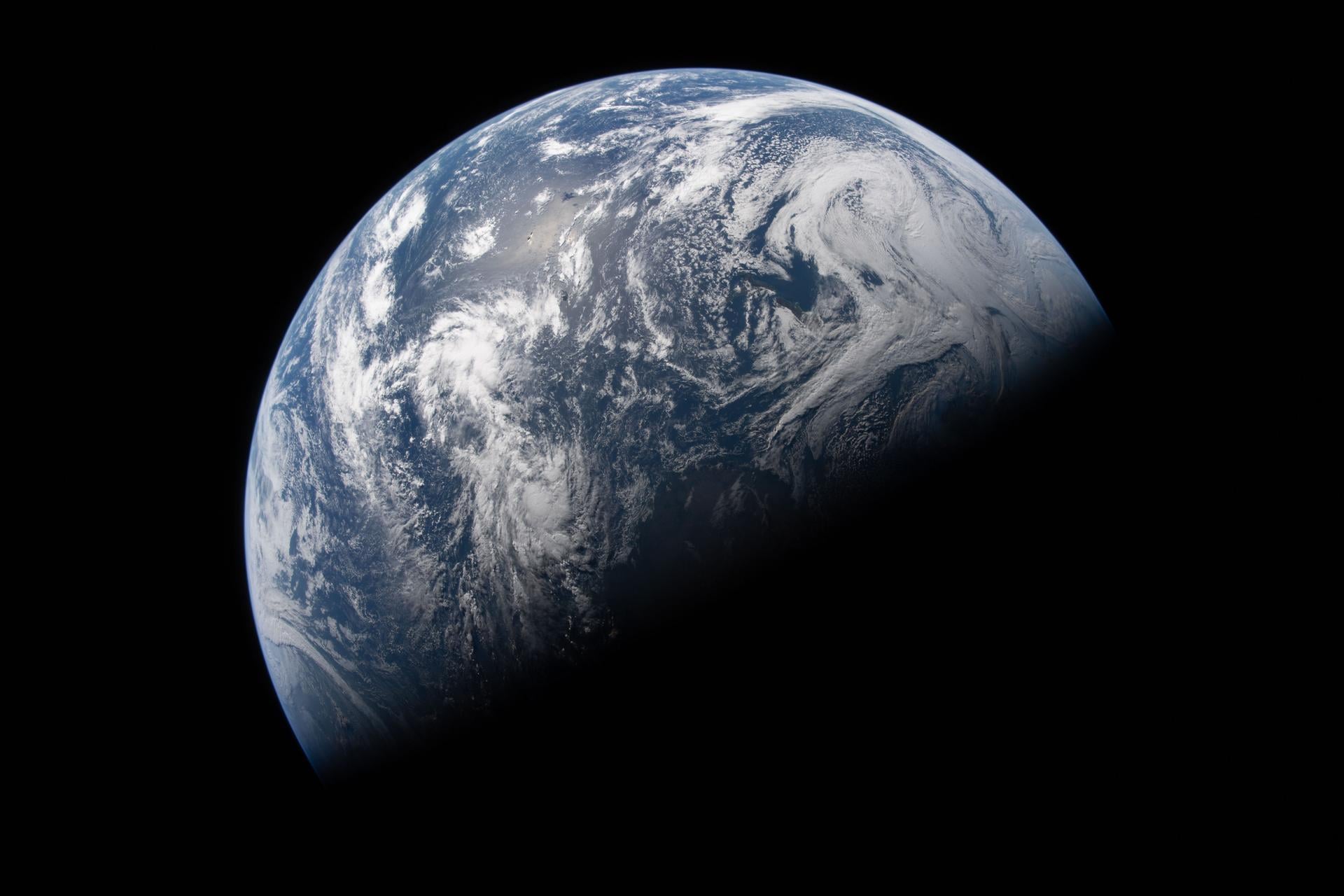
Around 4.5 billion years ago, the young Earth was largely a molten world. As the planet heated and gradually differentiated, dense iron sank toward its center, forming the metallic core, while lighter silicate materials rose to form the mantle. This separation shaped Earth’s internal structure, but it may not have marked the end of the interaction between these two vast reservoirs.
In a recent study published in Science Advances, scientists investigated whether Earth’s core has remained isolated from the mantle or whether material has continued to move between them over billions of years. The scientists turned to unusual chemical signatures found in volcanic rocks, which could offer clues that trace back to Earth’s earliest history.
The findings suggest that hydrogen—a key component of water—has been leaking from the planet’s metallic core into the lowest layer of the mantle, eventually influencing the composition of volcanic rocks at the surface.
Core-mantle exchange
Earth’s interior is not necessarily chemically uniform. Some regions of Earth’s deep mantle retained material from the planet’s formation, surviving the enormous heat and mixing of its early history. Some unusual material may have originated in the core and later traveled toward the overlying rocky mantle.
The researchers behind the new study used computer simulations to replicate conditions found deep inside the Earth. They set out to examine how two forms of hydrogen, standard light hydrogen and a heavier version called deuterium, behaved as molten rock cooled and crystallized into different minerals.
The simulations revealed that as Earth’s ancient magma ocean cooled and crystallized, its two forms of hydrogen were distributed relatively evenly throughout the mantle. Although small variations in isotope ratios developed at different depths, they were insufficient to explain the exceptionally low deuterium levels observed in volcanic rocks from places such as Baffin Island in the Canadian Arctic and Iceland.
Leaky core
To help explain the unusual chemical signatures found in volcanic rock, the researchers suggest that water, in the form of hydrogen with a low proportion of deuterium, has likely leaked from Earth’s metallic core into the surrounding mantle over billions of years. As iron sank to form the core, it absorbed lighter hydrogen, leaving Earth’s core depleted in deuterium.
Another clue pointing toward a leaky core is the presence of unusually high ratios of helium-3 to helium-4 found in volcanic rock, a rare form of helium that may have been preserved in Earth’s core since its early history. The same volcanic rocks also showed unusual tungsten and ruthenium signatures, pointing to a contribution from the core as well.
The findings strengthen the possibility that primordial volatile material has been transferred from the core to the mantle. Such an exchange would have important implications for understanding Earth’s interior. Rather than acting as entirely separate chemical reservoirs, the core and mantle may have exchanged volatile elements over geological time, allowing material from Earth’s deep interior to influence the composition of volcanic rocks at the surface.
The researchers are hoping to carry out future studies to try and figure out exactly how material from the core makes its way to the mantle.