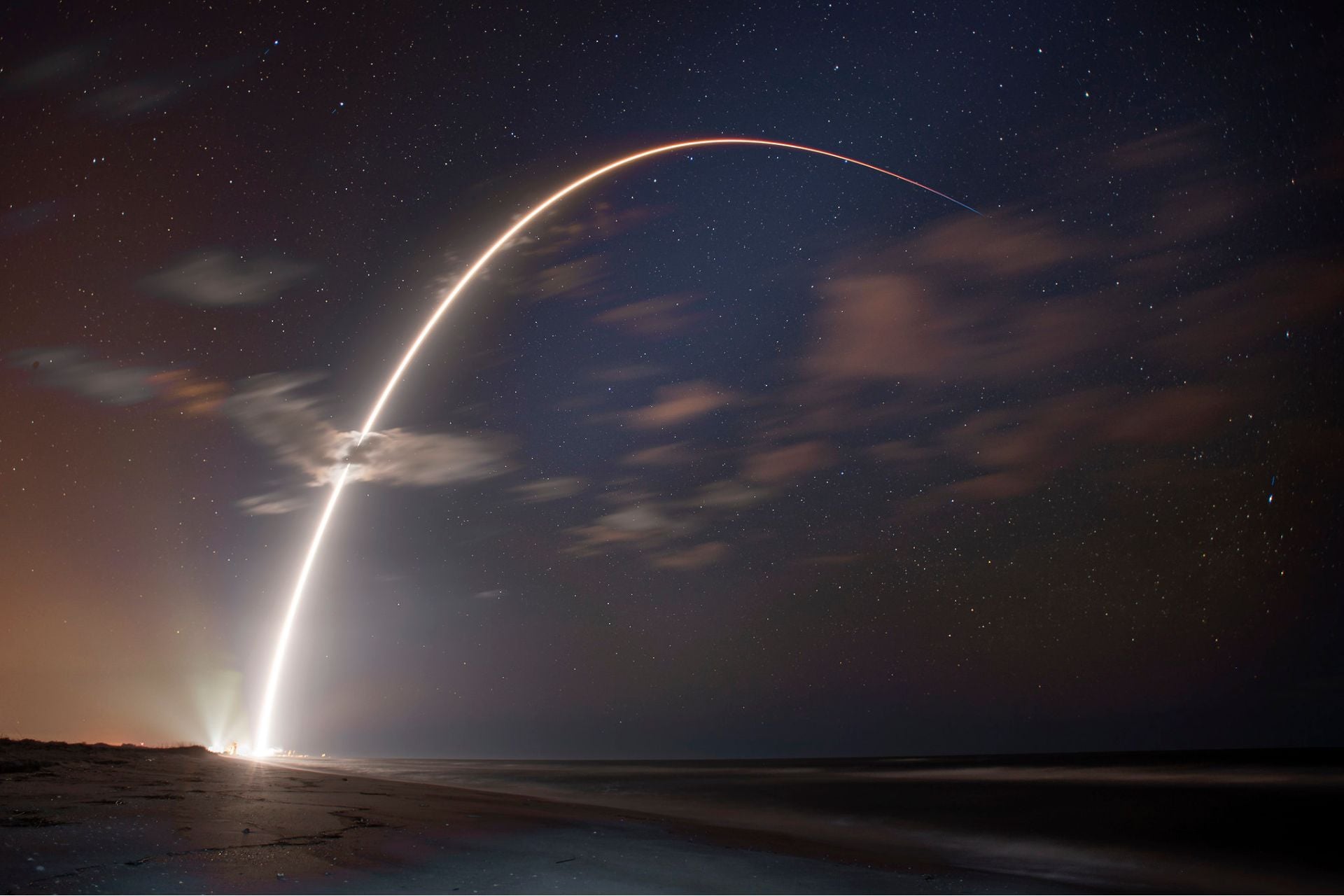
As SpaceX continues to dominate low Earth orbit, the U.S. military’s growing dependence on the rocket company may be creating an uncomfortable new reality for modern wartime.
Explaining on X, SpaceX founder Elon Musk said there’s “a US government arm of SpaceX called Starshield, which has a different set of satellites than Starlink, which is for civilian use,” and that the “company that makes the suicide drones incorrectly used the civilian system, instead of the Starshield.” SpaceX executives accordingly sought higher payments from the Pentagon for the satellite service used on the drones during the Iran war, arguing the military should be paying for a higher tier of connectivity, according to a Reuters report.
Starlink vs. Starshield
SpaceX operates two different satellite networks. Starlink is a commercial broadband constellation that provides internet and connectivity services for commercial use. Starshield, on the other hand, is a more secure, military-focused version built for defense, intelligence, and national security operations.
The Reuters report claims that the Pentagon had been paying $5,000 per terminal connection for the drone operations. SpaceX, however, argued that the military should pay for a more expensive aviation-grade service tier worth closer to $25,000 per terminal, according to Pentagon documents reviewed by Reuters and sources familiar with the pricing talks.
The drones in question are called LUCAS, a one-way attack drone made by Arizona-based company SpektreWorks. The Pentagon argued that the suicide drones used the Starlink connection for minutes or hours, so the higher aviation-tier pricing—typically intended for aircraft—should not apply to LUCAS.
SpaceX executives believe that the LUCAS drones were operating under conditions that more closely aligned with the company’s aviation tier subscription rather than the one designed for civilian use. The Pentagon ultimately agreed to pay the higher connectivity fee, a development that nearly doubled the per-unit cost of the LUCAS drones, according to Reuters.
Trouble in paradise?
In response to the Reuters report, Sean Parnell, the assistant to the secretary of defense for public affairs and Pentagon spokesperson, denied the allegations of a dispute with SpaceX.
“The claims in this article are simply not based in reality and do not reflect the close, effective collaboration between our teams,” Pernell wrote on X. He also added that SpaceX remains a strong and valued partner to the Department of Defense.
Musk also played down any alleged tension between the Pentagon and SpaceX. “Not the Pentagon, the company did it,” he wrote on X, blaming drone manufacturer SpektreWorks for using Starlink instead of Starshield.
The alleged dispute still highlights the U.S. military’s increased reliance on SpaceX, which holds a near monopoly over satellites in Earth orbit. The military use of Starlink-connected drones became publicly known during Russia’s invasion of Ukraine in early 2022; the satellite network has also been put to use in the ongoing war between the U.S. and Iran, both for military operations and for civilian internet access.
Earlier in March, Musk responded to a claim that a LUCAS drone had an integrated Starlink terminal by saying that “it is a violation of commercial Starlink terms of service to use the terminal for weapon systems.” He added, “This is not under SpaceX control.”
The line between civilian and military use is becoming blurred, especially when the two highly intertwined satellite networks are owned by the same company. And that company is currently dominating the industry, leaving little room for alternatives.