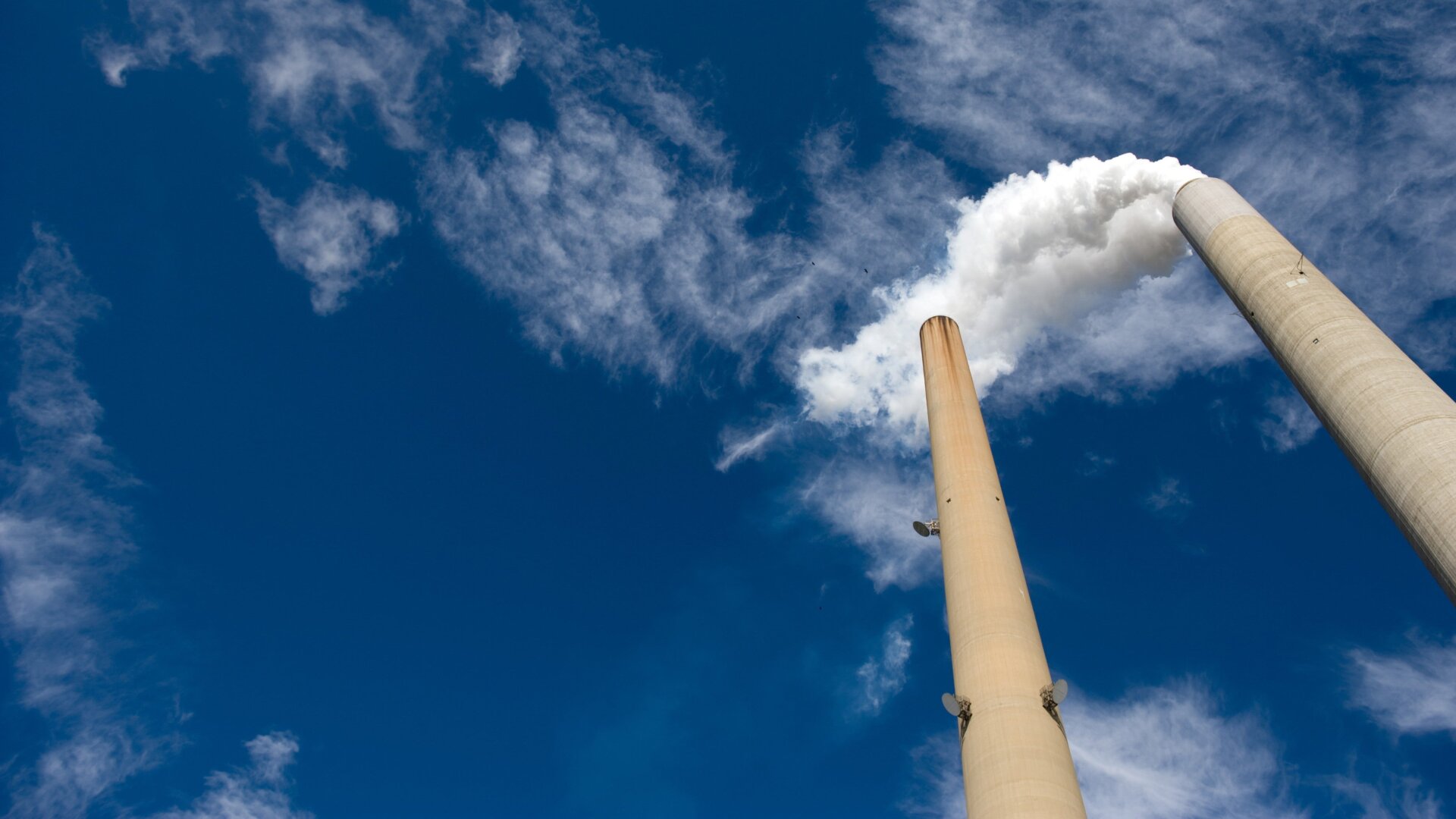
The Environmental Protection Agency’s name continues to get more oxymoronic under Donald Trump, with the agency now planning to abandon any and all restrictions on greenhouse gas emissions for coal and oil power plants.
The New York Times reported this week that EPA administrator Lee Zeldin told attendees at a Group of 20 meeting in Houston, Texas, that Barack Obama’s and Joe Biden’s administrations had waged a “war on coal.” In a statement to the Times, the EPA lied, claiming that carbon and climate are essentially unrelated.
U.S. power plant-generated pollutants “have no material impact on global climate change,” the agency wrote. “In fact, if all carbon dioxides were eliminated tomorrow, there would be no meaningful climate impact.”
That is not a fact, obviously. As the Times noted, if the U.S. power sector was measured separately from the rest of the U.S. economy, it would be the fifth-largest climate polluter on the planet behind China, all other U.S. emissions, India, and Russia.
The EPA specifically advanced two measures. One repealed a Biden-era directive that power plants eliminate most climate emissions by 2039 or shutter. In the other, the EPA rescinded its own authority to regulate greenhouse gas emissions generated by power plants under the Clean Air Act entirely, on the basis that greenhouse gas is not a pollutant.
That argument is, of course, in complete and total denial of the scientific consensus on climate change. It may also be fodder for an eventual attempt to get a friendly decision from federal courts/SCOTUS restricting the EPA’s regulatory powers as it pertains to power plants. The EPA already rolled out this argument earlier this year when deregulating emissions from tailpipes.
The endgame, presumably, is a court decision that prevents future administrations from attempting to resuscitate the EPA after Trump and Zeldin are done choking it to death.
“They are swinging for the fences to try to prevent any administration from regulating one of the largest sources of emission for the United States,” Carrie Jenks, executive director of Harvard Law School’s Environmental & Energy Law Program, told the Times.
“War on coal” rhetoric aside, the reason coal has been receding as an energy source over the last few decades is that other sources are outcompeting it. Trump’s Department of Energy has attempted to keep dozens of coal plants that are either failing or scheduled for shutdown or renovation operating as-is via “emergency” orders. One of those orders, for a coal plant in Michigan, was just shot down by a federal appeals court that agreed no emergency was occurring.
Trump’s EPA has also ceased estimating public health benefits of clean air regulations, because problems just go away if you ignore them long enough to blame someone else.