In the decades since American aviator Amelia Earhart and her navigator Fred Noonan vanished while attempting the first flight around the world, numerous theories about their disappearance have emerged. One posits that the pair landed on the uninhabited island of Nikumaroro in the Western Pacific, then became marooned when the tide swept up their plane and dashed it against the rocky shoreline.
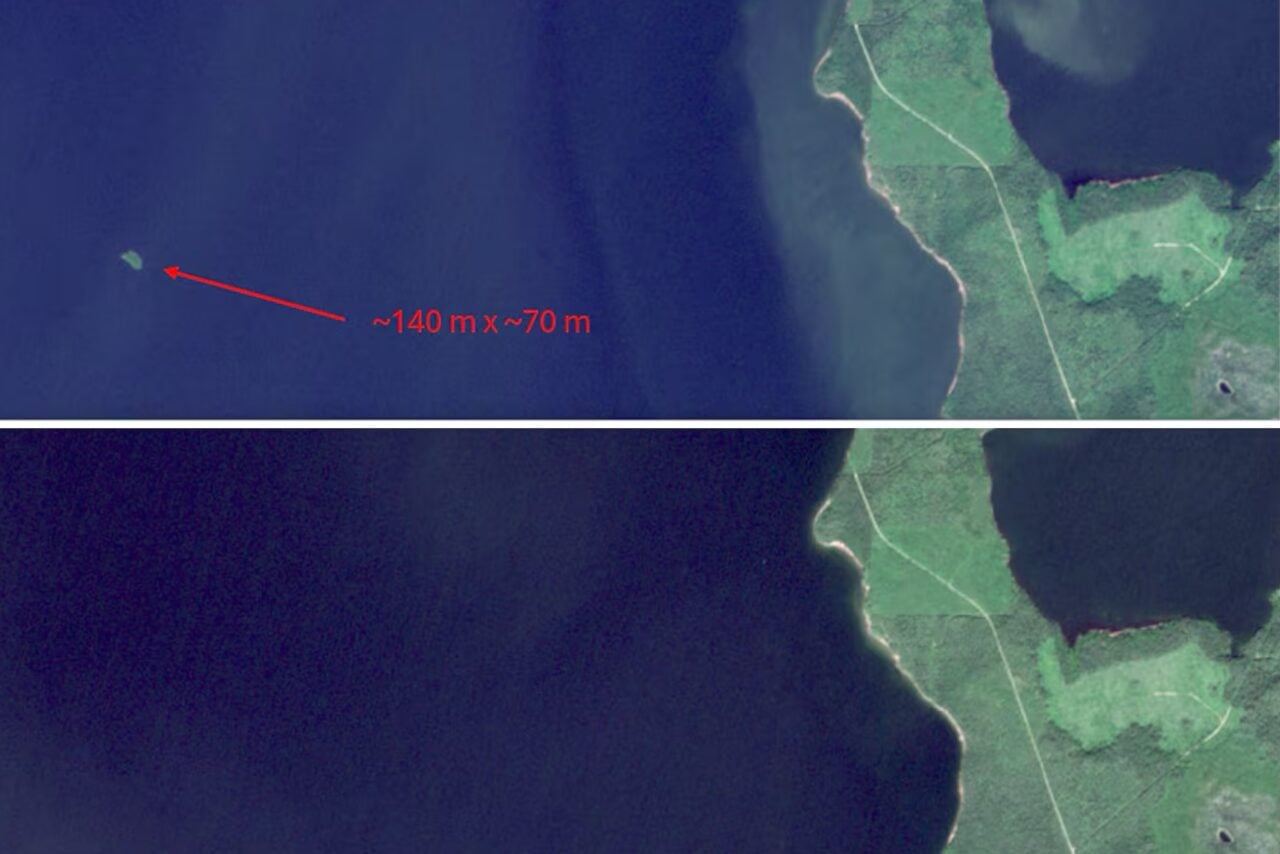
The evidence is certainly compelling. A 2018 analysis of human bones found on the island determined that they were 99% more likely to be from Earhart than other individuals. Experts have also speculated that 1930s artifacts discovered on Nikumaroro belonged to Noonan and Earhart. Then, in 2020, an amateur researcher spotted a plane-like shape while browsing satellite images of the island on Apple Maps. That visual anomaly later came to be known as the Taraia Object.
Now, Purdue University has announced that a team of 17 expeditioners, supported by a 17-person boat crew, has arrived at Nikumaroro to investigate whether the Taraia Object could be Earhart and Noonan’s Lockheed Electra 10E airplane. Over the next five days, they plan to use a combination of archaeological techniques, sonar technologies, and even a water induction dredge to thoroughly inspect the submerged structure, located on the edge of a peninsula in the island’s lagoon.
“It is incredibly rewarding to be this close to completing our inspection of the Taraia Object and potentially solving, at long last, the outstanding mystery of the disappearance of Amelia Earhart and Fred Noonan more than 89 years ago,” Rick Pettigrew, executive director of the Archaeological Legacy Institute and leader of the expedition, said in a statement.
That will be easier said than done. Not only will Pettigrew and his team have to contend with the effects of El Niño, which could restrict their daily access to shore, but they will also face scores of freakishly large, bird-hunting crabs.
An island crawling with crabs
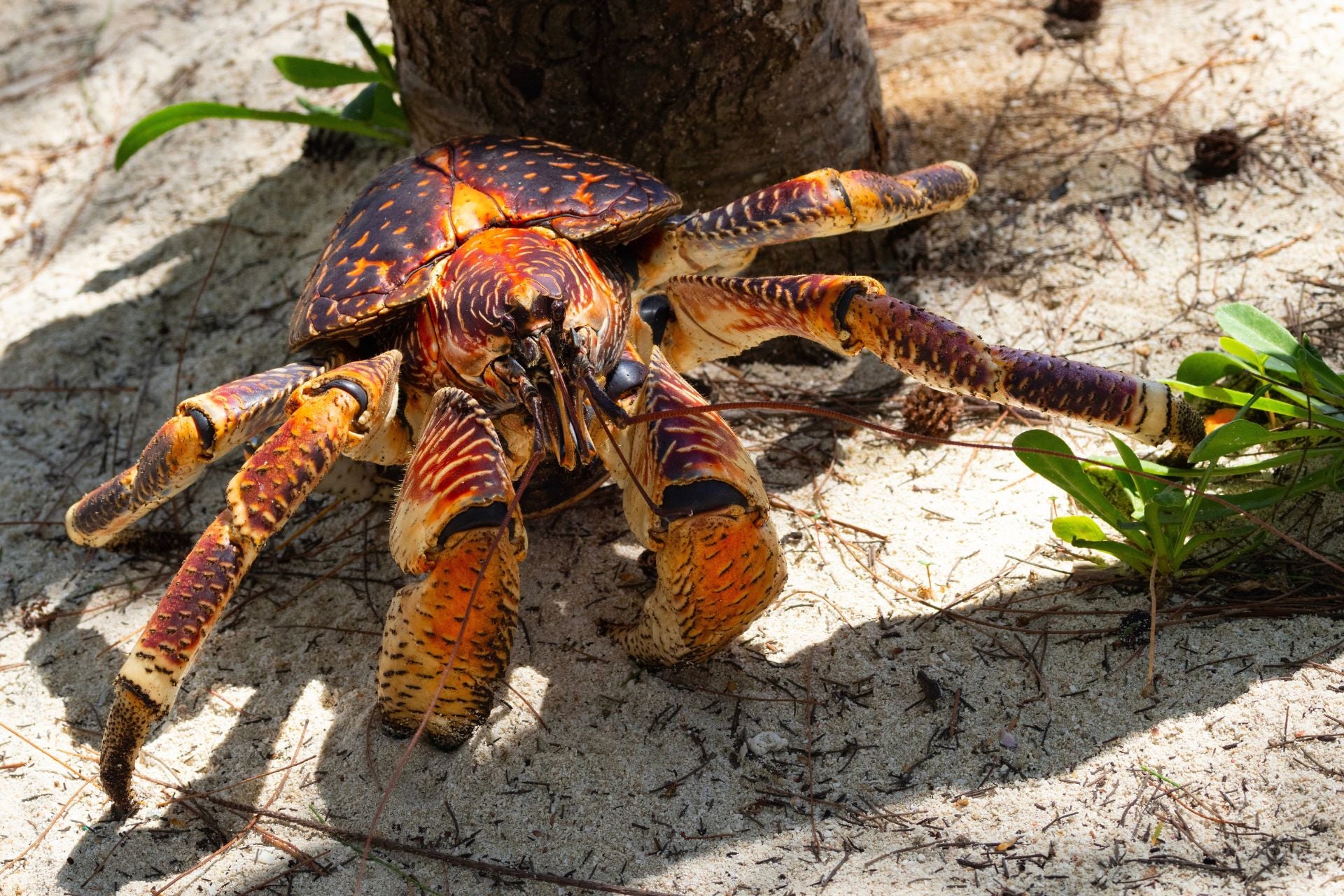
Birgus latro, commonly known as the coconut crab for its ability to tear open green coconuts and feast on the flesh, is the world’s largest land-dwelling arthropod. A coconut crab’s leg span can grow up to 3 feet (1 meter) long, and in addition to chowing down on coconuts and other fruits, nuts, and seeds, they also hunt animals such as rats and seabirds.
Nikumaroro is absolutely crawling with them. The crabs won’t pose any danger to the expedition team, but they will be a serious nuisance. Due to their size and heightened nighttime activity, the researchers will have to sleep on their ship instead of staying on the island overnight, according to Purdue.
This exceptionally strong El Niño could make each day’s journey from ship to shore even more difficult. “The effects of El Niño remain present around the island, and daily access to shore will depend on tides and safe boating conditions,” the Purdue statement reads.
Unearthing the truth
If all goes according to plan, the expedition team will begin investigating the Taraia Object on Wednesday. First, they will survey the sand spit at the tip of the peninsula to look for surface artifacts. Then, maritime archaeology specialists will use a magnetometer to hunt for any ferrous metals that could have been part of steel cabling or other aircraft components.
The researchers will also use sonar to detect objects beneath the sediment of the lagoon. After locating an object, the archaeology team will use a hydroprobe to make direct contact and determine its depth, orientation, and surface composition. Lastly, a water induction dredge will remove sediment for visual inspection of the object.
Aerial photos suggest the Taraia Object is only 10 feet (3 meters) from the lagoon’s shore and that it is submerged in just 5 feet (1.5 meters) at low tide. However, it could be buried deep beneath the sediment, so accessing it could still prove difficult.
On top of the challenges presented by El Niño, coconut crabs, and navigating a remote, uninhabited island, this investigation will certainly put the expedition team to the test. Hopefully, the tantalizing possibility of solving one of the biggest mysteries in American history will keep them going.