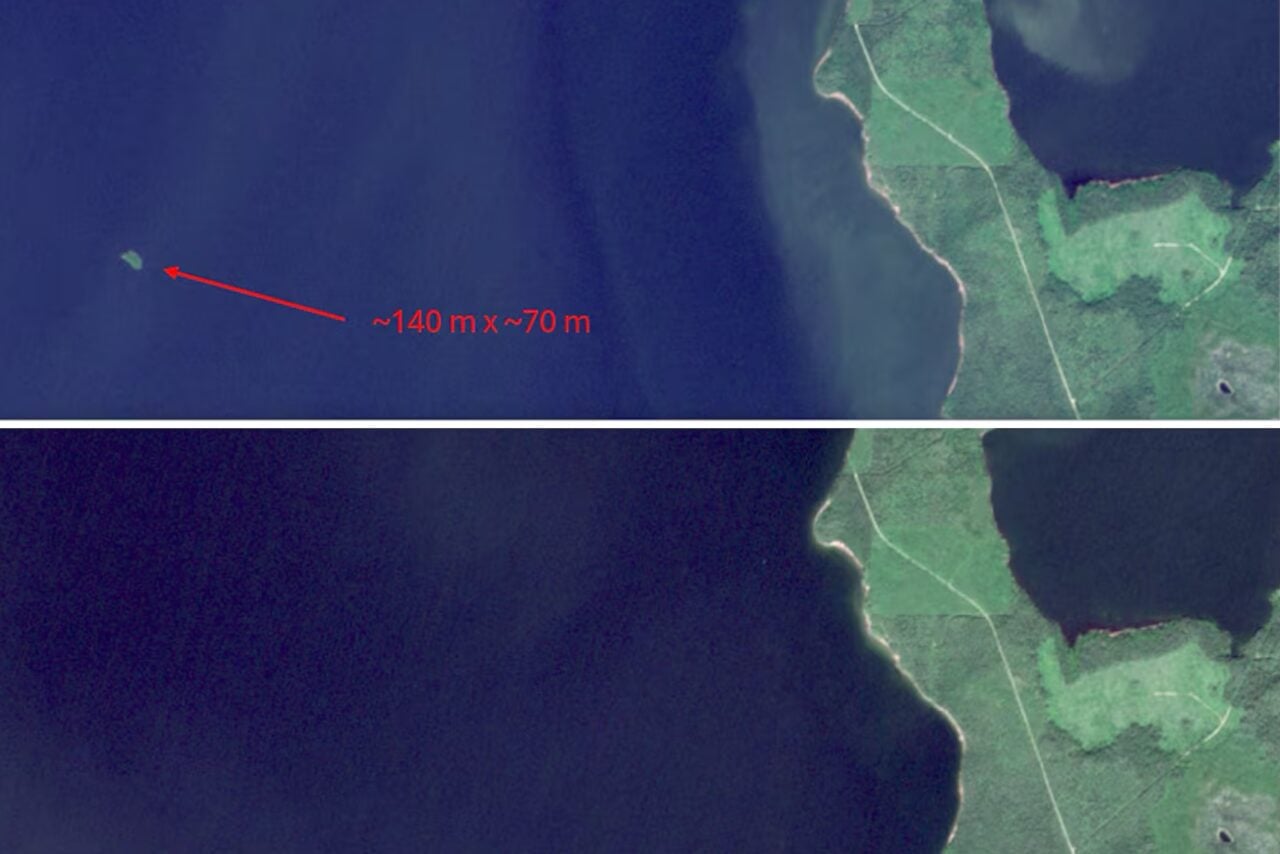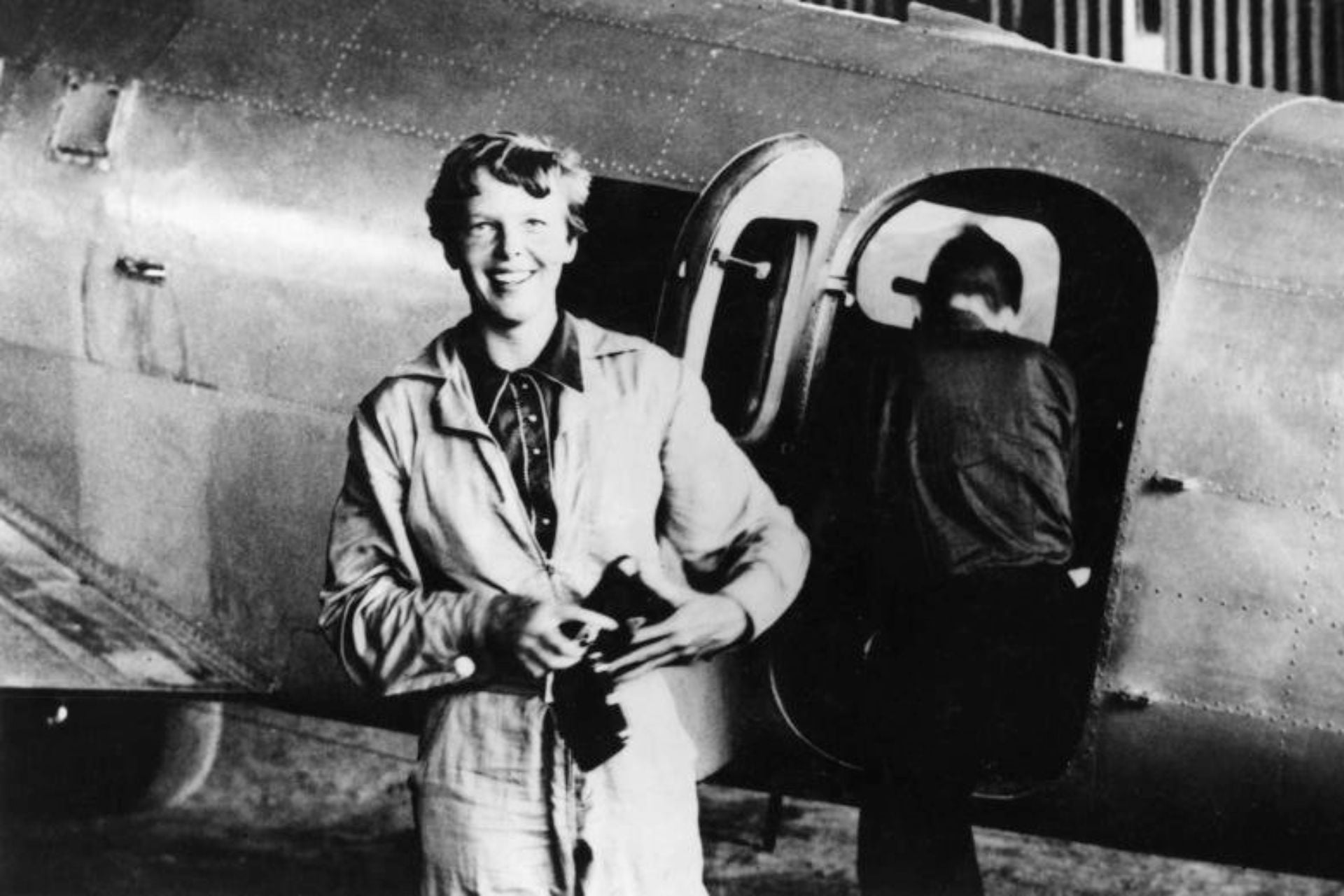
In 2020, an amateur researcher spotted an elongated, white object while browsing through Apple Maps satellite images of Nikumaroro Island in the West Pacific. In those blurry photos, it almost resembled an aircraft not unlike the plane Amelia Earhart and her navigator Fred Noonan attempted to fly around the world in 1937.
The unusual shape, which came to be known as the Taraia object, immediately captivated researchers who had long searched for Earhart’s plane. Could she and Noonan have landed on the remote, uninhabited island and become marooned there, never to be seen or heard from again?
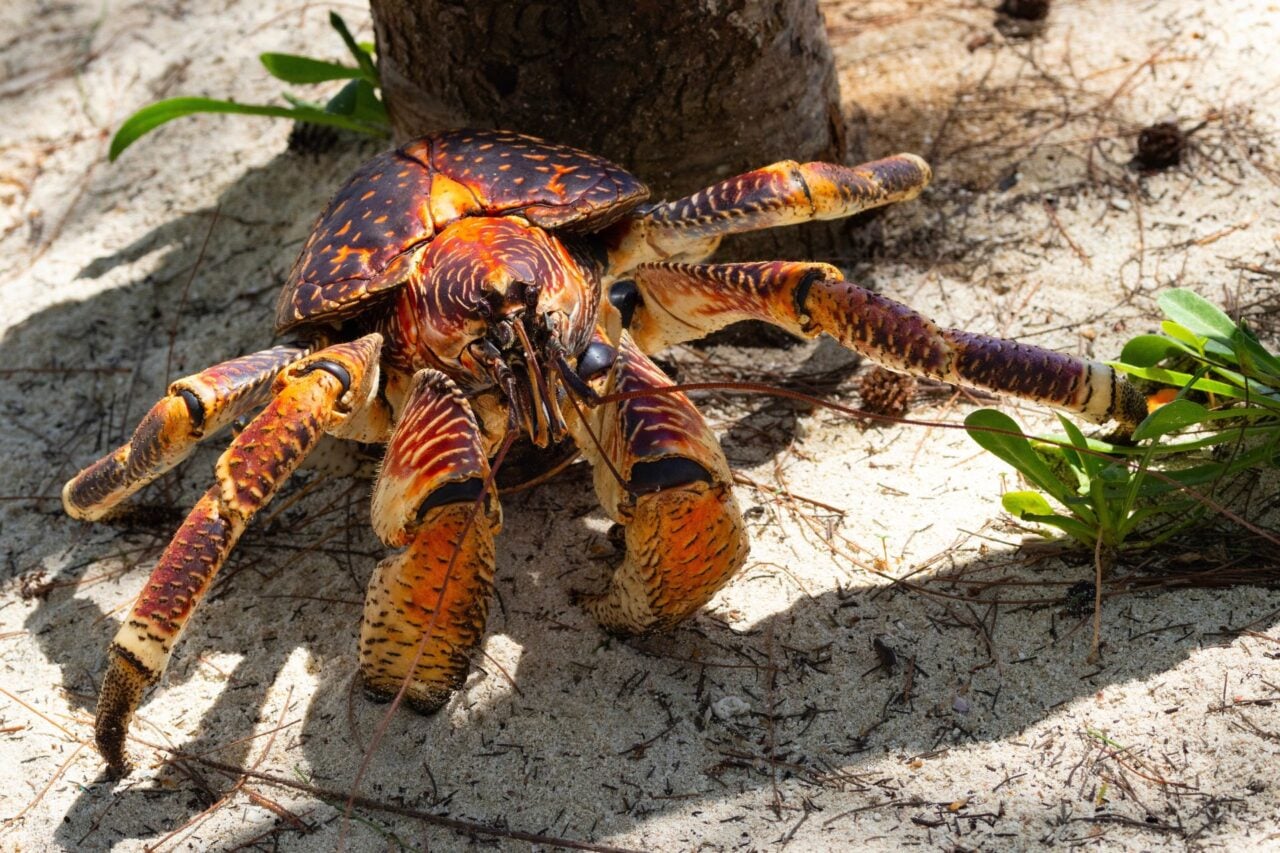
Last week, an expedition team arrived at Nikumaroro Island to investigate the Taraia object, hoping to finally solve the decades-old mystery of Earhart and Noonan’s disappearance. Their task was arduous. The object was located on the edge of Taraia Peninsula in the island’s lagoon and submerged in several feet of water, complicating investigative efforts. Plus, Nikumaroro is absolutely crawling with coconut crabs—freakishly large crustaceans so oppressive the team couldn’t stay on the island overnight.
Over the course of a week at Nikumaroro, the researchers spent four days studying the Taraia object, trekking back and forth between their ship and the lagoon daily. After all that, their search turned up empty.
“Perhaps no words better capture this expedition than Amelia Earhart’s own: ‘Adventure is worthwhile in itself,’” Steve Schultz, expedition member and general counsel for Perdue University, said in a statement. “We set out to test a hypothesis, not to guarantee a particular result, and we followed the evidence to the end.”
A clump of trees
On Monday, the Taraia Object expedition—a joint effort by the Archaeological Legacy Institute, Purdue Research Foundation, and Purdue University—confirmed that the visual anomaly was likely a clump of trees that had washed up on the peninsula’s sandspit.
Six years have passed since satellite imagery of the Taraia Object first came to light, and by the time the expedition team reached the site, a large portion of the debris had washed away. Only a single Y-shaped segment remained, and its reflective surface—long cited as evidence that the object was metallic—could be explained by a thin layer of carbonate.
Though the expedition did not find Earhart’s plane, it did uncover a number of interesting artifacts, including a 30-inch (76-centimeter) steel tube. Researchers will continue to study those objects, as they may provide evidence to support the core premise behind the Taraia Object hypothesis: Objects entering the lagoon through a natural channel on Nikumaroro’s western side can travel across the lagoon and wash up along the Taraia Peninsula.
Indeed, the researchers aren’t quite ready to give up on the idea that Earhart and Noonan could have been marooned on Nikumaroro.
“The evidence for the castaway hypothesis—what brought us here—remained very, very strong,” Rick Pettigrew, expedition lead and executive director of the Archaeological Legacy Institute, said in video shared by Purdue. “We think that it’s very likely that Amelia and her navigator Fred Noonan did, in fact, end up here on Nikumaroro island.”
For now, however, the mystery remains unsolved.