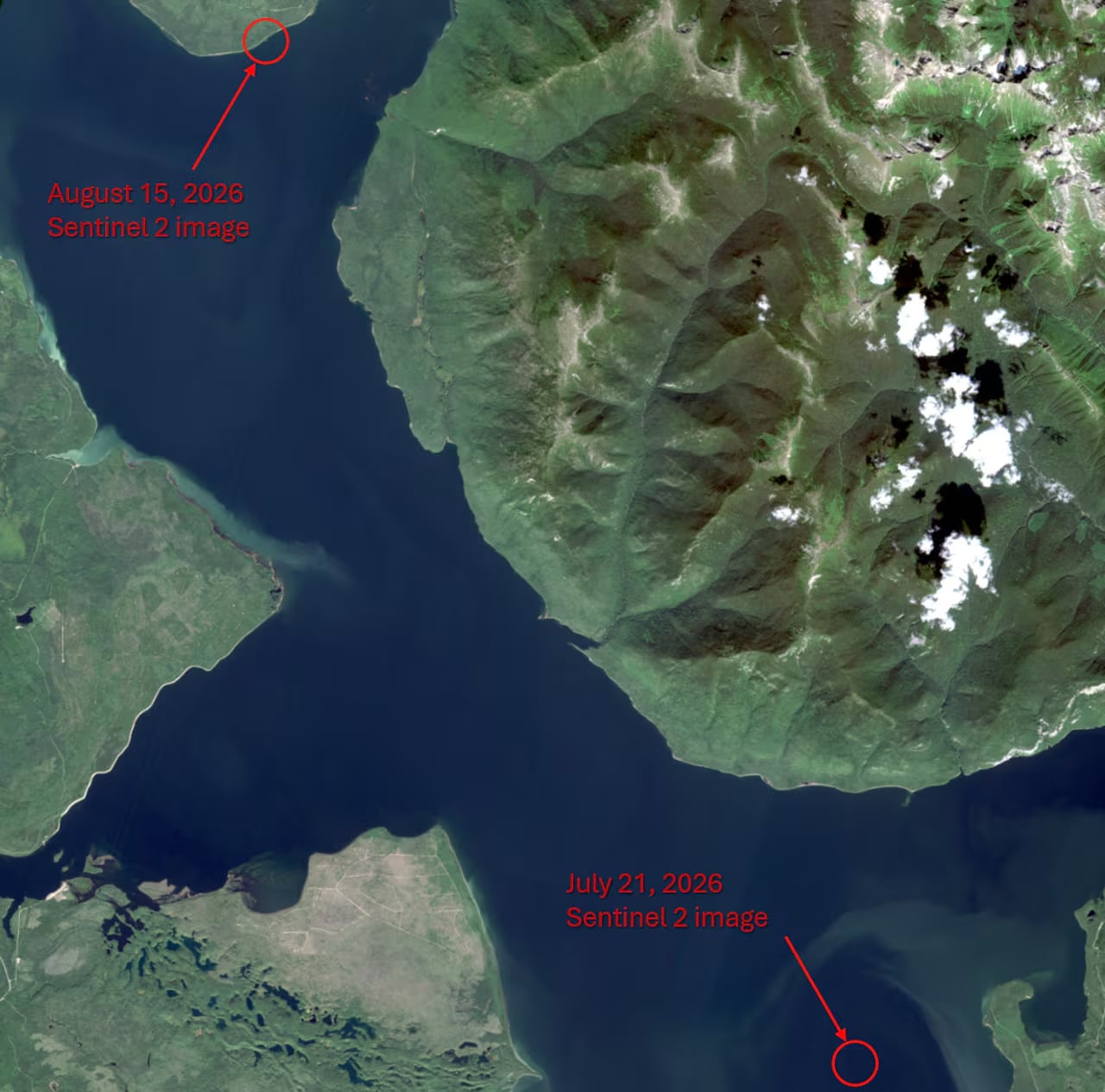
Update: September 1, 12:32 p.m. ET: Somehow Williston’s floating island has returned. A representative for B.C. Hydro—the power utility that manages the reservoir and its hydroelectric dams—told CBC News that satellite imagery has confirmed the 105,000-square-foot (9,800-square-meter) floating forest has drifted 19 miles (30 kilometers) to the northwest. Judging from that August 15, 2026, image, the island is now parked along a lakeshore where the Ospika River flows into the reservoir’s northern Ospika Reach.
“It’s great to know that we found it and it’s not causing any trouble right now,” B.C. Hydro spokesperson Bob Gammer said, “and hopefully that’s the way it stays.”
Rocky Avery, the local “tree relocator” in British Columbia who posted a remarkable video of the floating island earlier this summer, also reported fresh sightings of Williston’s majestic sail-barge of trees, with new photos, late in the day this past Monday.
The original article follows.
Welling up against the northernmost ridge of the Canadian Rockies, the Williston Reservoir in British Columbia is the seventh-largest reservoir by volume in the entire world. Its 680-square-mile (1,761-square-kilometer) expanse is so vast that the government power utility responsible for its upkeep, B.C. Hydro, can’t really monitor this artificial lake in its entirety without volunteer reports from the general public and sporadic satellite surveillance.
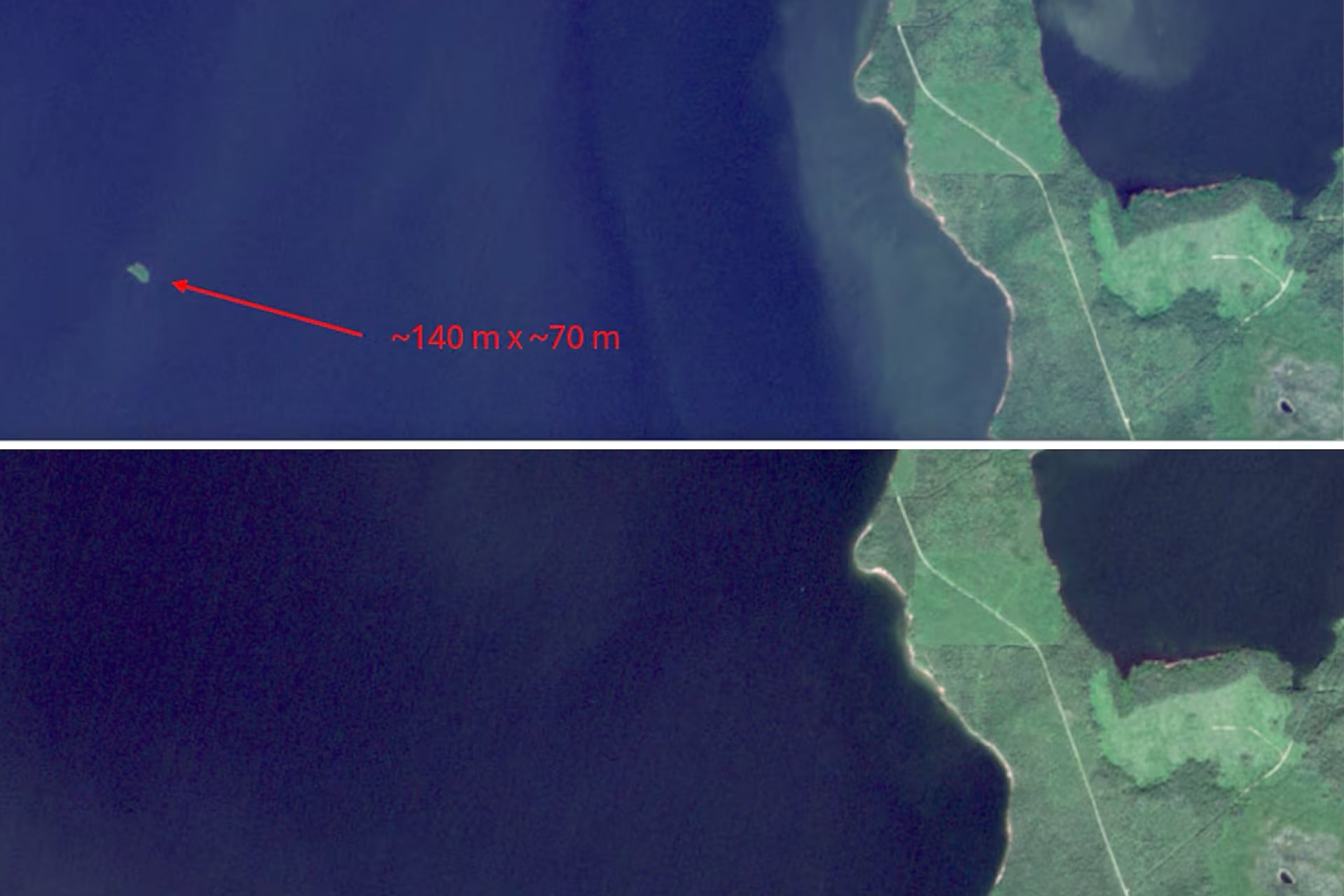
And, right now, B.C. Hydro is on the lookout for an elusive, tree-lined, floating island about the size of two NFL football fields, or an entire Manhattan city block, spanning over 105,000 square feet (9,800 square meters). The hydroelectric utility first spotted this island in a July 21, 2026, satellite image, as it floated through Finlay Bay, where the reservoir’s three reaches converge, about 62 miles (100 km) west of the W.A.C. Bennett Dam. By August 5, it was gone. Then, on August 12, a local resident filmed Williston’s mysterious island somewhere closer to the reservoir’s eastern Peace Reach. That resident passed his video on to another local, self-described “tree relocator” Rocky Avery, who said the island was spotted again this Sunday.
No one knows yet exactly where the island is now or where it came from. But B.C. Hydro’s community relations coordinator Bob Gammer told CBC News that he suspects the past winter’s high mountain snowpack, as well as a season of steady summer rains, dislodged this patch of forest from the coast as the Williston Reservoir rose to record levels.
“We haven’t had a full reservoir in 14 years,” Gammer explained. “We can’t pinpoint the origin of this floating island [but that’s] one explanation that seems reasonable.”
Driftwoods
Gammer added that the forested island likely developed over many years along the reservoir’s shoreline, as driftwood collected into a decomposed mass of mulch. An interlaced root system created by the site’s plants and trees has also likely helped to keep this floating landmass together, and—much like the bogs of Lake Chippewa in Wisconsin—its treetops themselves have acted as sails, carrying this island anywhere the wind blows.
And Williston’s apparently new island may not be the only one of its kind out in the reservoir this summer. Responding to Avery’s updates about the island on Facebook, Patrick Tutin, a local from Dawson Creek, a few hours east of Williston’s W.A.C. Bennett Dam, reported seeing more dislodged segments of the artificial lake’s shoreline floating by him on a recent trip.
“The last time I was out, there was a ton of debris and a couple root balls that looked like islands,” Tutin posted to Facebook. “This is something else,” he said of the island, “this is unreal!”
To catch a drift
B.C. Hydro conducts an “annual aerial debris reconnaissance survey” to scout for the substantial amount of loosened material, from whole logjams of felled trees to those root balls, according to the utility’s last annual report this May. It says it has installed debris catchers over the years furnished out of some of the driftwood itself and speed bumps (or “berms”) made of gravel—including a system that helped keep approximately 1,960 cubic yards (1,500 cubic meters) of debris out of the reservoir’s Ole Creek channel.
“Williston Reservoir is a very large and potentially hazardous reservoir for the unwary,” B.C. Hydro’s page for recreational boaters and other visitors advises. “Floating and submerged debris may be encountered in all areas of the reservoir.”
The company maintains a safety radio service, which it encourages patrons to utilize for “safety check-ins, reporting hazards and emergency use”—as well as, of course, now for updates on Williston’s 105,000-square-foot floating forest.