After facing some significant headwinds, Google’s flagship AI model appears to be back on course and ready to take on its competitors.
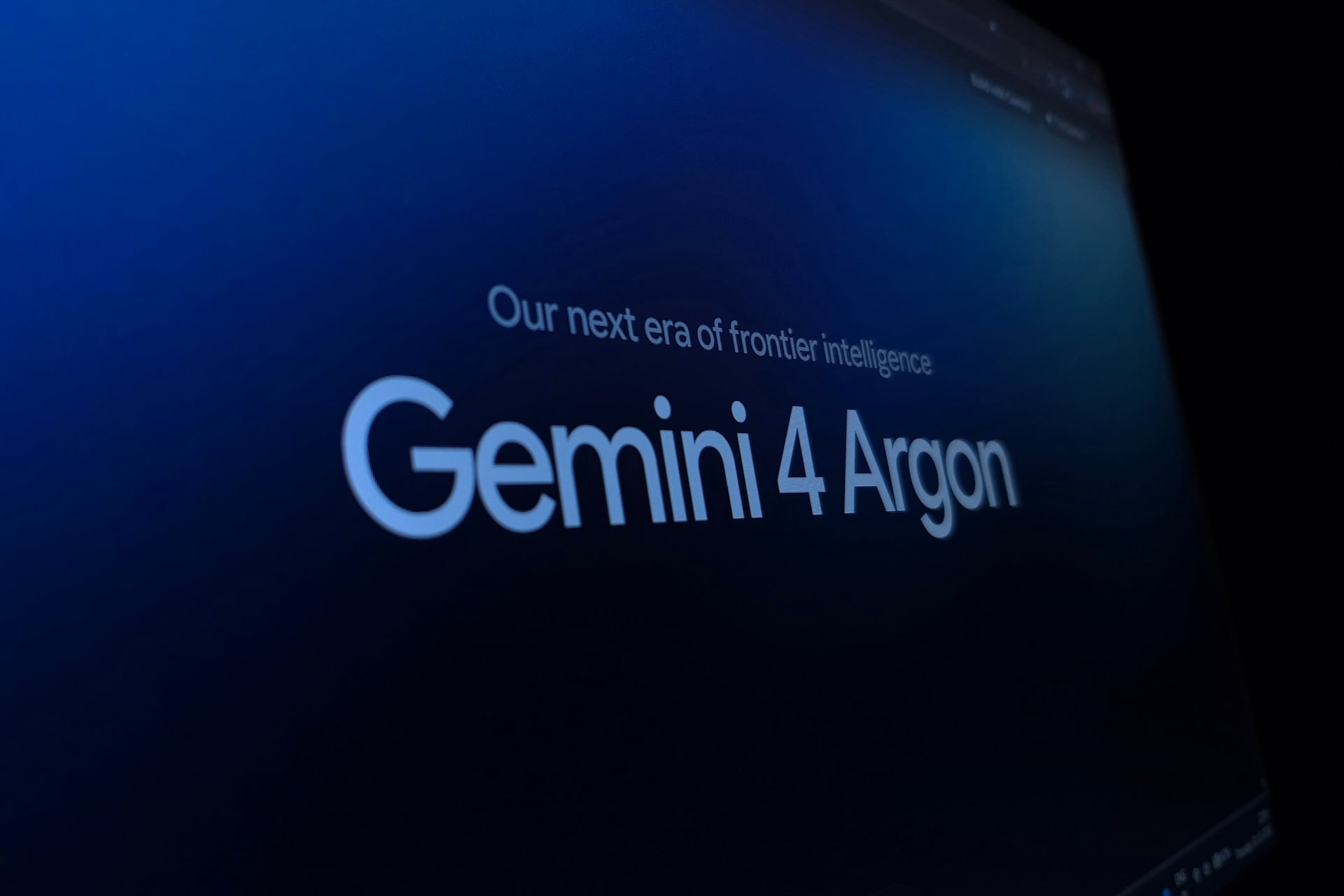
The company announced Tuesday that Gemini Astra 4 is now available to developers and business customers worldwide, following an initial testing period during which access was only given to a cohort of “trusted cyber defenders” via Google’s Fairwind Program. That kind of phased release—part safety protocol, part self-promotion—has become standard for frontier AI labs amid widespread anxiety over the dangers of misaligned AI.
For now, Argon is only accessible to paying customers through the API in AI Studio, Google AI Ultra and Pro subscribers via the Gemini App, and Antigravity, Google’s agentic software development platform. It’s currently priced at $2 per million input tokens and $10 per million output tokens, but those rates will double starting in December. Even after those higher prices kick in, the model will be significantly cheaper than other frontier options; OpenAI’s GPT-6 Astra, for instance, costs $10 per million input tokens and $50 per million output tokens. The affordability angle alone could therefore give Argon a competitive edge, despite its debut being somewhat dampened by reports of skepticism among some Google employees about the model’s performance in certain key areas, such as coding.
That’s far from the only setback Google has experienced in its AI buildout. While competitors like OpenAI, Anthropic, and Meta have shipped a steady stream of new products in recent months, Google’s Gemini 3.5 Pro was reportedly delayed while the company worked to strengthen its capabilities. Google has also recently lost some high-ranking researchers, including its longtime chief scientist Jeff Dean.
Perhaps hoping to shift the narrative that its own employees are losing faith in its mission and technology, Google is trying to sell its new model by emphasizing just how much its internal teams have been using it. “At Google, we’ve been using Argon on our hardest engineering problems,” Google DeepMind lead Koray Kavukcuoglu wrote in the company’s announcement on Tuesday. “Over the past few weeks, software engineers have been shipping high-quality code faster than ever.” The model has also been used to make the Chrome user experience more streamlined and efficient, Kavukcuoglu added.
Kavukcuoglu also says that by blending multimodal reasoning, agentic coding, and “deep physical understanding,” Argon could also lead to breakthroughs in the development of embodied robots—a form of AI which some experts believe is the only viable pathway to true artificial general intelligence. (The theory being that only embodied agents, like us, with an ability to directly engage with and derive feedback from their environment, can develop a world model that’s rich and dynamic enough to be able to flexibly adapt to any new challenge.)
In one test, Argon was fed footage of a human playing cornhole, and from there was able to map the physical layout of the room and the human’s motor movements. Those calculations were then handed to a humanoid robot, which according to Kavukcuoglu “quickly sank seven consecutive shots in a real-world trial.”
The vast majority of Google’s userbase, of course, isn’t using AI to build robots that can play games at the next neighborhood barbecue. If Google really wants its most powerful AI model to be a mainstream hit, it’ll need to prove useful for the kinds of everyday tasks for which millions of people are already relying on Claude, ChatGPT, and Muse. A free version wouldn’t hurt, either.