
If you type your full name and your city into a search engine, there is a good chance that the first page shows a site you have never used, with your age, your current address, two or three older ones and the names of your relatives. It is tempting to think you were hacked, but what happened is more ordinary than that: a company collected those details from public records and commercial sources, and it now sells them to whoever asks.
In this guide we explain what is out there and who put it there, then how to get it taken down, first on your own and then with a company that does it for you.
What the Internet Knows About You
The honest answer is more than most people expect, and the surprising part is that you posted almost none of it yourself. A typical profile starts with your email addresses, your phone numbers and every home address you have had, and then it adds your age, your date of birth and the names of the people you have lived with.
Public records bring another layer on top of that, because property deeds show which homes you own and what you paid, while court files can show a divorce or a bankruptcy from years ago. Commercial sources fill in the rest, meaning where you have worked and studied, what you tend to buy, and which social media accounts are yours.
Taken one by one, none of this looks very serious, since your address is on your mail and your age is no secret to your friends. What changes things is the assembled file, because a single page that ties your name to your address, your phone number, your employer and your relatives hands a stranger what would otherwise take days to collect.
The companies that build those files are called data brokers, and they come in two families. The ones you can see are people-search sites which publish a profile on almost every adult in the country and let anyone look it up, sometimes for free. Behind them are brokers you will never visit which sell shopping habits to advertisers, financial details to lenders, background data to recruiters and risk profiles to banks and insurers.
They also buy and copy from each other, which explains why the same outdated address can appear on twenty sites at once. And while you can find your own listing on a people-search site in a minute, a marketing or financial broker never shows you your file, so the only way to act is to send a formal deletion request and wait.
When It Stops Being Abstract
Most of us never think about any of this until something small happens, and very often it is the phone. You get a new number, you give it to your bank and a couple of stores, and a few months later the calls about car warranties begin. That is because telemarketers and scam call centers buy contact lists, and your number reached them through a broker, usually attached to your name and age so that the caller can sound like they know you.

The same lists feed the scam texts that have become so hard to spot. When a message names your street or mentions your sister, it looks credible for the simple reason that the details are correct, and whoever wrote it did not need to break into anything. A people-search report is cheap, and it gives them a name, an address and a list of relatives to work with.
Then there is the situation that pushes people to act, and it has nothing to do with fraud. Maybe you argued with someone in a neighborhood group, or sold a bike to a buyer who turned unpleasant, or stopped answering a person you met on a dating app. With your full name and your city, any of them can find your home address in under a minute, which is something teachers, nurses and landlords tend to realize sooner than the rest of us.
Moving does not really fix it either, because once you have updated your address with the post office, a utility and your bank, the new one ends up on the same sites as the old one within a few months.
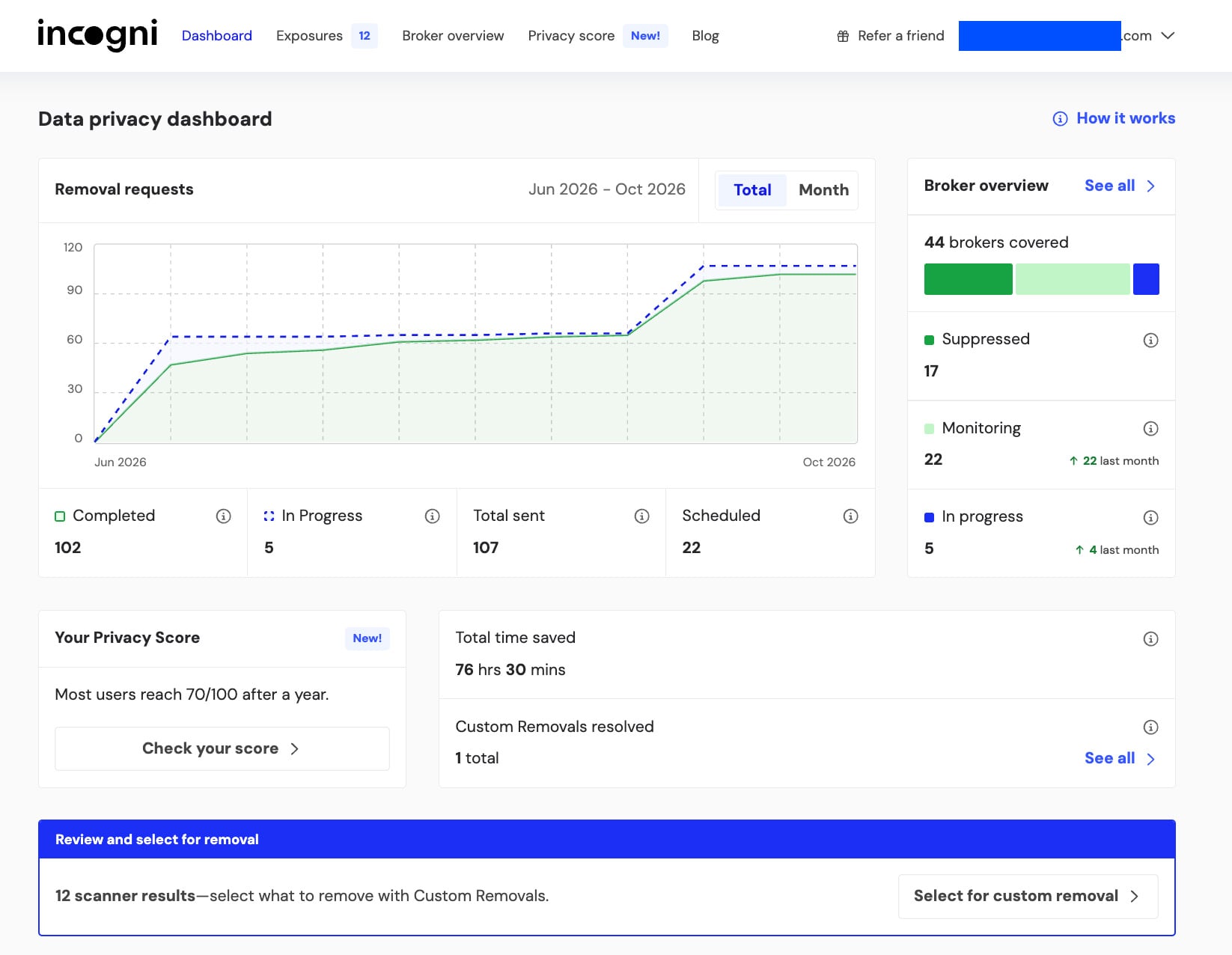
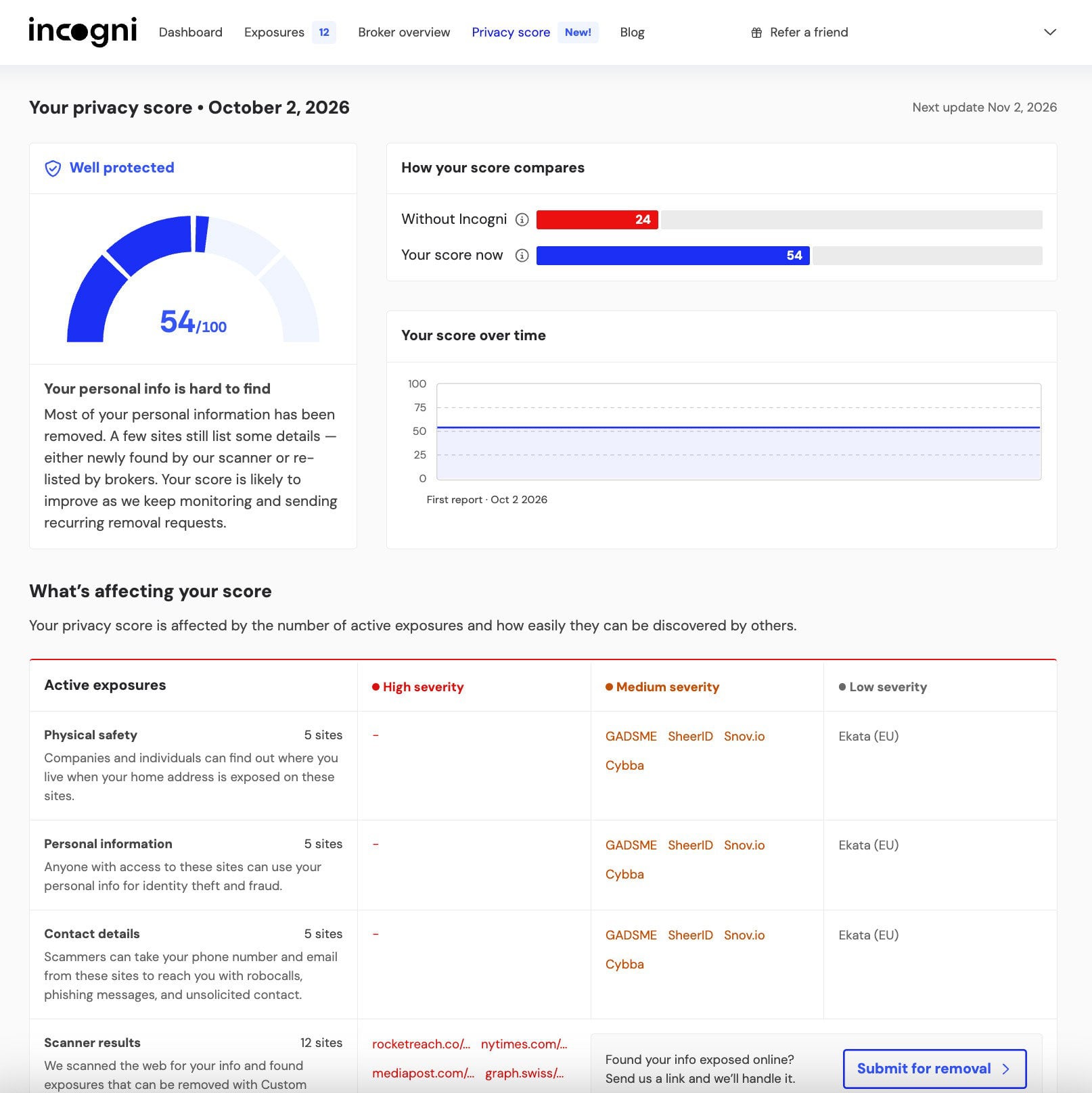
We saw a mild version of this on our own profile. After four months of removal requests, five sites still listed a home address and contact details, and although nothing bad had come of it, it was more than we would have guessed.
How to Remove Your Personal Information Yourself
The first thing to know is that you do not have to pay anyone : Every legitimate broker has an opt-out procedure, several state privacy laws give residents the right to demand deletion, and the manual route works fine as long as you are organized and a little patient.
Start by searching your full name with your city, then your phone number, then your address, ideally in a private browser window, and write down every site that shows a profile. The people-search sites on the first two pages of results should come first, since those are the ones a stranger would find.
On each of them, scroll to the bottom of the page and look for a link called “Do Not Sell My Info,” “Opt Out” or “Privacy.” The form usually asks for the address of your profile and an email to confirm and a few sites want a copy of an ID as well. We would use a separate email address for all of this so that the opt-out does not feed new data into the system, and keep a small spreadsheet with the site and the date of each request.
Google also has its own request form for search results that show your address, phone number or email. It is worth using, but keep in mind that it only hides the result in Google, and the page stays online until the site that hosts it deletes it.
Where it gets tiring is afterwards: Brokers collect the same data again so a profile you removed in January can be back by June which means the whole search has to be repeated every three months or so. And that is only the visible half, because the private brokers cannot be searched at all.
Let Incogni Send the Requests for You
The Best Companies to Remove Personal Information From the Internet
A data removal service does everything we just described on your behalf, on a schedule and across hundreds of brokers. We compared five of them in our ranking of the best data removal services, and the table below sums up where each one stands, with prices taken from each company’s pricing page.
| Company | Best For | Cheapest Paid Plan |
|---|---|---|
| Incogni | Most people | $95.88 per year |
| Optery | Proof of removal, free start | $39 per year |
| DeleteMe | Human support, couples | $129 per year |
| Privacy Bee | Largest broker list | About $8 per month, billed annually |
| Kanary | Social media and AI exposure | $250 per year |
Incogni, Our First Choice
What we like about Incogni is how little it asks of you: You enter your name, date of birth and address, you can add up to three email addresses, three home addresses and three phone numbers, and once you have signed the authorization form it works alone.
According to Incogni, its list of more than 420 brokers includes over 260 people-search sites and over 160 private databases. It scans the first group, finds the profiles that match you and sends a removal request for each one, and when several profiles share the same details it asks you to pick yours. The private databases cannot be scanned by anyone so Incogni sends each of them a formal deletion request and then it starts again a few weeks later because brokers tend to collect a deleted record a second time.
All four plans cover the full broker list which is the main reason we put Incogni first: Standard costs $95.88 per year and is enough for the automated removals, while Unlimited costs $179.88 per year and adds custom removals, where you paste the link of any page that shows your data and Incogni’s team handles it.
Incogni is also the only one of the five for which we found an outside check of the process. In a limited assurance report by Deloitte, the auditors confirmed that Incogni sends requests to more than 420 brokers, that it repeats them at least every 60 days for public brokers and every 90 days for private ones, and that it did not sell customer data during 2024.
In our account, Incogni sent 107 requests to 44 brokers in a little under four months, closed 102 of them and got us onto 17 suppression lists, which means those brokers should not rebuild the profile. There are two limits you should know about before buying, though: each profile accepts a single name, and a completed request can also mean that the broker had no data on you to begin with. Our Incogni review goes through the full test.
Try Incogni With a 30-Day Money-Back Guarantee
The Four Alternatives
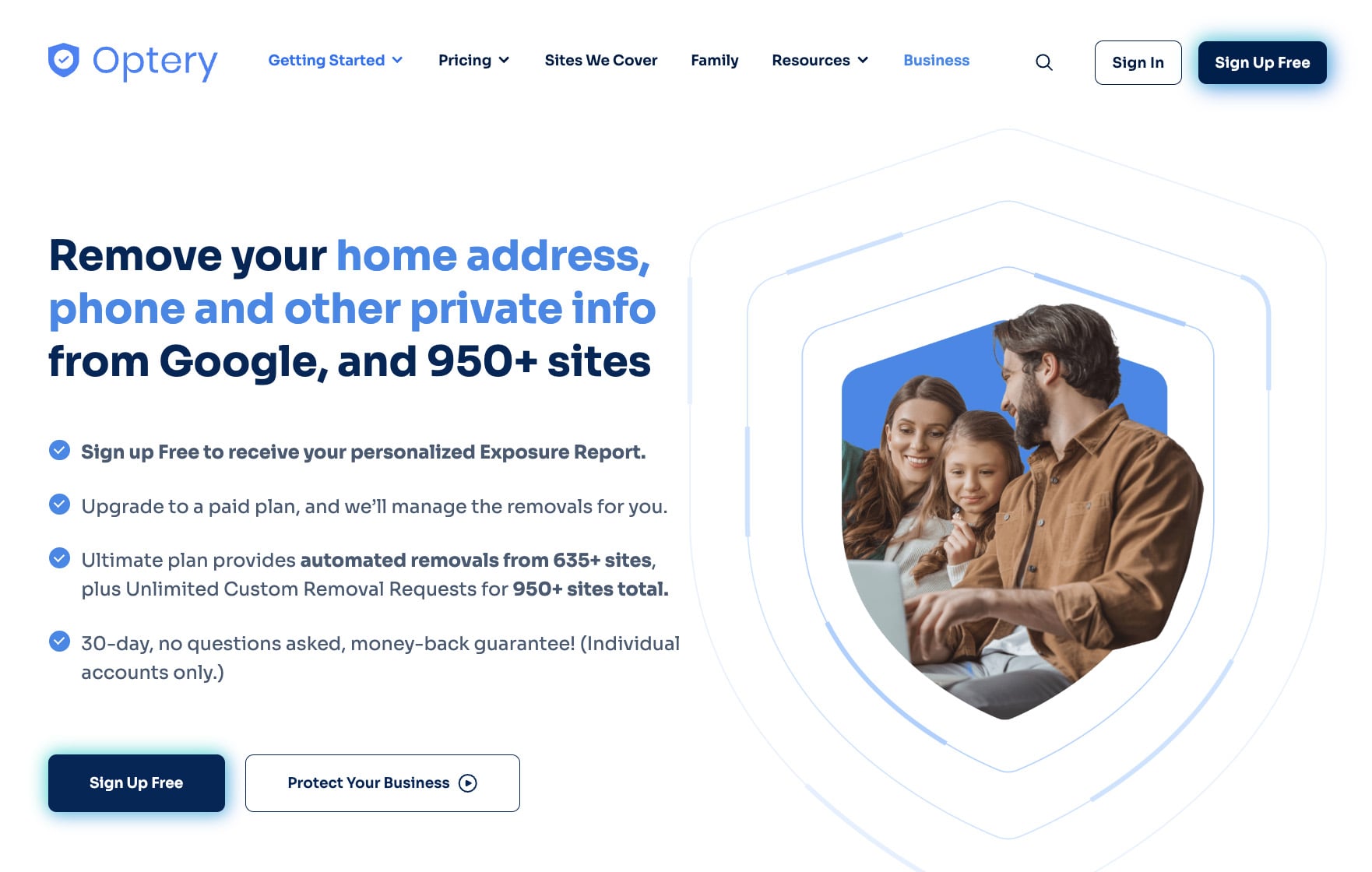
Optery is the closest rival and, since September 2026, also a relative, because Surfshark, the company that created Incogni, bought a majority stake in it even if the two still run as separate products. Its strong point is proof: from the Extended plan at $149 per year, Optery shows a screenshot of your listing before and after each removal. Its free tier finds your profiles and leaves the opt-outs to you, which goes well with the manual method above.
DeleteMe has been doing this longer than most, it includes a personal expert on every plan, and its plan for two people at $229 per year is convenient for a couple. Privacy Bee publishes the longest list, with 1,149 sites on its Pro plan at about $16 per month, and it accepts unlimited name aliases, which helps if you have changed names or moved a lot. Kanary is the odd one out, since its Advanced plan at $500 per year also watches social media and AI language models, something that mostly makes sense for people with a public profile.
How to Choose a Company to Remove Your Information
If you are comparing these services yourself, we would begin with coverage, and read it for the plan you actually intend to buy. The total on the homepage often belongs to the most expensive plan, and a long list of people-search sites does nothing about marketing and financial brokers.
After that, look at what happens once the first round is over. A removal that happens once only lasts a few months, so you want a stated interval, like Incogni’s 60 and 90 days, and ideally a dashboard you can open any day. It is also worth checking how many names and addresses one profile accepts if you have married, divorced or moved often.
Price comes last, and it should be judged over a full year. Incogni’s monthly billing, for instance, costs twice as much over twelve months as its annual plan. A 30-day money-back guarantee is the norm, but remember that it is a refund policy, so you pay first.
Compare Incogni’s Annual and Monthly Prices
Keeping Your Data From Coming Back
A removal service cleans up what is already out there, but new data keeps leaking in the meantime, and part of that is in your hands. You cannot do much about public records such as property deeds or court filings, yet most of the rest comes from small everyday choices.
Setting your social media profiles to private is the obvious one, along with taking your phone number and your employer out of the public parts. It also helps to refuse optional cookies, to give stores a secondary email address, and to leave the phone number field empty whenever it is not required. And if you have old accounts lying around, delete them, because a forum you joined in 2014 still holds your email and maybe your address.
Is a Data Removal Service Worth Paying For?
It really depends on how exposed you are. If a search for your name shows two or three listings, an afternoon with the opt-out forms will do the job, and a reminder every few months will keep it that way.
If you find a dozen listings, on the other hand, or if your work puts you in contact with the public, or if you simply have a reason to keep your address private, then a service earns its price. At $95.88 a year, Incogni costs about $8 a month to send and repeat requests that you would otherwise be tracking in a spreadsheet. You can expect fewer listings and fewer calls over several months, but you should not expect to vanish: on our own profile, a handful of sites still held data after four months, and Incogni was still sending them requests.
Start Removing Your Information With Incogni
FAQ
What Is the Best Company to Remove Personal Information From the Internet?
Incogni is our first choice, because it covers more than 420 data brokers on every plan, repeats its requests automatically and costs $95.88 per year. Optery is the best alternative if you want screenshots as proof of each removal.
Can I Remove My Information From the Internet for Free?
Yes, since each broker has an opt-out form and you can send the requests yourself. Optery’s free tier helps you find your profiles, but the work takes many hours and has to be repeated every few months.
How Do I Remove Private Information From Google?
Google has a request form for results that show your address, phone number or email. It hides the result in Google, but the page stays online until the site that hosts it deletes it, which is what an opt-out request or a removal service takes care of.
How Long Does It Take to Remove Personal Information?
Brokers usually answer within days or weeks, and in our Incogni account the average resolution times ranged from 2 to 15 days. Reaching most of your listings takes a few months.
Can Everything Be Removed?
No. Court records, government records, news articles and your own social media posts are outside what these companies handle. They deal with data brokers and people-search sites, which is where most address and phone listings come from.