
If you’ve ever wondered how a scammer got your phone number, or why a stranger sent you a phishing email using your home address, the answer usually leads back to the same industry: data brokers. These companies quietly harvest, package, and sell your personal information to anyone willing to pay, and the removal process is deliberately designed to be as slow and fragmented as possible. Surfshark’s play with Optery is a bet on making that fight less unfair.
What Surfshark Just Announced
The acquisition was made public on September 7, 2026, through an official announcement from Surfshark Group. Optery, a US-based data removal company, joins the group alongside two other services already operating under the Surfshark umbrella: Incogni, the flagship consumer data removal product, and Ironwall, a specialized service focused on government employees, public officials, and executive teams that Surfshark acquired in 2024.
According to the announcement, Optery will continue to operate independently within the group, with separate teams, products, and technology. This is Surfshark’s second strategic acquisition in the data removal space, and it signals a deliberate strategy: rather than folding acquired services into a single product line, Surfshark is stacking specialized data removal services side by side, each targeting a different segment of the problem.
Why Data Brokers Are a Problem You Can’t Easily Solve Alone
The data broker industry operates in a legal grey zone that most consumers never see. Hundreds of companies specialize in aggregating publicly available records, purchased datasets, and information scraped from social platforms into detailed profiles that they sell to marketers, insurers, background check services, and, in less regulated cases, to anyone with a credit card. Your name, home address, phone number, email history, family members, employer, income bracket, and political leanings can all end up on a single searchable profile without you ever knowing it exists.
The reason this matters isn’t just marketing. Data broker profiles are the raw material that fuels targeted phishing, romance scams, identity theft, and stalking. When a scammer calls your parents pretending to be from your bank, or a phishing email references your actual home address, the underlying data almost always came from a broker. Removing yourself from these databases is possible in theory, but each broker has its own removal process, its own forms, its own verification requirements, and its own timeline for actually deleting the records. Some brokers also reinstate profiles automatically after a few months, meaning the work has to be redone continuously.
This is the problem that services like Optery, Incogni, and Ironwall exist to solve.
How Optery Actually Works
Optery’s approach centers on two things that set it apart in the US market: specialized scanning technology and detailed screenshot reporting. When you sign up, the service scans hundreds of data broker sites and people-search platforms, identifies every location where your personal information appears, and provides visual evidence of what was found and where. The removal process is then handled on your behalf, with follow-up scans to confirm the deletions and re-detect any records that reappear over time.
The screenshot reporting is a small detail with a big consequence. Most data removal services tell you they’ve filed a removal request. Optery shows you the actual page where your data was, before and after the removal. That evidence-based approach has made it one of the most credible services in the US privacy tools market, and it’s a big part of why Surfshark went after the acquisition.
The Bigger Picture: How Surfshark Is Building an Anti-Data-Broker Ecosystem
Optery isn’t Surfshark’s first move in this space. The strategy has been building for years, with each service targeting a different piece of the data broker problem.
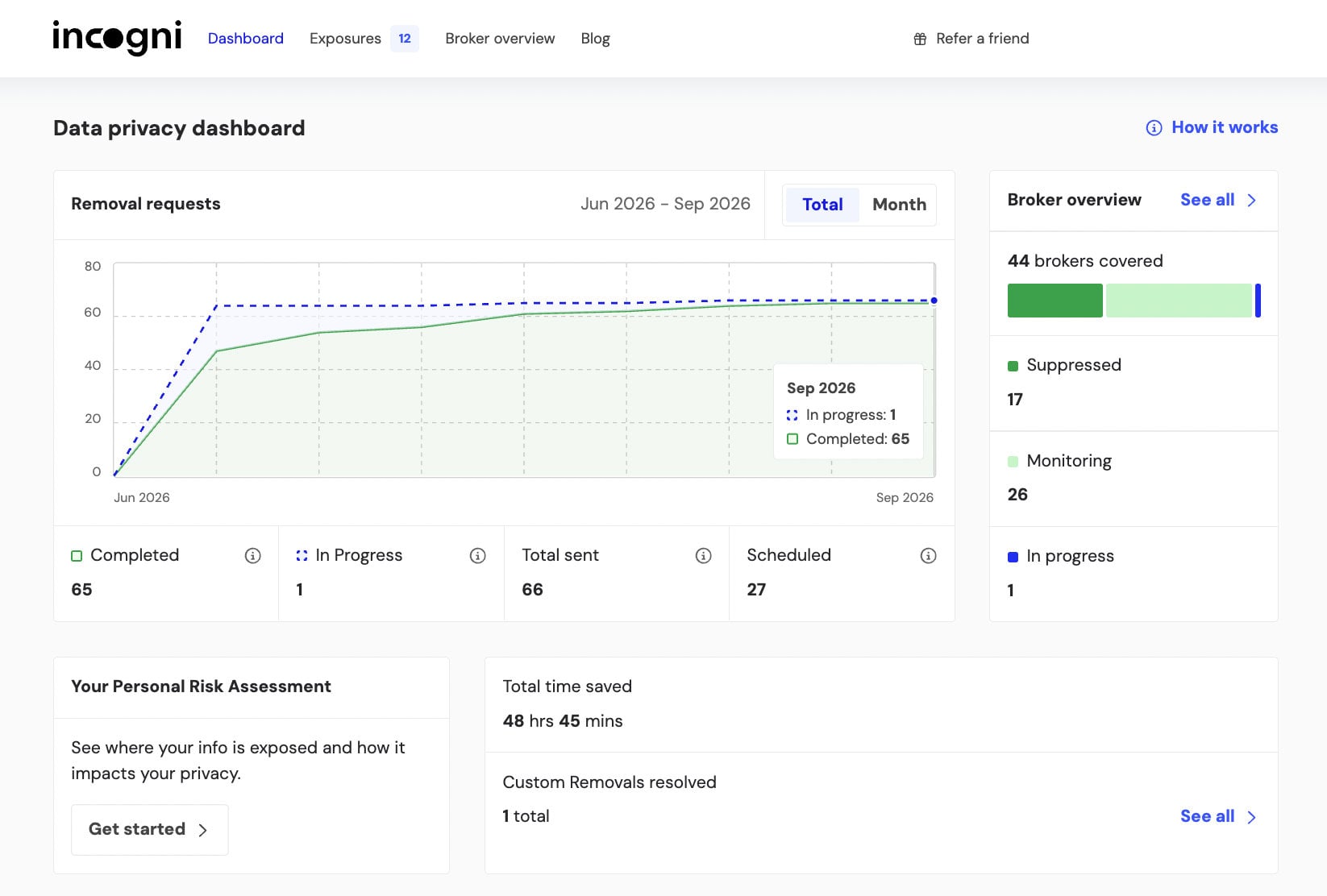
Incogni is the flagship consumer service in the Surfshark Group’s data removal portfolio. It’s an automated data removal and privacy service that deletes your personal information from over 420 data brokers and people-search sites. Incogni is the service most Surfshark users know by name, and it has become one of the most widely recognized names in the consumer data removal category.
Ironwall, acquired in 2024, targets a completely different segment. It’s built specifically for government employees, public officials, and executive teams, where the stakes of having personal information exposed publicly are dramatically higher than for the average consumer. Someone in the judiciary, in law enforcement, or in a public-facing corporate role has a threat model that a generalist consumer tool isn’t optimized for, and Ironwall was designed to fill that gap.
Optery, announced today, completes the third leg of the strategy. Its specialization in the US market, combined with its screenshot reporting methodology, addresses a specific need that neither Incogni’s broad automated coverage nor Ironwall’s high-risk vertical focus was designed to serve: the US consumer or professional who wants evidence-based, US-focused removal with the most detailed reporting on the market.
Taken together, the three services now operating under Surfshark Group cover the consumer segment, the high-risk professional segment, and the evidence-focused US segment. That’s a more complete anti-data-broker portfolio than any other privacy company currently offers.
Optery vs Incogni: Which One Can You Actually Use Right Now?
Here’s the practical reality worth spelling out before you scroll to the pricing. Optery will keep running as an independent service after the acquisition, with separate teams, separate products, and separate technology from the rest of the Surfshark Group. That means signing up for a Surfshark VPN plan does not give you an Optery subscription. If you want Optery specifically, you sign up for it directly through Optery.
What Surfshark VPN users can bundle today is Incogni, which sits inside the Surfshark One+ plan. Incogni is the automated data removal service Surfshark has been developing in-house, with coverage across 420+ data brokers and people-search sites worldwide. It’s the entry point into the group’s data removal ecosystem for VPN customers, and it’s the practical answer to anyone reading this announcement and wanting to actually start pulling their information out of broker databases today.
The bigger picture, as Surfshark itself frames it in the announcement: the three services are complementary rather than redundant. Incogni handles automated worldwide removal at scale, Optery brings evidence-based US market coverage with detailed screenshot reporting, and Ironwall focuses on high-risk professional profiles. Each was built for a different slice of the same problem, and today they all sit under the same corporate roof.
Get Surfshark One+ with Incogni
Surfshark One+ at $4.49 per Month
The Surfshark One+ plan is currently priced at $4.49 per month on the 24-month plan, which works out to $121.23 billed once for 27 months of service (24 + 3 free). That represents a 79% discount off the standard rate.
The One+ plan is the only tier that bundles the full ecosystem: the Surfshark VPN with unlimited simultaneous device connections, Alternative ID for creating disposable email addresses and identities for online sign-ups, the Surfshark Antivirus, Surfshark Alert for data breach monitoring, identity theft coverage for US residents (excluding New York state), and most importantly for the topic of this article, Data removal by Incogni. For anyone reading this and thinking about the data broker problem as a whole, the One+ is the plan that maps to the announcement.
The lower-tier Surfshark Starter ($2.49 per month) and Surfshark One ($2.79 per month) plans cover the VPN and other privacy tools but do not include Incogni’s data removal. For a fuller picture of how the VPN core performs across speed, server coverage, and privacy fundamentals, our Surfshark review walks through the details.
30-Day Money-Back Guarantee
All Surfshark plans, including the One+, are backed by a 30-day money-back guarantee. Refunds are processed through 24/7 chat support and typically return within 5 to 10 business days depending on the payment method used. That gives you a full month to install the apps across your devices, test the VPN and antivirus, run Incogni against the data brokers holding your information, and decide whether the ecosystem is worth staying in before the refund window closes.
A note on the subscription: the $4.49 per month rate applies to the first 27 months. Auto-renewal kicks in at the standard annual rate after that. If you’d rather renegotiate or cancel before renewal, set a reminder in your calendar 7 to 10 days before the renewal date.