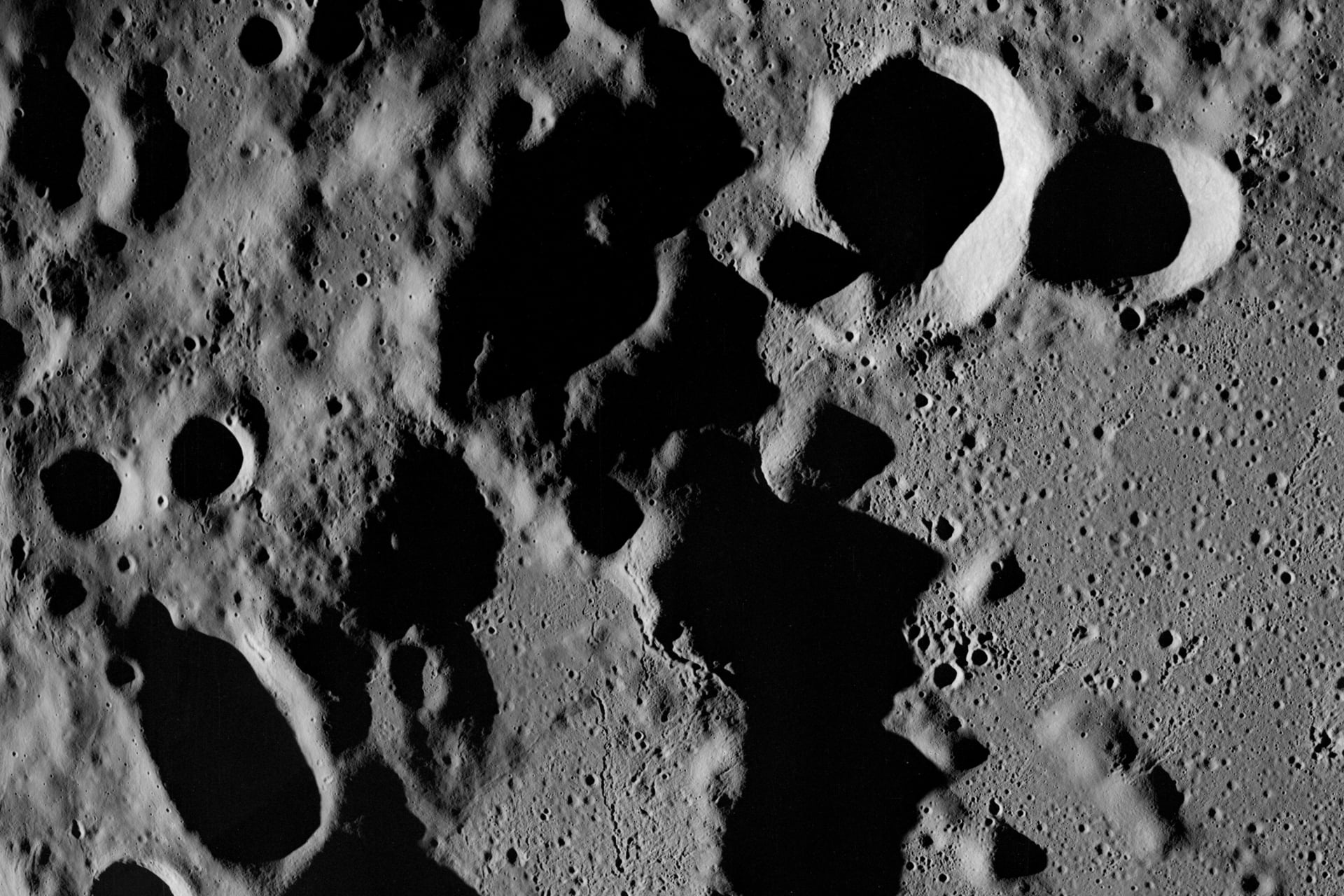
Today, the Moon has a very weak magnetic field—but did it always? This is something scientists have long debated. Some have theorized that the Moon did have its own magnetic field—a dynamo—some billions of years ago. Others disagree, saying the evidence doesn’t hold up. New observations from the Moon’s far side may finally settle the debate.
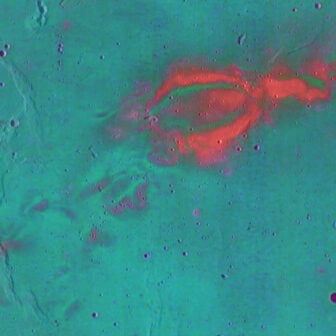
A review of archived lunar observations discovered a large, strongly magnetized rock in the Dewar region on the far side of the Moon. According to a study published today in Science Advances, this rock, about 37 miles (60 kilometers) wide, is likely solidified magma that emerged from deep inside the Moon roughly 4.2 billion years ago. The Dewar crater also hosts a lunar swirl—bright, sinuous patterns—that often coincides with magnetic anomalies on the lunar surface. Coupled with gravitational, orbital, and magnetic measurements, the findings strongly support the presence of an internally generated magnetic field in the Moon’s earliest days.
If true, the lunar magnetic field would have been around 11 microteslas, study co-authors Xi Yang and Anna Mittelholz told Gizmodo. (For context, Earth’s magnetic field today is around 50 microteslas.) “Dewar was a rare case where a magnetic anomaly, a gravity anomaly, and a surface swirl all coincide,” added Yang and Mittelholz, a PhD student and planetary scientist at ETH Zurich in Switzerland, respectively.
A rocky discourse
In astrophysics, the dynamo generates the magnetic field of a planetary body (and adjacent things) by driving the rotation and convection of hot, electrically conductive fluids deep within the core. For instance, Earth’s magnetic field comes from the constant movement of liquid iron at its outer core, which then creates electric currents that are converted into a magnetic field.
The lunar dynamo, on the other hand, has been the subject of a long debate for scientists. Yang and Mittelholz explained that previous paleomagnetic studies “supported a long-lived lunar dynamo lasting from about 4.25 to 3.5 billion years ago.” However, recent analyses of rock samples from the Apollo mission began to put a damper on that theory, leading the community to contest the “timing” and even the existence of an early lunar dynamo,” they added.
Working out the anomalies
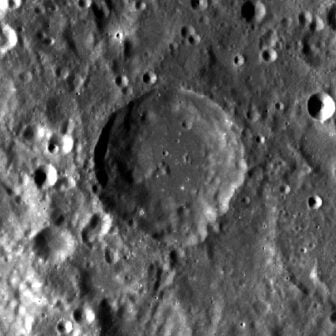
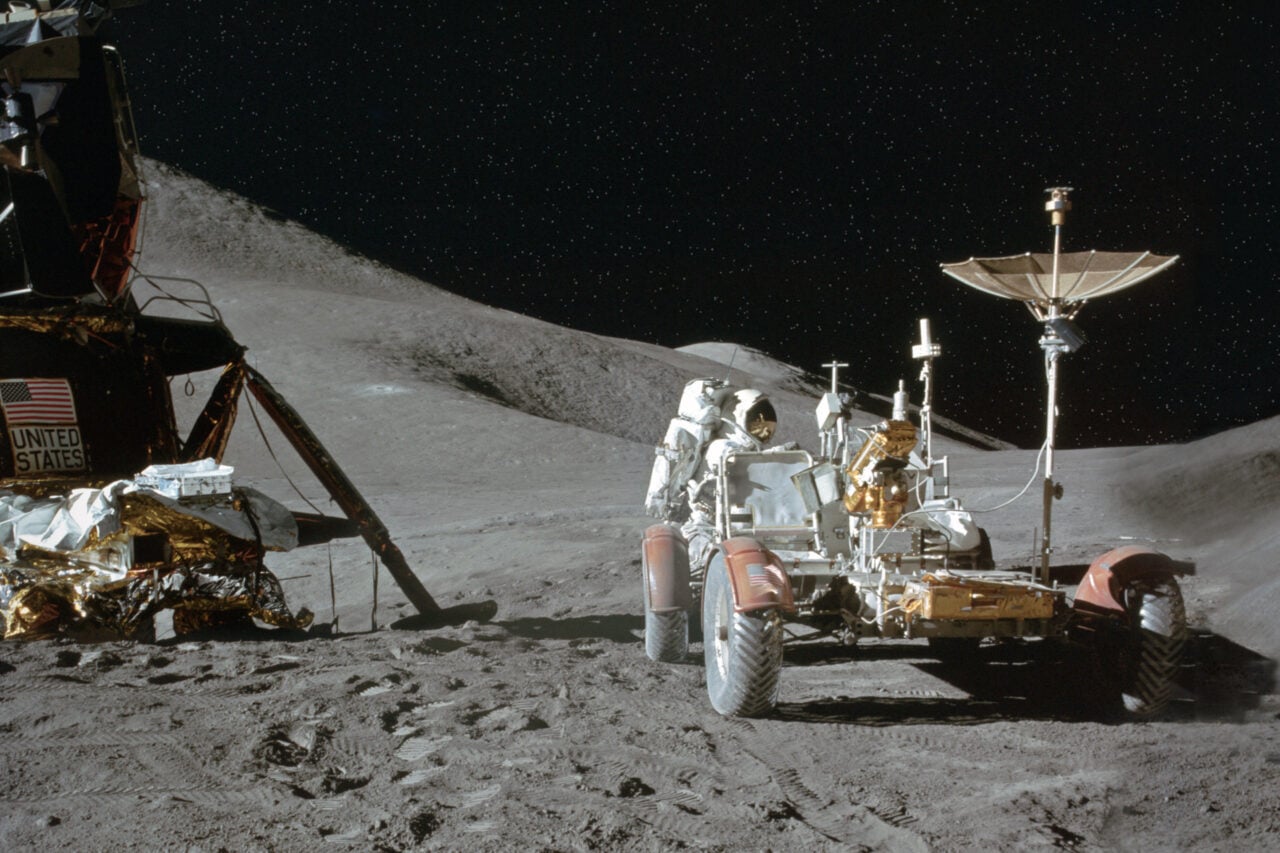
That was somewhat of an ironic turn of events, as the Apollo rock samples were what led scientists to believe in an ancient Moon dynamo in the first place. So the studies based on rock samples had become rather “contradictory,” the team noted in a university statement. In that sense, finding Dewar from archival data was a “genuine stroke of luck,” Mittelholz said in the statement.
“So we jointly inverted gravity and magnetic field data in one model to solve for the density and magnetization of the crust together,” the team explained to Gizmodo. In other words, combining the two signals allowed the researchers to first attribute these anomalies to a geological structure. Then, the team could estimate the minimum strength of the magnetic field required to leave behind this structure.
“It’s a way of getting new dynamo constraints from orbital data that is much more easily accessible than returning a sample,” the team told Gizmodo. Dewar’s location also rules out the possibility that a violent impact with asteroids could have temporarily created a magnetic field, they said.
Still ongoing
More broadly, understanding the Moon’s magnetic history represents a “case study” in how smaller planet-like bodies can (or, in this case, fail to) sustain a dynamo, they added. That would be something to keep in mind as we explore the physical features of other planets and moons, for example.
However, Yang and Mittelholz added that the study “still does not reconcile the contradictory interpretation of sample-based records,” namely those from the Apollo missions. Since the latest work focuses on a single anomaly at Dewar, investigating similar regions on the lunar surface could help refine the study’s results.
“But we are examining the question from an entirely new perspective,” Mittelholz said in the statement, adding that the question has now shifted from “Was there a dynamo?” to “How did it work?”