Seen from Earth, the Moon looks so bright and peaceful. But on closer inspection, the lunar surface is etched with crinkles that also happen to be active faults—whose appearance and behavior may be more unexpected than scientists thought.
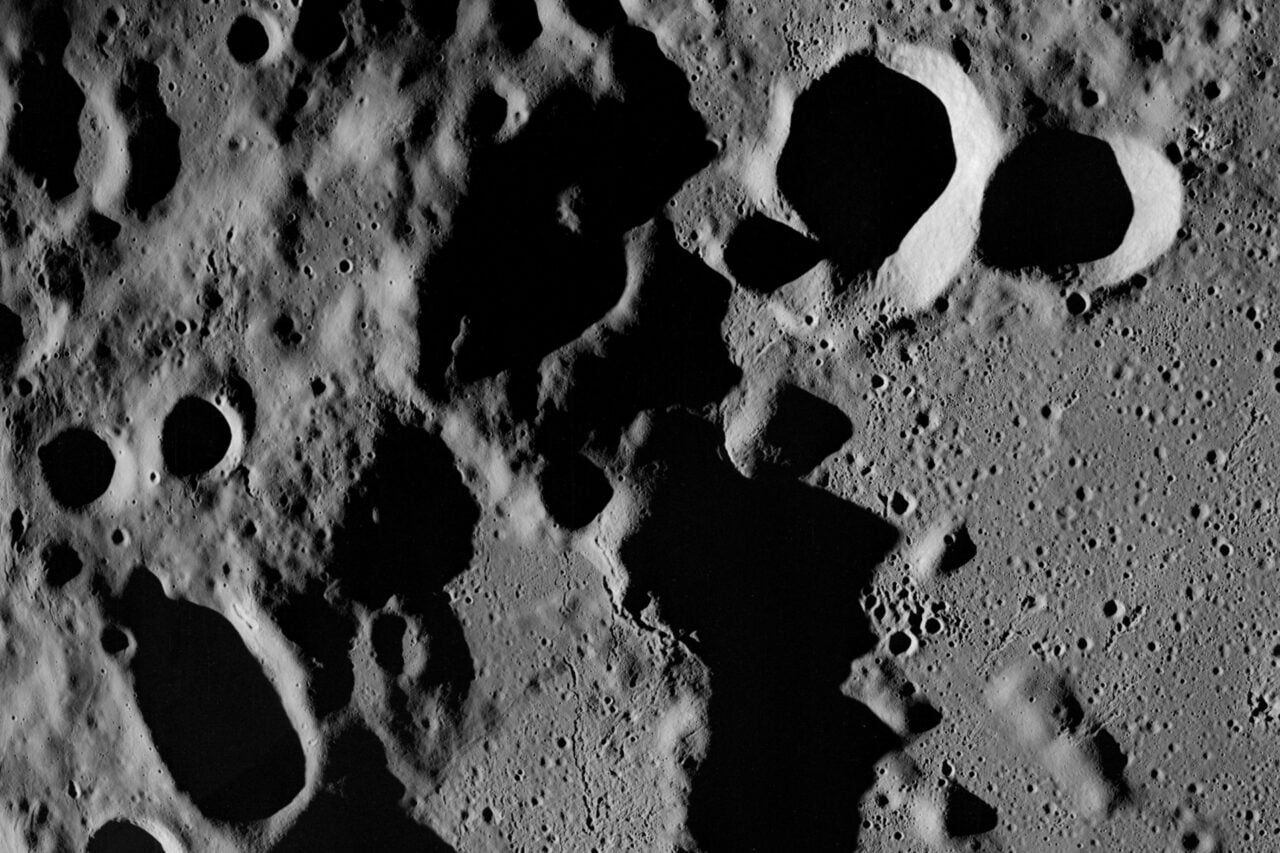
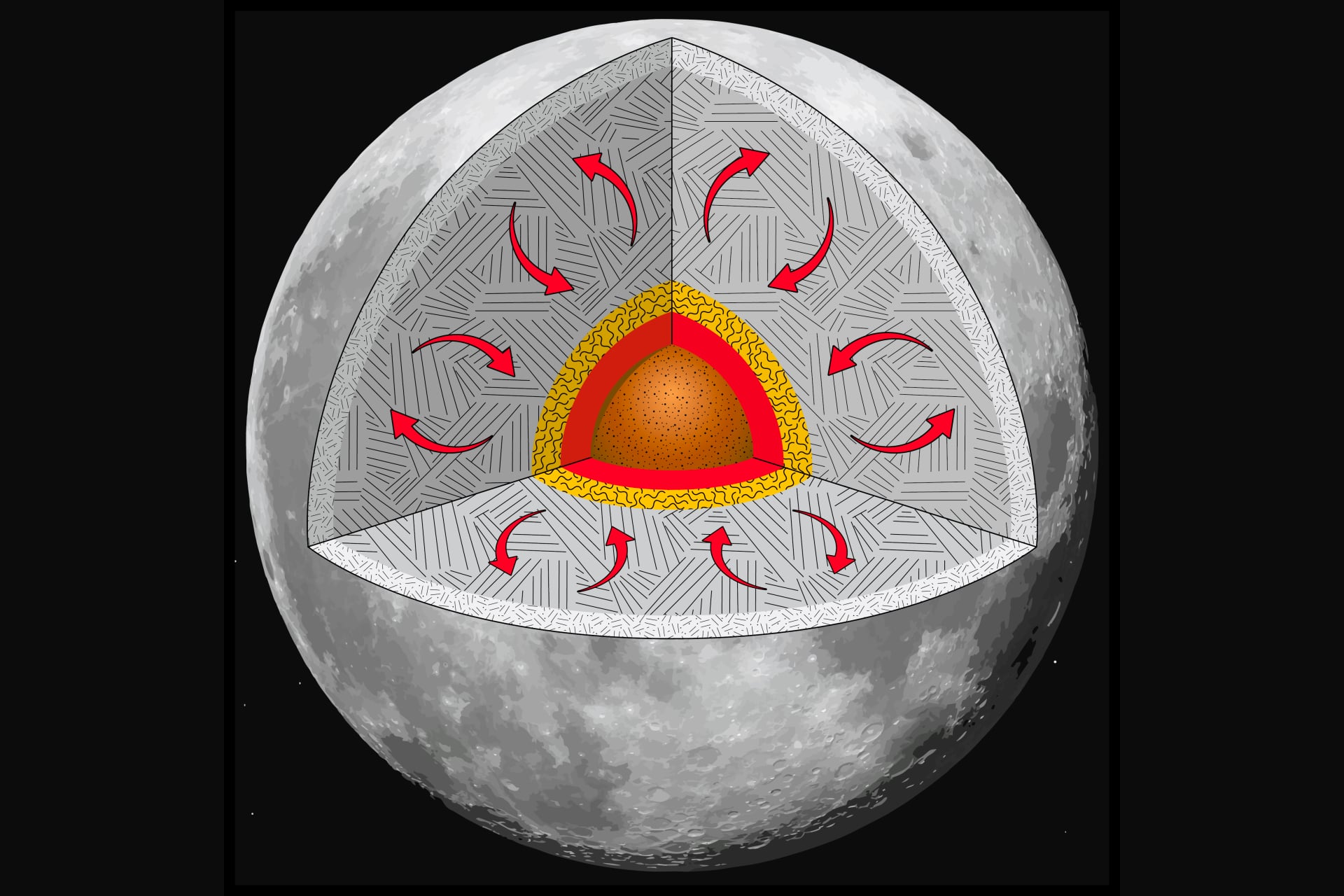
In a study published yesterday in The Planetary Science Journal, scientists report the identification of more than 10,000 young faults across the lunar surface. The team referenced images from NASA’s Lunar Reconnaissance Orbiter Camera (LROC), specifically its images of ridges and long, curvy structures called lobate scarps. These features form as a result of a celestial body’s contraction, in this case the Moon. From the analysis, the researchers concluded that the moon’s radius has shrunk by roughly 148 feet (45 meters) in the past 400 million years. 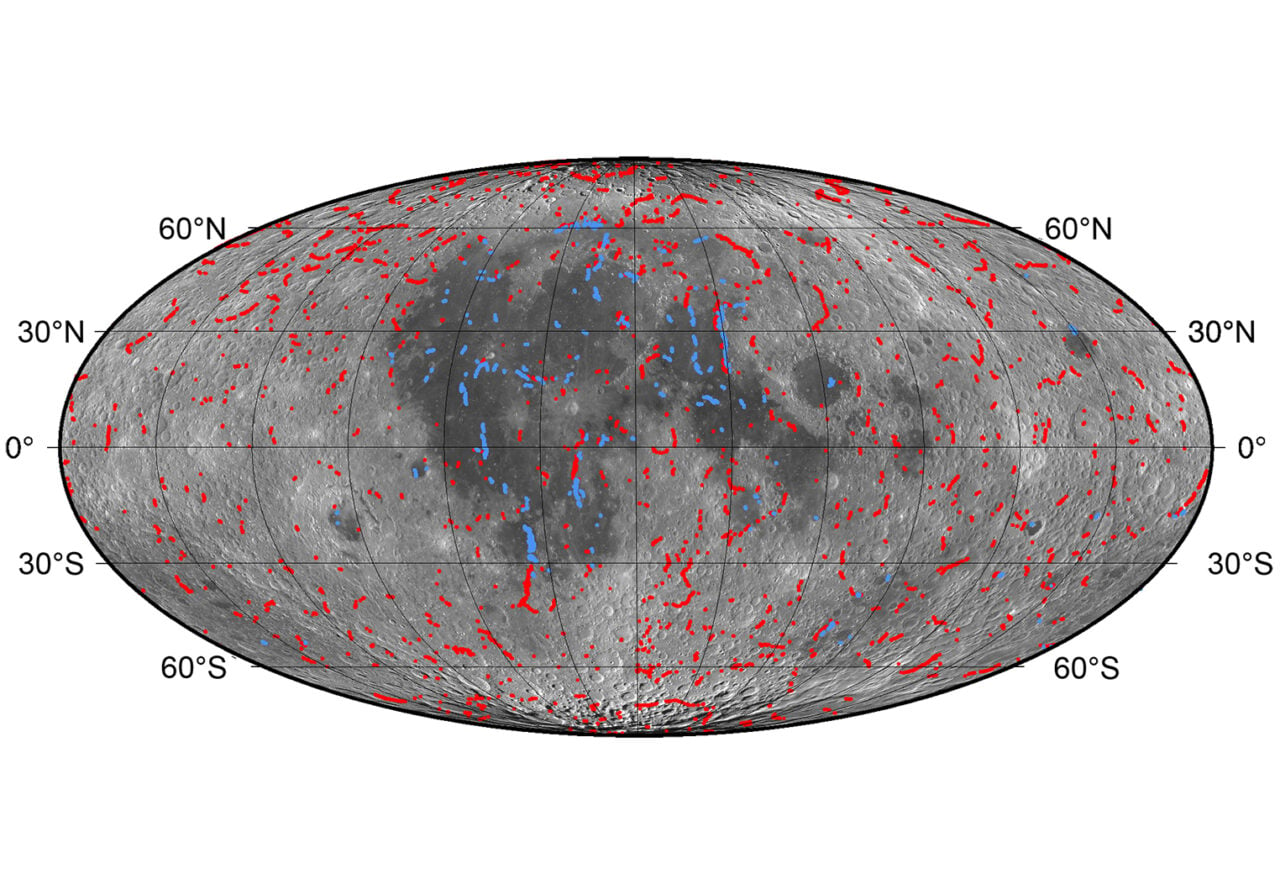
Global map of the moon centered on the nearside. The red lines show the locations of over 8,900 lobate scarps, and the blue lines show the locations of over 2,000 small mare ridges. Credit: NASA/ASU/Intuitive Machines/SmithsonianThis kind of change isn’t unique to the Moon; similar shrinkage is also happening to Mercury. But the lunar surface is like a singular, unbroken shell, which means moonquakes or new faults can pop up anytime, anywhere, according to a statement from the Smithsonian National Air and Space Museum, where study author Tom Watters serves as a senior scientist emeritus.
Shrinking and shaking
Scientists generally believe that the Moon had a violent birth; the details vary, but the gist is that stuff, or even one particularly large object, crashed into the Earth billions of years ago, and our planet spat hot debris back into space, which coalesced into the Moon. That’s why it wasn’t news to scientists that the Moon has been shrinking. As per a NASA explainer (which consulted Watters), “[m]any things shrink as they cool and the moon is no exception.”
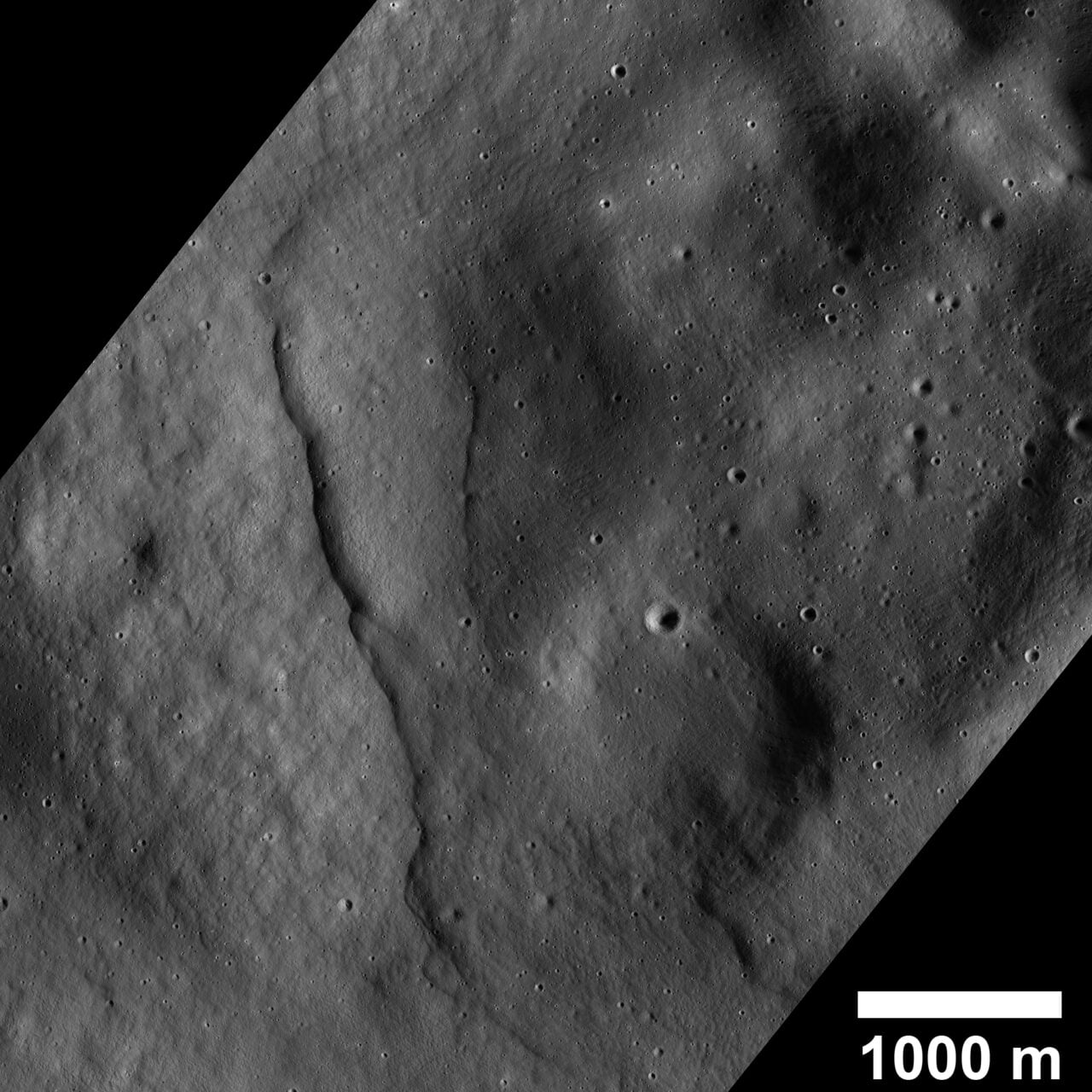
In 2019, Watters and colleagues found evidence that these “wrinkles” on the lunar surface were actually active faults that continue to cause moonquakes. According to a NASA statement at the time, moonquakes recorded by seismometers planted by the Apollo missions occurred close enough to the faults to make a connection.
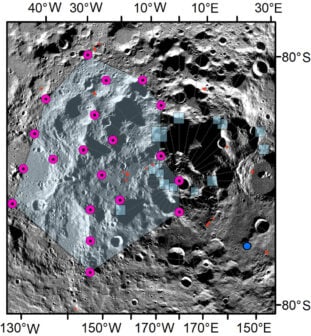
Understandably, this raised concerns for NASA’s Artemis planning team. That didn’t go unnoticed to Watters, the resident moonquake expert. And a 2024 study confirmed that these young faults were indeed of great relevance. Thirteen proposed landing spots for Artemis 3 (now Artemis 4) were uncomfortably close to moonquake epicenter candidates—which could raise the risk for landslides and the like for lunar missions, according to a NASA statement on the 2024 study.
A big, beautiful chunk of rock
Then again, it’s not like we’ve figured a way to reliably predict quakes from the ground we’re literally standing on—so, how would it be any easier to do that for the Moon? That’s a fair point, but there’s actually another, maybe less obvious reason that moonquake predictions are more difficult.
According to the Smithsonian statement on the latest work, Earth has a “mosaic” of 15 lithospheric plates, and about 90% of tectonic and seismic activity is concentrated near these regions. The Moon, on the other hand, only has one big plate that “acts like an unbroken shell,” the Smithsonian explained, which means “moonquakes from slip events on existing faults or the formation of new faults can occur anywhere on the moon.”
Lunar travel advice
In the paper, the team added that the insulating effect of a thick regolith in the Moon’s earliest days might have prevented interior cooling and contraction. In other words, this lunar wrinkling may be a recent phenomenon starting in the Copernican period, which in the lunar timescale refers to roughly 1.1 billion years ago. Assuming that this rate of contraction has been more or less consistent, it would mean that the Moon’s radius has been shrinking about 2 to 4 inches (6 to 11 centimeters) per million years.
“The number of these young faults revealed in LROC images is much greater than I ever imagined,” Watters said in the statement. “As the interior of the moon continues to cool and contract, it is expected that the growth of existing faults and formation of new faults continues today.”
That said, it’s definitely not the end for missions like Artemis 3. The new study did find that regions with a thicker lunar crust tended to have fewer faults, so these areas could be more stable than others. As long as we understand as much as we can about our destination, the safer we’ll be—and really, that’s good travel advice, even if you’re not headed to the Moon.