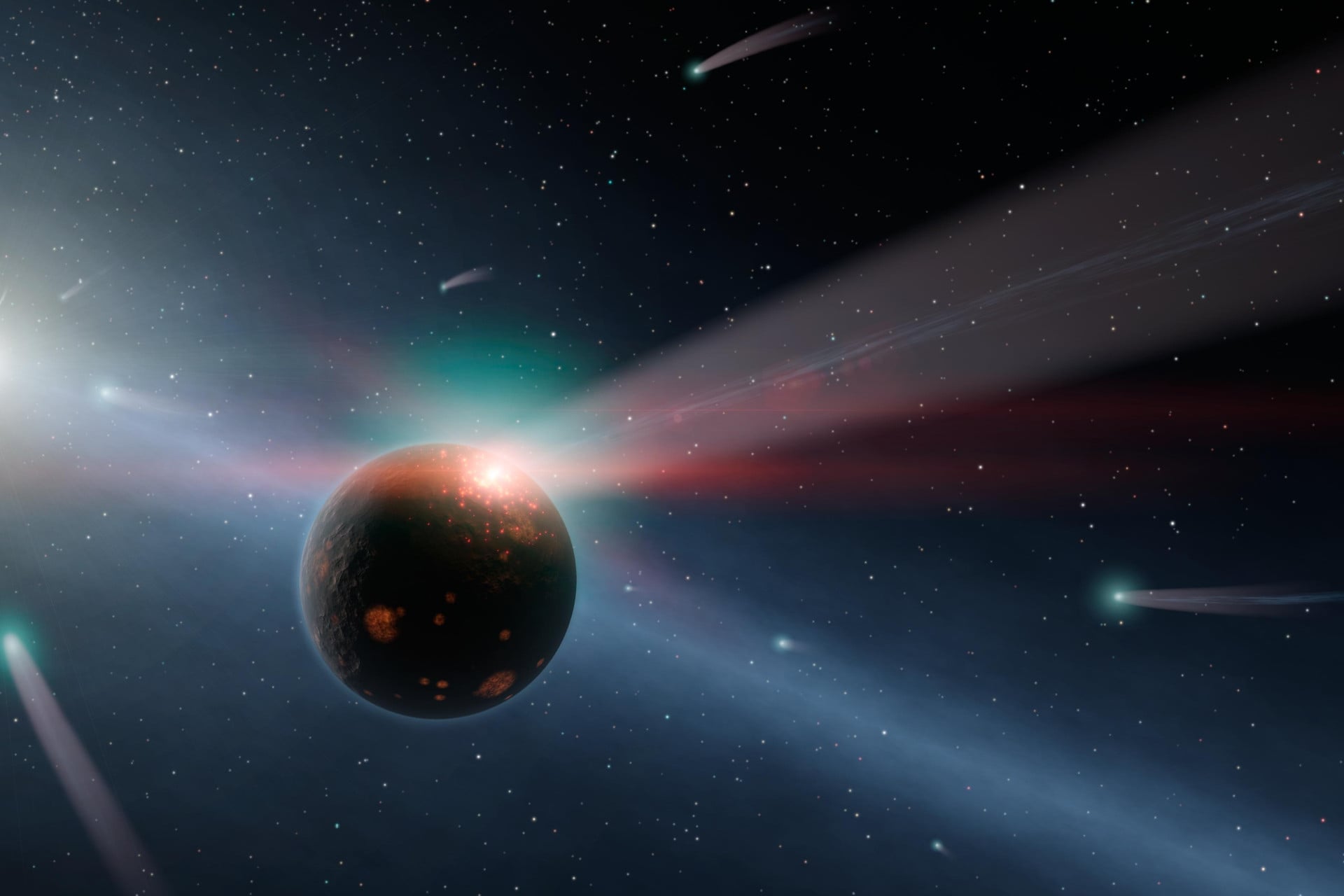
As NASA says, comets are “cosmic snowballs” of frozen gases, rock, and dust that include a good amount of organic materials. Accordingly, scientists have long suggested that a comet brought these molecules to Earth and that they became the building blocks for life here. But a new study explains how that scenario might actually be impossible.
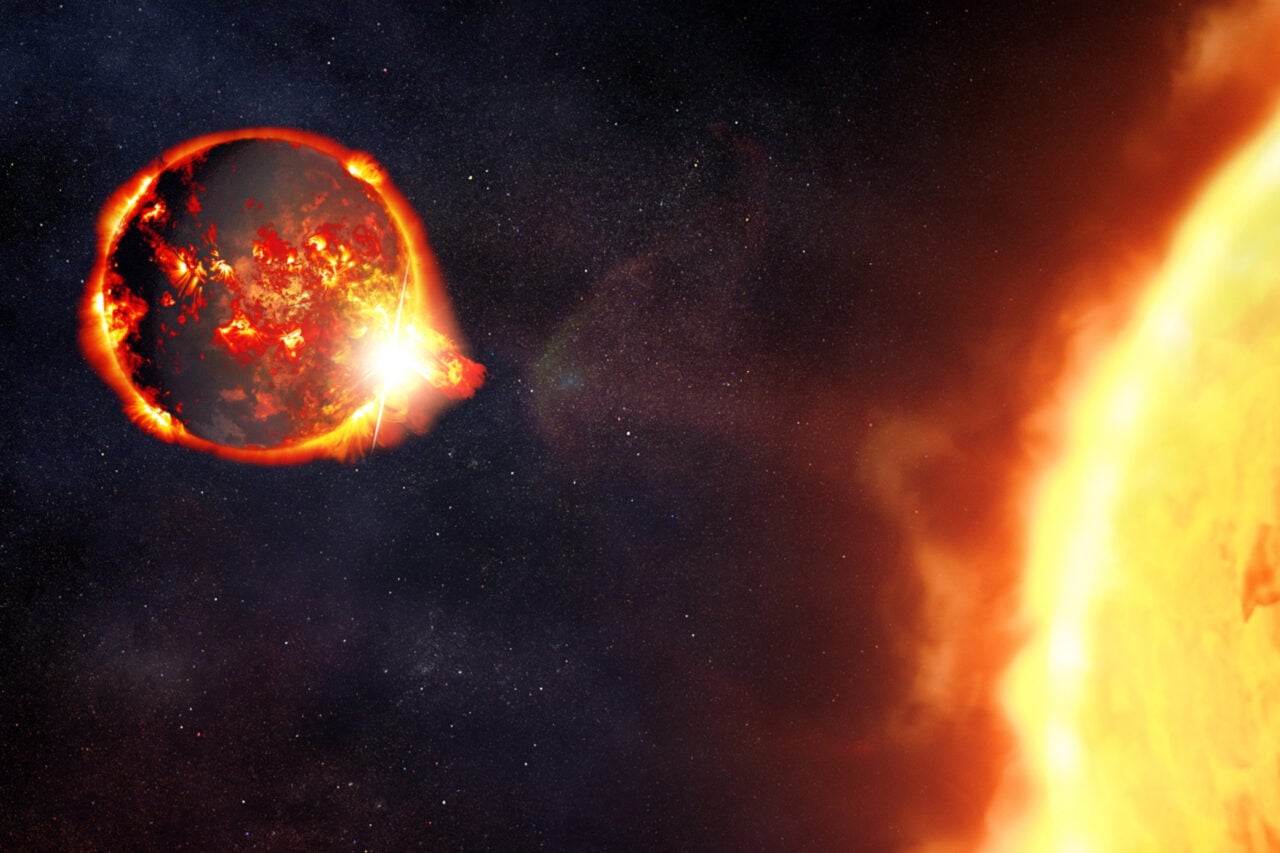
It’s very likely that comets carrying organic materials have crashed into Earth at some points in our distant past. The issue, however, has to do with whether these fragile molecules survived its vessel’s violent entry—and the odds are very slim, as researchers explained in a study published today in Scientific Reports. According to the paper, modeling simulations strongly suggest that comets travel too fast and at too sharp an angle to Earth’s atmosphere for the molecules to escape vaporization.
“Historically, scientists thought that comets were important for the origin of life on Earth, because they carried carbon- and nitrogen-bearing molecules,” Richard Anslow, the study’s lead author and an astronomer at Cambridge University in the U.K., said in a statement. “So these giant space snowballs were almost like a ‘get out of jail free card’ that brought all the molecules a planet would need to seed life. It’s kind of a romantic idea, but our results suggest it’s highly unlikely.”
A bumpy ride
In 2023, Anslow and colleagues explored an idea that was arguably favorable to this “get out of jail free card,” as he puts it. Specifically, they explored whether comets could deposit similar organic materials on other planets in the galaxy, with the understanding that such systems would be promising candidates in the search for extraterrestrial life.
One important takeaway from this study, however, was that a comet would have to travel at speeds below roughly 9 miles (15 kilometers) per second. Any faster than that, the precious molecules would break apart from the speed and temperature of impact. Ideally, a comet could travel at the right speed in systems where groups of planets orbit closely together, such that a comet would essentially “bounce” between their orbits.
Wait a second…
Then, perhaps naturally, the team shifted its focus back to the solar system. Was it possible that something like that unfolded in our neighborhood? To find out, the team ran simulations of hydrogen cyanide, a compound that’s frequently found on solar system comets. The models incorporated the latest advancements in comet impact simulations, comet-atmosphere interactions, and comet evolution. And the numbers didn’t look too promising.
“It would really have to be a one-in-a-million occurrence,” Anslow said. “[N]ot only would you need an impact at just the right speed and just the right angle, you would also need everything to happen after that point, in terms of the concentration and the speed at which the chemical origins of life got going.”
It would take a miracle
It’s possible that all these factors miraculously aligned to make it work, but that would “be a really rare occurrence—at best, a one-off fluke,” Anslow said. And in the larger flow of things, the organic compounds that did survive would only be an “insignificant source of the concentrated feedstock molecules required for prebiotic chemistry [the synthesis of key molecular building blocks],” according to the paper.
According to the study, scientists have proposed two main sources for prebiotic chemistry. One, an exogenous (originating outside of Earth) delivery via comets, asteroids, and interplanetary dust particles. Two, endogenous (originating here on Earth) synthesis within the Earth’s own atmosphere. To be clear, as the team explained in the paper, there’s still some conflicting evidence that made scientists hesitant to fully subscribe to the latter view.
Unfinished business
But on a global scale, the “intact delivery” of hydrogen cyanide via comets is “orders of magnitude” below what the atmosphere can produce, even in the most unfavorable of conditions, the team explained in the paper. That said, the study only (mostly) rules out comets, and the exogenous delivery camp includes asteroids, which slammed into Earth much more often than comets. And for what it’s worth, scientists have used meteorites to follow some promising leads on the solar system’s past.
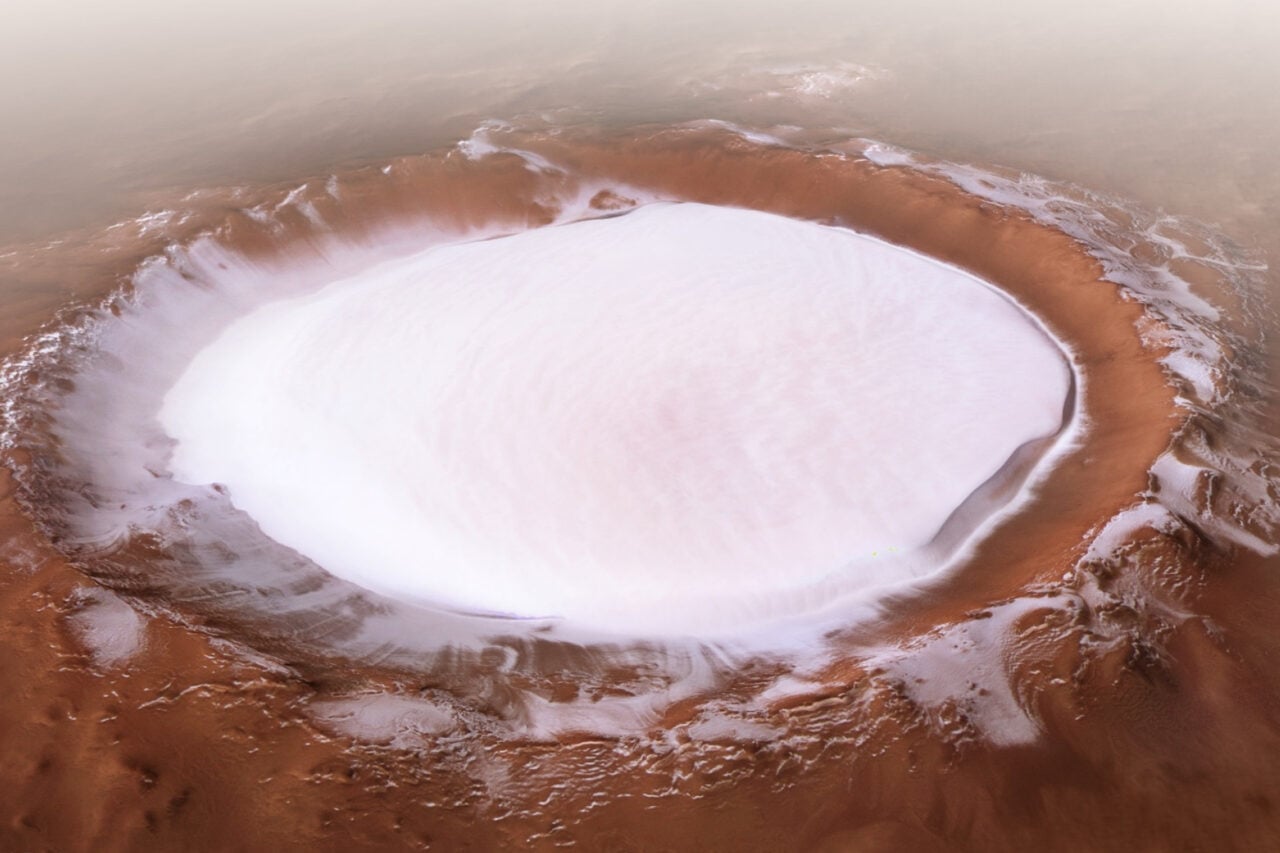
On another note, Anslow noted in the statement that the cometary delivery scenario for prebiotic chemistry could be more likely on Mars, since it’s smaller and has a much thinner atmosphere than Earth. But that’s just a maybe, he added, the point being that, if something like this truly happened on Earth, it’d be odd if it didn’t happen on Mars.
“Or the other, perhaps more likely, alternative, is that it didn’t happen on either planet,” he said.