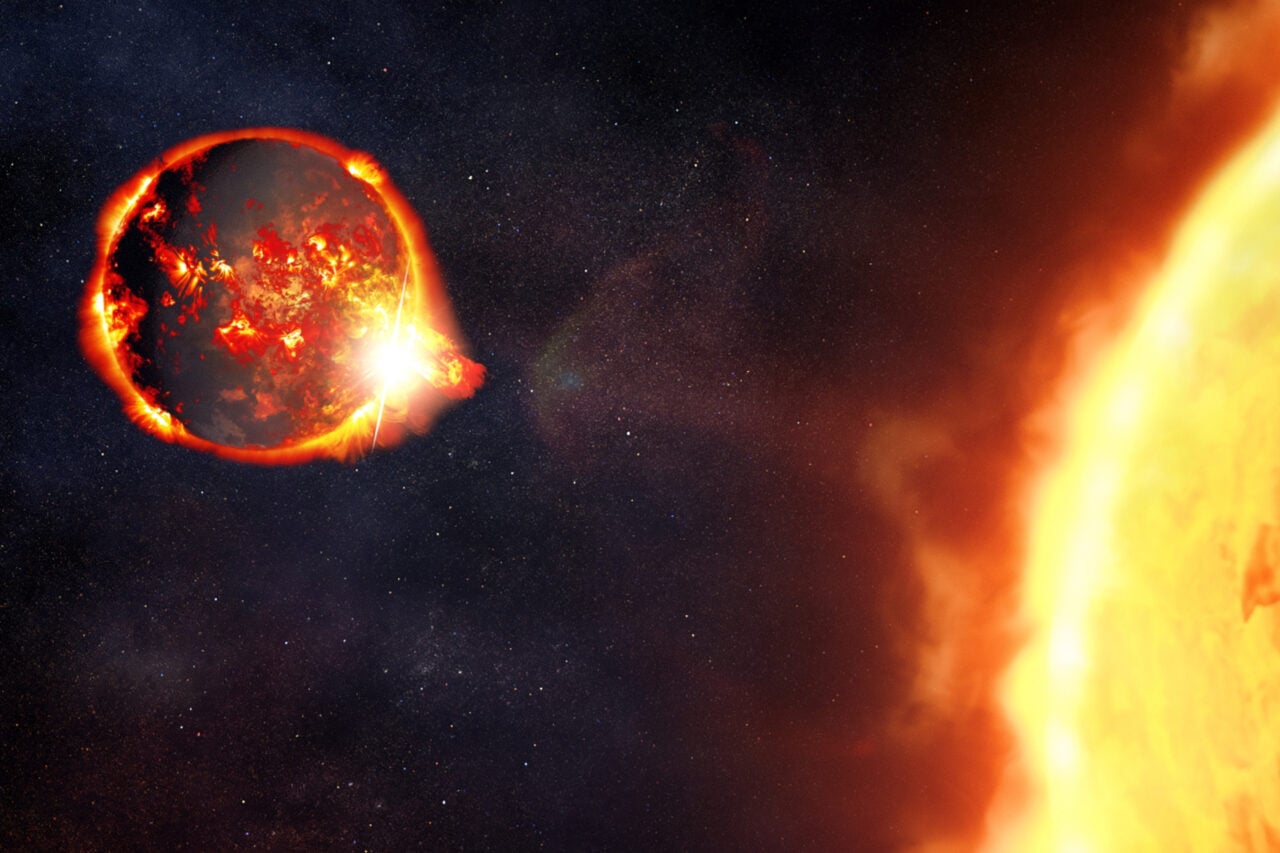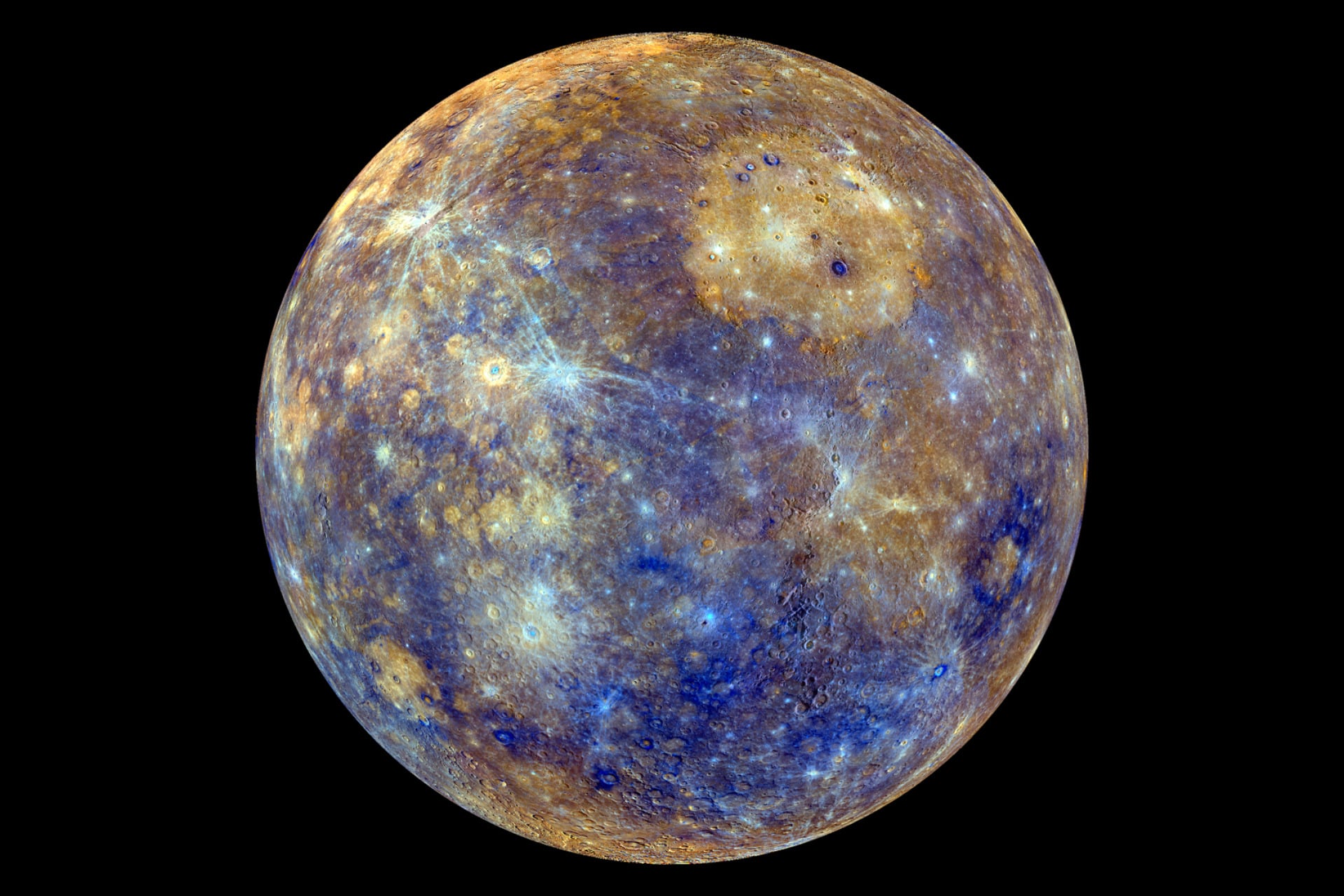
Mercury, the littlest planet in our solar system (though Pluto apologists may beg to differ), is getting smaller by the day. In fact, it’s been slowly shriveling up ever since it formed roughly 4.5 billion years ago. A new analysis of its shrinkage, or “radial contraction,” throws earlier estimates into question.
The findings, published today in the journal Geophysical Research Letters, suggest Mercury has shrunk a whopping 10% to 30% more than previous studies found. The new estimate equates to a loss of roughly 12 miles (19 kilometers) of total diameter since the planet formed.
“Mercury’s radial contraction provided in previous works has been underestimated because of lack of consideration of recent geologies,” lead author Gaku Nishiyama, a planetary scientist at the German Aerospace Center (DLR) Institute of Space Research, told Gizmodo in an email. By “recent geologies,” Nishiyama means geologically young impact craters and their ejected debris, which can obscure signs of the planet’s shrinkage.
“Our study solved this point for the first time by using surface roughness of Mercury [to] successfully estimate how much radial contraction has been missed in previous works,” he explained.
Diminishing Mercury
Before the planets of our solar system took shape, the Sun was surrounded by a flat, spinning disk of gas and dust. Over time, gravity gathered this material into clumps, and the eight planets we know today were born. Mercury, a rocky planet closest to the Sun, grew as asteroids collided with its surface.
The kinetic energy of these violent impacts converted to heat, and the little planet has been cooling down ever since. As Mercury has cooled, its interior has shrunk, like a grape shriveling up into a raisin. Indeed, much like a raisin, Mercury’s surface is covered in wrinkles—tectonic features such as scarps and ridges. Scientists have long studied these wrinkles to estimate how much the planet’s size has changed since its formation.
Because Mercury is cooling evenly across its entire interior (or at least it should be), scientists expect the wrinkles to be fairly evenly distributed across its surface. But they aren’t. Nishiyama and his colleagues wondered if that might be because some of them are obscured by resurfacing events, such as asteroid impacts that make craters and scatter debris across Mercury’s landscape.
To test this hypothesis, the researchers created a global map of Mercury’s roughness—which serves as a proxy for geological freshness—to previous maps of its wrinkles. They found that the roughest areas on Mercury (places where the terrain had been most modified by resurfacing events) had the fewest visible wrinkles, suggesting their hypothesis was correct.
“I was expecting that there would be some correlations, but such a clear correlation was well beyond my expectation,” Nishiyama said.
His team then used the contraction required to form wrinkles in less rough areas to estimate how much shrinkage had occurred across the entire planet, including under the rough patches. By accounting for these previously overlooked areas, they found 10% to 30% more shrinkage over Mercury’s lifetime than previous studies had. The researchers believe the planet’s total radial contraction is around 4.3 to 7.2 miles (6.9 to 11.6 kilometers).
It’s what’s inside that counts
These updated figures should help researchers better understand what’s happening beneath Mercury’s surface, shedding light on how rocky planets form and evolve. While Nishiyama noted that disentangling the many parameters of Mercury’s interior isn’t easy, his team’s results suggest its evolution began at a higher temperature with lower concentrations of lighter elements in the core, resulting in a larger core.
However, the new findings may still underestimate Mercury’s shrinkage, according to Nishiyama. They are based on data from NASA’s MESSENGER mission, which only reliably measured features larger than about 3 miles (5 km) across. When BepiColombo, a joint mission between the European Space Agency and the Japanese Aerospace Exploration Agency, reaches Mercury in November, it will collect higher-resolution scans of the planet’s surface. This could reveal its surface features in unprecedented detail.
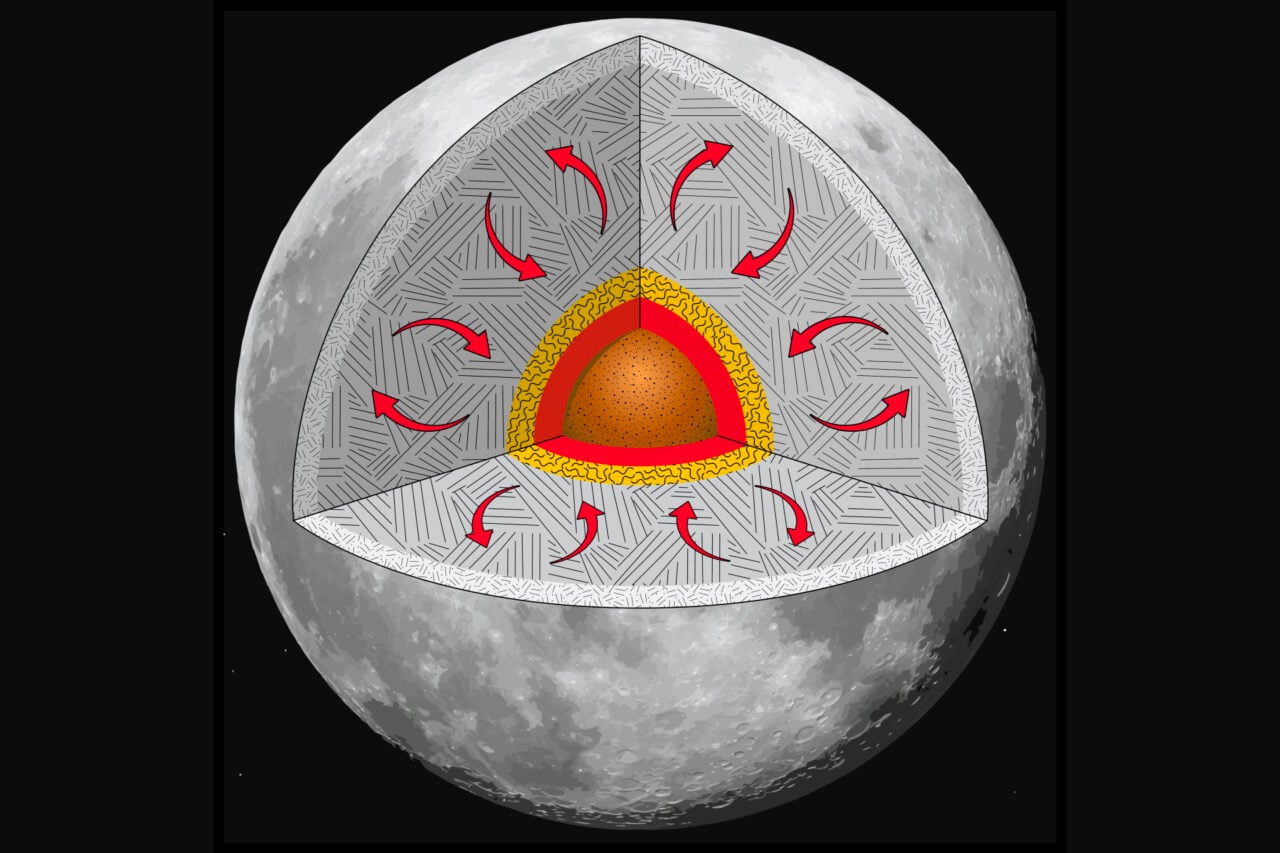
In the meantime, Nishiyama’s approach could help refine estimates of the Moon’s shrinkage, too. That’s right—Earth’s satellite is shriveling up too.
“In the case of the Moon, previous radial contraction is less than 1 km [0.6 miles] and never becomes consistent with thermal evolution models. But lunar roughness is generally much higher than Mercury, which means we have missed more shortening structures on the Moon than on Mercury,” Nishiyama explained. “Extension of our study will be useful to tackle this problem as well.”