The farthest planet from the Sun has a rather strange collection of moons in its orbit. That may be because Neptune’s largest moon, Triton, made a mess when it forced its way into the planet’s orbit billions of years ago. Now, scientists suggest that Neptune’s original set of moons was violently destroyed by Triton’s violent entry, except for one.
Using data from the Webb space telescope, a team of researchers is suggesting that Neptune’s moon Nereid is the only survivor of the ancient lunar collision that rewrote the history of the planet’s orbital satellites. In a recent study published in Science Advances, the researchers provide new insight into the chaotic history of the solar system and how it changed over billions of years.
Making an entrance
Neptune’s moon Triton was discovered just 17 days after the planet itself. It’s nearly the size of Earth’s Moon, far larger than any of Neptune’s other moons. Triton orbits in the opposite direction of its planet’s rotation, the only large moon in the solar system to display such weird behavior.
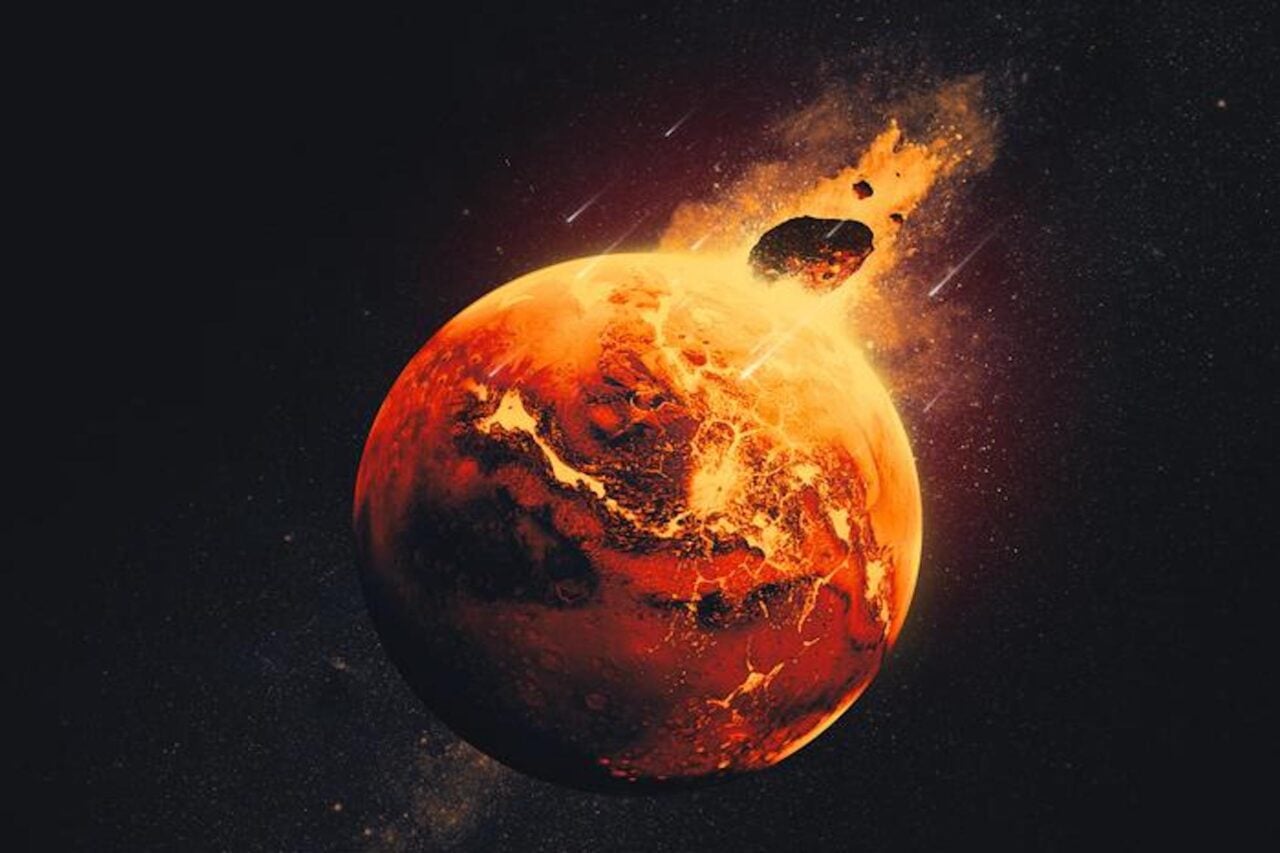
Because of its odd qualities, scientists believe that Triton did not form from the remnants of Neptune’s formation. Instead, it may be a Kuiper Belt object that was drawn in and captured by Neptune’s gravity nearly 4 billion years ago. As it entered orbit around Neptune, Triton may have caused quite the chaos, disrupting the planet’s satellite system.
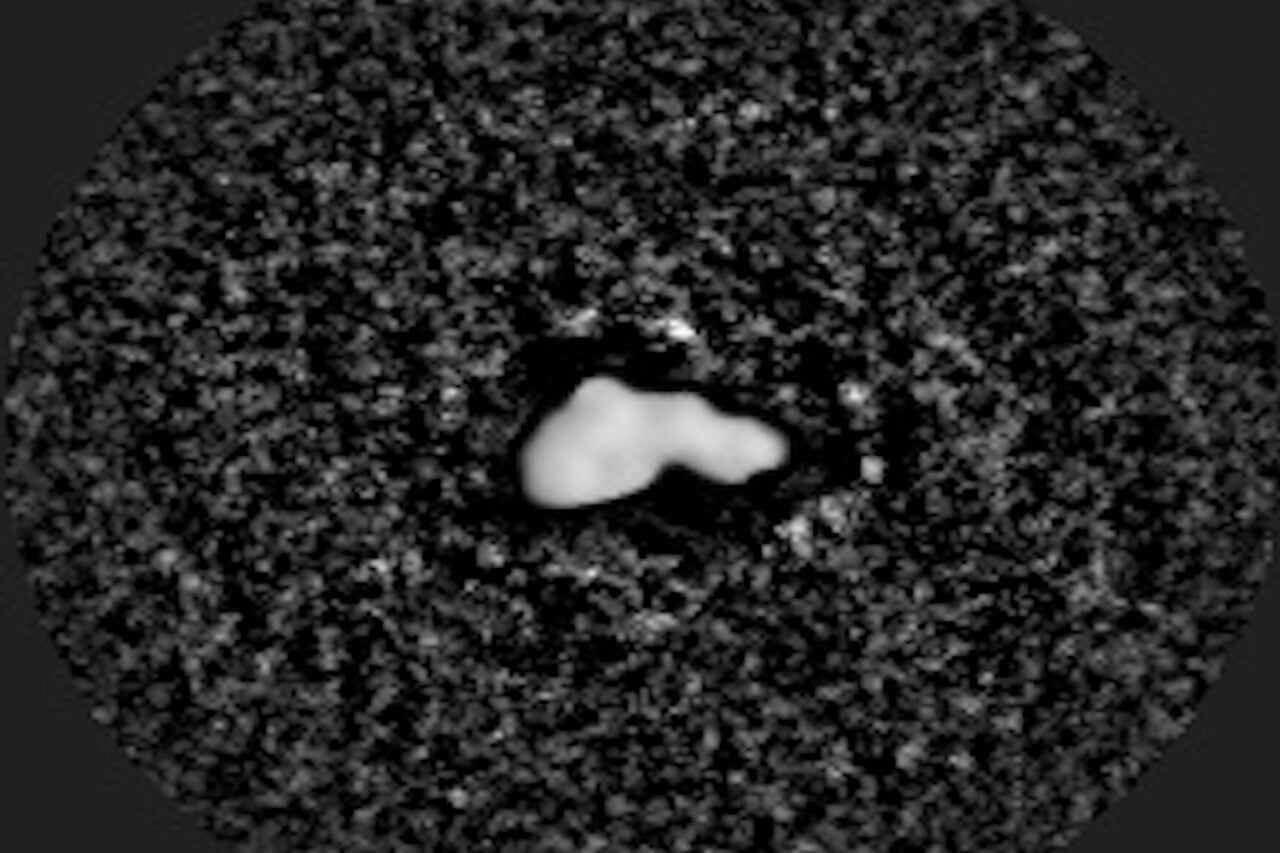
Another strange moon that orbits Neptune is Nereid. The third largest of Neptune’s moons, it has the most eccentric orbit of any moon in the solar system. As one of the outermost moons around Neptune, it takes 360 Earth days to complete one orbit around its host planet. Its odd orbit suggests that Nereid may have also been captured by Neptune’s gravity.
The new study, however, suggests that rather than sharing a common origin story, Triton and Nereid may be long-time foes.
Surviving Triton
The researchers behind the study, led by first author Matthew Belyakov from the California Institute of Technology, observed Nereid for a total of 10 minutes and 40 seconds using Webb’s infrared capabilities. They found that the moon was water-rich on the surface and brighter than a lot of Kuiper Belt objects. Instead, Nereid’s overall signature was more similar to the moons found around Uranus.
The researchers then ran computer simulations to test whether Nereid could have been part of Neptune’s original crew of moons. In simulations where Triton crashed through Neptune’s satellite system, one or more moons survived on irregular orbits around 20% of the time.
The study suggests that within the solar system’s first 200 million years, Triton’s forced entry into Neptune’s orbit would have likely destroyed the planet’s original set of moons. Nereid, on the other hand, may have been spared and kicked outward into an eccentric orbit.
That leaves Nereid as the sole survivor of an ancient lunar collision that destroyed its satellite companions and left it farther out from its host planet. It’s a hell of a story, with young Neptune thrown into chaos by Triton’s arrival and with Nereid emerging as the lone surviving relic of the planet’s original family of moons.