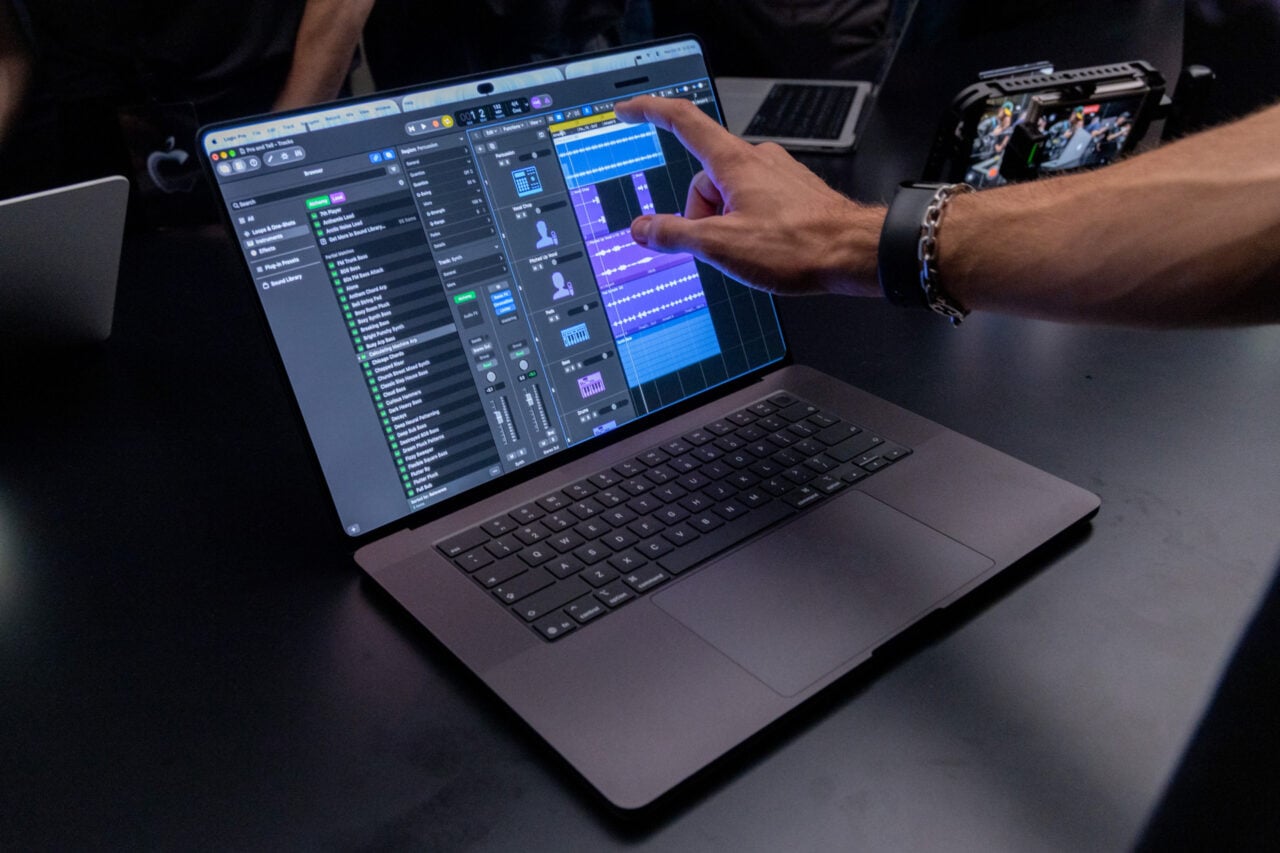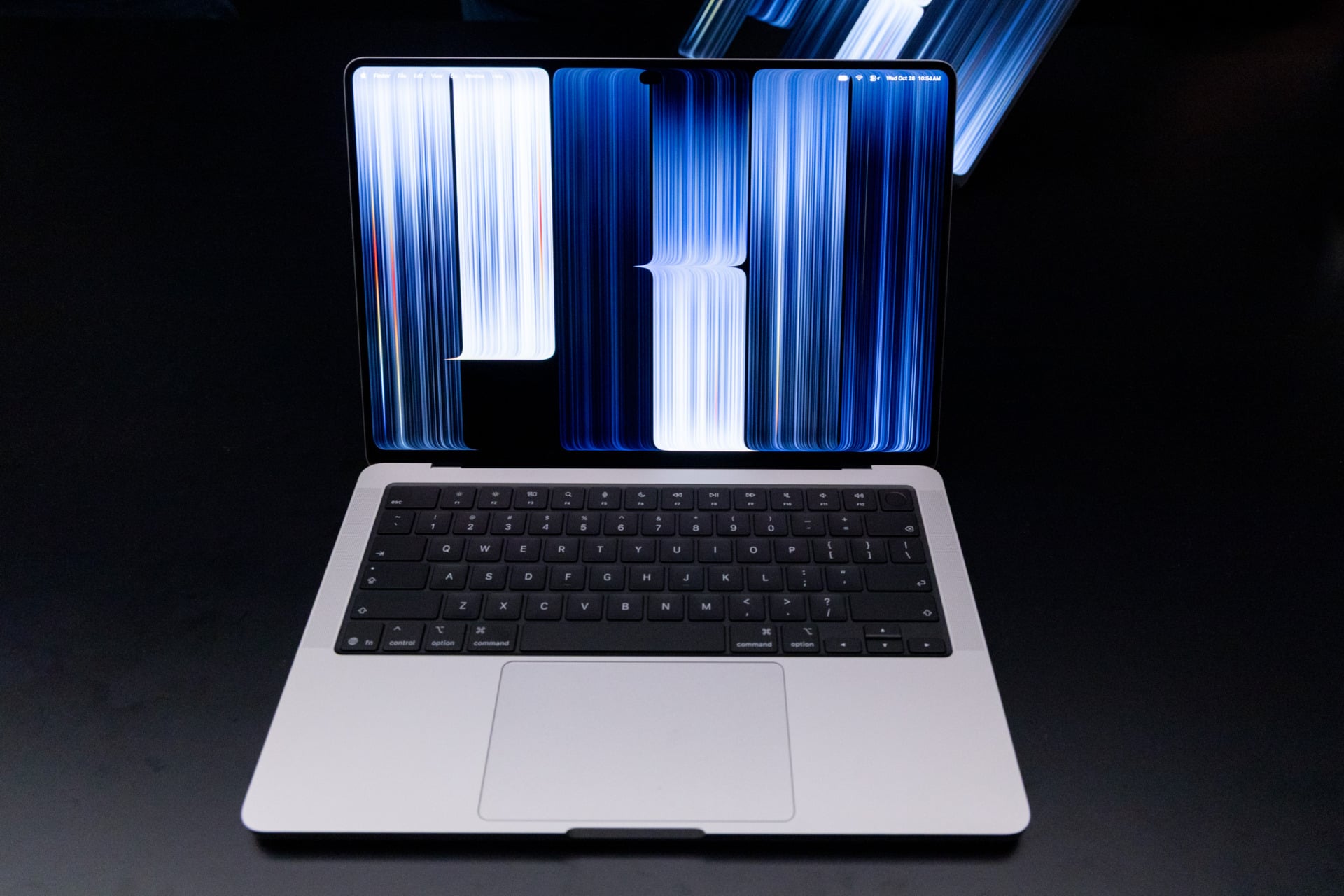
Apple’s MacBook Pro with PROLED XDR Display is literally what it says on the tin. This is a M5 Pro or M5 Max MacBook Pro with an improved display. Apple has said you should not expect any additional performance out of these laptops—zilch, nadda. Additionally, while these laptops are significantly lighter at 3 pounds for the 14-inch and 4 pounds for the 16-incher, the main reason for the Weight Watchers’ routine is thanks to the OLED panel. Without the need for heavier backlights of the Liquid Retina XDR mini-LED displays, Apple managed to shear off more than half a pound in overall heftiness.
So, in every figurative and literal meaning of the phrase, the OLED MacBook Pro is everything its name implies. If Apple intends to charge a $400 premium on top of the base 14-inch M5 Pro MacBook Pro at $2,899, then it has to proclaim its using the most “pro” level screen you can get. Based on everything I’ve seen, it may be a new standard.
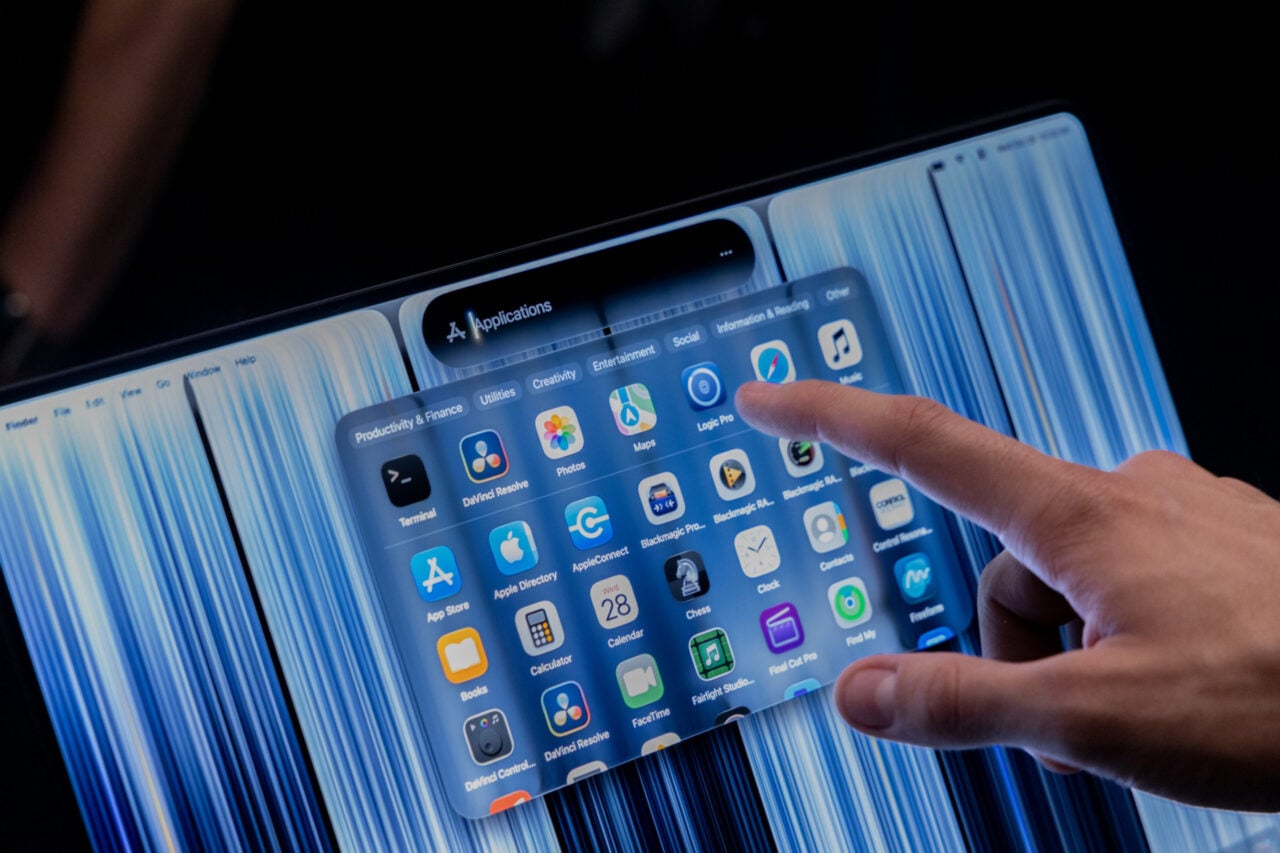
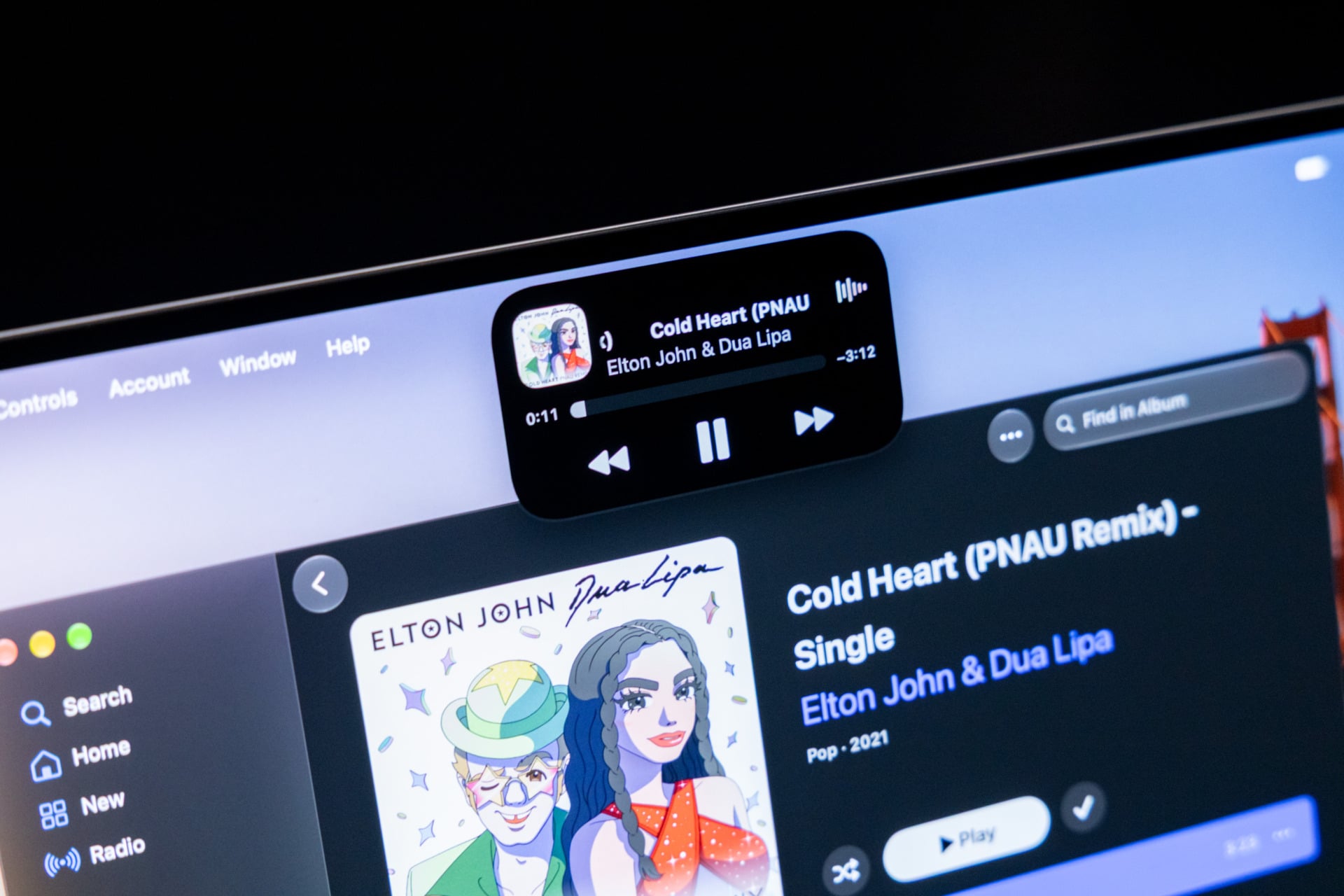
Let’s ignore the whole touchscreen aspect for now. The touchscreen tech allows Apple to remove the annoying notch that was the camera cutout and install a less-intrusive Dynamic Island. For that alone, I’d say the touch interface gives a better deal when we’re trying to maximize screen real estate.

You can read all about Apple’s screens in a reference document the company published after its big “Pro and Tell” MacBook showcase. PROLED XDR is another tandem OLED type of screen that overlays multiple layers of diodes on top of each other to increase the screen’s brightness. Apple claims it can get 1,000 nits for standard brightness and up to 2,000 nits in HDR, but that belies the fact that these screens can compensate for ambient light, potentially reaching above that stated peak value when working in direct sunlight.
Apple is making a big deal about its OLED manufacturing process. The company rarely cites its supply chain partners, but based on what they’ve said about the OLED factory, we can guess they’re talking about Samsung’s A6 fab. According to Counterpoint Research, the plant sprung up this past summer explicitly to design laptop OLED panels.
The new OLED MacBook Pro’s do not use LTPS or LTPO for the backplane. Instead, they use high mobility oxide. Samsung’s A6 fab is the industry’s first high mobility oxide fab and it is made on a larger substrate than LTPS and LTPO fabs for now.
— Ross Young (@DSCCRoss) October 29, 2026
From what Apple has said about its OLED manufacturing, A6 is an absolutely massive plant that’s building some high-end screens. OLED creation is a resource-hungry process, but Apple’s screens are special since they are likely not based on LPTS (low-temperature polycrystalline silicon) or LPTO (low-temperature polycrystalline oxide). These are instead using a high-mobility oxide backplane (which Apple referred to as a “full oxide transistor layer”). Essentially, this is the transistor layer that’s supposedly more power-efficient and more precise than the other more common backplanes.
That accuracy is important. Apple wants these “Pro” laptops to be used by professionals, and that includes DICOM for medical imaging as well as the industry standards P3 and Adobe RGB color gamuts. These screens are also capable of using Apple’s CMF 2026, which is essentially Apple’s latest mode for color calibration. It was first seen on the Studio Display XDR, but this is the company’s first OLED panel to try and reach these same professional standards.
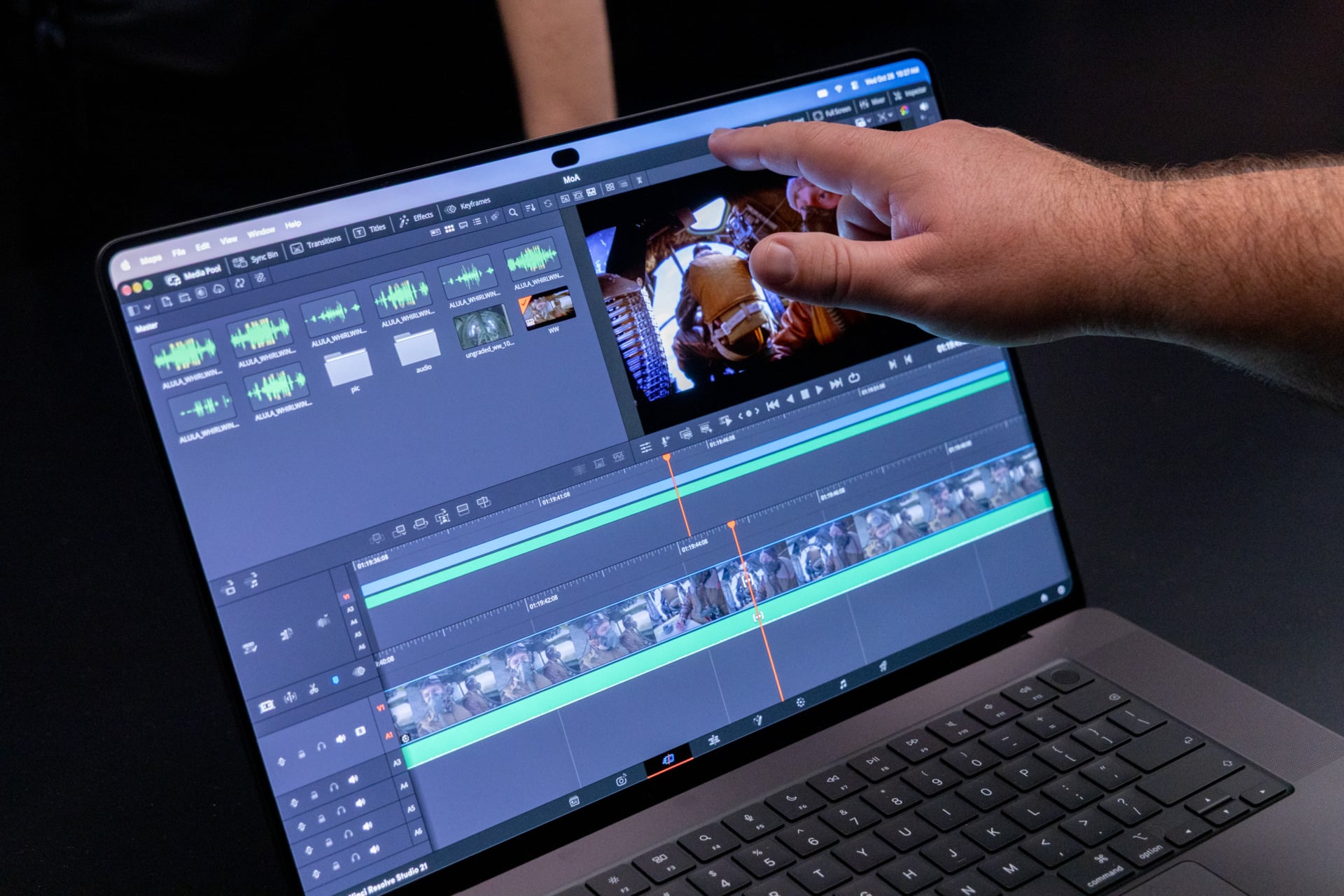
Those standards matter to the class of users who need to care about it, but what about most Mac fans who only want a pretty picture? Without our own chance in-house for apples-to-apples comparisons, I’m stuck reminiscing about my favorite OLED PCs to draw comparisons. Laptops like the Lenovo Pro 9i 16 G11 Aura Edition and Lenovo Yoga 9n 2-in-1 both sport a very colorful and bright OLED screen, but Apple’s PROLED XDR seems richer by comparison, with black levels that bleed into the shrunken screen bezels. Apple promotes its display, which hits a 10,000,000:1 contrast ratio, 10x more than the Lenovo laptops’ 1,000,000:1 ratio.
What’s more, Lenovo’s OLED screens use a glossy texture to enhance the colors on-screen. This results in a mirror-like sheen that can be distracting on occasion. Apple’s displays are covered with an anti-reflective coating as well as extra attention to avoid internal reflections from light bouncing off the cover glass. I haven’t taken these new MacBooks outside to test their mettle against sunlight, but under several studio lights, the PROLED XDR seemed to avoid that mirror-like quality. They also maintained a strong picture despite multiple viewing angles.
The 14-inch model hits a 3,024 x 1,986 pixel resolution, while the 16-inch high-end MacBook Pro sits at a 3,472 x 2,266 resolution, both managing a laudable 254 PPI (pixels per inch) pixel density. Both panels are rated with ProMotion, which means they can vary between 10Hz and 120Hz refresh rates. If we were talking about a gaming-ready OLED panel, we’d expect it to go up to 165Hz or even more, but Apple’s machines still aren’t pitch-perfect gaming rigs (and not just because you may still struggle to get most of your Steam library on macOS).
We’ll need more time in front of these new $2,899 MacBooks before we can say whether these screens match all of Apple’s promises. Considering the price and that these laptops will live and die by their display alone, they certainly have a lot to live up to.