How feathers evolved is somewhat of an enigma for scientists. But these typically soft, occasionally colorful appendages keep showing up in fossil records, and some of them are more impressive than others—like the twin tail feathers of a newly discovered bird from the distant past.
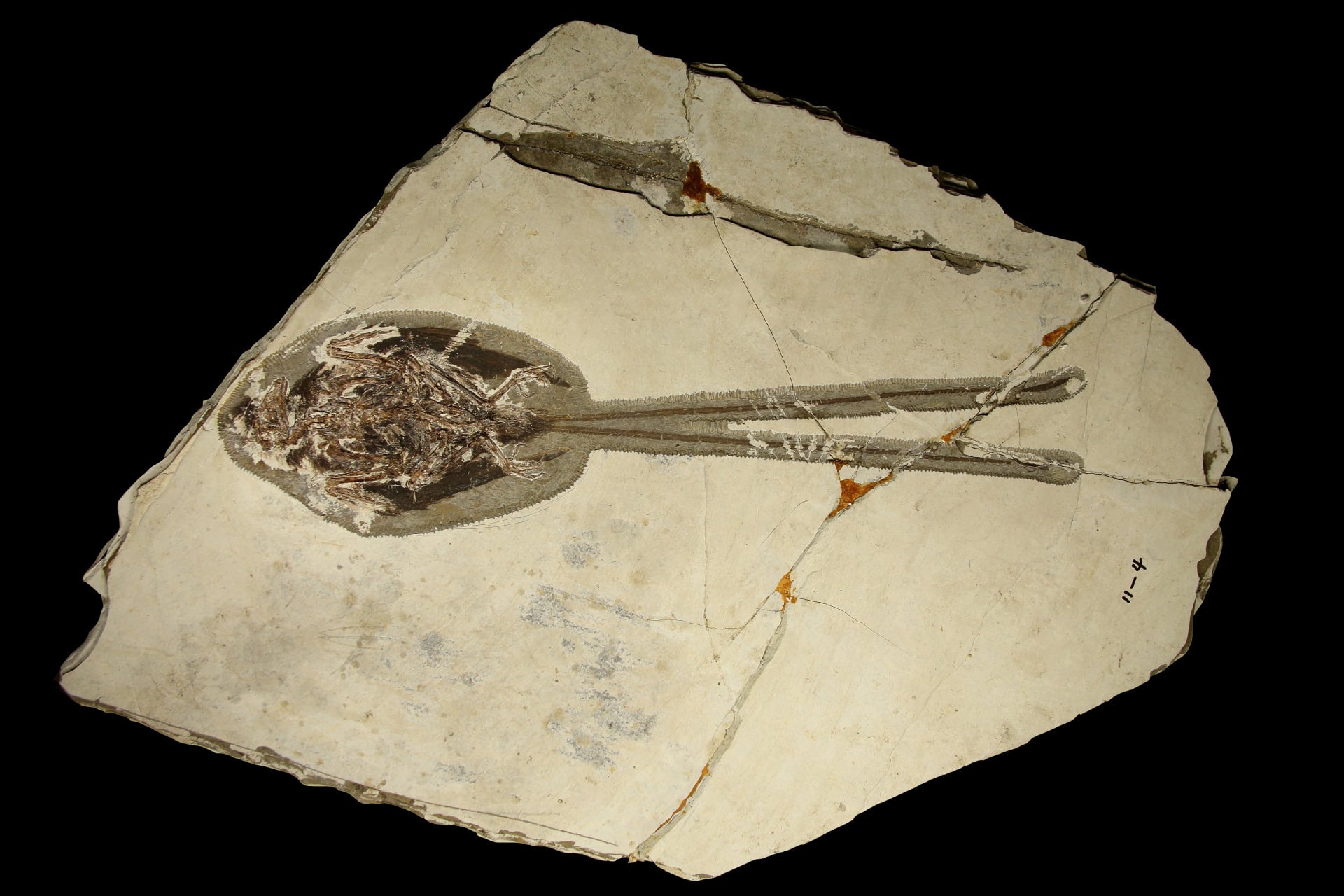
The new species, named Plumadraco bankoorum, or “Banko’s feather dragon,” flaunts two long, spindly tail feathers that are nearly twice the size of its entire body. Specifically, the bird measures about 6 inches (15 centimeters) from beak to tail, whereas the feathers are around 12 inches (30 centimeters). The Cretaceous bird dates to roughly 121 million years ago and was discovered in Liaoning, China. The feathers were probably ornamental and meant for flashy displays to attract mates, according to a study describing the new bird, published today in PLOS One.
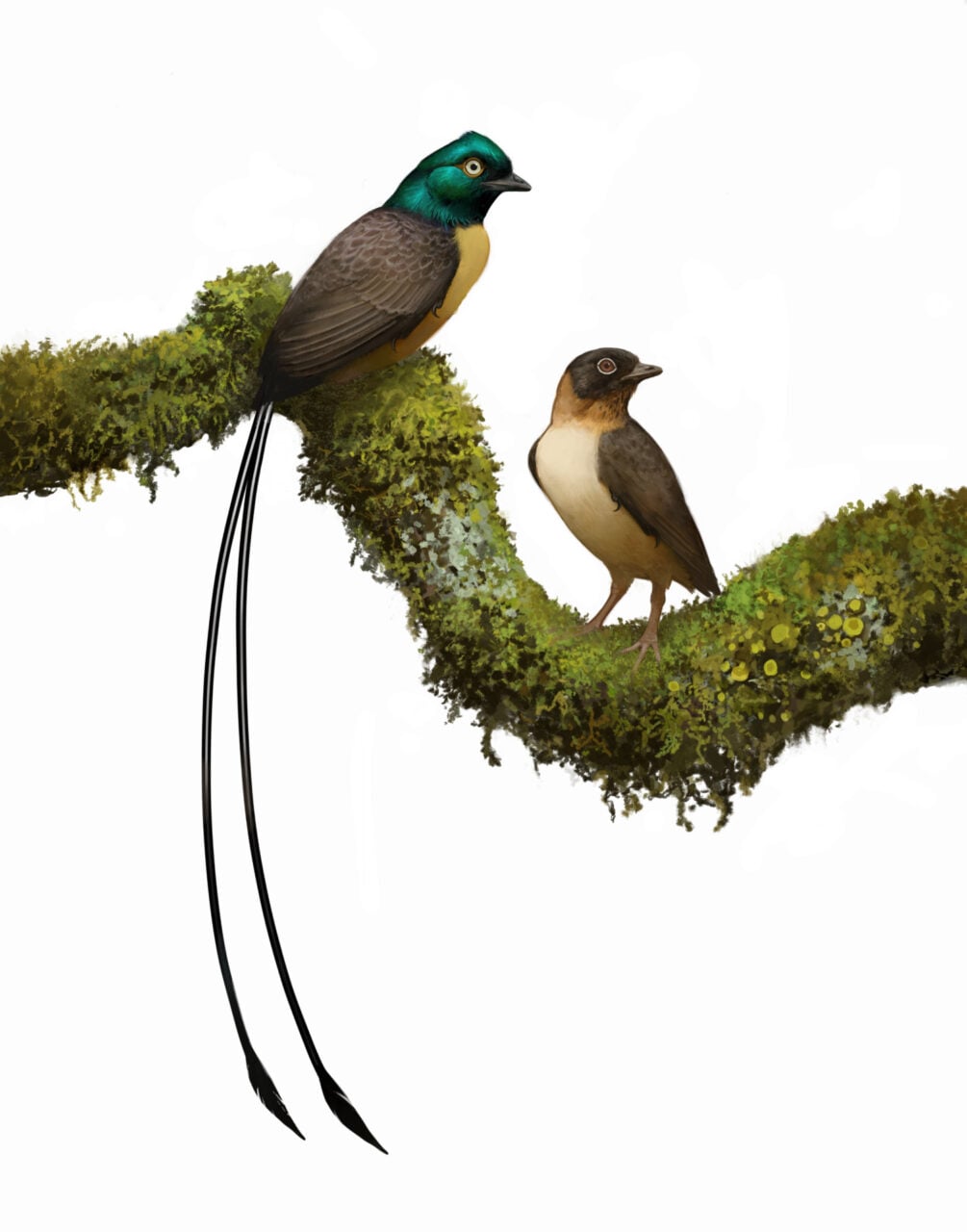
“The first thing we did was to determine if this specimen was indeed a new species—and it was,” Alex Clark, the study’s lead author and a PhD student at the University of Chicago, said in an interview with PLOS. “121 million years ago, this male Plumadraco was dragging along a train of tail feathers twice its body length, just to impress potential mates—something we see today in modern birds as well. Pretty cool, if you ask me!”
Hidden in plain sight
As it often happens to be the case for significant fossil discoveries, Clark spotted Plumadraco among hundreds of unanalyzed fossil birds lying around, in this case in China’s Shandong Tianyu Museum. In a press release from Field Museum, Clark said that Plumadraco caught his eye almost immediately.
“I saw this little guy, and I did a double-take when I saw the tail feathers,” he recalled. “I’m really interested in the way birds do displays to attract mates, and I thought that these tail feathers were so crazy, they had to be used for something like that.”
For the analysis, Clark and his colleagues took detailed photographs of the fossil and ported the images to digital platforms for closer examination. The specimen was surprisingly well-preserved, with body feathers from head to ankles, wing feathers, and, of course, the tail feathers—which Clark noted was a “new record” for any enantiornithine, the most diverse group of birds during the Mesozoic.
Flaunting for love
The fossil itself didn’t really leave much in the way of clues for the team to determine its sex. However, it seems more likely that this specimen was male. The structure of the feathers suggests “eye-catching levels of movement if moved up and down,” which is also reminiscent of what we see in the courtship displays of modern birds with long, ornamented tails, Clark explained in the PLOS interview.
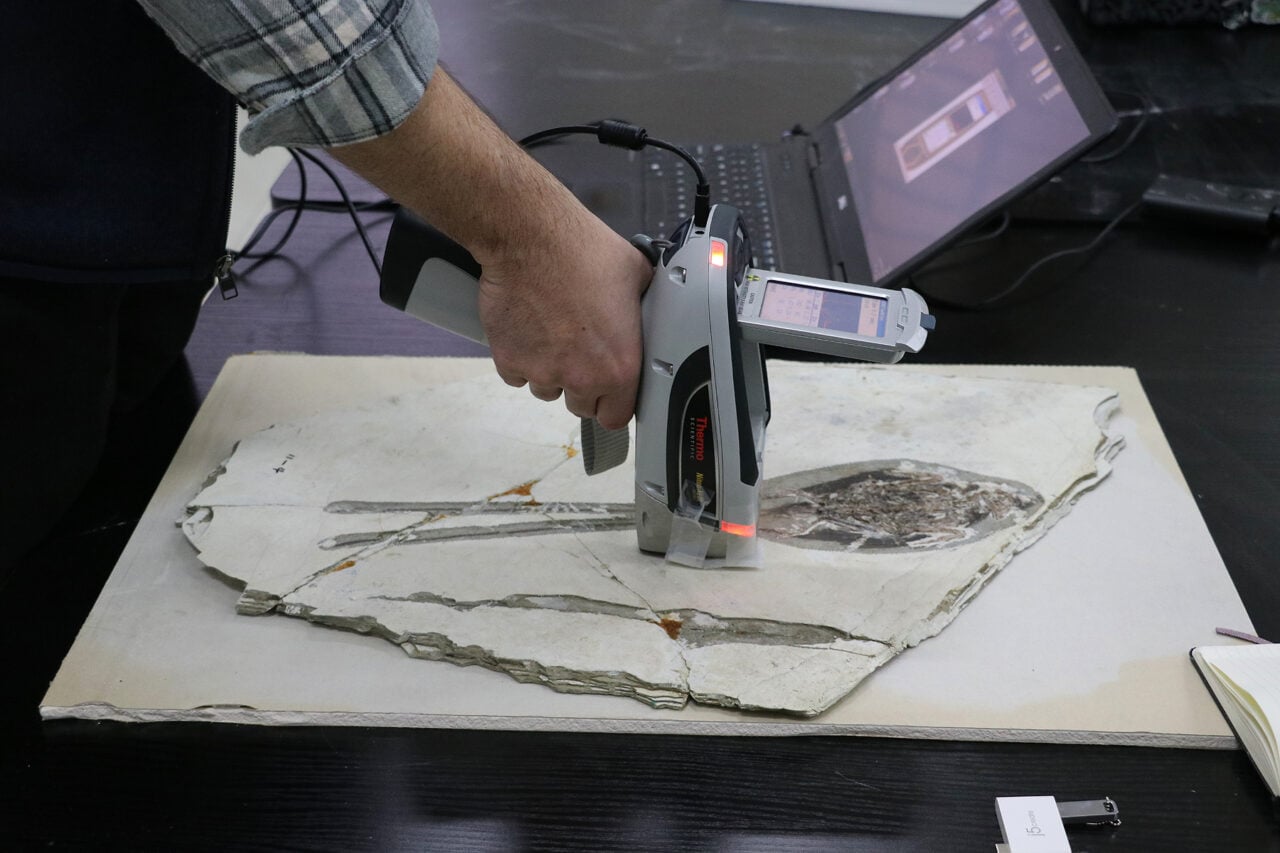
“Additionally, other enantiornithine specimens suggest muscles along the pelvis and tail, which raise and lower the tail,” he added. “With this specimen, we have a pretty strong argument that not only did probable males try to attract females with feather ornamentation, but they also did so with ridiculous lengths and probably displays.”
Paleontological discoveries always come with the caveat that we’ll never know for certain if our hypotheses are correct. Heck, it took a while for scientists to realize the T. rex probably sported feathers. Still, if the latest findings are correct, it shows how “birds have been evolving costly, elongate, specialized features to attract mates for a long, long time,” Clark said in the Field Museum statement. “Based on these fossils, female choice in selecting ornamented males has been playing a huge part in how birds look and behave for more than 120 million years.”
Related article: Ancient Bird Swallowed 800 Rocks and Choked to Death, Scientists Say