Google’s browser-based, streaming-centric Chromebooks never had any reason to be that powerful. That may not be the case with the forthcoming sequel to the lightweight laptop brand, annoyingly and eponymously called Googlebooks.
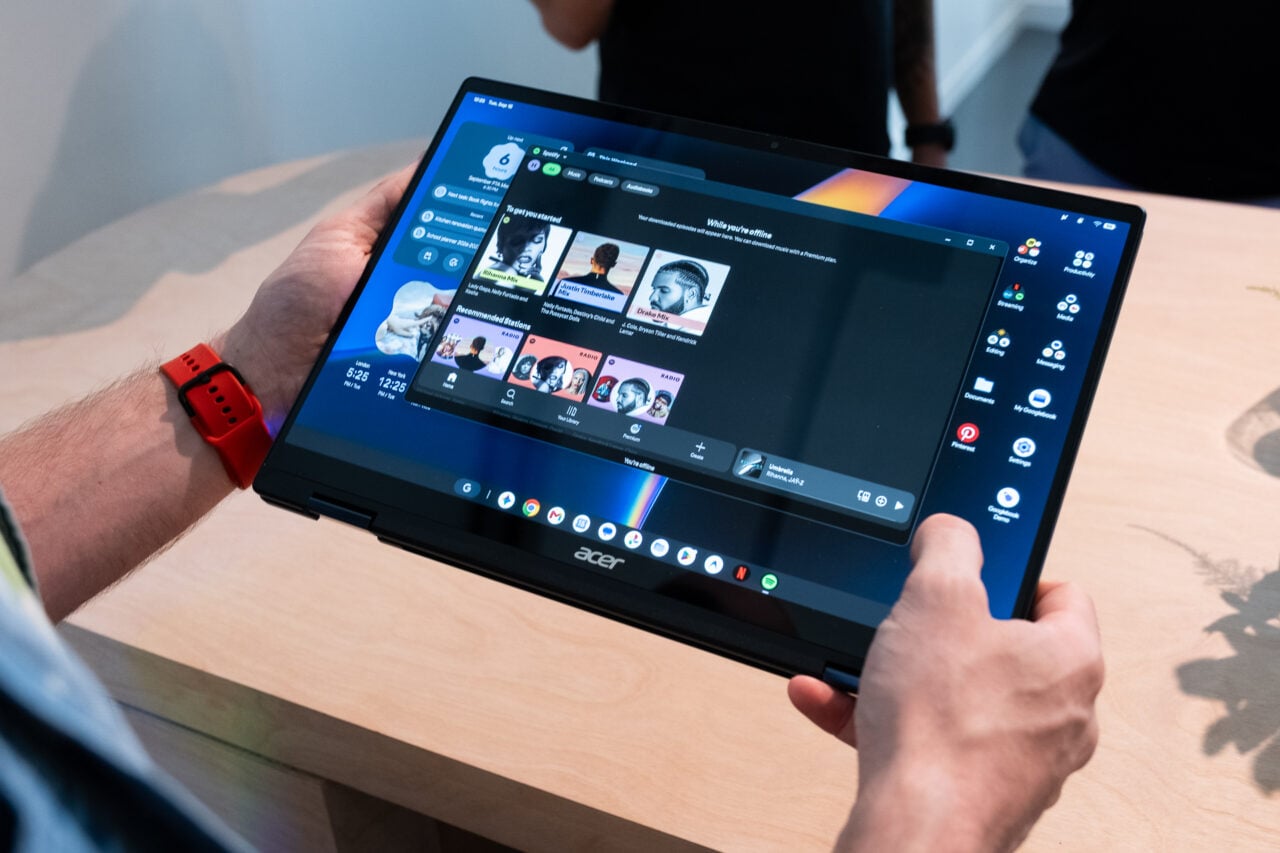
We’ve already seen several Googlebook leaks showing renders from multiple laptop OEMs (original equipment manufacturers) like Lenovo and Asus. The latest leaks from Chrome Unboxed offer an even better idea of what’s going on inside these larger, more powerful machines. The first Acer Googlebook 14 may sport a pretty 14-inch OLED screen and up to 512GB of SSD storage. The laptop also includes a whopping 16GB of RAM, more memory than most Chromebooks ever needed.
The code sleuths at Chrome Unboxed looked through Chromium code repositories and retailer info and found the Acer Googlebook 14 also includes a mainboard with either an Intel Core Ultra 5 325 and a Core Ultra 7 355. Those are Intel’s latest Panther Lake processors built for lightweight laptops, and they’ve proved capable in Gizmodo’s own tests over the last eight months.
Chromebooks never made that much use of higher-end chips, even something like these mid-range 8-core Intel processors. The 8-core MediaTek Kompanio Ultra proved to be overkill on past Chromebooks like the Lenovo Chromebook Plus 14 and Acer Chromebook Plus Spin 514. Googlebooks need apps that can make use of these capabilities for them to make sense. Some of those past leaked renders included icons for Adobe Premiere Pro. The lingering question is: What other apps can we expect to run natively on the new Googlebook operating system (dubbed internally as AluminumOS)?

Google’s next OS will reportedly combine Android and ChromeOS into one homogeneous environment. Google hasn’t offered any real details on how that will work nor what kind of app support we can expect. Certainly, we’d enjoy running a whole slew of Android programs on a larger screen, but more than that Googlebooks need to feel like you’re not scrounging for software or driver support. Qualcomm and its push for ARM-based PCs learned that the hard way.
Chromebooks were long pushed as a cheap option, but in the age of the $700 MacBook Neo and cheaper, higher-quality PCs, Google may be trying to push a mid-range alternative. Google’s plan to push Chromebooks to higher-end consumers doesn’t seem like the most sensible thing in this age when even mid-range laptops can cost more than $1,500. The ongoing memory crisis has especially hurt laptop models with at least 16GB of RAM. Chromebooks, on the other hand, have often gotten away with just 4GB or—at most—8GB of memory.
ChromeOS was designed off a Linux kernel, same as Android. With the two melded into one, it should still be less RAM intensive than Windows 11. As Microsoft tries to break apart its OS to make it more compatible with 8GB devices, Google may actually have a leg up in today’s RAM-ravaged landscape. That’s only if the laptop OEMs like Acer, Lenovo, Asus, and maybe even Samsung can keep prices contained.