Astronomers noticed something odd while hunting for exoplanets in a star system just 28 light-years away from Earth. A powerful gravitational force was tugging mightily at the red dwarf star at the heart of this system, inducing whipsaw variations to its velocity by nearly 10 miles per second (16 kilometers per second)—over one thousand times larger than anticipated.
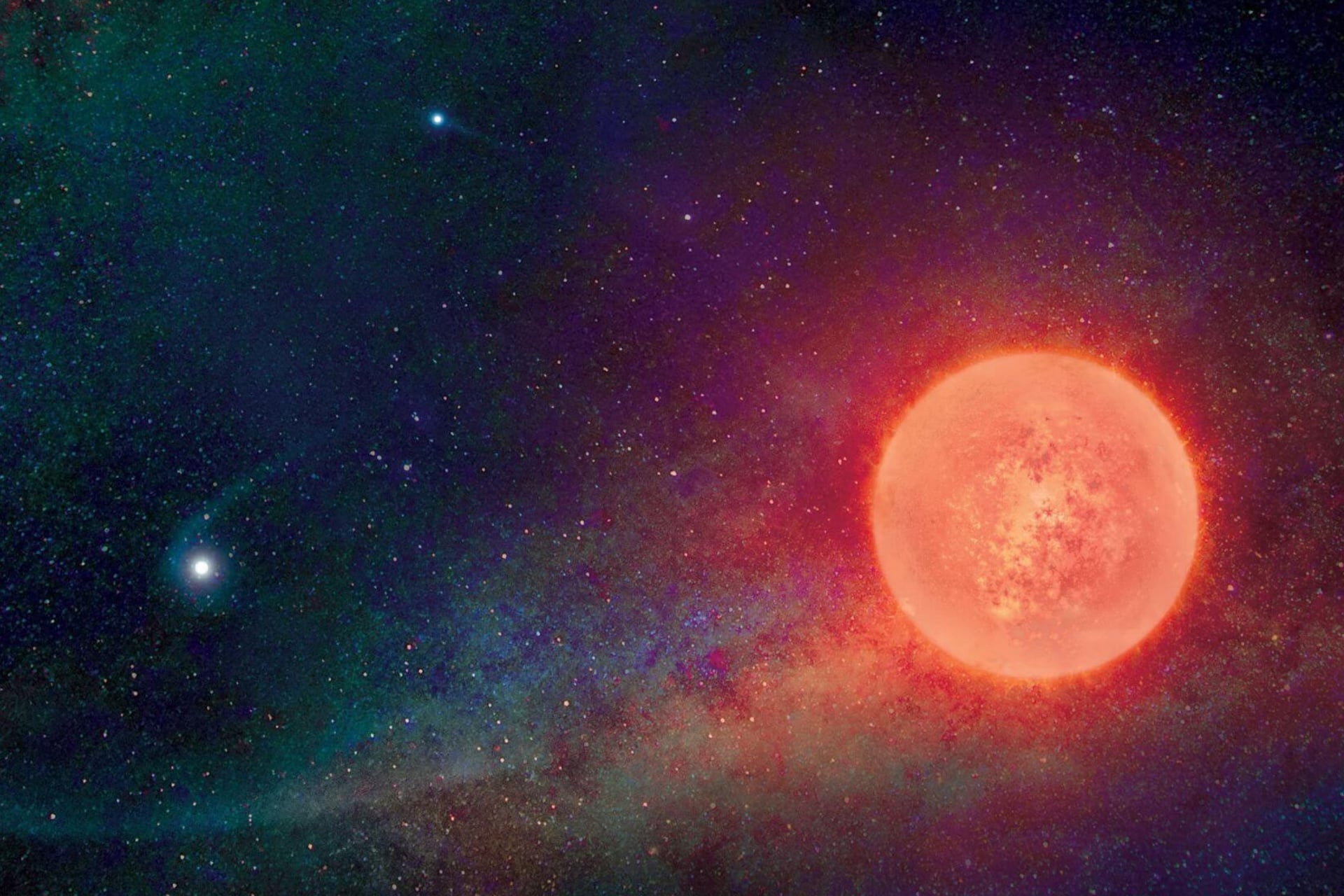
It took years of observations, but astronomers have now traced this red dwarf’s puzzling movements to a star system unlike anything they’ve ever seen in our region of the galaxy: a triple star system with a tightly intertwined white and red dwarf pair at its center, orbited by another white dwarf at a distance.
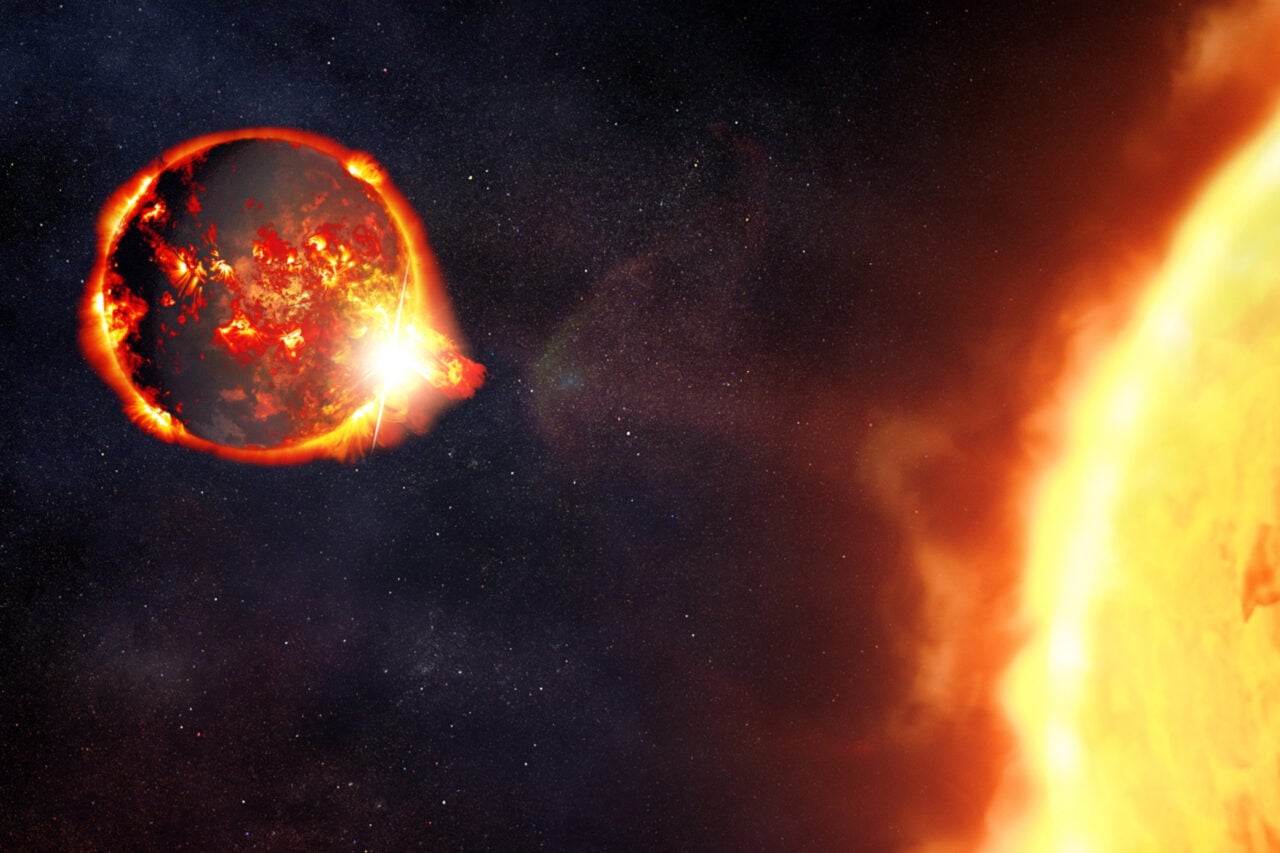
The tight dance of this system’s central pair didn’t make sense, the researchers said, given what the white dwarf must have been in its prior stage—a swollen giant big enough to reach its partner. The two stars should have spiraled together and fused into a single star long ago.
“This system should not exist,” study coauthor Patrick Dufour, an astrophysicist at the University of Montreal, said in a press statement. “We have no clean explanation for how it got here.”
Too close for comfort
Astronomers first noticed something odd about the red dwarf at the heart of Welopōʻai (“path of family traits” in Hawaiian) using SPIRou, a near-infrared instrument on the Canada-France-Hawaii Telescope atop the dormant Maunakea volcano in Hawaii. Optimized for taking precise radial velocity measurements of celestial orbits, SPIRou provided clues but no firm explanation—until the team calculated that whatever hidden object was so closely orbiting this red dwarf had more than half the mass of our Sun.
“The unusual combination of high mass and very low brightness left only one plausible explanation: it was the remnant of a dead star,” study coauthor Charles-Antoine Parent, a second-year physics student at Université Laval, recalled in a statement.
“The most likely explanation was a white dwarf, although a neutron star or even a black hole couldn’t be ruled out,” Parent said.
High-resolution images taken from another tool on Maunakea, Gemini North telescope’s ‘Alopeke instrument, provided the final evidence needed to rule out those other two options.
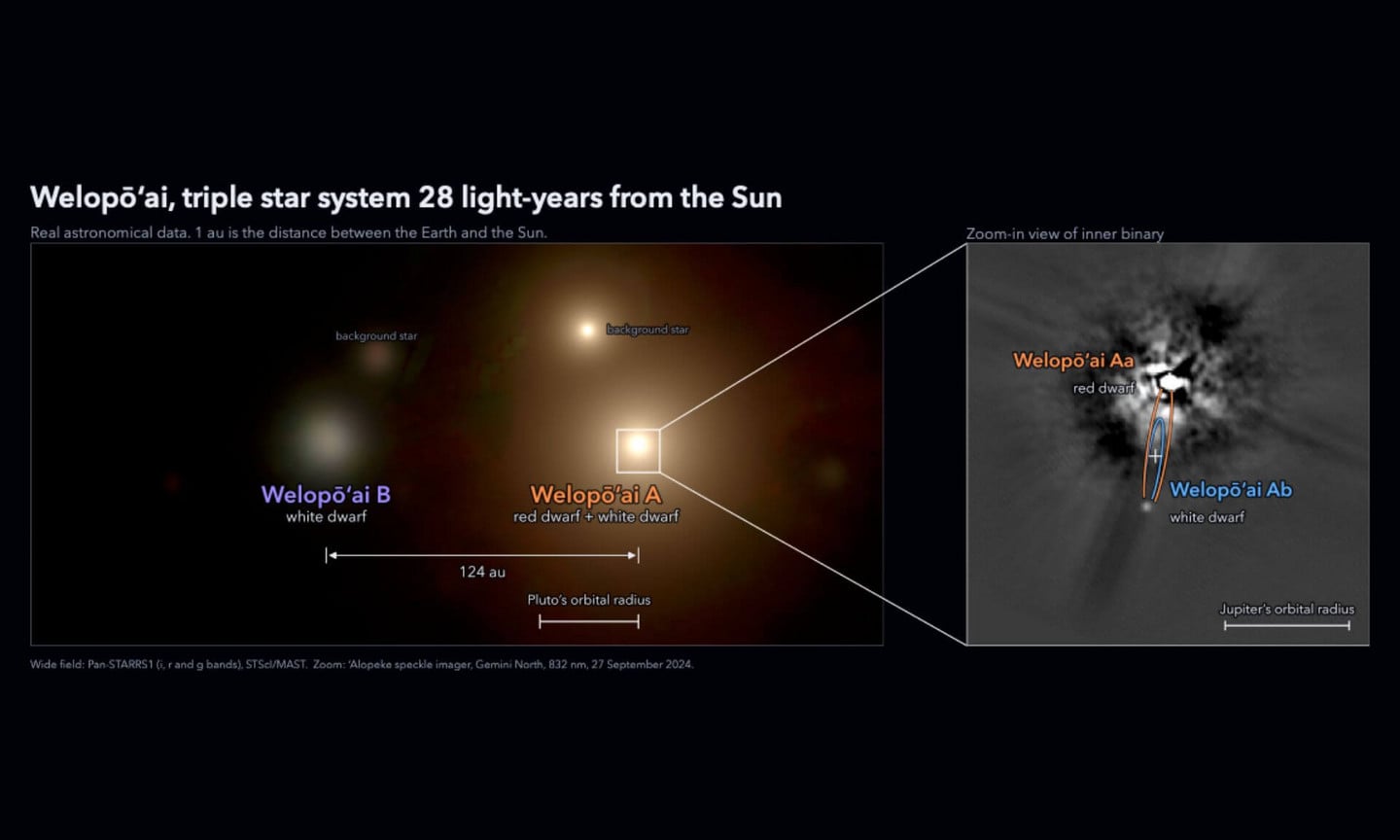
But unlike that second white dwarf orbiting farther away in this same star system, the newly confirmed white dwarf raised serious questions. Typically, the white dwarf phase at the end of a star’s life is preceded by a powerful phase of expansion with its atmosphere swelling into a subgiant or giant star, particularly for white dwarfs of this size.
This star’s calculated “expanding giant envelope,” as the team noted in its study, should have led to a monumental collision. “[Strong gravitational] tidal interactions and at least partial envelope grazing were nearly unavoidable,” the researchers wrote. The stars should have merged.
A three body problem
The researchers hope their next dive into Welopōʻai will help them more accurately model the interplay of gravitational forces between these three stars, which might help them determine how these aging celestial bodies came to fall into this seemingly rare arrangement. One early theory, they wrote, would be that the pull from the system’s more distant white dwarf may have kept the two more tightly orbiting stars from merging during that prior “expanding giant” phase.
But the team may find themselves hard pressed to find relevant nearby systems for comparison. As noted in its study, published online Thursday in the journal Astronomy and Astrophysics, “a hierarchical triple with a more distant white dwarf” has “no known analogue” within 100 light-years of Earth.
For coauthor Étienne Artigau, Dufour’s astrophysics colleague at the University of Montreal, this system’s uniqueness should challenge astronomers to look more closely for further peculiar behavior from other celestial bodies in our neck of the galaxy.
“Discoveries like this remind us that our own cosmic neighbourhood still contains remarkable surprises,” Artigau said in a statement.