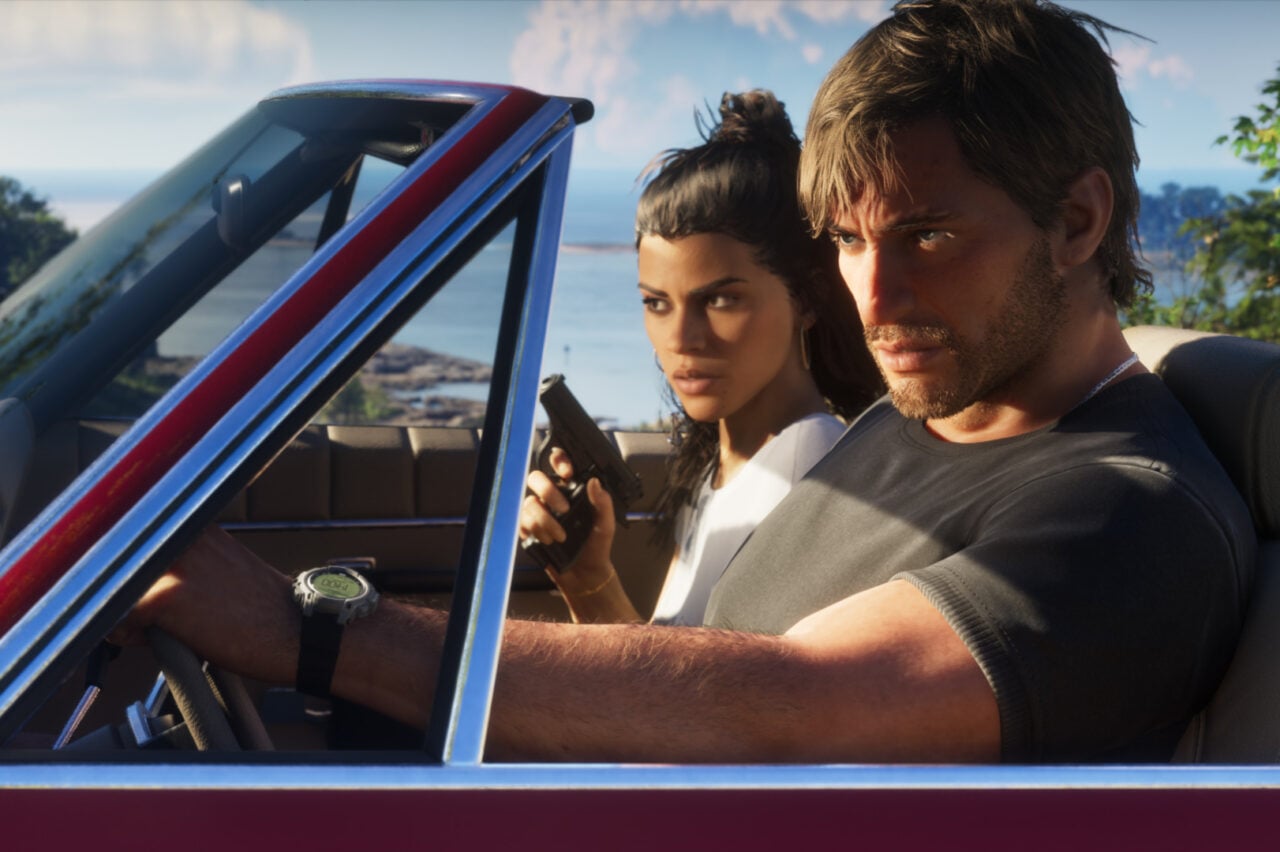
Well, Grand Theft Auto VI is out, and in news that will surprise absolutely no one, it has already made developer Rockstar Games gazillions of dollars: initial estimates suggest that the game sold nearly 25 million copies by the end of its first day of release, including preorders, generating approximately $2.36 billion in revenue. TWO POINT THREE SIX BILLION DOLLARS.
You might wonder how much profit that represents. We don’t know, because Rockstar hasn’t disclosed the game’s development budget, and there are plenty of other expenses to account for, including marketing and the cut taken by console platforms. But the development budget has reportedly been estimated at somewhere between $1 billion and $1.5 billion—which are also INSANE numbers. So, at least on paper, GTA VI has generated more revenue in a single day than it reportedly cost to develop.
The scale is hard to comprehend without some comparisons, but there really aren’t any releases remotely comparable to this. The Wall Street Journal, for instance, noted that the only cultural phenomena to make similar amounts of money have done so over far longer timescales: Taylor Swift’s Eras tour, for instance, grossed $2.2 billion, but that was over the course of nearly two years. GTA VI surpassed it in a day.
But no. Because capitalism, at least some of those staff are actually worrying about their jobs. More than 1,600 Rockstar workers in the UK are currently voting on union recognition, while the company is embroiled in an employment tribunal over allegations that it fired 31 workers for union activity last year. Rockstar denies the allegations, but the dispute helps explain why employees are anxious about their futures even after delivering what could be the most profitable video game in history.
Nestor Uriarte, one of the UK staff involved in the unionization effort, penned an op-ed for The Guardian on Wednesday—which, by the way, ballsy choice of week—in which he wrote, “It says a lot about the industry that even my colleagues and I, working on the biggest game of all time, are worried about getting laid off. But the truth is that workers across the sector are helpless to resist the waves of redundancies crashing around us, until we get organised.”
If it seems far-fetched that Rockstar would lay off staff after making absurd amounts of money, consider that tech companies are awfully fond of cutting jobs even while bringing in billions in revenue. Earlier this month, for instance, Canva announced a sweeping restructuring affecting 22% of its workforce, including an undisclosed number of layoffs, despite reporting $3.5 billion in revenue for 2025 and a 43% increase in annual recurring revenue. The privately held design software company has acknowledged slowing growth, but its latest move is another reminder that even enormous commercial success doesn’t necessarily translate into job security for the people responsible for it.
And, of course, while Rockstar no doubt has other projects in the works, it also seems likely that there are at least some staff who were brought on specifically to work on GTA VI and who are now looking nervously over their shoulders. The company’s workforce grew 14.1% over the last three years, and while there are still job postings on its website, it’s hiring less than it did in the run-up to its big release. There’s also the specter of AI hanging over the entire industry, threatening to automate away the jobs of coders, writers, designers, and artists alike. (Or, at least, threatening to make C-suite types deem those jobs expendable.)
The idea that companies can just treat staff like literal human resources, to be used and dispensed with when done, as opposed to actual people to whom they have a duty of care, is a very post-Reaganite one, and it’s easy to forget that things were not always thus. In 1941, AT&T’s employee handbook described its pension plan as follows: “By means of this [pension plan] and other welfare practices, the Company endeavors to ‘take care’ of its employees throughout their working careers, and beyond. In return, it naturally expects employees to be genuinely concerned with the welfare of the business and to feel personally responsible for its reputation and continuing success.”
That sort of corporate give-and-take feels almost impossibly quaint and naïve in 2026, but that’s only because we’ve had nearly half a century of companies slashing, burning, union-busting and working employees to the bone. In a perfect example of what the late Mark Fisher called capitalist realism, we feel that because things feel like they’ve always been this way, they have to be this way. But they haven’t, and they don’t. In a sane world, no one who worked at a company that has just made a gross profit exceeding the total GDP of something like 26 entire countries would be worrying about their jobs. That’s not the world we live in, but as Uriarte writes, unionization efforts like those at Rockstar are a step in the right direction: “What happens here could open the door for other workers across the UK to imagine an alternative future for the industry—one in which workers’ voices are taken into account more.”