Central to many unsolved mysteries in physics are tiny, weakly interacting particles that require heavy-lift detection methods. This makes them difficult to visualize, so scientists find roundabout ways to track particle movement, typically using giant, expensive machines that take time to process data. But one proposal—a smaller, camera-like prototype—aims to solve these issues.
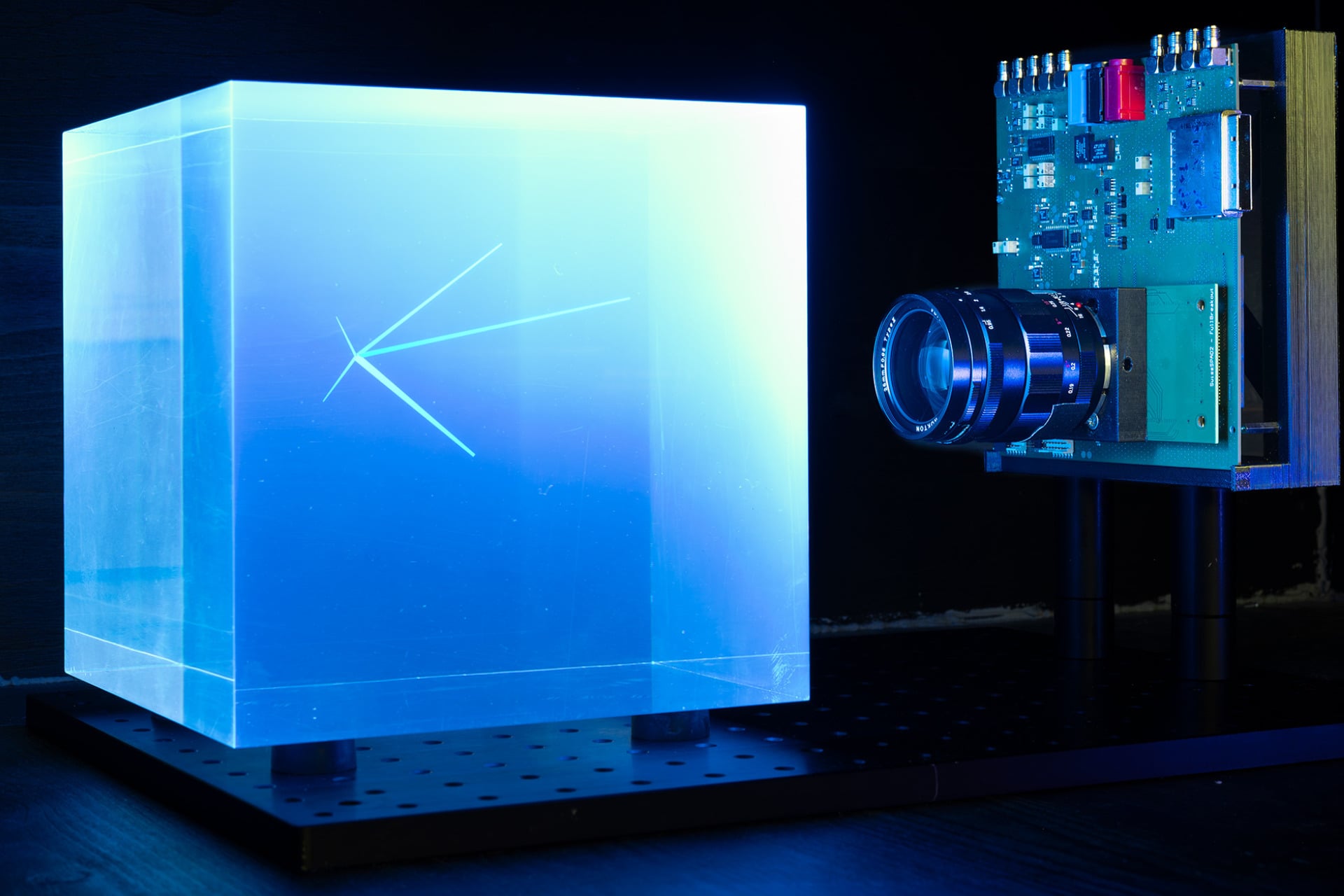
In a recent Nature Communications study, researchers from ETH Zurich and EPFL in Switzerland report results from the first prototype of an alternative particle detector that “enables ultrafast three-dimensional high-resolution imaging,” according to the paper. The demonstrator, called PLATON, is a monolithic detection system comprised of a scintillator block and a 3D camera. The setup is simple, but a combination of original software and neural networks helps enhance the resolution of the 3D image.
“The result is a simplification of the construction of a particle detector and, maybe surprisingly, the excellent 3D spatial resolution that can be achieved [with the simple setup],” Davide Sgalaberna, a physicist at ETH Zurich, told Gizmodo in an email. “Our demonstrator opens the path to a completely new approach to detect neutrinos and, more in general, elementary particles.”
Neutrinos are chargeless, near-massless particles that exist in extreme abundance in the universe. Dubbed “ghost particles,” they’re important because, despite their abundance, they are so difficult to detect that there’s not much physicists know for certain about them.
Practically speaking, the earliest application of PLATON will be as a full-body scanner for medical purposes. However, it’s easily scalable, so it should eventually prove itself useful in particle physics, the team explained in a statement.
Tracking the near-invisible
Scintillators are materials that convert high-energy radiation, such as X-rays or gamma rays, into visible or near-visible light. In particle physics, scintillating materials in a detector convert radiation from tiny, high-energy particles into light signals. These “calorimeters” stop particles and measure their energy loss, giving researchers the information they need to analyze their behavior, according to CERN.
“Usually, to 3D track this multitude of particles in the scintillator, you have to segment the scintillator into many tiny voxels (e.g., 1 cm³ cubes) between several thousand and millions,” Sgalaberna explained. “However, the size of the voxels, [or] the granularity of the segmentation, limits the spatial resolution of the image.”
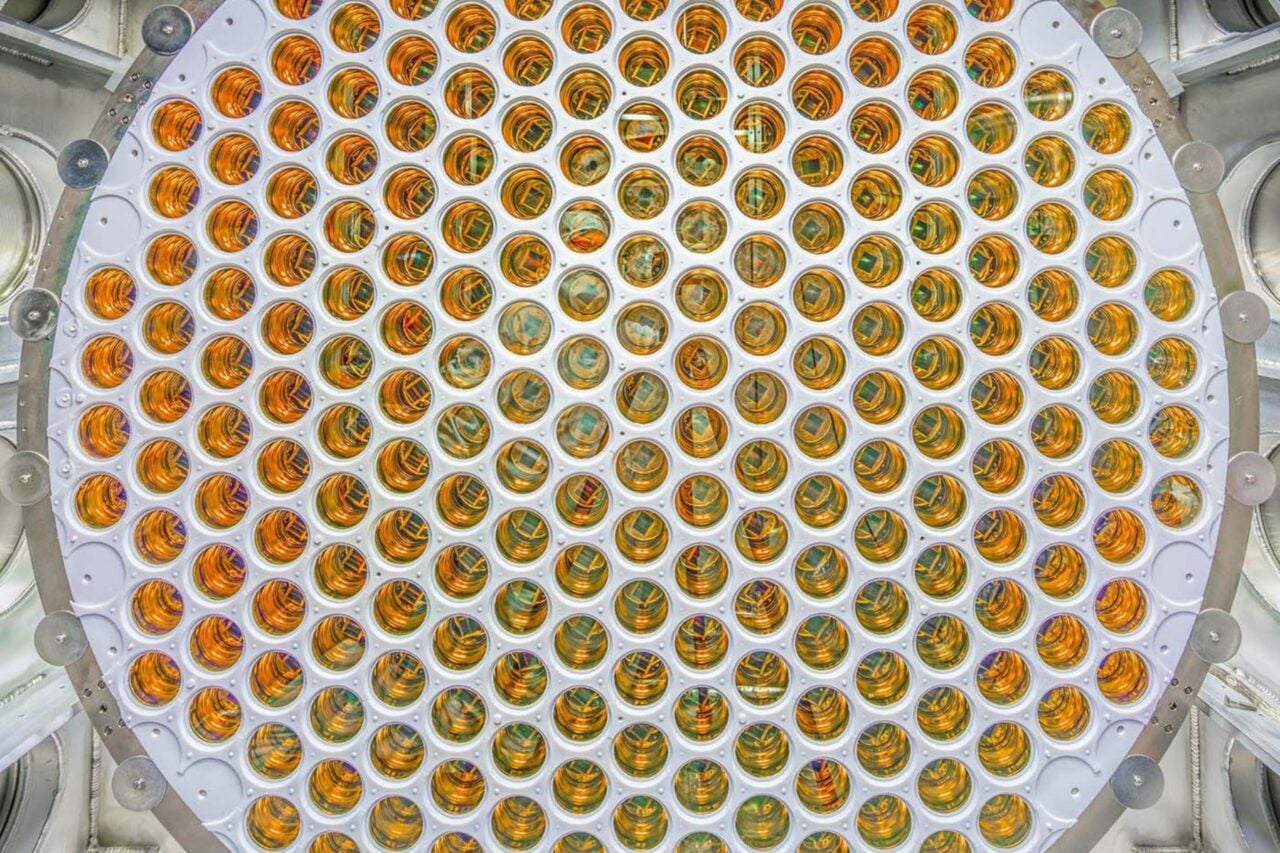
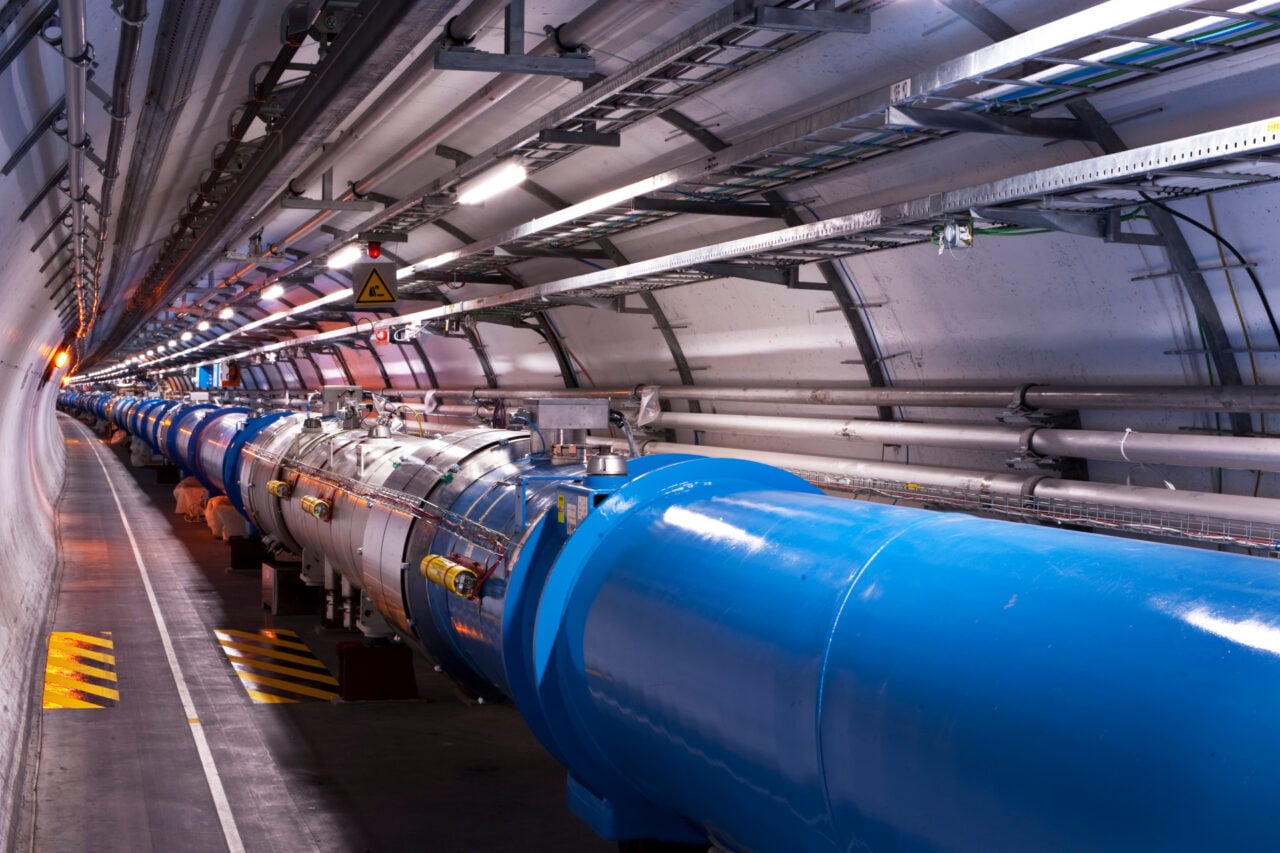
Indeed, top institutions employ a massive number of scintillators (which aren’t necessarily solid all the time). For instance, the T2K experiment in Japan has about two tons of scintillating materials in the form of two million cubes and 60,000 optical fibers. CERN’s gigantic detectors also boast millions of thin, scintillating optical fibers. That gives physicists top-notch data, but what if these setups could be simpler?
Tech plus tech
The latest prototype brings a scintillator into a plenoptic camera scheme. Also known as light field cameras, plenoptic cameras have a tiny micro-lens array that each act as a tiny camera for reconstructing the depth and intensity of the light field. According to the statement, combined with a specialized single-photon sensor, plenoptic cameras have good, underexplored potential for high-resolution 3D tracking of elementary particles.
So that’s precisely what the researchers did; after developing and assembling a tailored camera, micro-lens array, and the single-photon sensor, the team conducted both empirical and simulation experiments with its new detector. In the lab tests, the team successfully reconstructed positions of electrons from a strontium-based source, confirming that, as suspected, this setup could viably detect particles.
Tiny scales, big challenges
Using these results, the researchers performed a simulation-based analysis of how neutrinos—chargeless, near massless fundamental particles—would behave in a PLATON detector. The simulations demonstrated that the detector could track these tiny particles down to a resolution of 200 micrometers, the paper explained. A deep learning model assisted in post-processing large data loads. Overall, the final results, Sgalaberna reported to Gizmodo, were “excellent.”
“We wanted to characterize the resolution of the 3D camera with well-controlled experiments and, more importantly, reproduce the results in our custom optical simulation,” he added. That said, as the researchers add in the paper, there are still many technical challenges to be addressed for PLATON-style tech to truly make a splash in the particle physics scene.
Still, there are some obvious advantages to the detector’s design, like how it doesn’t need “big cryogenic infrastructures” typical of particle detectors. If the team delivers on its promises, the new prototype could be revolutionary for scalability and unprecedented imaging resolutions, which are, as Sgalaberna put it, “key for future particle physics experiments—not only those related to neutrinos.”