


The new particle, named Xi-cc-plus, carries two heavy charm quarks and is about four times heavier than an ordinary proton.
The magnum opus of particle physics is far from complete, requiring physicists to devise many alternatives—some weirder than others.
This year's winners offer behind-the-scenes access to the frontiers of particle physics research.
Don't worry, it's all good.
The science here gets really dark.
Despite everything, science goes on.
A particle physics team at CERN turned lead into gold 80,000 times per second.
sPHENIX is a next-generation particle detector that probes the mysterious, soupy form of the early universe.
After a decade of construction, the gigantic JUNO detector has joined the race to uncover the many mysteries of the neutrino.
Physicist Carlos Argüelles-Delgado gives us an introduction to this one-of-a-kind facility, one of the most successful neutrino detectors in the world.
Physicists recorded the lowest-energy neutrino event yet, using signals from the particles’ antimatter counterpart produced in a nuclear reactor.
In its second antimatter breakthrough this month, CERN announced it successfully created the first-ever antimatter qubit, paving the way to even weirder quantum experiments.
In a first, CERN physicists succeeded in observing matter-antimatter imbalance in baryons, fundamental particles that make up most of the observable universe.
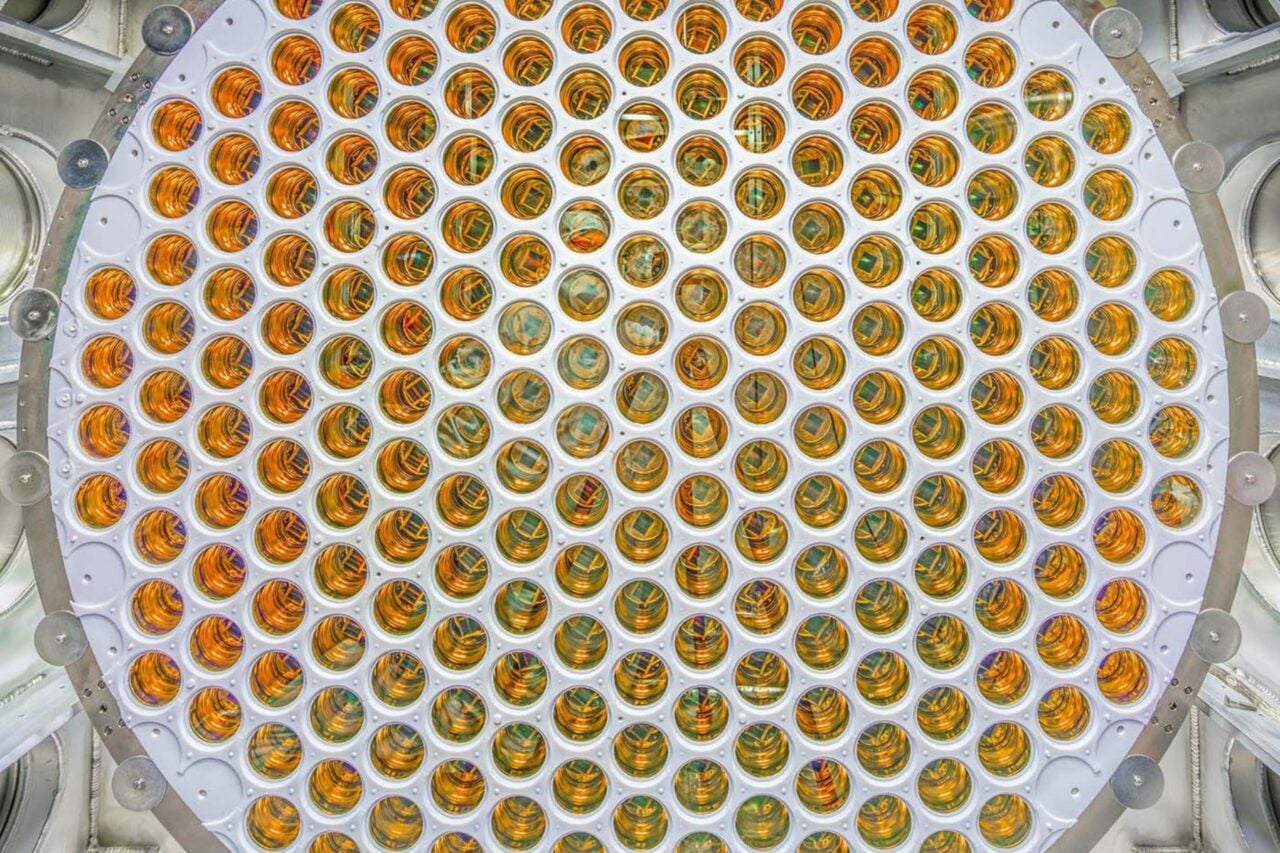
LUX-ZEPLIN’s latest result sets the most stringent limit on WIMPs' interaction strength to date.
The anomalies, which can’t be explained by known particle-based signals, have baffled scientists.
The most powerful laser in the U.S. just fired up to full strength for its first official experiment—and it’s an absolute beast.
Instead of using the Large Hadron Collider to smash atoms together, researchers briefly turned lead into gold by facilitating near-misses.
A new measurement finds the universe's teensiest particles weigh no more than one-millionth the mass of an electron.
A report published late last month outlines MATHUSLA, a particle detector named for the longest-lived person in the Bible.
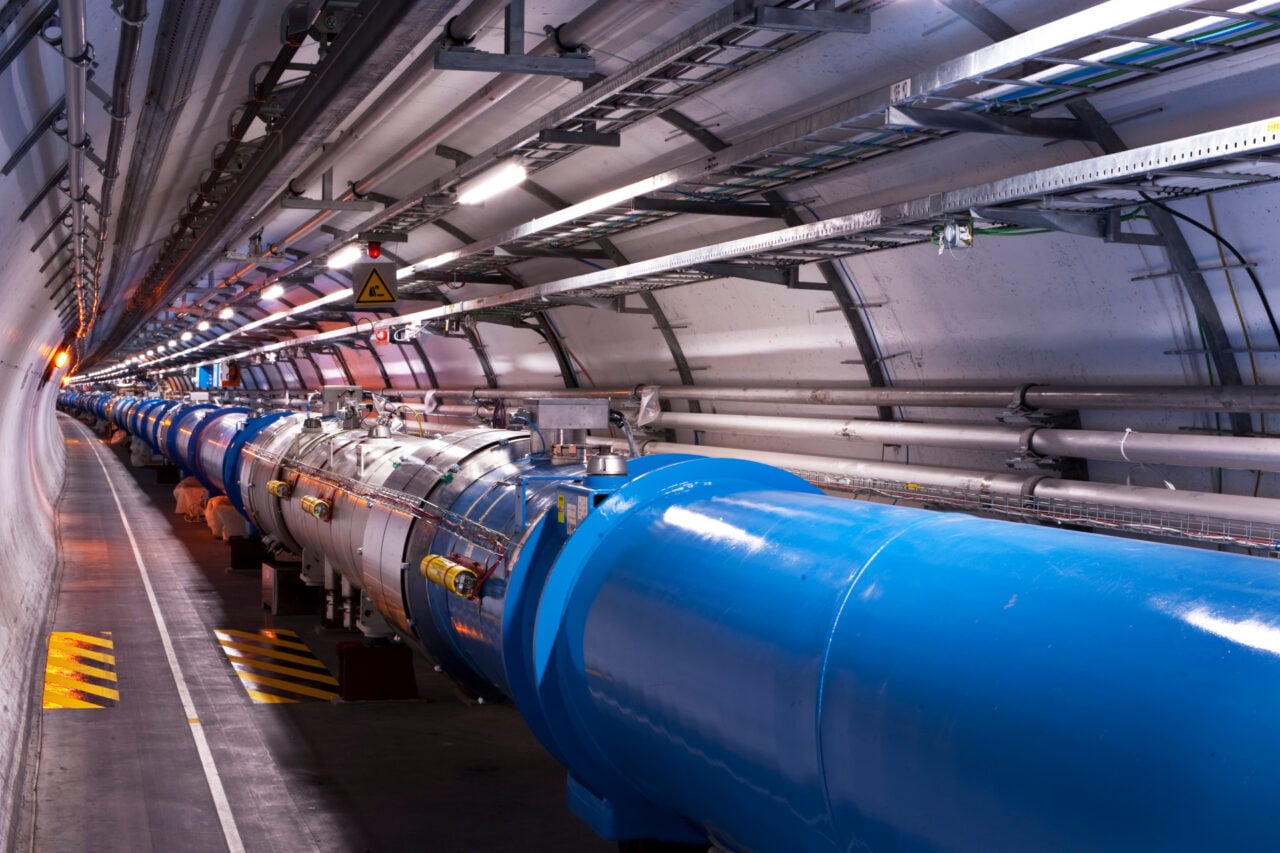
CERN says its Future Circular Collider has no technical hurdles—though the expected costs are exorbitant.