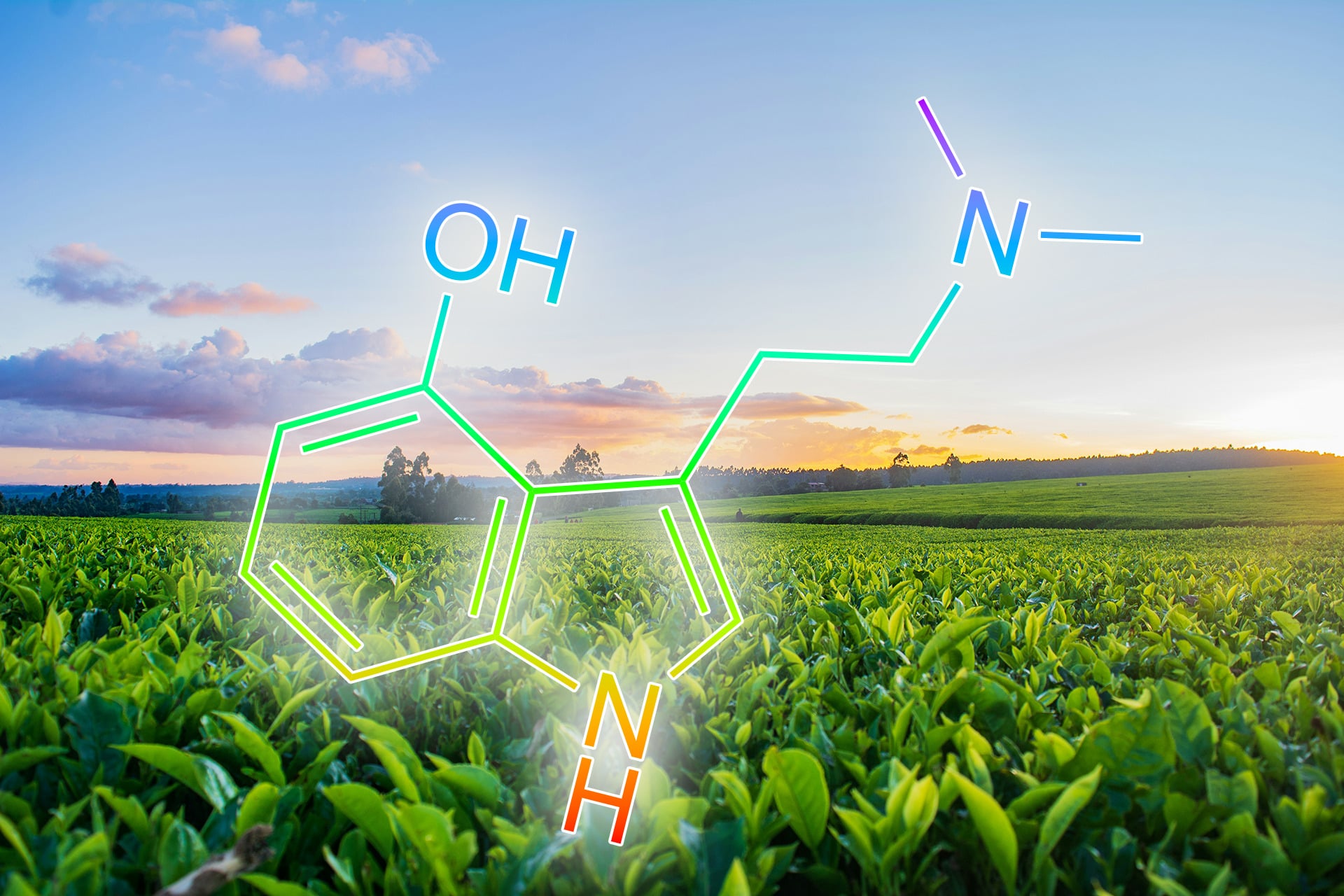
If you didn’t have “psychedelic tobacco” on your bingo card of “potential pieces of actual good news” for this week, well, me neither. But according to a paper published this week in Science Advances, researchers at the Weizmann Institute of Science in Israel have managed to genetically engineer tobacco plants to produce a whole smiley-faced ziplock bag of closely related psychedelics: “Psilocin and psilocybin found in mushrooms, DMT from plants, and bufotenin and 5-methoxy-DMT secreted by the Sonoran Desert toad.”
This is clearly good news for the humble Sonoran Desert toad, which may one day be able to go about its business without the risk of some bug-eyed enthusiast trying to pick it up and give it a lick. But it’s also good news for the rest of us—and not because you might be able to blast off into inner space with the added bonus of lung cancer.
As the paper notes, research into these and other psychedelic substances has suggested that they can “promote neuroplasticity and modulate serotonergic circuits… [demonstrating therapeutic potential for depression, anxiety, posttraumatic stress disorder, and addiction.” Being able to produce them via biosynthesis in a fairly common plant would be a more straightforward and cost-effective method than retrieving them from their natural sources.
As if just discussing both the benefits and production of psychedelics in a refreshingly matter-of-fact manner wasn’t enough, the paper also includes a throwback to the good old days of several years ago, when the primary use of AI software was for researching protein folding. The team describes using an AI-powered software package to figure out why a certain enzyme used in the production of 5-methoxy-DMT was performing poorly: “After the team fixed the problem with a targeted mutation, the amount of 5-methoxy-DMT in the tobacco plants increased 40-fold.” Now that’s a use for AI that we can get behind!
As well as using tobacco plants to replicate naturally occurring psychedelic molecules, the paper also discusses the production of halogenated analogs of these molecules. Basically, these are altered versions of the molecules where one or more of the hydrogen atoms that hang off the molecule’s carbon chain are replaced by halogen atoms, i.e. fluorine, chlorine, or—less commonly—bromine or iodine. Carbon-halogen bonds are generally stronger than carbon-hydrogen bonds, and while the intricacies of drug design are well beyond the remit of this article, the tl;dr is that the addition of halogens to drugs can make them more stable, more potent, and/or more selective in their activity. (If you’re interested in reading more, this paper on halogen-containing drugs is a good place to start.)
This is notable in the case of psychedelics because, as the paper points out, “several halogenated … derivatives [of these drugs] have demonstrated therapeutic potential for mental disorders.” This remains an active area of research, and being able to produce such molecules in what appears to be a reasonably straightforward manner promises to aid in that research. The entire paper is a fascinating read, and happily, it’s available in its entirety for free.