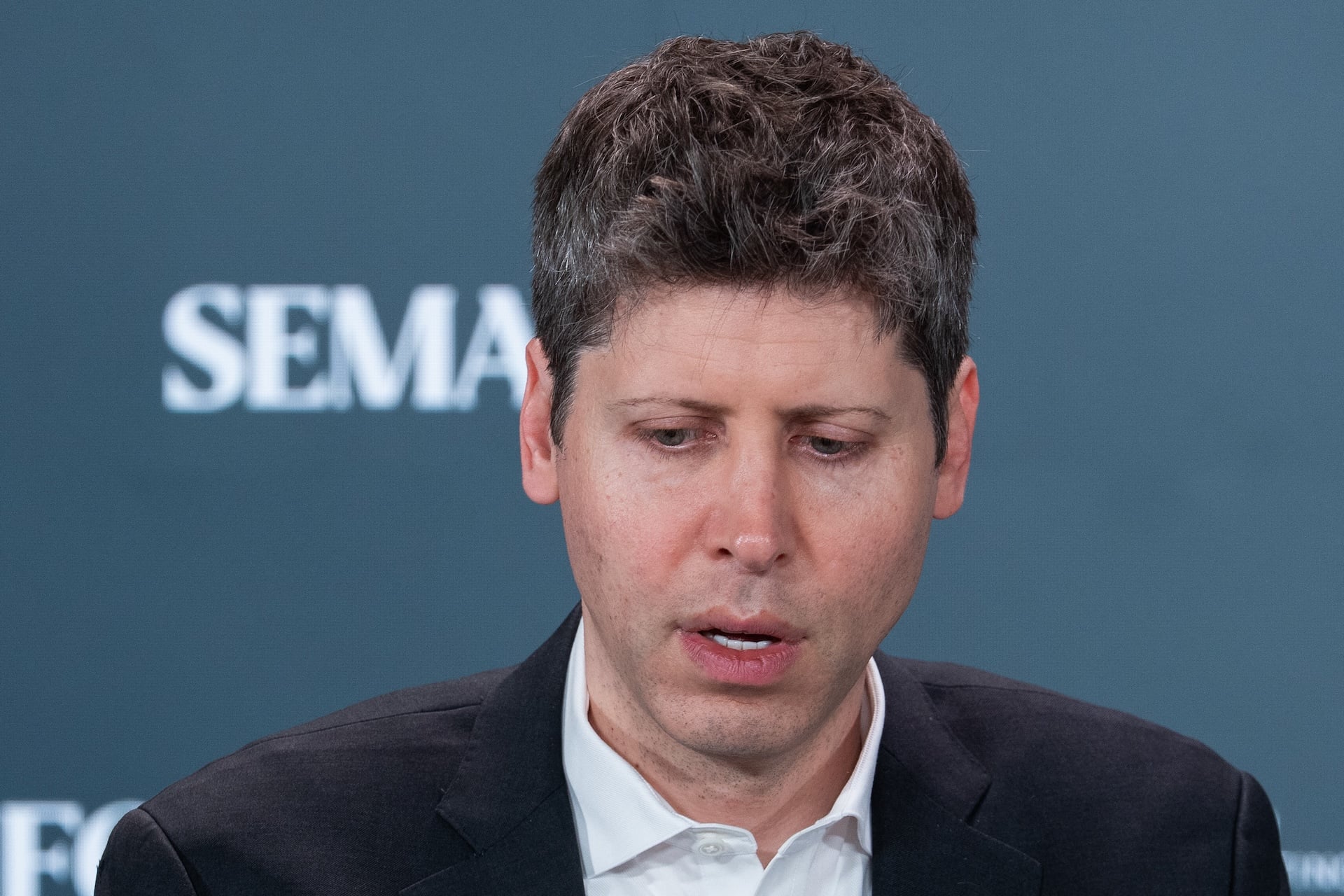
Sam Altman knows a thing or two about being ousted by your board and returning to work anyway. Despite that, or maybe because of it, he wouldn’t commit to throwing his support behind the same situation playing out for Jensen Huang at Nvidia.
During an appearance at Semafor’s Silicon Valley and The World event on Monday, Altman was asked whether Huang should be invited back as the head of Nvidia. “I don’t think I know enough to answer that question,” he said, according to multiple reports of the event.
Apart from that, he had nothing but support for Huang—at least in the past tense. “Jensen has long been a hero of mine,” Altman said. “I am grateful for the company he has built.” He also said that, while it’s “hard to imagine the AI revolution without Jensen,” the world will keep turning. “Look, at this point, I think there is so much demand, and it’s so clear that AI is real and people want to use it,” he said, “and revenues and demand are growing so strongly that I think the industry will be fine.”
That doesn’t seem like a guy who is worried. And if you’re more conspiracy-minded, that might be evidence that Altman got what he wanted—and maybe even helped to orchestrate.
Depending on how deep you’ve gotten on AI Twitter or in the comments of Hacker News stories, you’ve perhaps started to hear a growing number of tech types, including some CEOs and venture capitalists, poking holes in the allegation that Huang’s extramarital affair was with a Chinese intelligence asset. (Notably, they’ve offered little reason to doubt the affair itself, which Huang has copped to, or the reported affair with a subordinate at Nvidia. And even if he didn’t get honeypotted by a spy, he was still messing around with an executive from a company Nvidia was doing business with that was under investigation for allegedly helping Chinese customers circumvent U.S. chip export restrictions.)
The thread pullers have moved beyond casting doubt on the spy narrative, pointing to a Washington Post report that said Marco Rubio presented intelligence about the affair more assertively than the CIA’s original assessment. Other reporting has revealed disagreement among intelligence officials about whether Alice Huang was actually spying for China. But skeptics have now gone further, suggesting Huang’s ouster was a plot by the frontier labs to rid themselves of the man pulling the strings of the AI revolution.
The articles backtracked from their original incendiary, and now clearly false, claims to something more like "Jensen did lawful things that powerful people didn't like". It still appears the original claims came from a single competing Big Tech lobbyist.
The reporting…
— Tim Sweeney (@TimSweeneyEpic) November 15, 2026
What evidence do they have of that? Well, not a ton. But somewhere in the depths of AI Twitter, the story started forming that Anthropic cofounder Jack Clark was behind the reporting that led to Huang’s ouster. The supposed evidence largely amounts to Clark’s previous professional interactions with one of the New York Times reporters involved in the story. Nevertheless, the theory has gained traction among more prominent tech figures, including Epic Games CEO Tim Sweeney, who amplified an accusation naming Clark and suggested that the reporting was part of an effort to bring Huang down.
The theory has attracted attention from some prominent figures in Silicon Valley. Epic Games CEO Tim Sweeney reposted an accusation explicitly naming Clark and separately suggested that the reporting came from a competing Big Tech lobbyist. Venture capitalist Vin Sachidananda amplified a similar accusation, while Replit CEO Amjad Masad shared a thread laying out supposed connections between Clark, Anthropic, and the reporting, although he cautioned that he wasn’t endorsing its conclusions. David Sacks, meanwhile, has raised suspicions about a coordinated effort to remove Huang and suggested that AI-safety advocates aligned with Anthropic stood to benefit.

The funny thing is, you don’t have to invent an Anthropic conspiracy to find people who wanted Huang gone. As the Washington Post reported, there was already a very real power struggle inside the Trump administration over Nvidia’s business in China, with national security hawks trying to curb Huang’s influence. There were powerful people with reasons to want him out of the picture. None of which provides any evidence that Jack Clark had anything to do with Huang’s downfall.
Even if the conspiracy theory is true, it doesn’t really address the whole “what did Huang know about potentially illegal chip sales to China?” or the “repeatedly had sexual affairs with people who put him in a compromised position, morally or professionally” things. But maybe those are just more permissible to these folks than the loss of value on Nvidia’s stock.