

Space Force’s capabilities are still nascent. So far their biggest claims to fame have been protecting the world’s GPS and deterring attacks on U.S. satellites.
The private company has pushed back the inaugural flight of the heavy-lift launch vehicle several times, but signs point to a launch in just a few weeks.
China's inaugural spaceplane mission in 2020 lasted for only two days, but this one just keeps on going.
The private company is hoping to not drop it immediately afterwards this time.
The private lander will bring some cool toys to the lunar surface, including a baseball-sized transformable robot.
The 230-foot-tall rocket flew for the first time since 2019, delivering a classified payload for the U.S. Space Force.
The NASA-funded probe, following a scary incident several weeks ago, is expected to reach a unique lunar orbit on November 13.
It's still too early to tell where the Long March 5B core stage might fall, but estimates will improve in the coming hours.
The space agency is targeting a launch date in October 2023 for its asteroid mission.
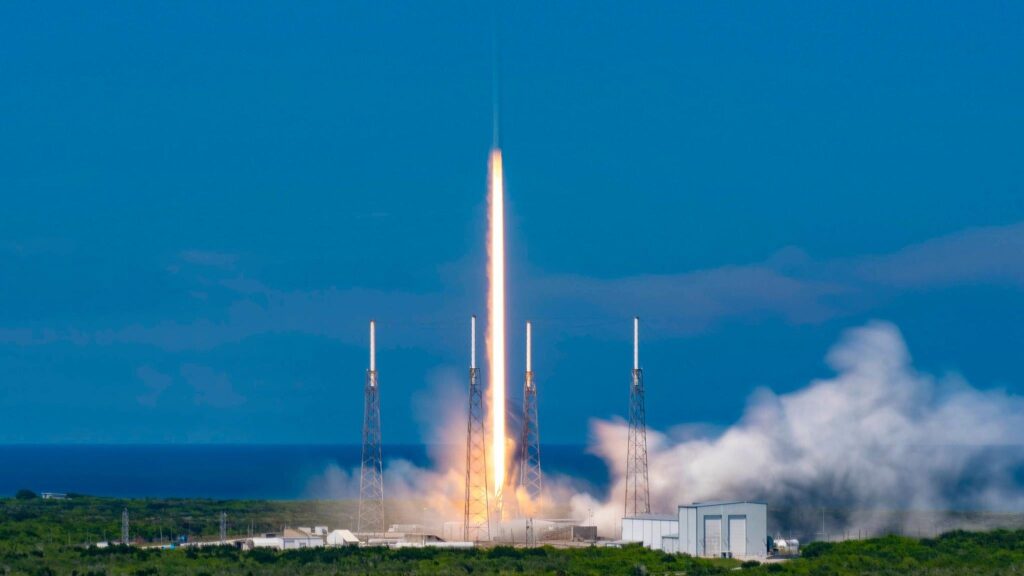
The Falcon Heavy, currently the most powerful rocket in the world, blasted off on Tuesday at 9:41 a.m. ET.
The HAARP facility in Alaska completed a 10-day campaign of ambitious science.
The space agency had previously ruled out a crewed landing for Artemis 4, citing the complexity of the lunar mission.
Launching next month, the space agency's Lunar Flashlight will search for water ice hiding in permanently shadowed craters on the Moon's south pole.
The lab module was launched aboard a Long March 5 rocket, which is expected to make a risky uncontrolled reentry through Earth's atmosphere.
At nearly 1.5 kilometers wide, it's the largest such asteroid discovered in eight years.
The agency's Aerospace Safety Advisory Panel says ISS partners are currently "operating at risk" without the capacity to perform an impromptu reentry.
A future mission will pick up these rock cores and bring them to Earth, where scientists will search them for signs of ancient life.
Called JuRa, the cube is a radar instrument expected to fly on the Hera mission to survey the impact of NASA's asteroid-nudging experiment.
The impact was intense enough that NASA's InSight lander detected the seismic waves from over 2,000 miles away.
To keep its FCC license, the company must launch half of its 3,236 Project Kuiper satellites by 2026.