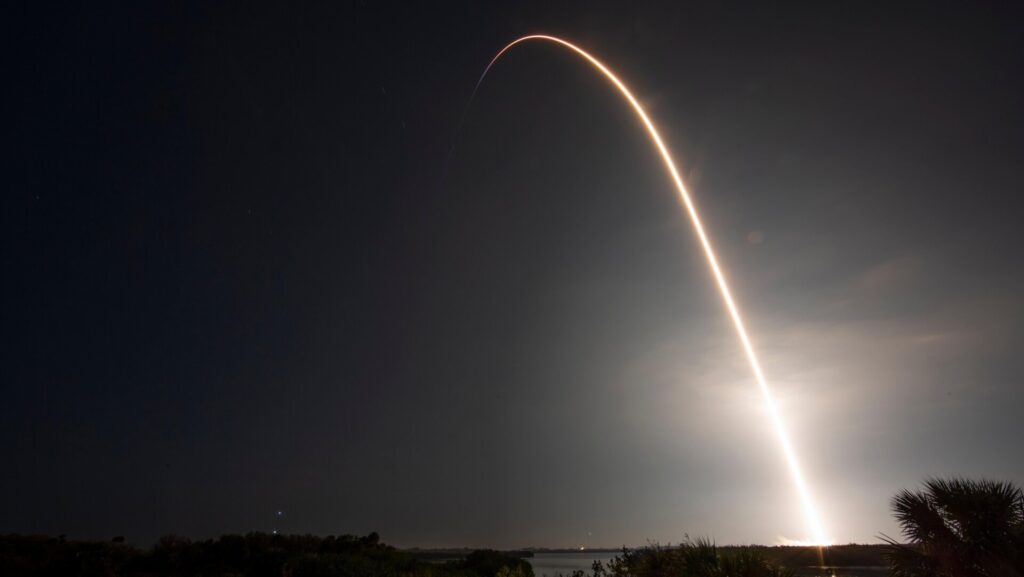
The Space Launch System took flight early Wednesday, providing no shortage of breathtaking views.
The uncrewed Artemis 1 capsule is equipped with 16 cameras, which it will use to snap pictures and gather data during its journey to the Moon and back.
The space observatory’s most recent image shows a star’s preamble in the nearby universe.
The gigantic SLS blasted off into the dark Florida sky, becoming the most powerful rocket to ever take flight. The Artemis era has officially begun.
Florida-based Space Perspective announced they purchased a ship named MS Voyager , calling it the "world’s first Marine Spaceport" for human spaceflight.
LightSail 2 will end its mission by reentering Earth's atmosphere after spending 3.5 years in orbit.
Images from the Mars Express orbiter suggest that clouds form similarly on both planets, despite their very different atmospheres.
AST SpaceMobile fully deployed the satellite's array of antennas that stretches across 693-square-feet.
They're some of the densest objects in the universe, with nutty internal physics
NASA is targeting a two-hour launch window that opens at 1:04 a.m. ET on Wednesday, despite minor damage caused by Hurricane Nicole.
NASA astronauts are stepping outside the ISS after a long hiatus to figure out a water leak issue inside the spacesuits.
The reusable vehicle set a new record during its sixth mission by spending 908 days in orbit.
The NASA-funded cubesat reached its target orbit on Sunday, following a stressful four-month journey to the Moon.
The 19-year-old Mars Express has now relayed data for seven different Mars ground missions, NASA's Perseverance rover being the latest.
The core stages of the rocket have performed four uncontrolled reentries to date, posing a potential threat to human lives and property.
An upcoming experiment could make it possible for the U.S. Space Force to launch replacement satellites with just 24 hours notice.
The space agency may need to go through an additional process to clear its rocket for launch due to Tropical Storm Nicole.
The inflatable shield's ceramic fiber is designed to withstand the scorching temperatures of atmospheric reentry.
The spacecraft exploded shortly after launch in 1986, killing all seven astronauts on board.
The fascinating heat shield demonstration is expected to happen shortly after 4:25 a.m ET on Thursday.