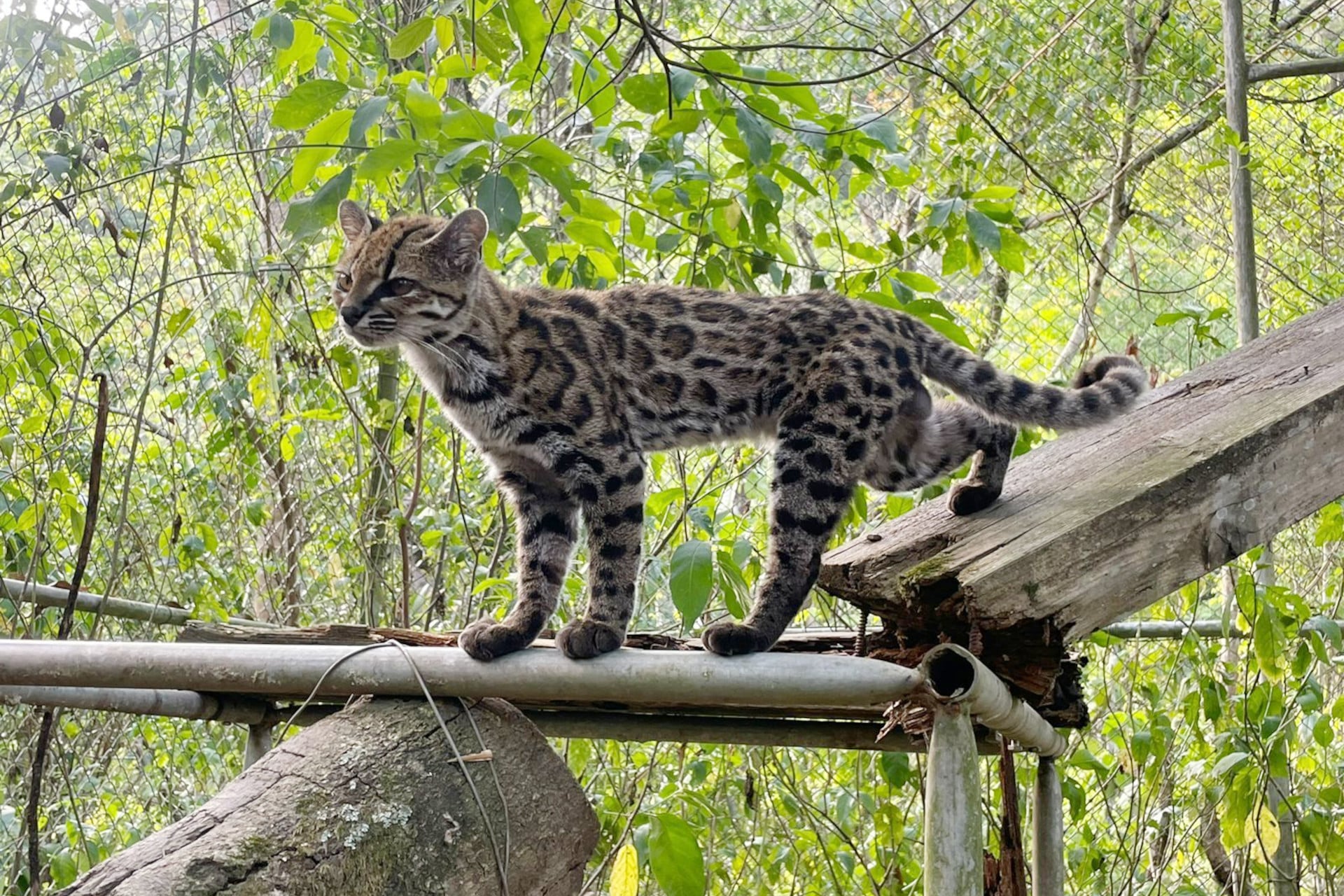
Feline lovers rejoice: Scientists have just uncovered an entirely novel species of wild cat for people to fixate on from afar.
An international team of researchers genetically analyzed dozens of samples from small felines native to South America known as tiger cats. They found evidence that at least five distinct species of tiger cat live in the region, including a previously undocumented species now called the tilcayo. The team’s work sheds light on an elusive group of wild cats and should help better inform conservation efforts in the area, the researchers say.
“The tilcayo is the first living cat species to be discovered and newly named in over a century,” lead study author Jonas Lescroart, an evolutionary ecologist at the University of Antwerp in Belgium, told Gizmodo.
The elusive tiger cat
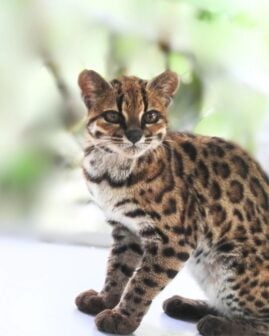
Unlike their big cat namesake, tiger cats are tiny, typically measuring between one and two feet long and weighing between four and six pounds. They’re also not closely related to the tiger, instead belonging to the same broad genus as ocelots (Leopardus). They do have distinct spotted or striped fur coat patterns that help them camouflage in their environment, similar to a tiger. They are also known as oncillas.
Tiger cats are cryptic animals, Lescroart says, meaning that even different species look very close in appearance to one other. So the most reliable way to tell apart these species is through examining their genes. Scientists like Lescroart have only recently been able to take a deep dive into the genetics of these animals, however.
According to Lescroart, the first serious effort to genetically survey tiger cats began with a 2013 study. These scientists, who are also involved in this latest research, showed that the only known species of tiger cat back then, Leopardus tigrinus, was actually at least two species: L. tigrinus, found in the northern half of South America, and Leopardus guttulus, found in the southern half. A 2024 study found evidence that tiger cats living along the Andes mountains comprised another distinct species, Leopardus pardinoides. Some scientists have also argued that a fourth group, Leopardus emiliae, should be considered a species as well.
Compared to previous efforts, this study was able to analyze a wide variety of specimens from throughout the continent. All told, they studied the complete genomes of 38 cats in the Leopardus genus, including 26 tiger cats. Some of the specimens came from previously unsurveyed parts of the Guianas, an area in northeastern South America that includes the countries Guyana and Suriname, as well as French Guiana (a region of France). They also had access to older historical samples from museum collections.
“Our current study presents the most complete genetic study yet, including that key missing element: DNA from tiger cats in the Guianas, which is the location where the original tiger cat L. tigrinus had been described in 1775,” Lescroart said.
Though scientists have classified other new species of tiger cats in recent years, these names had already been coined, Lescroart says—their genetic work merely settled whether these cats were distinct enough to be seen as a separate species (as opposed to a subspecies). But it was in Bolivia that the team, to their surprise, found a novel species that didn’t line up with any other known or disputed group of tiger cat. They named their new find Leopardus tilcayo, in honor of the local name that residents in the area use for tiger cats.
“Importantly, our study did not rely only on fresh samples,” study co-author Paola Nogales Ascarrunz, a scientist with the National Geographic Society and wild cat conservation expert in Bolivia, told Gizmodo. “We also analyzed specimens preserved in natural history museums, showing how these collections can provide valuable genetic information and help answer questions that would otherwise be difficult or even impossible to investigate.”
In addition to finding the new species L. tilcayo, the team’s findings support past research arguing that L. emiliae and L. pardinoides should be considered distinct species alongside L. tigrinus and L. guttulus. The team also found evidence for a previously unknown subspecies of L. tigrinus, which they’re calling L. tigrinus antisuyo. Their study was published Thursday in the journal Current Biology.
The importance of a name
The team’s work shows how much scientists still have to learn about the world, even when it comes to heavily studied animals like wild cats. It’s also practically important to understanding and overcoming the challenges that these animals are facing.
Lescroart notes that the two currently accepted species of tiger cat (L. tigrinus and L. guttulus) are classified as vulnerable under the IUCN Red List of Threatened Species. Yet it’s possible that the other cats detailed by these researchers are in even greater peril. So the team is calling for a reevaluation of all of these species’ population health.
“We have already shared our findings with IUCN and in their upcoming reassessment of tiger cats, they will treat each unit separately, which will result in more accurate assignment of conservation categories,” he said.
As is often the case with a new discovery, the team’s work here is only the start.
“We plan to continue to study these poorly known cats for many years. We are finally, after 25 years of cumulative improvements, close to fully understanding their evolutionary history and taxonomic structure (some additional regions still need to be sampled). Once this is sorted out, many additional scientific questions about their genetics, ecology, behavior and other topics must be addressed,” study co-author Eduardo Eizirik, a researcher with the Pontifical Catholic University of Rio Grande do Sul (PUCRS) in Brazil, told Gizmodo. “Now, with a clearer understanding of the taxonomy, these more in-depth questions can be more adequately framed.”
I’m just happy that my housecat Cheddar now has more role models to look up to.