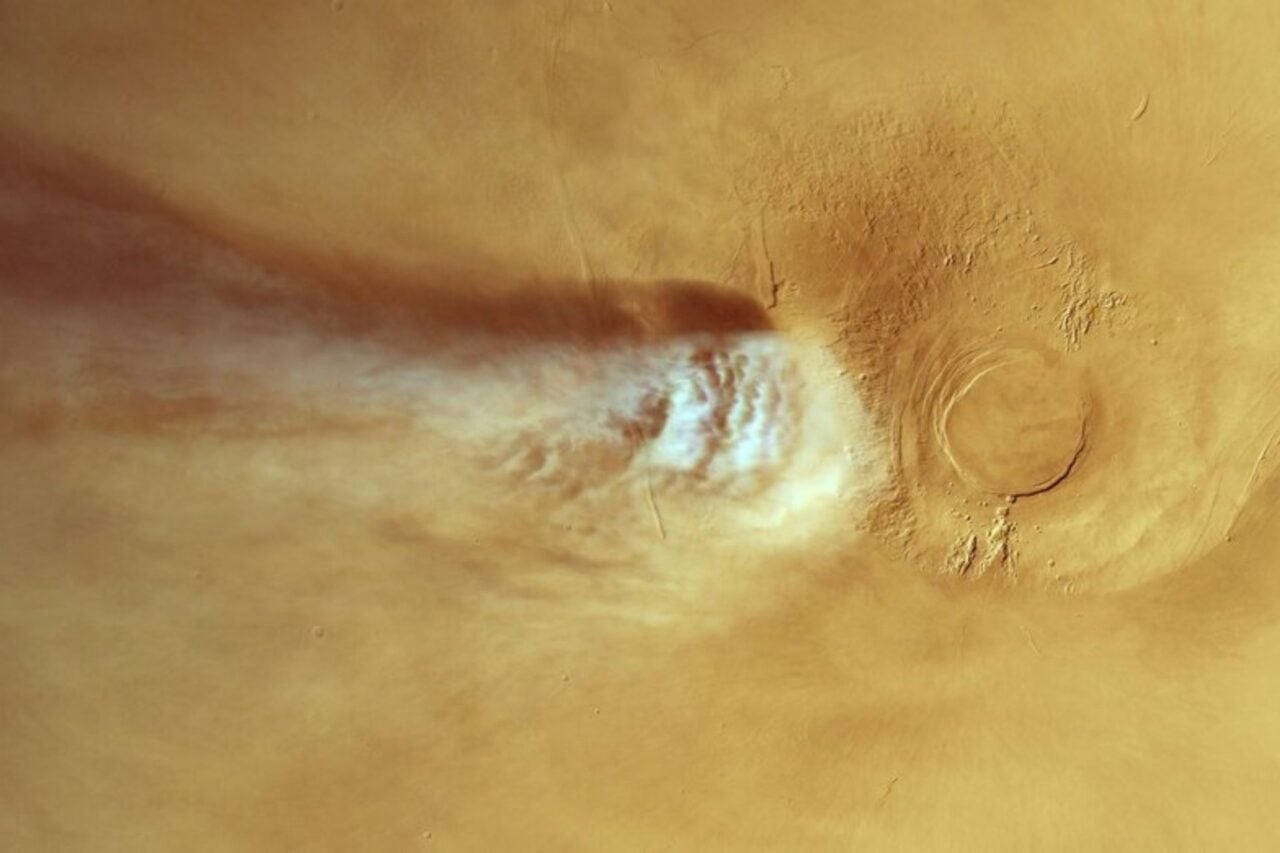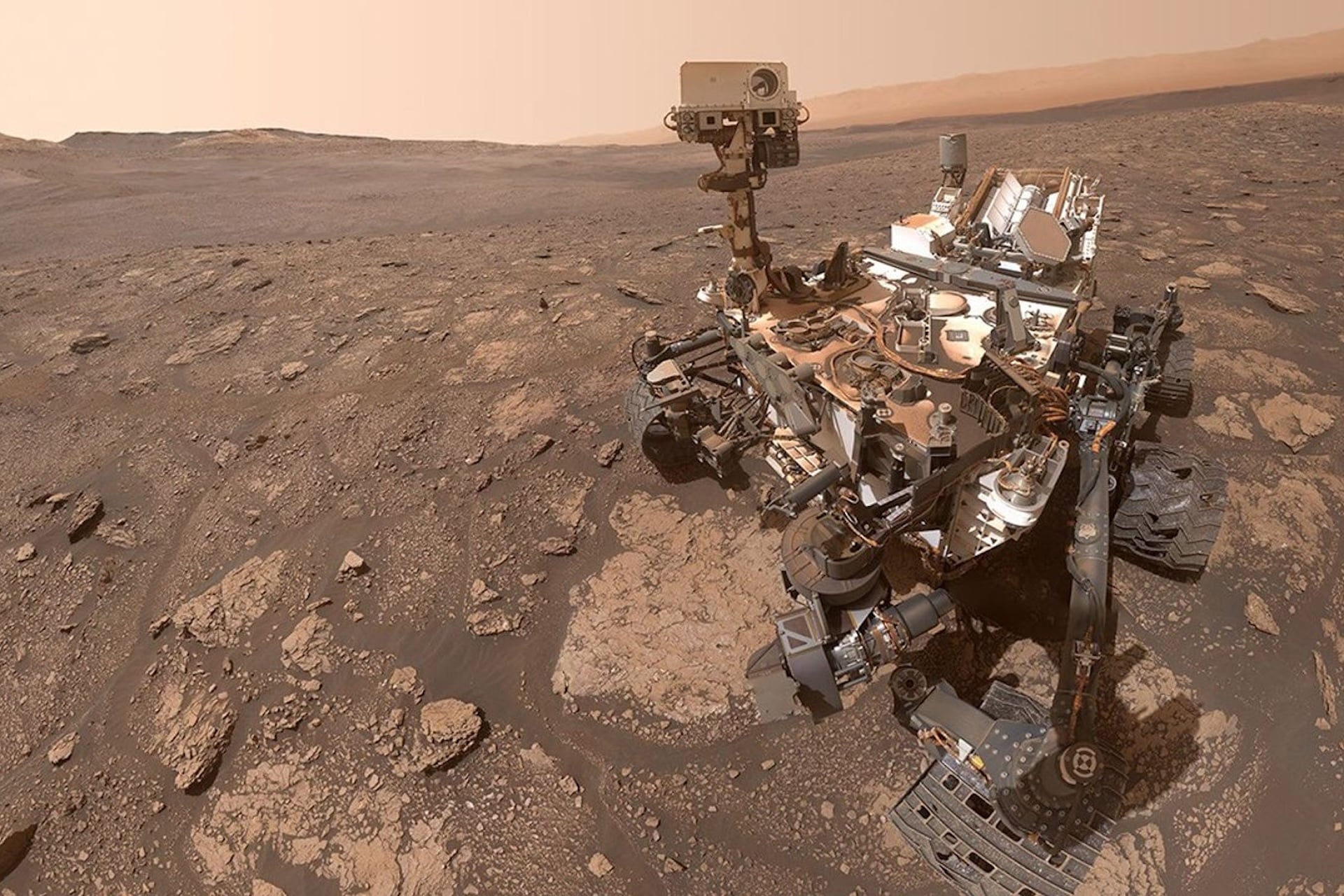
NASA’s Curiosity rover has spent nearly 15 years exploring the Gale crater, a large impact basin just south of the Martian equator. Curiosity has uncovered substantial evidence to suggest that the Gale Crater once held liquid water, but a new analysis of its observations suggests water is present there today—albeit in a starkly different form.
The study, published today in the journal Proceedings of the National Academy of Sciences, analyzed atmospheric carbon dioxide (CO2) data that Curiosity gathered at Gale Crater from 2012 to 2025. According to the researchers, this represents the first long-term record of the isotopic composition of CO2 in Mars’s atmosphere. Their analysis uncovered evidence of a strange yearly phenomenon that points to microscopic traces of thin films of water at the surface of the Gale Crater region or clinging to soil grains underground.
“It has been fun to see where this work has led us. We’re following the water again!” lead author Heather Franz, an isotope geochemist at NASA’s Goddard Space Flight Center, told Gizmodo in an email. “This is not what anyone expected when we began these measurements at the start of the mission.”
A mysterious molecular exchange
The ratios of carbon and oxygen isotopes in the atmospheric CO2 of Mars can offer clues to where water may exist on the surface. Over the years, Curiosity has repeatedly measured the Red Planet’s atmospheric gases using its Sample Analysis at Mars (SAM) instrument suite, targeting both chemical and isotopic composition.
Equipped with more than a decade of this data, Franz and her colleagues looked for seasonal changes in the isotopic makeup of Mars’s atmospheric CO2, as well as differences between day and night. While they found no significant variation between daytime and nighttime, they did find an increased proportion of oxygen-18 isotopes during the spring and summer seasons.
The researchers used computer models to evaluate several possible explanations for this, but only one allowed them to reproduce the observed changes in oxygen-18 ratios. Thus, they believe atmospheric CO2 is exchanging oxygen isotopes with extremely thin, liquid-like films of water on the surface of the Gale Crater.
“Exchange of oxygen isotopes between CO2 and water is the only one that our models found capable of producing the level of oxygen-18 enrichment seen in the atmosphere at the Gale Crater,” Franz explained.
The findings provide indirect evidence for water that can interact with atmospheric CO2 during the warmest part of the Martian year, meaning it is not bound in ice crystals like the water found at Mars’s polar ice caps or in its subsurface reservoirs. The films could be up to several molecules thick, but the CO2-water exchange can involve individual water molecules as well.
“Our data represent the first time measurements of this type have been possible on Mars, through long-term operation of Curiosity,” Franz said. She and her colleagues hope future missions will obtain similar data from other locations across the Red Planet, which will help them investigate how widespread this CO2-water exchange is. This, in turn, will shed light on the composition of subsurface water in other areas of Mars, Franz said.