Definitive evidence of past or present extraterrestrial life, including Martians, has been annoyingly elusive. Some researchers, however, are tackling the alien question from a different perspective: Could life as we know it survive the Red Planet’s environment as it exists today?
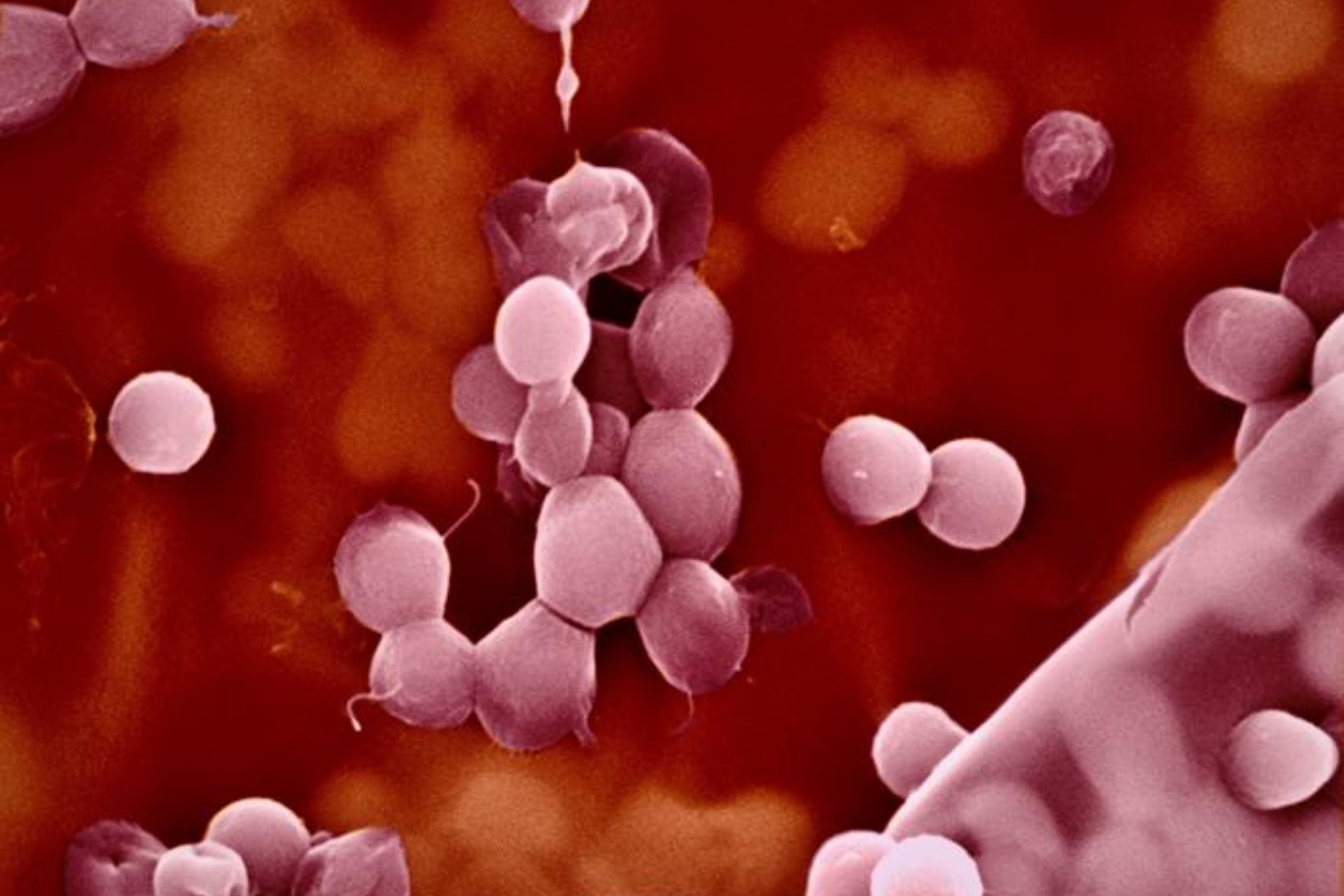
It turns out that some of Earth’s most tenacious microorganisms just might. In the latest of such experiments, researchers subjected the extremophile Haloferax volcanii to hellish, potential Mars-like conditions and found that the tough mother-hecker can still grow. These results bolster the idea that life can exist on our planetary neighbor and point scientists searching for cellular Martians in new directions.
Researchers have grown microbes under harsh Mars-like conditions before, such as high salt concentrations or low pressure. Sometimes, these microbes get subjected to multiple conditions at the same time, though typically for just hours or days. “Far fewer have been able to combine these conditions together and show that microorganisms can actively grow,” Adam Robinson, an astrobiologist at the University of Florida and co-lead author of the Applied and Environmental Microbiology study published Thursday, said in a statement.
Robinson and colleagues investigated whether H. volcanii, a microbe chosen for its affinity to salt, could go one step further than just surviving several stresses linked to Mars’ environment. The harsh conditions include ones present on the planet’s surface, as well as perhaps in its subsurface. On Earth, this extremophile does well in high-salt environments like those thought to exist just beneath Mars’ surface.
The researchers put cultures of H. volcanii in oxygen-free, carbon-rich, low-pressure, and extremely salty environments for 160 days and gave the microbes nitrate or perchlorate—bleach-like compounds linked to Mars. The hardy organisms used the chemicals to power their metabolisms and were able to reproduce—albeit slower than comparable cultures subjected to Earth’s atmospheric pressures. What’s more, they also retained most of their water in the salty environment, which may have been in part thanks to structures called biofilms. Microbes that weren’t subjected to nitrate or perchlorate simply survived.
The researchers highlight that their simulated environments did not include every Martian environmental condition. For example, the microbes hung out at a temperature of 70 degrees Fahrenheit (21 degrees Celsius), which is much warmer than most of the Martian subsurface. Furthermore, scientists don’t know if the liquid-water pockets that the microbes’ lab environment was meant to resemble actually exist on Mars.
“The environment that we’re mimicking in this experiment has not been observed on Mars, but is theorized to exist,” Robinson explained. Simply put, the study demonstrates that a form of life as we know it can thrive in potential Mars-like conditions. While that might feel like a whole lot of boring uncertainty, the recent findings join previous research bolstering hope that there might be live microbial Martians doing their thing somewhere out of sight.
“We are adding to the growing body of evidence suggesting that we should consider the possibility of life on Mars today,” Robinson concluded. This would serve to expand the search beyond traces of long-extinct microbial life on Mars.