Much like sushi or political humor, badly needed donor organs tend to have a pretty short shelf life. By current estimates, vital organs like a heart or a lung need to be transplanted into their waiting human recipient within six hours or less, while the most hardy of these organs, the kidney, can only remain viable for up to 36 hours before surgery.
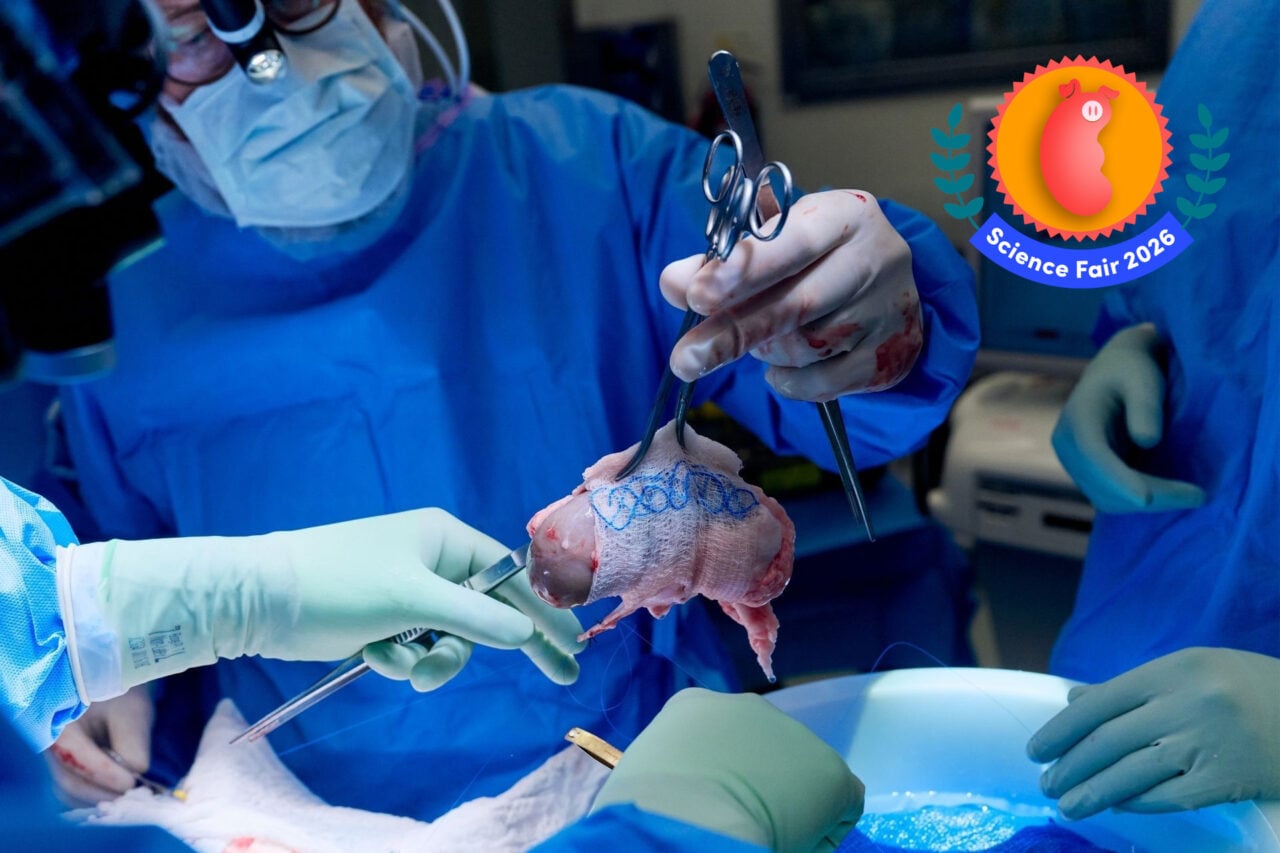
These unforgiving expirations dates have helped keep over 100,000 Americans (and counting) stuck on the waiting list for a new organ—but surgeons and medical researchers at the University of Minnesota have just reported a breakthrough that might finally get this line moving. A university team, co-led by transplant surgeon Erik Finger, says it has effectively kept pig kidneys in cold storage for months, and in one case over a year, managing to gently thaw, test, and successfully transplant these warmed-over organs into test pig recipients.
The research, published as a pre-print with bioRxiv while it awaits peer review, confirmed that the once-frozen organs had both regained their color and helped the test pigs produce urine: critical signs that restored blood flow and organ function had been achieved.
“Ten years ago […] I wouldn’t say I had high hopes it was actually going to work,” Finger told MIT Technology Review on Thursday. “After we did the last transplant, I walked out of the room and said, ‘This is a big deal.’”
Porco gelato
The University of Minnesota team’s long path to this latest milestone in surgery and cryopreservation included smaller successful tests with rat kidney transplants published in 2023 and a prior pig kidney transplant involving a much shorter freezing period (10 days) back in 2025. The technical term for this freezing process is vitrification, the steeping of living tissue in a chemical cryoprotective agent (CPA) and then cooling it down to, in this case, -238 degrees Fahrenheit (-150 degrees Celsius) to create a well-preserved and glass-like state of suspended animation.
Once it gets down to -184 degrees Fahrenheit (-120 degrees Celsius), as Finger told MIT Tech Review, the organ can “stay stable for long periods of time—we think indefinitely.”
While vitrification has been routinely used in reproductive medicine, storing eggs, sperm, and embryos, the process grows in complexity alongside the size of the living matter being vitrified.
Finger collaborated with the school’s department of mechanical engineering, including bioengineer John Bischof, to develop an iron-oxide nanoparticle solution that was added to their cryoprotectant mix. These electrically and thermally conductive (but otherwise safe) nanoparticles could be activated to ease any damage to the organ during reheating, by more carefully and evenly warming its tissue back to room temperature.
Organ Grind
Perhaps self-evidently, the researchers’ long-term goal remains successfully replicating this same procedure with human organs. That long effort has been funded, in part, by the National Science Foundation, which oversees the Engineering Research Center for Advanced Technologies for the Preservation of Biological Systems (ATP-Bio) headquartered at the University of Minnesota Twin Cities.
“The ability to safely pause biological time in a complex organ like a kidney opens the door to truly transformative change in transplantation medicine,” as Harvard Medical School professor Mehmet Toner, ATP-Bio’s deputy director, put it last year in a press statement.
But the hurdles between this current state of the art and safely vitrifying and thawing human organs remain complex, as Finger and his colleagues noted in their new pre-print.
“Scaling organ vitrification to human dimensions shifts the challenge from rewarming alone to the integrated problems of cooling, [cryoprotective agent] stability, CPA transport and biological toxicity,” they wrote.