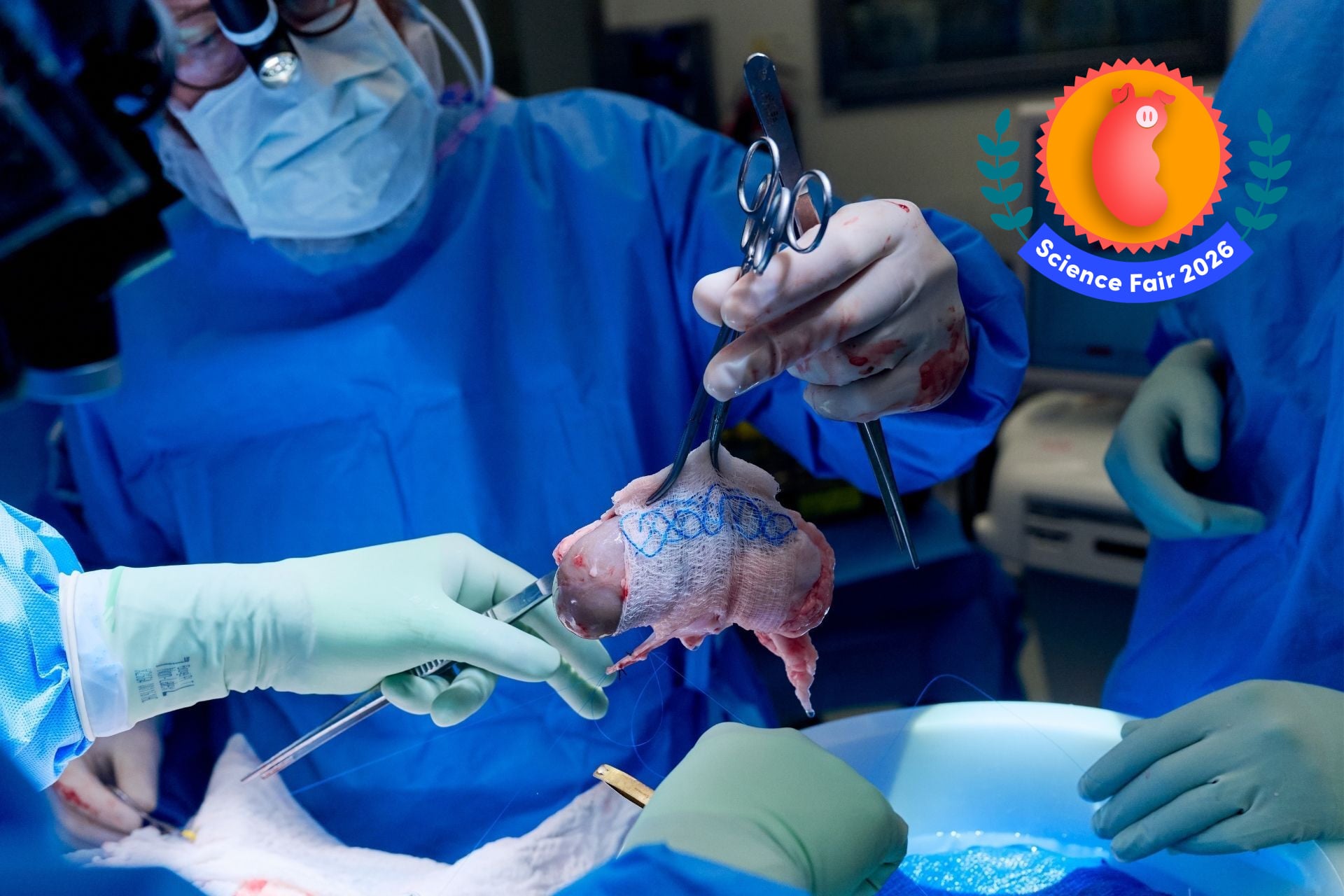
Researchers at the NYU Langone Transplant Institute are the winners of the 2026 Gizmodo Science Fair for their ongoing work in developing animal-to-human transplantation, also known as xenotransplantation.
The question
Can we ever create a reliable and safe supply of new organs for those who need them?
The results
In September 2021, Robert Montgomery and his team performed a novel procedure: the first transplantation of a genetically modified pig organ into a still-intact human body. The family of a neurologically dead patient allowed the team to keep the patient’s body on a ventilator with the transplanted organ during the length of the experiment. For 52 hours, the pig kidney seemed to behave much like a typical human kidney, with no immediate signs of rejection.
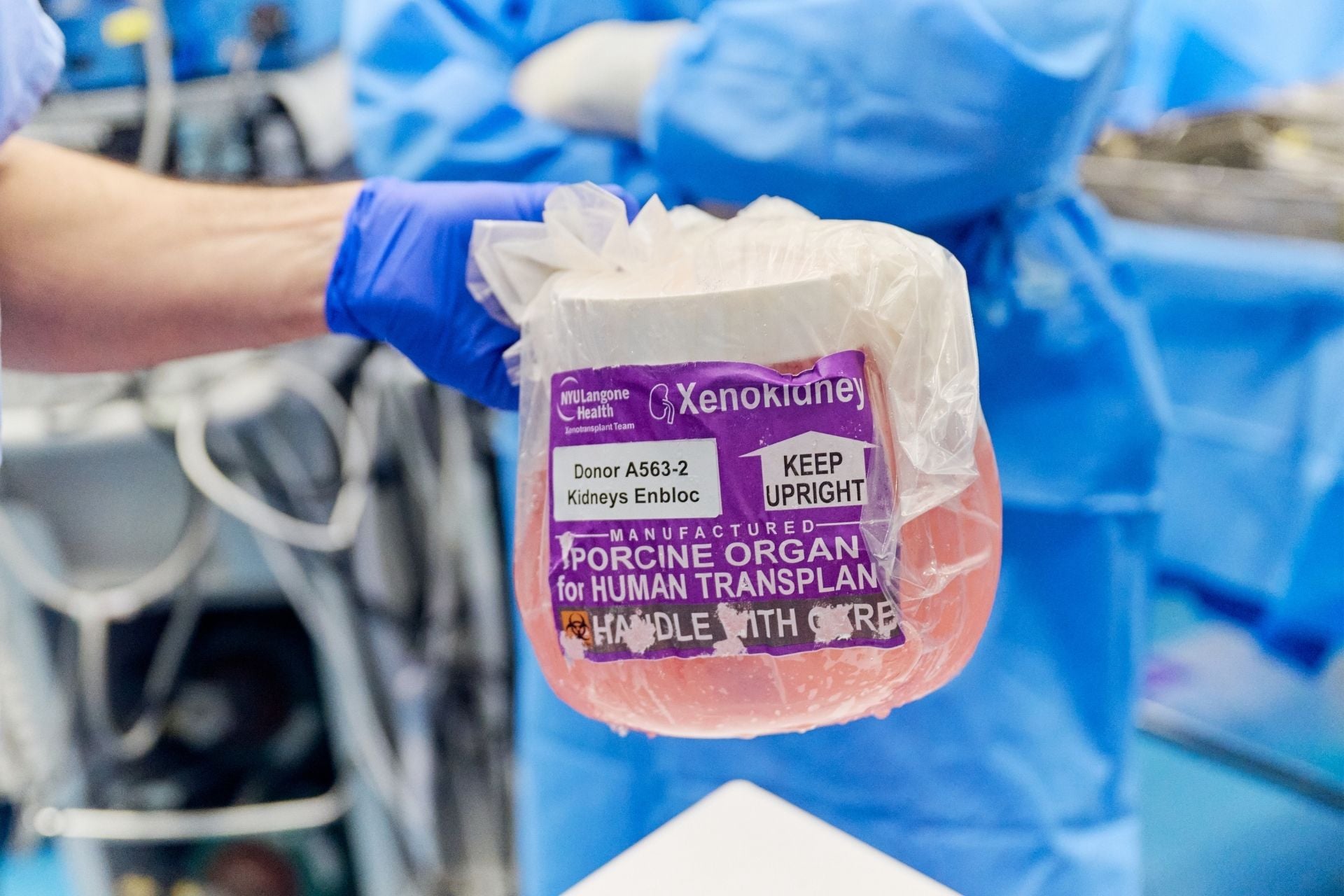
Altogether, the team has conducted six of these studies, two of which involved pig hearts. It’s also performed experimental xenotransplantations with living humans on a compassionate use basis, meaning they were performed on people who had no other medical alternatives available to them.
All of this work by the NYU team and others has now culminated in the world’s first clinical trial of the technology for people with end-stage kidney disease: the EXPAND study, which is being sponsored by United Therapeutics Corporation, one of two companies in the U.S. that are creating these edited pig organs. The first patient in this trial received their modified kidney at NYU Langone Health last November.
Why they did it
The simple truth is that doctors don’t have enough spare organs. There are more than 100,000 Americans currently on the waiting list for an organ, with a new person added every seven minutes. Yet only 49,000 transplants take place annually. It’s estimated that 12 people die every day waiting on the transplant list.
Researchers have long hoped that animal organs could bridge this gap, yet we’ve been stymied by the biological differences that make our bodies incompatible with a pig or monkey. In recent years, however, gene-editing advances like CRISPR have allowed scientists to cut out the genes in pigs most responsible for this incompatibility as well as to add other genes that make them a better match. One of the key changes in these modified pigs is removing their ability to produce alpha-gal, a sugar abundantly found in the muscles of nearly all mammals, with the vital exception of most primates like humans. The specific pigs used in this trial have 10 genetic edits: four gene knockouts and 6 additions.
These innovations have made it possible to envision a world where xenotransplantation can truly help solve the organ shortage crisis. It’s a crisis that Montgomery is intimately familiar with, both as a doctor and, more recently, as the recipient of a donated heart in 2018.
“Even though I’m a transplant surgeon, I only see the success stories. I see the people who get listed, and then we do a transplant on them. And there’s a lot of survivorship bias even among the people who are the practitioners and the surgeons who do transplants—we don’t see all the people who are dying every day, waiting for an organ,” Montgomery told Gizmodo. “When I had to walk in those shoes myself and realize how unlikely it was that I was going to get a transplant in time, it just changed the way I thought about this whole thing. It really made me wake up and vow that I’d spend the rest of my career trying to find another source of organs.”
Why they’re a winner
We’re very much in the early days of xenotransplantation, and even with the advent of gene-edited pigs, there have still been some setbacks. One early heart transplant in a living person—performed by doctors at the University of Maryland—likely failed, at least in part, due to a hidden virus in the pig organ that eventually caused an infection, for instance (the person ultimately died two months after the transplant). And the current record for the survival of a gene-edited pig kidney inside a person is still only 271 days, which is well below the usual years—up to decades—of use for a human donated kidney these days.
But even the failures have helped move this research further. There’s now more extensive screening and removal of latent pig viruses, for example. Montgomery also notes that early human transplantation faced similar challenges like short organ survival times. Compared to that era, the field of xenotransplantation seems to be advancing at a much quicker pace, he says.
Though this clinical trial alone might not enshrine xenotransplantation as a widely used alternative to interventions like dialysis, Montgomery is hopeful such a time could arrive in the not-so-distant future. From there, a whole new world of possibilities would be available.
“It could change everything in transplantation. It would make it so that the organ is waiting for people, not the other way around. We’d essentially be able to deliver an organ to anyone with organ failure who is a reasonable candidate,” he said. “I think, eventually, it’s going to change our lifespan. Both our lifespan and healthspan will increase if we can just replace an organ when we need to. It’d be like keeping an old car going. The only reason that we can’t do that now—that we can’t deliver that to the majority of people—is that we just don’t have enough organs. So once you eliminate the scarcity of organs, I think you open up a future that is going to look completely different.”
What’s next
The first part of the EXPAND trial will involve six patients who are not eligible for a conventional kidney transplant and serves to validate the intervention’s safety. Assuming that goes smoothly, the trial will then cover an additional 44 patients by around 2027; this group will include patients on the kidney waitlist who are more likely to die or go without a conventional transplant.
Within the next five years, Montgomery says, the Food and Drug Administration could very well decide to approve these kidneys for wider use based on the trial results.
The team
Getting to this point has been a massive undertaking for the NYU team and its partners.
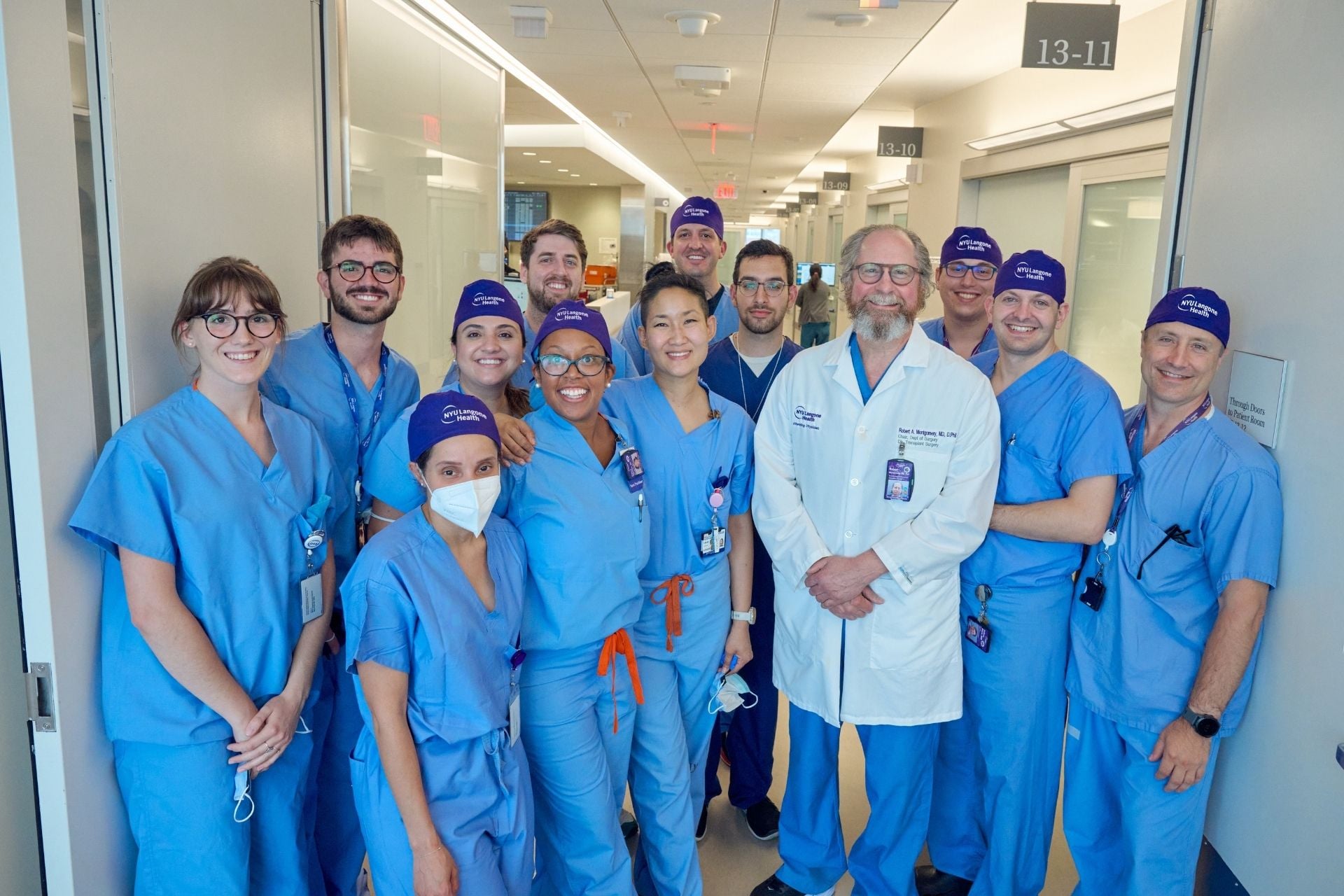
“I always show a slide of all our collaborators and all the people on our team, and it’s probably three or four hundred people. Then there’s the company that actually breeds the pigs, makes those gene edits, keeps them in a pathogen-free facility, and tests them for the viruses. There are all the people in the operating room when we do the transplant and all of the aftercare people we need. On the research side, we collaborate with some other institutions that have specialties in different areas. And there are the companies that are making some of the new immunosuppressive drugs that we’re using in these trials,” Montgomery said. “So it’s just a huge community.”
Once the EXPAND trial, well, expands, ten different centers are expected to be carrying out these transplants. And the company eGenesis is moving ahead with a similar clinical trial of its own gene-edited pig kidney.
Click here to see all of the winners of the 2026 Gizmodo Science Fair.